
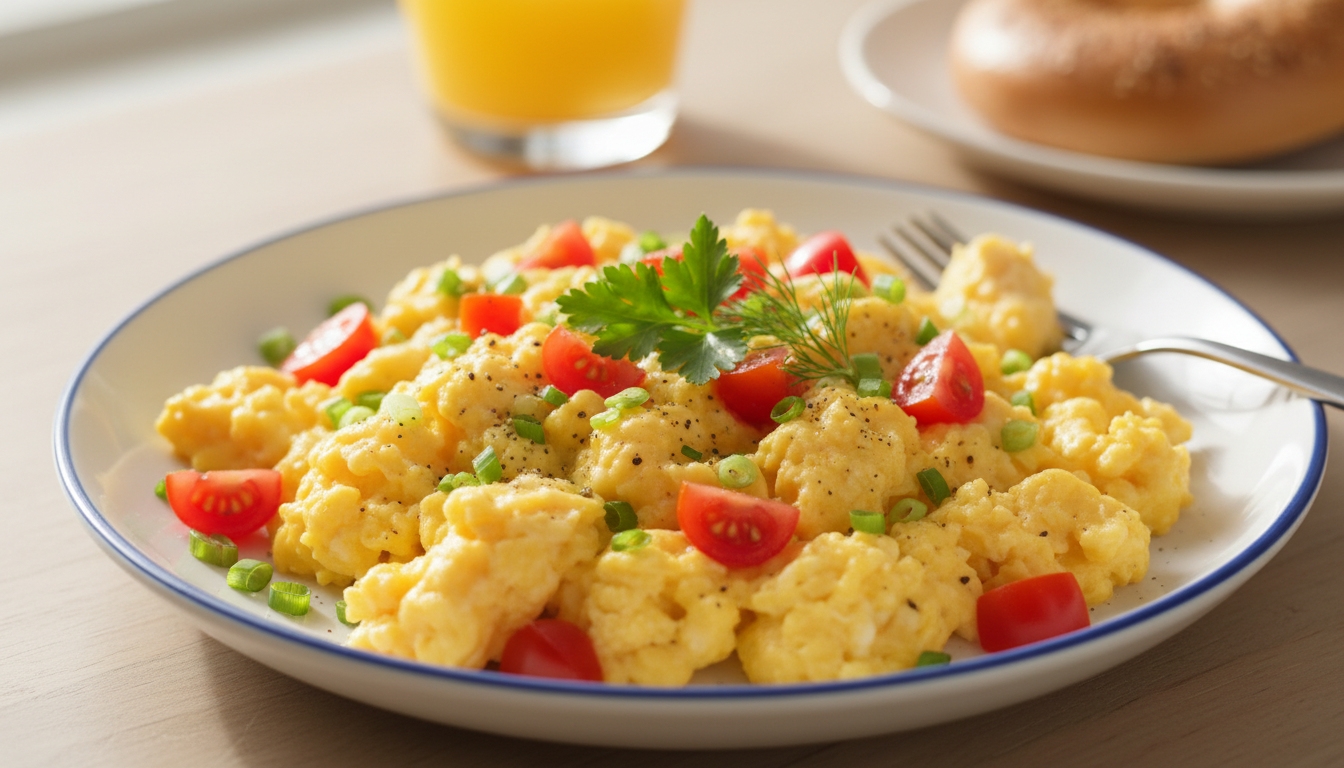
A plain two‑egg scramble gives you about 180 kcal, and each topping adds its own count— a tablespoon of butter adds roughly 100 kcal, a quarter‑cup of cheddar adds about 115 kcal, while a splash of salsa or a handful of fresh herbs adds barely any. You can keep the whole dish under 300 kcal by swapping high‑calorie cheese for low‑calorie spinach, mushrooms, or a dollop of low‑fat Greek yogurt. Stick around and you’ll discover more tricks to stay within your calorie goal.
How Many Scrambled Egg Calories Are in Plain Eggs?
How many calories does a plain scrambled egg contain? You’ll find that a single large egg, scrambled without butter, oil, or milk, holds roughly 90 calories. The protein contributes about 6 g, while the fat accounts for 7 g, and carbohydrates are negligible.
If you whisk two eggs together, the total climbs to around 180 calories, and the nutrient profile doubles accordingly.
Cooking method matters: a non‑stick pan with a spray of oil adds only a few extra calories, whereas a tablespoon of butter can push the count up by 100 calories per egg.
Portion size is key—some people serve a “scrambled egg” that’s actually three or four eggs, which dramatically raises the calorie total.
Remember to count any added dairy, cheese, or herbs separately, as they each bring their own caloric load.
Keeping the base plain lets you gauge exactly how many calories you’re consuming before any toppings.
Which Toppings Add the Most Scrambled Egg Calories?
Adding toppings can quickly turn a low‑calorie scrambled egg into a calorie‑dense meal, so it’s worth knowing which extras pack the biggest energy punch. Cheese tops the list; a single ounce of cheddar adds roughly 115 calories, while mozzarella and feta hover around 80–90 calories per ounce. Full‑fat dairy like sour cream or crème fraîche contributes about 50 calories per two‑tablespoon serving, and butter, melted onto the eggs, adds 100 calories per tablespoon. Processed meats—bacon bits, sausage slices, or ham—are calorie culprits, delivering 40–70 calories per two‑tablespoon portion. Avocado, though healthy, adds 45 calories per quarter‑fruit, and nuts or seeds sprinkled on top contribute 60–80 calories per tablespoon. Even a drizzle of olive oil or avocado oil adds 120 calories per tablespoon. By tracking these high‑calorie toppings, you can control the total energy content of your scrambled‑egg breakfast.
What Low‑Calorie Toppings Keep Scrambled Eggs Light?
Ever wonder which toppings let you enjoy fluffy scrambled eggs without the calorie overload? Fresh herbs are your best bet. Sprinkle chopped chives, parsley, or dill for bright flavor and virtually no calories. A handful of baby spinach wilts quickly and adds volume, fiber, and a few nutrients while staying under 10 calories per cup.
Sautéed mushrooms give an earthy bite; use a spray of olive oil and limit them to half a cup for roughly 15 calories. Diced tomatoes add juiciness and a pop of acidity with only about 5 calories per medium fruit. If you crave a creamy texture, a dollop of low‑fat Greek yogurt (about 30 calories per two‑tablespoon serving) works wonders without the fat of sour cream.
Finally, a pinch of hot sauce or a dash of smoked paprika can boost excitement without adding any calories at all. These choices keep your scrambled eggs light, tasty, and nutritious.
How to Calculate Total Scrambled Egg Calories When Customizing
After picking low‑calorie toppings, you can quickly figure out the total calories in your custom scramble by adding the base egg count to each topping’s calories. Start with the eggs: a large egg is about 70 kcal, so two eggs equal 140 kcal. Next, tally each topping’s value, then sum everything. This method keeps you in control and avoids surprise calorie spikes.
- List each ingredient – write the name, portion size, and calories per portion.
- Multiply and add – if you use ¼ cup of cheese (≈80 kcal) and 2 tbsp of salsa (≈10 kcal), add 80 + 10 to the egg total.
- Verify the final sum – double‑check your math; the total should match the sum of eggs plus all toppings.
How to Keep Your Scrambled Egg Breakfast Under 300 Calories
Want to keep your scrambled‑egg breakfast under 300 kcal? Start by using two large eggs (≈140 kcal) and swap half the whites for a low‑fat dairy alternative—this cuts calories while keeping protein high. Cook with a non‑stick spray instead of butter; a quick mist adds virtually no calories. Add volume with non‑starchy veggies: a handful of spinach (≈7 kcal), diced bell pepper (≈12 kcal), and cherry tomatoes (≈5 kcal). If you crave richness, stir in a tablespoon of reduced‑fat cheese (≈30 kcal) or a splash of skim milk (≈10 kcal). Skip high‑calorie toppings like bacon or avocado, or limit them to a thin slice (≈15 kcal). Portion control matters—serve on a small plate to avoid mindless extra servings. Finally, track your ingredients with a nutrition app; a quick log confirms you stay below the 300‑kcal target without sacrificing flavor.
Frequently Asked Questions
Can I Use Egg Substitutes and Still Count Calories Accurately?
Yes, you can use egg substitutes and still count calories accurately, just check the nutrition label for serving size and protein content, then add those numbers to your total as you would with regular eggs.
Do Different Cooking Oils Affect Scrambled Egg Calorie Totals?
Yes, different cooking oils change your scrambled‑egg calorie count. Olive oil adds about 40 kcal per teaspoon, butter about 35 kcal, and avocado oil roughly 45 kcal, so choose the oil that fits your target.
How Does the Size of the Egg Influence Calorie Counts?
You’ll see larger eggs add more calories—each extra ounce adds roughly 15‑20 kcal. So a medium egg (about 2 oz) is ~70 kcal, while a large (2.5 oz) reaches ~90 kcal before toppings.
Are There Seasonal Toppings That Add Fewer Calories?
You can choose seasonal toppings that keep calories low—think fresh herbs, sliced tomatoes, or sautéed spinach in spring, bright peppers in summer, and roasted root vegetables in fall, all under fifty calories.
Can I Batch‑Prepare Scrambled Eggs Without Increasing Calorie Content?
You can batch‑prepare scrambled eggs without adding calories by cooking them plain, cooling quickly, storing in airtight containers, and reheating with low‑calorie toppings like herbs or hot sauce.
Conclusion
You’ve seen how plain scrambled eggs are already low‑calorie, and how toppings can quickly add up. By choosing veggies, a sprinkle of low‑fat cheese, or a dash of herbs, you keep the meal light while still satisfying cravings. Use the simple calculator to total your choices, and you can easily stay under 300 calories. Enjoy a fluffy, flavorful breakfast without the guilt.


No Comments