
How Many Calories in Strawberries per Serving?
You’ll find strawberries are incredibly low in calories – just 25 calories in a half-cup serving or 49 calories in a full cup of whole berries. That’s only 4 calories per medium strawberry! With 91% water content and 3 grams of fiber per cup, they’ll help you feel satisfied without breaking your calorie budget. These naturally sweet berries pack over 140% of your daily vitamin C while staying lighter than almost any other fruit you’d choose.
Table of Contents
Key Takeaways
- A single medium strawberry contains only 4 calories, while 1 cup of sliced strawberries has 32 calories.
- One cup of whole strawberries (144g) provides approximately 49 calories, making them one of the lowest-calorie fruits available.
- Fresh and unsweetened frozen strawberries have identical calorie counts, but sweetened versions can double or triple the calories.
- A half-cup serving contains about 25 calories, while 100 grams of fresh strawberries provides 32 calories.
- Eight medium strawberries contain approximately 47 calories, and one pound (454g) has about 145 calories total.
Calorie Count in Different Serving Sizes of Fresh Strawberries
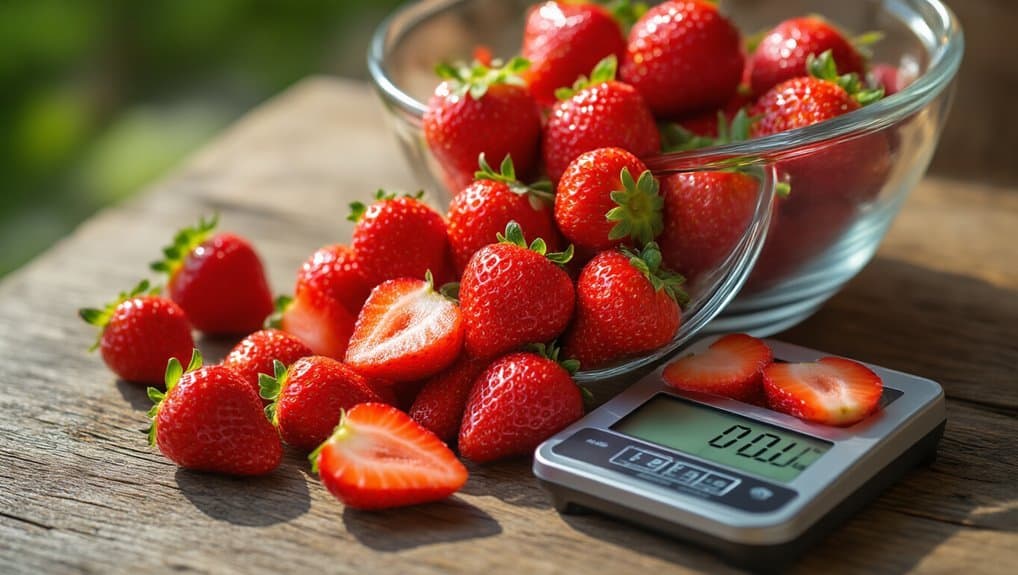
When you’re counting calories, strawberries offer one of the best nutritional bargains in the produce aisle. A single medium strawberry contains just 4 calories, while you’ll consume only 32 calories in a full cup of sliced berries. Understanding these calorie estimates helps you make informed decisions about your daily intake.
Different serving sizes provide flexibility for portion control. You’ll get approximately 49 calories from one cup of whole strawberries (144 grams), while a half-cup serving contains about 25 calories. If you’re measuring by weight measures, 100 grams of fresh strawberries delivers just 32 calories.
For practical reference, a typical serving of eight medium strawberries weighs around 147 grams and provides 47 calories. When you choose larger portions, like a pound of strawberries (454 grams), you’re still consuming only 145 calories. These low numbers make strawberries an ideal snack that won’t derail your dietary goals while satisfying your sweet tooth naturally.
Nutritional Breakdown Beyond Calories in Strawberries
While strawberries’ low calorie count makes them attractive for weight management, you’ll find their nutritional profile extends far beyond simple energy content.
These berries pack impressive vitamin content, with one cup providing over 140% of your daily vitamin C needs. You’ll also get folate, vitamin K, and smaller amounts of B vitamins that support your metabolism and energy production.
The mineral profile of strawberries includes potassium for heart health, manganese for bone development, and magnesium for muscle function.
You’re getting 3 grams of fiber per cup, which aids digestion and helps you feel full longer. Strawberries contain powerful antioxidants like anthocyanins and ellagic acid that fight inflammation and protect your cells from damage.
They’re naturally fat-free and contain about 7 grams of natural sugars per serving.
With their high water content at 91%, strawberries help keep you hydrated while delivering these essential nutrients without excess calories.
How Strawberry Preparation Methods Affect Calorie Content
You’ll find that fresh strawberries maintain their original calorie count of about 32 calories per 100 grams, while frozen varieties without additives contain the same amount.
However, you’re looking at a significant jump when manufacturers add sugar to frozen strawberries, which can double or triple the calorie content.
Your choice between fresh, unsweetened frozen, or sweetened frozen strawberries directly impacts the calories you’re consuming per serving.
Fresh Vs Frozen
If you’re comparing fresh and frozen strawberries, you’ll find their calorie counts remain nearly identical at about 32 calories per 100 grams. The freezing process doesn’t add calories since no ingredients are added during commercial freezing.
You’ll notice the main difference lies in practical considerations rather than nutritional value. Fresh strawberries offer that crisp, fresh texture you can’t replicate once they’re frozen. They’re perfect when you want to enjoy berries at their peak ripeness or use them as garnishes.
Frozen strawberries provide unmatched frozen convenience – they’re pre-washed, pre-hulled, and ready whenever you need them. You can store them for months without worrying about spoilage. They’re ideal for smoothies, baking, and cooking since the softer texture won’t affect your final dish’s quality.
Added Sugar Impact
When manufacturers add sugar to strawberry products, the calorie content skyrockets compared to plain berries. You’ll find that strawberry jam contains about 50 calories per tablespoon, while fresh strawberries have just 4 calories in the same amount. That’s a dramatic increase in calorie density that can derail your diet goals.
Added sugars in processed strawberry items don’t just boost calories—they’ll spike your blood sugar levels too. You’re getting empty calories without the fiber that naturally slows sugar absorption in whole berries. While sweetened products might match your taste preferences better, they’re nutritionally inferior choices.
If you’re watching your weight, stick with fresh or frozen strawberries without added ingredients. You can always sweeten them yourself with controlled amounts of honey or stevia, keeping both calories and blood sugar impacts minimal.
Comparing Strawberry Calories to Other Common Fruits
Since you’re counting calories, understanding how strawberries stack up against other popular fruits can help you make smarter snacking choices. Strawberries contain just 32 calories per 100 grams, making them one of the lowest-calorie fruits available.
Berry comparisons reveal strawberries outperform most options. They’re lower in calories than blueberries (57 calories), raspberries (52 calories), and blackberries (43 calories) per 100-gram serving. Among common fruits, only watermelon beats strawberries at 30 calories.
Here’s how popular fruits rank per 100 grams:
- Apples: 52 calories
- Bananas: 89 calories
- Grapes: 67 calories
- Oranges: 47 calories
- Pineapple: 50 calories
Fruit rankings show strawberries offer exceptional value when you’re watching your caloric intake. You’ll get more volume and satisfaction from strawberries compared to calorie-dense choices like bananas or grapes.
Their high water content and fiber keep you feeling full longer, making them ideal for weight management while still enjoying something naturally sweet.
Factors That Influence Calorie Variations in Strawberries
Though you might assume all strawberries contain identical calories, several factors actually create slight variations in their caloric content. The ripeness level directly impacts how many calories you’ll consume. As strawberries ripen, their starch converts to sugar, increasing the calorie count by 2-3 calories per serving. You’ll find fully ripe berries contain more calories than their underripe counterparts.
Different strawberry varieties also affect caloric values through their varietal sugar content. Some cultivars naturally produce more sugars than others. For instance, you’ll get slightly more calories from sweeter varieties like Albion or Seascape compared to tarter types.
Growing conditions matter too. Strawberries grown in optimal sunlight develop higher sugar concentrations, adding 1-2 extra calories per serving. Temperature fluctuations during growth also influence sugar development. Additionally, the berry’s size affects total calories – larger strawberries contain more calories overall, though the calorie density remains similar.
Smart Ways to Include Strawberries in a Calorie-Controlled Diet
Incorporating strawberries into your calorie-controlled diet becomes effortless when you understand their versatility as a low-calorie food. You’ll discover countless portion swaps that significantly reduce calories without sacrificing satisfaction. Replace high-calorie desserts with fresh strawberries topped with a dollop of Greek yogurt. You’re cutting hundreds of calories while boosting nutrition.
Transform your meals with these strategic strawberry additions:
- Use sliced strawberries as salad toppers instead of dried cranberries or croutons
- Blend frozen strawberries into smoothies to replace higher-calorie fruits like bananas
- Mix diced strawberries into overnight oats rather than adding honey or maple syrup
- Create strawberry-infused water to satisfy sweet cravings without liquid calories
- Substitute strawberry slices for jam on whole-grain toast
You can’t go wrong adding strawberries to your breakfast bowls, afternoon snacks, or evening treats. They’ll naturally sweeten your dishes while keeping portions generous and calories minimal. Their high water and fiber content helps you feel fuller longer.
Frequently Asked Questions
Do Strawberries Have More Calories When They’re Overripe or Underripe?
You’ll find overripe strawberries have slightly fewer calories than underripe ones, though the difference isn’t significant.
As strawberries ripen, sugar breakdown occurs naturally, converting complex carbohydrates into simpler sugars.
While texture changes make overripe berries softer and sweeter-tasting, they’re actually losing some caloric content through respiration and moisture loss.
You’re looking at roughly the same 32 calories per 100 grams regardless, so don’t worry about timing your consumption perfectly.
Can Diabetics Safely Eat Strawberries Despite Their Natural Sugar Content?
Yes, you can safely enjoy strawberries as a diabetic. They’re low on the glycemic index and won’t spike your blood sugar levels dramatically.
You’ll benefit from their fiber content, which slows sugar absorption. Practice portion control by limiting yourself to about one cup per serving.
They’re naturally sweet but contain only 7-8 grams of sugar per cup. You’ll find they’re a smart choice compared to other fruits.
Are Organic Strawberries Different in Calorie Content Than Conventional Ones?
You’ll find no significant difference in calorie content between organic vs conventional strawberries. Both varieties contain approximately 32 calories per 100 grams.
While farming practices impact how the berries are grown—with organic methods avoiding synthetic pesticides and fertilizers—they don’t alter the fruit’s basic nutritional composition. You’re getting the same caloric value whether you choose organic or conventional strawberries, so base your decision on other factors like environmental concerns or personal preferences.
How Long Can I Store Strawberries Without Affecting Their Calorie Content?
You can store strawberries for 3-7 days in the refrigerator without affecting their calorie content. The calories won’t change during normal storage life, but temperature effects matter – keep them between 32-36°F for best results.
While they’ll lose moisture and potentially develop mold over time, the actual caloric value remains stable until they’re completely spoiled. Don’t wash them until you’re ready to eat, as excess moisture accelerates deterioration.
Do Strawberry Calories Count Differently for People With Certain Metabolic Conditions?
You’ll absorb strawberry calories the same way regardless of metabolic conditions, but your body’s response differs.
If you have diabetes, you’ll process the natural sugars differently from someone without it. Your metabolic rate affects how quickly you burn those calories, not how many you absorb.
Some medication interactions can alter nutrient absorption, but they don’t change the strawberry’s actual calorie count. You’re still consuming the same energy, just processing it differently.
Conclusion
You’ve learned that strawberries are incredibly low in calories, with just 32 calories per 100 grams. Whether you’re counting calories or simply making healthier choices, you can’t go wrong with these nutrient-packed berries. They’re naturally sweet, versatile, and won’t derail your diet goals. Next time you’re craving something sweet, reach for fresh strawberries instead of processed snacks. Your body will thank you for choosing this delicious, guilt-free option that satisfies without the calorie overload.


No Comments