
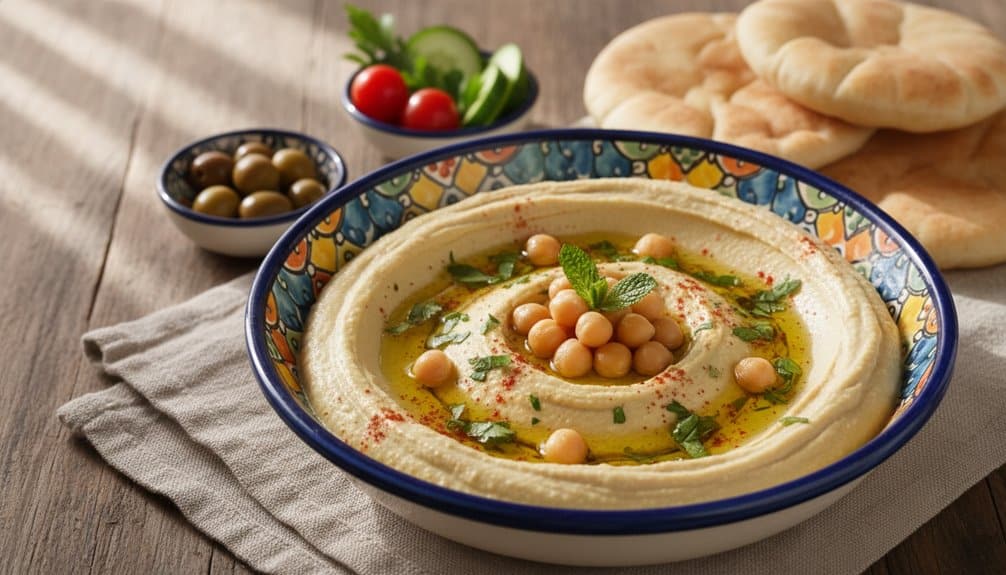
You’re making a smart nutritional swap when you choose hummus over traditional dips, getting quality protein and fiber in just 70 calories per two-tablespoon serving. While ranch packs 140 calories of empty fats and cheese dips offer minimal nutrition, hummus delivers complete proteins from chickpeas and tahini plus essential vitamins. You’ll save about 100 calories per serving compared to mayo-based spreads while gaining slow-releasing energy that stabilizes blood sugar. Discover how this Mediterranean staple transforms everyday meals beyond basic snacking.
Table of Contents
Key Takeaways
- Traditional hummus contains only 70 calories per 2-tablespoon serving while delivering 8 grams of protein per half-cup.
- Chickpeas and tahini create a complete protein profile with all 9 essential amino acids without requiring extra oil.
- Hummus saves 100+ calories compared to ranch dressing and mayo-based dips while providing superior nutritional value.
- Homemade hummus allows customization of tahini and olive oil amounts to control calories while maintaining protein content.
- The protein-fiber combination in hummus provides sustained energy and blood sugar stability unlike empty-calorie conventional dips.
Breaking Down the Calorie Count: What Makes Hummus a Smart Choice
Two tablespoons of traditional hummus contain roughly 70 calories, making it a nutrient-dense option that won’t derail your daily calorie goals. You’re getting substantial protein, fiber, and healthy fats in those calories, unlike empty-calorie snacks that leave you hungry.
When evaluating calorie considerations, you’ll find hummus outperforms many popular dips. Ranch dressing packs 140 calories in the same serving size with minimal nutritional value. Cheese-based dips can exceed 100 calories while offering less fiber and plant-based nutrients.
The nutrient density of hummus means you’re fueling your body efficiently. Each calorie delivers iron, folate, manganese, and B vitamins alongside 2 grams of protein and 2 grams of fiber. You’ll stay satisfied longer because the combination of protein, fiber, and healthy fats slows digestion and stabilizes blood sugar.
Store-bought varieties range from 50-80 calories per serving depending on added ingredients. You can control calories by making your own, adjusting tahini and olive oil amounts to fit your needs.
Protein Power: How Chickpeas and Tahini Deliver Nutritional Value
Chickpeas and tahini team up to create a complete protein profile that rivals many animal-based sources. You’re getting about 8 grams of protein per half-cup serving, making hummus an excellent plant-based option for muscle maintenance and satiety.
The amino acid content in this duo works synergistically. While chickpeas lack methionine, tahini fills that gap, giving you all nine essential amino acids your body can’t produce on its own. You’ll also benefit from the fiber benefits that support digestive health and blood sugar control.
Here’s what makes this protein combination special:
- Slow-releasing energy – The protein-fiber combo keeps you satisfied for hours
- Muscle recovery – Essential amino acids support post-workout repair
- Blood sugar stability – Protein slows carbohydrate absorption, preventing spikes
- Gut health boost – Fiber feeds beneficial bacteria while protein supports intestinal lining
This nutrient density means you’re not just counting calories—you’re maximizing every bite’s nutritional impact.
Comparing Popular Dips: Why Hummus Beats Ranch, Cheese, and Mayo
The nutritional differences between hummus and traditional dips reveal why this Mediterranean staple deserves a permanent spot in your refrigerator. You’ll save approximately 100 calories per serving when you choose hummus over ranch dressing. While ranch packs 140 calories and 14 grams of fat per two tablespoons, hummus delivers just 50 calories with 3 grams of healthy fats.
Cheese dips aren’t any better—they’ll load you up with 90 calories and minimal protein compared to hummus’s fiber-protein combination. Mayo-based dips hit even harder at 180 calories per serving, offering zero nutritional benefits beyond fat.
You’re getting healthy dip alternatives that actually fuel your body. Hummus provides iron, folate, and B vitamins that processed dips can’t match. Its versatile snacking options work with vegetables, whole grain crackers, or as sandwich spreads. You won’t find inflammatory oils or artificial preservatives that dominate conventional dips. This swap cuts calories while adding genuine nutrition.
Creative Ways to Use Hummus Beyond Basic Snacking
Your hummus habit doesn’t need to stop at carrot sticks and pita chips. This protein-packed dip transforms into countless versatile recipe ideas that’ll revolutionize your meals. You’re sitting on a goldmine of nutritious spread options that work from breakfast through dinner.
Transform your cooking with these creative applications:
- Sandwich Spread – Replace mayo with hummus on sandwiches and wraps for extra protein and fewer calories
- Pasta Sauce Base – Thin hummus with pasta water to create a creamy, dairy-free sauce
- Salad Dressing – Mix hummus with lemon juice and herbs for a thick, satisfying dressing
- Pizza Base – Swap tomato sauce for hummus on flatbreads before adding toppings
You’ll cut calories while boosting nutrition in unexpected places. Hummus works as a butter substitute on toast, a base for deviled eggs, or even mixed into meatballs for moisture. Don’t limit yourself to store-bought varieties—experiment with beet, avocado, or black bean versions.
Frequently Asked Questions
How Long Does Homemade Hummus Stay Fresh in the Refrigerator?
Your homemade hummus will stay fresh for 4-5 days when stored properly in the refrigerator. You’ll extend its storage life by keeping it in an airtight container and maintaining your refrigerator temperature at 40°F or below.
You can tell it’s gone bad if you notice an off smell, mold, or separation that doesn’t mix back together when stirred. For best quality, you should consume it within three days.
Can I Freeze Hummus Without Affecting Its Texture and Taste?
Yes, you can freeze hummus for excellent shelf life preservation, though you’ll notice slight texture changes.
Store it in airtight containers with a thin layer of olive oil on top for better freezer storage results. It’ll keep for up to four months frozen.
When you’re ready to eat it, thaw overnight in the fridge and stir well. The consistency might be slightly grainy, but the flavor remains intact.
Is Hummus Safe for People With Sesame Allergies?
No, traditional hummus isn’t safe for you if you have sesame allergies since it contains tahini, which is made from sesame seeds. You’ll need to look for sesame free hummus options at stores or make tahini free hummus recipes at home.
You can substitute tahini with ingredients like Greek yogurt, avocado, or sunflower seed butter to create a creamy texture while keeping the classic chickpea base and flavors you love.
What’s the Best Consistency for Hummus – Thick or Creamy?
You’ll want your hummus rich and creamy rather than thick and paste-like. The best consistency feels smooth and velvety on your tongue, spreading easily without being runny.
You’re aiming for a texture that clings to vegetables but doesn’t feel heavy. Add liquid gradually while blending until you achieve that perfect balance. Your hummus shouldn’t require effort to scoop, yet it shouldn’t slide off your pita either.
Should I Remove Chickpea Skins When Making Hummus From Scratch?
You don’t have to remove chickpea skins, but it’s worth the effort for ultra-smooth hummus. The chickpea skin texture impact is significant – leaving them on creates a slightly grainy consistency, while removing them yields silky results.
Though peeling chickpea time saving methods exist like adding baking soda during cooking to loosen skins, you can skip this step entirely if you’re fine with a rustic texture.
Conclusion
You’ve discovered that hummus isn’t just another dip—it’s your protein-packed Mediterranean secret weapon. You’ll get more nutrition without drowning your food in oil-based alternatives. Whether you’re spreading it on sandwiches, using it as salad dressing, or keeping it classic with veggies, you’re making a smart swap that your body will thank you for. Next time you’re reaching for ranch or mayo, grab that hummus instead and enjoy every guilt-free, flavorful bite.


No Comments