
Hot Chocolate Calories: Cozy Winter Mixes Ranked – Which Brand Won’t Break Your Deficit?
Your favorite hot chocolate mix could pack anywhere from 25 to 400 calories per cup, with most popular brands landing between 80-150 calories when prepared according to package directions. You’ll find ultra-light options like Swiss Miss Diet at just 25 calories, while premium brands like Ghirardelli Double Chocolate reach 190 calories. The sweet spot for taste and calories sits around 85-100 calories with brands like Ghirardelli Premium Singles. Smart milk choices and portion control can slash even more calories from your cozy winter treat.
Table of Contents
Key Takeaways
- Swiss Miss Diet leads ultra-low options at 25 calories per serving, using artificial sweeteners and water instead of milk.
- Mid-range picks like Ghirardelli Premium Singles deliver indulgent taste at 85 calories without breaking calorie budgets.
- Premium brands like Godiva Dark Chocolate and Starbucks Classic range 160-180 calories with real chocolate and richer textures.
- Sugar-free versions from Nestle and Kroger offer 30-35 calories but sacrifice creamy consistency for calorie savings.
- Sweet spot options between 50-100 calories balance taste and nutrition, providing calcium and protein without excessive calories.
The Calorie Spectrum: From 25 to 400+ Calories Per Cup

When you’re craving hot chocolate, the calorie count can vary dramatically depending on how it’s made. You’ll find sugar-free powder mixes starting at just 25 calories per serving, while decadent café versions topped with whipped cream can exceed 400 calories. The wide range reflects differences in ingredient quality and preparation methods.
Basic instant mixes typically contain 80-120 calories, using cocoa powder, sugar, and dried milk. Premium brands bump this to 150-180 calories by adding real chocolate and whole milk powder, enhancing flavor complexity significantly.
When you make hot chocolate from scratch using whole milk and dark chocolate, you’re looking at 200-250 calories.
Coffee shop versions are the heaviest hitters. A medium hot chocolate with 2% milk averages 300 calories, while versions made with whole milk, chocolate syrup, and whipped cream can soar past 400. You can’t ignore that toppings like marshmallows add another 25-50 calories per serving.
Ultra-Light Champions: Hot Chocolates Under 50 Calories
For calorie-conscious chocolate lovers, several brands now offer hot chocolate options that stay under 50 calories per cup. Swiss Miss Diet delivers 25 calories while maintaining that melt in your mouth texture you’re craving. Nestle’s Fat-Free version clocks in at 30 calories, and Kroger’s Sugar-Free mix provides just 35 calories per serving.
You’ll achieve these low counts by using water instead of milk and sticking to the recommended serving size. Most ultra-light options rely on artificial sweeteners like sucralose or stevia to maintain sweetness without sugar’s calories.
While they won’t match the richness of traditional versions, you’re still getting those cozy comforts without derailing your diet. The trade-off? These lighter versions typically contain less cocoa and more stabilizers. You might notice a thinner consistency and slightly artificial aftertaste. However, adding a tablespoon of unsweetened almond milk (about 3 calories) can improve the creaminess without significantly impacting your calorie count.
The Sweet Spot: Satisfying Options Between 50-100 Calories
Moving up from ultra-light options opens a world of more satisfying hot chocolate choices that won’t break your calorie budget. In the 50-100 calorie range, you’ll find drinks that deliver genuine chocolate flavor without compromise. Swiss Miss Diet packs 25% more cocoa than its lighter counterpart at just 60 calories, while Nestle’s Fat-Free version brings creamy textures at 80 calories per serving.
You can explore seasonal variations like Land O’Lakes’ Mint Cocoa (70 calories) or Starbucks’ Sugar-Free Peppermint mix (90 calories). These options incorporate real dairy powder, creating the richness you’re craving.
Ghirardelli’s Premium Singles hover around 85 calories yet taste indulgent enough for dessert. The secret? These brands use maltodextrin and natural flavors strategically, maintaining sweetness while cutting sugar grams in half. You won’t need extra marshmallows or whipped cream—they’re satisfying straight from the mug. This range hits the perfect balance between calorie consciousness and comfort food satisfaction.
Mid-Range Indulgences: 100-150 Calorie Selections Worth Considering
When you’re ready for something more substantial than the lighter options, the 100-150 calorie range offers hot chocolates that balance richness with reasonable portions. You’ll find that major brands like Swiss Miss and Nestlé dominate this category with their classic milk chocolate varieties, each delivering distinct flavor profiles from creamy vanilla notes to deeper cocoa intensity.
These mid-range selections typically pack 2-3 grams of protein and 15-20% of your daily calcium needs, making them a more nutritionally complete choice than their lower-calorie counterparts.
Popular Brand Comparisons
The mid-range category offers you the perfect balance between satisfying your chocolate craving and maintaining reasonable calorie intake. You’ll find these options deliver richer flavors without derailing your diet goals. Most brands in this range prioritize ingredient transparency, listing real cocoa and milk powders prominently.
Here’s how popular brands stack up:
- Swiss Miss Diet (25 calories) – Artificially sweetened, budget-friendly
- Nestle Fat-Free (50 calories) – Creamy texture, moderate brand pricing
- Ghirardelli Premium (120 calories) – Real chocolate chips, premium quality
- Starbucks Classic (130 calories) – Coffeehouse flavor, higher cost
You’re getting more authentic chocolate taste compared to ultra-low options. The 100-150 range lets you add mini marshmallows or whipped cream while staying under 200 calories total. Brand pricing varies significantly—generic versions cost half of premium selections.
Flavor Profile Analysis
Flavor complexity ramps up considerably when you’re working with 100-150 calorie hot chocolates, as manufacturers can incorporate higher-quality cocoa and natural sweeteners. You’ll notice these mid-range options deliver a richer sensory experience through deeper chocolate notes and balanced sweetness that doesn’t overwhelm your palate.
The textural qualities improve dramatically in this calorie bracket. You’re getting actual cocoa butter that creates silky smoothness rather than the chalky finish of lower-calorie alternatives. Brands like Ghirardelli and Godiva include Dutch-processed cocoa that adds subtle caramel undertones without extra sugar. You’ll taste genuine vanilla extract instead of artificial flavoring, and some varieties feature hints of cinnamon or peppermint that complement rather than mask the chocolate. These selections prove you don’t need 200+ calories for legitimate hot chocolate satisfaction.
Nutritional Value Breakdown
Beyond taste considerations, you’ll find these 100-150 calorie hot chocolates pack surprisingly balanced nutritional profiles that justify their slight caloric increase. These mid-range options deliver better nutrient density than their lighter counterparts, offering meaningful amounts of essential vitamins and minerals per serving.
Here’s what you’re getting in typical calorie breakdowns:
- Protein Content: 3-5 grams supporting satiety and muscle recovery
- Calcium Boost: 15-20% daily value strengthening bones during winter months
- Iron Sources: 8-10% daily value combating seasonal fatigue
- Fiber Addition: 2-3 grams promoting digestive health
You’ll notice these beverages contain less added sugar than premium brands while maintaining rich chocolate flavor. Most incorporate real cocoa powder, providing antioxidants without excessive calories. Smart ingredient choices make these perfect post-workout treats or afternoon pick-me-ups.
Premium Territory: When 150-200 Calories Delivers Extra Richness
When you’re ready to treat yourself to something more indulgent than basic cocoa, premium hot chocolates in the 150-200 calorie range offer the perfect balance of richness without excessive guilt. These mixes deliver a creamy mouthfeel that transforms your average cup into a café-quality experience. You’ll notice the velvety texture immediately coating your palate with each sip.
| Brand | Calories Per Serving |
|---|---|
| Ghirardelli Double Chocolate | 190 |
| Starbucks Classic | 180 |
| Williams Sonoma Peppermint | 170 |
| Godiva Dark Chocolate | 160 |
What makes these worth the extra calories? You’re getting real chocolate liquor, premium cocoa butter, and often vanilla extract instead of artificial flavoring. They dissolve completely without grainy residue and don’t require additional sugar. You can enhance them with a splash of cream or enjoy them straight. At this calorie level, you’re investing in quality ingredients that satisfy chocolate cravings without needing seconds.
The Calorie Bombs: Mixes That Exceed 200 Calories Per Serving
You’ll find some luxury hot chocolate brands packing over 200 calories per serving, with gourmet mixes from companies like Godiva and Ghirardelli often reaching 250-300 calories per cup. These indulgent options typically hide their sugar content behind fancy packaging, containing 25-35 grams of sugar that accounts for most of their caloric load.
When you’re choosing these premium mixes, you’re essentially drinking a liquid candy bar that delivers a quarter of your daily sugar intake in one mug.
Luxury Brand Offenders
Premium hot chocolate brands often pack a serious caloric punch that’ll make your daily calorie budget wince. You’re paying premium price points for what amounts to a dessert in a mug, with luxury brand drawbacks extending beyond just the cost.
Here’s what you’ll find in high-end hot chocolate mixes:
- Ghirardelli Double Chocolate – 240 calories per serving
- Godiva Dark Chocolate – 230 calories, plus 8g saturated fat
- Williams Sonoma Peppermint Bark – 250 calories with extra sugar
- Vosges Haut-Chocolat – 280 calories for their signature blend
You’re essentially drinking a candy bar’s worth of calories in minutes. These brands use real chocolate, heavy cream powder, and premium sweeteners that drive up the calorie count. While they taste incredible, they’ll derail your deficit faster than you can say “marshmallow topping.”
Hidden Sugar Content
| Brand | Listed Sugar (g) | Actual Total Sugars (g) |
|---|---|---|
| Swiss Miss Marshmallow | 17 | 28 |
| Nestlé Rich Milk | 19 | 31 |
| Land O’Lakes Arctic White | 23 | 35 |
These mixes pack 210-280 calories per serving when prepared with whole milk. You’re essentially drinking liquid candy bars. Check ingredient lists carefully—manufacturers often split sugar sources to push them lower on the label, masking the true sweetness overload.
Sugar-Free vs. Regular: How Much Do You Really Save?
Many people switch to sugar-free hot chocolate expecting dramatic calorie savings, but the actual difference might surprise you. Most sugar-free versions only cut 20-40 calories per serving because manufacturers compensate with other ingredients to maintain texture and taste.
Here’s what you’ll actually save with sugar-free options:
- Standard packets: Regular contains 80-90 calories; sugar-free has 50-60 calories
- Coffee shop versions: Regular packs 190-400 calories; sugar-free reduces this by just 30-80 calories
- Homemade mixes: You’ll save 35-45 calories per cup when using artificial sweeteners
- Premium brands: Difference narrows to only 15-25 calories due to added cream substitutes
The calorie comparisons reveal that artificial sweeteners don’t create the massive deficit you’d expect. Sugar-free versions often contain maltodextrin, modified starches, and extra fats to replicate regular hot chocolate’s mouthfeel. You’re better off reducing portion sizes or using unsweetened cocoa powder with your preferred low-calorie sweetener for maximum control.
Portion Size Reality Check: What Counts as One Serving?
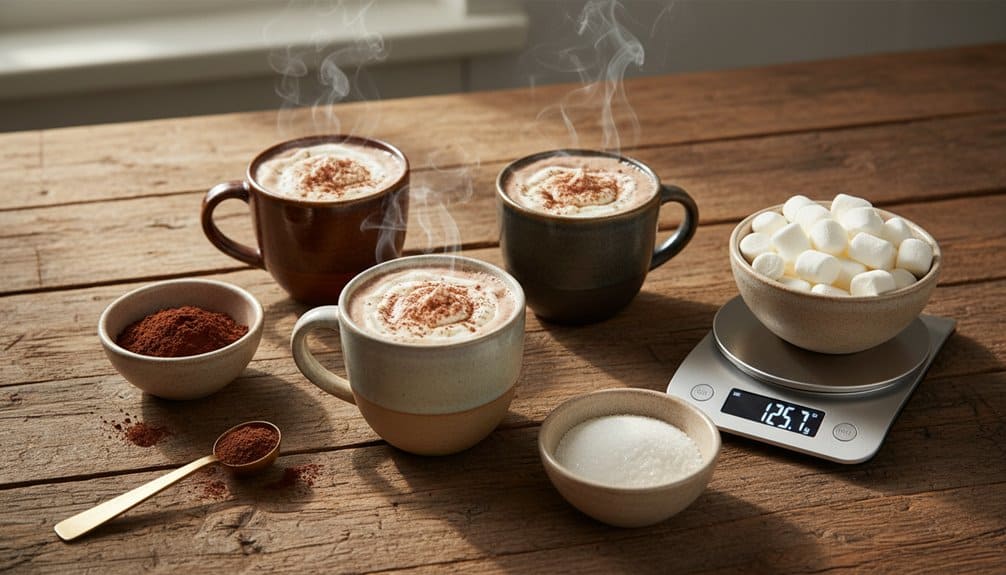
Pour out what you think is a single serving of hot chocolate, and you’ll likely discover you’re drinking double or triple the actual portion size. Most packages define one serving as 6-8 ounces, but you’re probably filling a 12-16 ounce mug to the brim.
Check the serving size guidelines on your favorite brand’s label. You’ll find most powdered mixes list 2-3 tablespoons as one serving, meant for just 6 ounces of water or milk. That’s smaller than a standard coffee cup. Meanwhile, coffee shop “small” hot chocolates start at 12 ounces, automatically doubling your calorie intake.
Serving size recommendations matter when you’re tracking calories. If you’re using a packet labeled “single serve,” you’re safe. But if you’re scooping from a canister, measure carefully. Your heaping tablespoons aren’t level ones, and that “one cup” you’re eyeballing is probably closer to two. Get honest about portions, and you’ll understand why your calorie count isn’t adding up.
DIY Hacks to Slash Calories in Your Favorite Mix
You don’t have to sacrifice your hot chocolate habit to cut calories—just make a few smart swaps. By replacing sugar with stevia or monk fruit, switching to unsweetened almond milk, and measuring your mix with a tablespoon instead of eyeballing it, you’ll slash hundreds of calories per cup.
These simple tweaks let you enjoy the same cozy comfort with half the caloric cost.
Alternative Sweetener Swaps
While traditional hot chocolate recipes rely on sugar for sweetness, you can dramatically reduce calories by switching to alternative sweeteners without sacrificing taste. You’ll find both artificial sweeteners and natural sweeteners work excellently in hot cocoa, each offering unique benefits.
Here are your best zero-calorie options:
- Stevia – Plant-based natural sweetener that won’t spike blood sugar
- Erythritol – Sugar alcohol with chocolate-enhancing properties
- Monk fruit – Natural sweetener that dissolves smoothly without aftertaste
- Sucralose – Heat-stable artificial sweetener perfect for hot beverages
Start with half the recommended amount since these alternatives pack more sweetness per teaspoon than sugar. You can always add more. Mix sweeteners directly into your cocoa powder before adding liquid to prevent clumping and ensure even distribution throughout your drink.
Smart Milk Substitutions
Often overlooked as a calorie-cutting opportunity, the milk in your hot chocolate accounts for most of the drink’s calories and fat content. You’ll slash 100+ calories per cup by swapping whole milk for unsweetened almond milk, which contains just 30-40 calories versus dairy’s 150.
When comparing oat milk versus almond milk, you’re looking at 90-120 calories for oat versus 30-40 for almond. Oat milk’s creamier texture might satisfy you more, preventing second servings. You can also explore dairy free creamer options like coconut cream powder or cashew-based creamers, which offer richness at 25-35 calories per tablespoon.
For maximum satisfaction without the calories, try mixing half water with half unsweetened almond milk. You’ll maintain some creaminess while cutting calories even further.
Portion Control Tricks
Simply using a smaller mug automatically reduces your hot chocolate calories by 30-50% without feeling deprived. You’ll still enjoy the full experience while practicing mindful snacking habits that support your goals.
Transform your hot chocolate into conscious indulgence with these tricks:
- Pre-portion packets – Divide bulk mix into single servings using small bags
- Water-first method – Fill your mug halfway with hot water, then add mix and top with milk
- Whipped topping swap – Use a milk frother to create foam instead of adding whipped cream
- Temperature hack – Make it extra hot so you’ll sip slowly and feel satisfied sooner
These simple adjustments let you savor every sip without sabotaging your deficit. You’re creating sustainable habits that work year-round.
Milk Choice Impact: How Your Base Liquid Changes the Numbers
The milk you choose for your hot chocolate can double or even triple its calorie count. While water creates the lightest option at zero calories, you’ll sacrifice creaminess and richness.
Whole milk adds 150 calories per cup, but 2% milk saves you 30 calories without much flavor loss.
Among dairy options, skim milk delivers just 80 calories while maintaining protein content. Half-and-half rockets your drink to 320 calories per cup—save it for special occasions. Heavy cream? That’s 800 calories you’re stirring in.
Non dairy substitutes vary wildly in calories. Unsweetened almond milk keeps things light at 30-40 calories, while oat milk brings 120-140 calories with natural sweetness. Coconut milk from a can packs 450 calories, but the carton version contains only 45. Soy milk sits in the middle at 80-100 calories. You’ll find cashew milk offers creaminess at 25 calories, making it an excellent compromise between texture and calorie control.
Best Overall Winners: Top 3 Mixes for Taste and Calorie Balance
Finding the perfect hot chocolate mix that doesn’t sabotage your diet requires testing dozens of options. After extensive comparisons, three brands deliver exceptional flavor balance without calorie overload.
Swiss Miss Diet emerges as the frontrunner at just 25 calories per serving. You’ll get rich chocolate taste with surprisingly good texture quality for a low-calorie option.
Ghirardelli’s Premium Hot Cocoa Double Chocolate ranks second at 90 calories, offering indulgent depth that satisfies serious chocolate cravings.
Nestle’s Fat-Free Hot Cocoa Mix rounds out the top three at 50 calories, providing the best middle ground between taste and nutrition.
What makes these winners stand out:
- No artificial aftertaste that plagues many diet versions
- Smooth consistency when prepared with hot water or milk
- Natural cocoa flavor that doesn’t taste watered down
- Versatile preparation options for customization
Each mix dissolves completely without clumping, ensuring you’re getting restaurant-quality results at home while maintaining your calorie goals.
Frequently Asked Questions
Does Hot Chocolate Break Intermittent Fasting Even if It’s Low-Calorie?
Yes, hot chocolate breaks your intermittent fast regardless of being low-calorie. Even small amounts of calories trigger metabolic effects that interrupt your fasting state, stopping autophagy and fat-burning processes.
You’ll disrupt insulin levels and halt the benefits you’ve built during your fasting window duration. If you’re strictly fasting, stick to water, black coffee, or plain tea. Save that hot chocolate for your eating window when you can fully enjoy it.
Can I Drink Hot Chocolate Before Working Out Without Affecting Performance?
You can drink hot chocolate before working out, but timing matters. The sugar provides quick energy for your session, though dairy might cause stomach discomfort during intense exercise.
For optimal pre workout hydration, consider mixing it with water instead of milk. You’ll get better performance drinking it 30-60 minutes before exercising.
Save richer, creamier versions for post workout recovery when your body needs those calories and protein for muscle repair.
How Many Calories Does Whipped Cream or Marshmallows Add to Hot Chocolate?
You’ll add about 50-100 calories with two tablespoons of whipped cream, while the whipped cream calorie content varies by brand and whether it’s homemade or canned.
Mini marshmallows pack roughly 25 calories per tablespoon, though the marshmallow calorie count jumps to 90-100 calories if you’re using larger ones.
These toppings can quickly double your drink’s calories, so you’d better measure portions carefully to stay within your daily goals.
Do Hot Chocolate K-Cups Have Different Calorie Counts Than Powder Mixes?
Yes, you’ll find K-cups typically contain 60-80 calories per pod, while powder mixes range from 80-150 calories per serving. The calorie content variations depend on each brand’s recipe and ingredients.
K-cups have controlled portions, but powder mixes let you adjust serving size impact by using more or less mix. You’re getting fewer calories with most K-cups since they contain less product than traditional powder packets.
Will Drinking Hot Chocolate at Night Cause Weight Gain?
No, drinking hot chocolate at night won’t directly cause weight gain—it’s your total daily calories that matter. If you’re within your calorie deficit, you’ll still lose weight.
However, late night cravings can lead to overconsumption, and sugary drinks might temporarily spike insulin levels. The metabolic effects of nighttime eating aren’t significantly different from daytime, but you might sleep better avoiding caffeine-containing cocoa close to bedtime.
Conclusion
You’ve got plenty of options to satisfy your hot chocolate cravings without derailing your diet. Whether you’re reaching for an ultra-light 25-calorie packet or splurging on a 150-calorie premium blend, you’ll find something that fits your goals. Remember, your milk choice can double the calories, so choose wisely. Stock up on your favorite low-cal mix, experiment with portion sizes, and you’ll stay cozy all winter while keeping your deficit on track.


No Comments