

You’re getting about 70 calories from one large egg, though it varies by size—small eggs pack 54 calories while jumbos reach 90. The yolk contains 55 calories and most nutrients, while the white has just 17 calories of pure protein. Cooking doesn’t change the calorie count unless you add butter or oil, which can double your calories. There’s much more to discover about how eggs stack up nutritionally and fit your diet goals.
Table of Contents
Key Takeaways
- One large egg contains approximately 70-72 calories, the most common egg size consumed.
- Egg size affects calories: small (54), medium (63), large (72), extra-large (80), jumbo (90).
- Egg white has about 17 calories while yolk contains about 55 calories.
- Cooking method doesn’t change calories unless oil, butter, or other ingredients are added.
- Boiled or poached eggs maintain the same 70-72 calories as raw eggs.
Calorie Count by Egg Size: From Small to Jumbo

When you’re counting calories, egg size makes a significant difference in your daily intake. A small egg contains approximately 54 calories, while medium eggs pack 63 calories. You’ll find large eggs contain 72 calories, extra-large ones have 80 calories, and jumbo eggs reach 90 calories.
The small shell of a petite egg doesn’t mean it’s nutritionally inferior. These eggs simply come from younger hens or smaller breeds. Whether you’re buying from a local farm origin or grocery store, the size classification remains consistent across the industry.
You’ll notice that each size increment adds roughly 8-10 calories. This difference matters when you’re tracking macros or following a strict calorie budget. If you typically eat two eggs for breakfast, switching from jumbo to large eggs saves you 36 calories daily. That’s 252 calories weekly without sacrificing protein or satisfaction. Understanding these variations helps you make informed choices that align with your dietary goals.
Raw Egg vs. Cooked Egg Calorie Differences
You might wonder if cooking changes an egg’s calorie count, but the calories remain virtually identical whether you eat it raw or cooked.
What does change is how your body absorbs the egg’s nutrients—you’ll actually absorb about 50% more protein from a cooked egg compared to a raw one. The cooking method itself won’t add calories unless you’re using butter, oil, or other ingredients in the preparation.
Cooking Method Impact
Although cooking methods can alter an egg’s weight and volume, they don’t significantly change its calorie content. When you boil, poach, or scramble an egg without additions, you’re still consuming roughly the same 70-80 calories found in a raw large egg. The calories increase only when you add ingredients like butter, oil, or milk during preparation.
Pan frying requires oil or butter, which can add 40-120 extra calories depending on the amount you use. You’ll get the same protein and nutrients whether you choose sous vide cooking at precise temperatures or quick scrambling in a hot pan. What matters isn’t the heat application method but what you’re adding to the egg. Plain preparation methods keep the calorie count consistent with raw eggs.
Nutrient Absorption Changes
While raw and cooked eggs contain identical calories, your body absorbs their nutrients differently based on preparation. Cooking creates bioavailability shifts that dramatically improve protein absorption. You’ll absorb 91% of protein from cooked eggs versus only 51% from raw ones. Heat causes matrix changes in egg structure, breaking down protein bonds and making amino acids more accessible to your digestive enzymes.
| Nutrient | Absorption Rate |
|---|---|
| Cooked Protein | 91% |
| Raw Protein | 51% |
| Biotin (Cooked) | 100% available |
You’re also protecting yourself from avidin, a protein in raw egg whites that blocks biotin absorption. Cooking deactivates avidin completely. Additionally, you’ll reduce salmonella risk while maintaining the same 70-calorie count. The bottom line? You’re getting more nutritional value per calorie when you cook your eggs.
Breaking Down Calories: Egg White vs. Egg Yolk
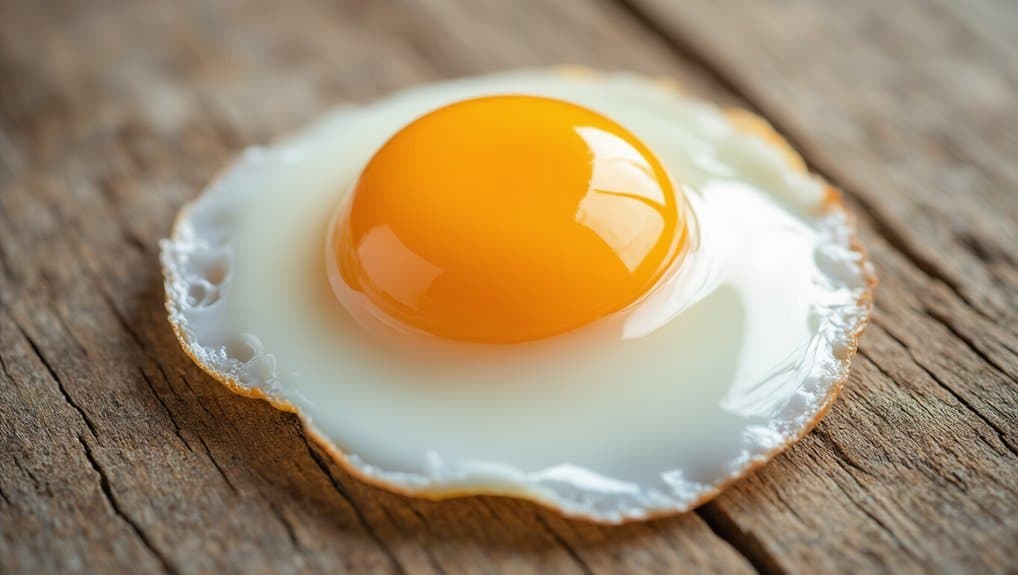
When you crack open an egg, you’ll find two distinct parts with very different calorie counts.
The egg white contains only about 17 calories and consists mostly of protein and water, making it the lower-calorie portion.
In contrast, the yolk packs around 55 calories and contains all the egg’s fat, cholesterol, and most of its vitamins and minerals.
White Calorie Content
Egg whites make up about two-thirds of an egg’s total weight but contain only 17 calories — roughly 30% of a whole egg’s caloric content. You’ll find that this low-calorie portion consists almost entirely of water and albumen protein, with virtually no fat or cholesterol.
When you separate an egg, you’re getting about 3.6 grams of complete protein in the white alone. The albumen protein provides all essential amino acids your body needs for muscle repair and growth. You’ll also notice the sodium content in egg whites is relatively modest at 55 milligrams, making them suitable for most dietary plans.
If you’re counting calories or managing your fat intake, egg whites offer an excellent protein source without the concentrated calories found in the yolk.
Yolk Calorie Content
Although the yolk makes up only about one-third of an egg’s total weight, it packs approximately 55 calories — accounting for nearly 70% of a whole egg’s caloric content.
You’re getting concentrated nutrition in this golden center, with most of the egg’s vitamins and minerals residing here.
Don’t let outdated cholesterol myths steer you away from yolks. Modern research shows dietary cholesterol doesn’t significantly impact blood cholesterol for most people.
You’ll benefit from powerful yolk antioxidants like lutein and zeaxanthin, which protect your eye health and may reduce age-related macular degeneration risk.
The yolk’s calories come primarily from healthy fats that help your body absorb fat-soluble vitamins A, D, E, and K.
You’re also getting choline for brain health and B vitamins for energy metabolism.
How Cooking Methods Affect Egg Calories
The way you cook your eggs can bump up the calorie count significantly, especially if you’re adding butter, oil, or other ingredients to the pan. A plain large egg contains about 72 calories, but pan frying with just one tablespoon of butter adds 102 calories. That’s nearly double the original count.
Here’s how different cooking methods stack up:
- Boiled or poached – No added calories; you’ll maintain the boiled texture without extra fat
- Scrambled with milk – Adds 20-30 calories depending on milk quantity
- Fried in oil – Increases calories by 90-120 per tablespoon used
You’re better off choosing water-based cooking methods when counting calories. Steaming, poaching, and boiling preserve the egg’s nutritional value without sneaking in hidden fats.
If you must use oil, try cooking spray instead—it’ll add only 5-10 calories versus the hefty increase from traditional frying methods.
Nutritional Benefits Beyond the Calorie Count
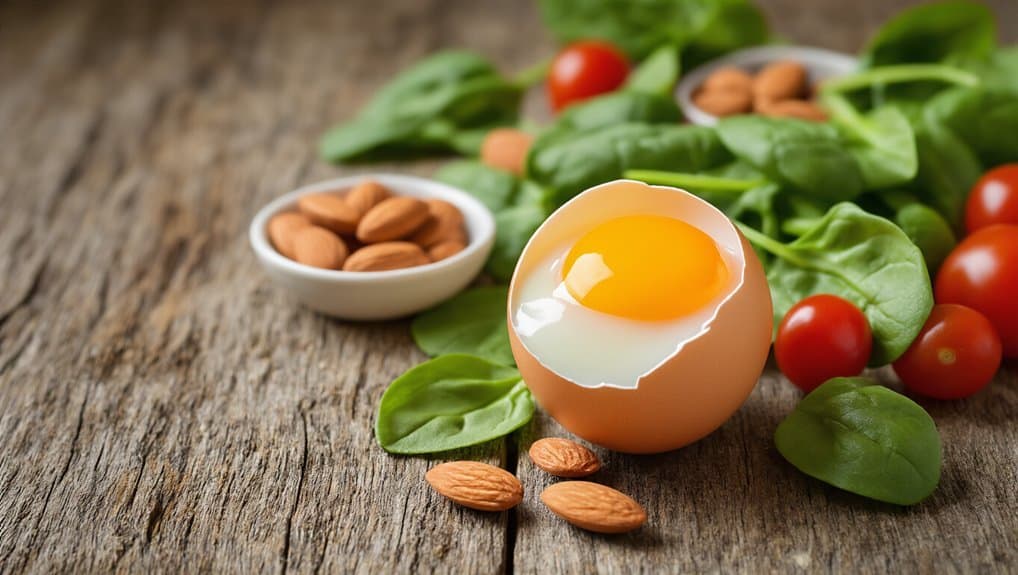
While you’re tracking calories, you shouldn’t overlook eggs’ impressive nutrient profile that makes them worth every calorie consumed. You’ll get 6 grams of complete protein containing all nine essential amino acids your body can’t produce alone. This makes eggs perfect for protein timing strategies, whether you’re fueling post-workout recovery or starting your morning with sustained energy.
Despite outdated cholesterol myths, current research shows dietary cholesterol from eggs doesn’t significantly impact blood cholesterol for most people. You’re actually getting heart-healthy nutrients like choline for brain function and memory support. Eggs deliver vitamin D for bone health, vitamin B12 for energy production, and selenium for immune function.
Your eyes benefit from lutein and zeaxanthin, antioxidants that protect against age-related macular degeneration. You’ll also absorb fat-soluble vitamins A, E, and K more efficiently when eating eggs. With just 70 calories, one large egg provides exceptional nutritional density that supports multiple body systems simultaneously.
Comparing Egg Calories to Other Protein Sources
Now that you understand eggs’ nutritional value, let’s examine how their calorie content stacks up against other popular protein sources. You’ll find eggs offer exceptional protein-to-calorie ratios compared to many alternatives.
Consider these protein comparisons per 100 calories:
- Large egg: 12g protein, complete amino acid profile
- Chicken breast: 20g protein, requires cooking oil adding calories
- Greek yogurt: 10g protein, often contains added sugars
You’re getting more than just protein with eggs. Omega 3 enrichment in specialty eggs provides heart-healthy fats without significant calorie increases.
While beef delivers similar protein, it contains double the calories per serving.
The sustainability impact makes eggs even more appealing. They require less water and land than meat production, making them an environmentally conscious choice. You’ll spend less too—eggs cost pennies per gram of protein compared to fish or lean meats. When you’re tracking calories while maintaining protein intake, eggs remain one of nature’s most efficient packages.
Making Eggs Work for Your Daily Calorie Goals
Throughout your daily meal planning, eggs can serve as versatile building blocks that adapt to various calorie targets. Whether you’re maintaining, losing, or gaining weight, you’ll find eggs fit seamlessly into your nutrition strategy.
For portion control, consider your specific needs. One egg provides roughly 70 calories, making it easy to scale up or down. If you’re targeting 300-calorie breakfasts, pair two eggs with vegetables. Need more calories? Add cheese, avocado, or whole grain toast.
Meal timing matters when incorporating eggs. They’re perfect for breakfast since their protein content keeps you satisfied until lunch. You can also use hard-boiled eggs as afternoon snacks to bridge the gap between meals without derailing your calorie goals.
Track your egg consumption alongside other foods to maintain balance. Since eggs are nutrient-dense but relatively low in calories, they won’t overwhelm your daily budget while still delivering essential vitamins, minerals, and quality protein your body needs.
Frequently Asked Questions
Do Organic Eggs Have Different Calorie Counts Than Conventional Eggs?
No, you won’t find significant calorie differences between organic and conventional eggs. Both typically contain 70-80 calories per large egg.
While organic nutrition profiles remain nearly identical calorie-wise, you’re choosing different farming practices when buying organic. Organic hens aren’t given antibiotics or hormones and eat organic feed. You might notice slight variations in vitamin content, but the calorie count stays consistent regardless of production method.
How Many Calories Are in Duck or Quail Eggs?
You’ll find duck eggs contain about 130 calories each, significantly more than chicken eggs due to their larger size.
They’re richer and creamier with higher fat content.
Quail eggs are tiny powerhouses with approximately 14 calories per egg.
You’d need to eat about five quail eggs to match one chicken egg’s calories.
Both offer unique flavors and nutritional profiles that make them interesting alternatives to conventional chicken eggs.
Do Egg Calories Change Based on the Hen’s Diet?
Yes, you’ll find slight caloric variations based on what hens eat. Feed composition directly affects the egg’s nutritional profile, though protein variability remains minimal.
You’ve probably noticed yolk pigmentation changes with different diets – orange yolks from pasture-raised hens versus pale yellow from grain-fed ones. While omega-3 enrichment through flaxseed or fish oil doesn’t significantly alter calories, it does enhance the egg’s fatty acid content and nutritional value.
Are There Fewer Calories in Pasteurized Liquid Egg Products?
You’ll find pasteurized liquid egg products typically have fewer calories than whole eggs because manufacturers often remove some or all of the yolks.
While whole eggs contain about 70-80 calories, liquid egg whites have only 25-30 calories per equivalent serving.
Products with liquid yolks included vary in pasteurized nutrition content – they’re usually modified with reduced fat, containing 35-60 calories depending on the yolk-to-white ratio you’re buying.
How Accurate Are Calorie Counts Listed on Egg Carton Labels?
You’ll find egg carton calorie counts are generally accurate within 20% due to FDA regulations, though label variances exist between brands and egg sizes.
They’re based on standardized serving sizes – typically one large egg at 50 grams.
You should remember that actual calories can vary slightly depending on the hen’s diet and egg freshness.
Most manufacturers test batches regularly to ensure their nutritional information stays reliable for consumers.
Conclusion
You’ve learned that a large egg contains about 70-80 calories, with variations based on size and cooking method. Now you can make smarter choices about incorporating eggs into your diet. Whether you’re counting calories, boosting protein intake, or simply enjoying a nutritious meal, eggs offer incredible versatility and value. Don’t overthink it—eggs are a nutrient-dense food that’ll fuel your body efficiently. Use this knowledge to plan your meals and reach your health goals confidently.


No Comments