
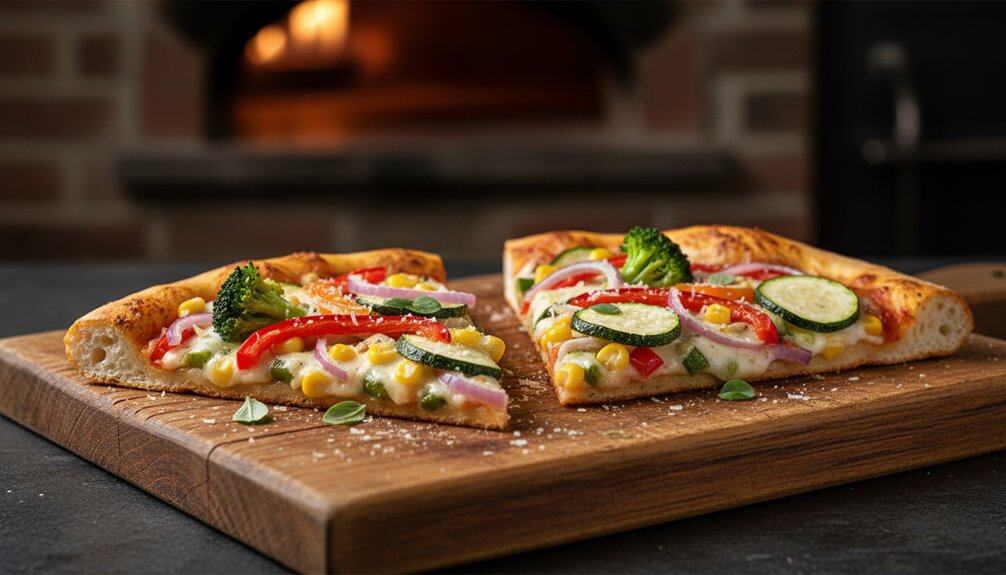
Two Slices of Pizza Calories: The Topping Combo That Saves 300 Calories Without Sacrifice
You can easily cut 300 calories from two pizza slices by making smart swaps that don’t sacrifice flavor. Replace half your pepperoni with grilled chicken and load up on mushrooms, peppers, and onions—you’ll save 150 calories while adding filling protein and nutrients. Mix equal parts whole-milk and part-skim mozzarella to slash another 80 calories per slice without losing that perfect cheese pull. These simple tweaks transform your favorite indulgence into a lighter meal that still satisfies every craving.
Table of Contents
Key Takeaways
- Replace full pepperoni with half portions plus extra vegetables to cut 150-200 calories while maintaining flavor.
- Swap high-calorie meats for grilled chicken or shrimp, saving 100+ calories per two slices.
- Use half whole-milk and half part-skim mozzarella to reduce 80 calories per slice without sacrificing melt quality.
- Load pizzas with mushrooms, peppers, and onions for only 20 calories versus 260 calories from meat toppings.
- Combine roasted red peppers, caramelized onions, and mushrooms to replace half the cheese, saving 150 calories per slice.
The Calorie Math Behind Traditional Pizza Toppings
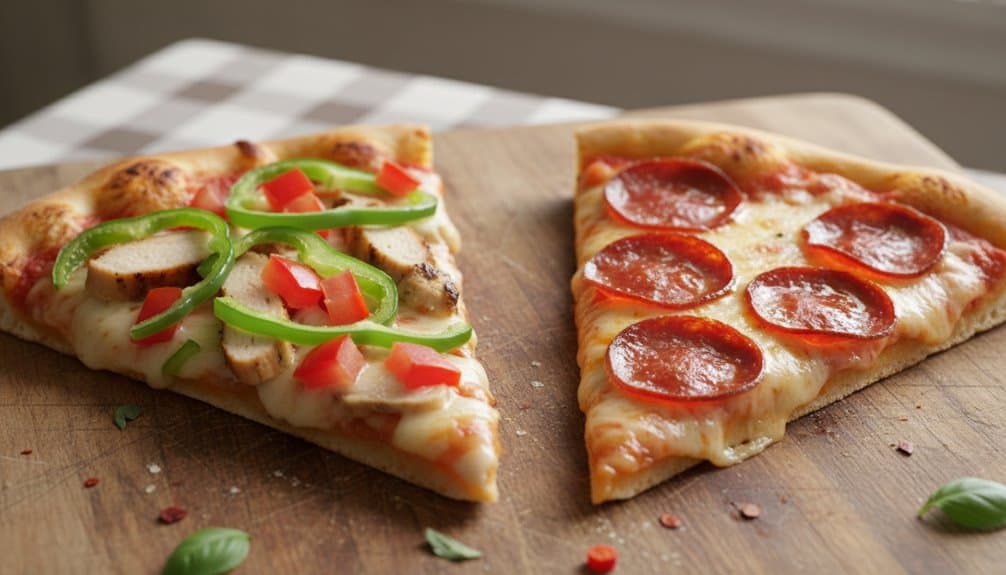
When you’re calculating the calories in your two slices of pizza, the toppings make a dramatic difference in the final count. Pepperoni adds 130 calories per ounce, while sausage packs 96 calories for the same amount. You’ll find vegetables like mushrooms, peppers, and onions contain just 5-10 calories per ounce.
Understanding topping nutrition facts helps you make smarter choices. Cheese alone contributes 80-100 calories per ounce, and most pizzas use two to three ounces across two slices. Meat toppings typically double your slice’s calorie content.
Portion control considerations matter when you’re customizing your order. You don’t need to eliminate favorite toppings entirely. Instead, ask for half the usual amount of high-calorie meats and extra vegetables. This strategy cuts 150-200 calories without sacrificing flavor. You’ll still taste the pepperoni or sausage, but the vegetables add volume and nutrients while keeping calories in check.
Smart Protein Swaps That Keep You Full and Satisfied
The protein on your pizza doesn’t have to sabotage your calorie goals. You’ll slash calories significantly by choosing grilled chicken over pepperoni or sausage. Two ounces of grilled chicken adds just 70 calories compared to 140 for pepperoni. Turkey bacon delivers smoky flavor at half the calories of regular bacon.
Consider plant-based lean protein portions that pack nutritional punch. Chickpeas, black beans, or seasoned tofu provide substance without the saturated fat. You’re getting filling fiber sources alongside protein when you choose these options. A quarter cup of black beans contains 4 grams of fiber and keeps you satisfied longer than processed meats.
Don’t overlook seafood choices. Shrimp adds mere 30 calories per ounce while delivering complete protein. You can load up on these lighter proteins without guilt. Mix proteins with vegetables like spinach or bell peppers to create volume that fills you up faster, naturally limiting how much you eat.
Vegetable Combinations That Add Flavor Without the Calories
Vegetables transform your pizza from a calorie bomb into a nutrient-dense meal that actually satisfies your hunger. You’ll save roughly 150 calories per slice by replacing half your cheese with roasted red peppers, caramelized onions, and mushrooms. These nutrient dense toppings deliver umami richness that tricks your brain into thinking you’re eating something indulgent.
Try these flavor boosting combinations that work: spinach with sun-dried tomatoes creates a savory depth, while bell peppers paired with jalapeños add sweet heat without oil. You can’t go wrong with the classic trio of mushrooms, onions, and green peppers – they’ll give you that pizzeria taste for just 20 calories per slice.
Don’t pile vegetables randomly. Layer moisture-rich tomatoes under cheese to prevent sogginess, and add delicate greens like arugula after baking. You’ll maximize flavor while keeping each slice under 250 calories when you use these strategic vegetable combinations.
The Half-and-Half Cheese Strategy for Maximum Taste
Smart pizzerias have discovered that mixing equal parts whole-milk mozzarella with part-skim saves 80 calories per slice while maintaining that essential cheese pull. You’ll get the rich flavor from whole-milk cheese while the part-skim provides structure and melting consistency. This strategy works perfectly with various topping variations since the cheese blend doesn’t overpower delicate vegetables or compete with bold meats.
| Cheese Type | Calories (2 oz) | Melt Quality | Flavor Impact |
|---|---|---|---|
| Whole-Milk Only | 180 | Excellent | Very Rich |
| Part-Skim Only | 140 | Good | Mild |
| Half-and-Half Mix | 160 | Excellent | Rich |
| Fat-Free | 90 | Poor | Bland |
The texture contrasts between the two cheese types create complexity in every bite. You’re essentially getting premium taste at a fraction of the caloric cost. Apply this blend liberally across your pizza’s surface, ensuring even distribution. The part-skim prevents excessive grease pooling while the whole-milk delivers that satisfying stretch you’re craving.
Frequently Asked Questions
How Many Calories Are in Different Pizza Crust Types and Thicknesses?
You’ll find major differences in pizza crust type variations and their calorie counts. Thin crust contains about 200-250 calories per two slices, while thick crust packs 350-400 calories. Regular hand-tossed sits between at 280-320 calories.
Pizza thickness considerations matter too – stuffed crust adds 100+ calories, cauliflower crust saves 50-80 calories, and whole wheat offers similar calories to regular but with more fiber. You’re looking at 150-200 calorie differences between options.
Does Reheating Pizza Change Its Calorie Content or Nutritional Value?
No, reheating pizza doesn’t change its calorie content. You’ll consume the same calories whether it’s fresh or reheated. Different reheating methods like ovens, microwaves, or air fryers won’t alter the caloric value either.
However, nutritional changes can occur slightly – you might lose small amounts of water-soluble vitamins like vitamin C during reheating. The macronutrients (proteins, fats, carbohydrates) and their calories remain unchanged regardless of how you reheat your leftover slices.
What’s the Calorie Difference Between Delivery, Frozen, and Homemade Pizzas?
You’ll typically find delivery pizzas pack 250-400 calories per slice, while frozen options range from 200-350 calories. Homemade versions can drop to 150-250 calories since you control portions and ingredients.
Pizza delivery nutrition often includes more oil and cheese than frozen alternatives. Frozen pizza nutrition varies wildly by brand, but they’re generally lower in calories than restaurant versions. Making your own lets you slash calories by using less cheese and adding vegetables.
How Do Different Pizza Sizes Affect Portion Control and Calorie Counting?
You’ll consume fewer calories with smaller pizza sizes since they naturally limit your portion sizes. A 10-inch personal pizza’s slice contains about 200 calories, while a 16-inch extra-large slice packs 400+.
You’re more likely to overeat with larger pizzas available. Choose medium pizzas to control portions better – you’ll satisfy cravings without the temptation of multiple oversized slices sitting in front of you, making calorie counting easier.
Which Pizza Chains Offer the Lowest Calorie Options Nationwide?
You’ll find the lowest calorie options at Blaze Pizza, MOD Pizza, and Pieology, where you can customize thin crusts with veggie toppings. These chains provide detailed pizza nutrition labels online and practice pizza ingredient transparency, making it easier to track calories.
Domino’s thin crust and Pizza Hut’s Skinny Slice also offer lighter choices. You’re looking at 150-200 calories per slice when you choose wisely at these nationwide chains.
Conclusion
You’ve discovered that smart topping choices can slash 300 calories from your two-slice pizza habit without feeling deprived. By swapping fatty meats for lean proteins, loading up on flavorful vegetables, and using the half-cheese strategy, you’re getting the same satisfying meal with fewer calories. Next time you’re ordering, remember these simple swaps. Your taste buds won’t notice the difference, but your waistline will thank you for making these small but powerful changes.


No Comments