
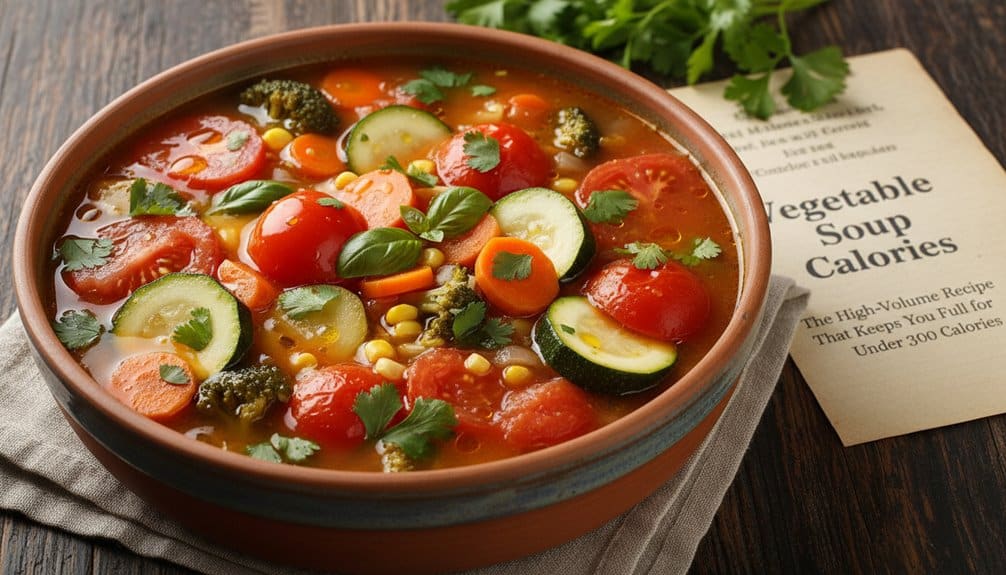
Vegetable Soup Calories: The High-Volume Recipe That Keeps You Full for Under 300 Calories
You can create a filling vegetable soup under 300 calories by using low-density vegetables, broth-based liquids, and strategic seasonings. The high water and fiber content triggers your stomach’s stretch receptors while slowing digestion, keeping you satisfied for hours. Add beans or tofu for protein without breaking your calorie budget. This nutrient-dense combination stabilizes blood sugar and reduces cravings naturally. You’ll discover the exact recipe and science behind why this soup works so effectively for weight management.
Table of Contents
Key Takeaways
- A large bowl of vegetable soup contains under 300 calories while providing essential vitamins, minerals, and antioxidants for complete nutrition.
- High water content and fiber create stomach volume that triggers fullness signals, keeping you satisfied for hours between meals.
- Strategic ingredient selection using low-calorie vegetables, broth-based liquids, and herbs delivers maximum flavor without adding unnecessary calories.
- The combination of fiber, water, and protein slows digestion and stabilizes blood sugar, preventing hunger and energy crashes.
- Simple preparation involves sautéing aromatics, adding vegetables by hardness, simmering in broth, and seasoning with calorie-free herbs and spices.
Why Vegetable Soup Is the Ultimate Low-Calorie Powerhouse
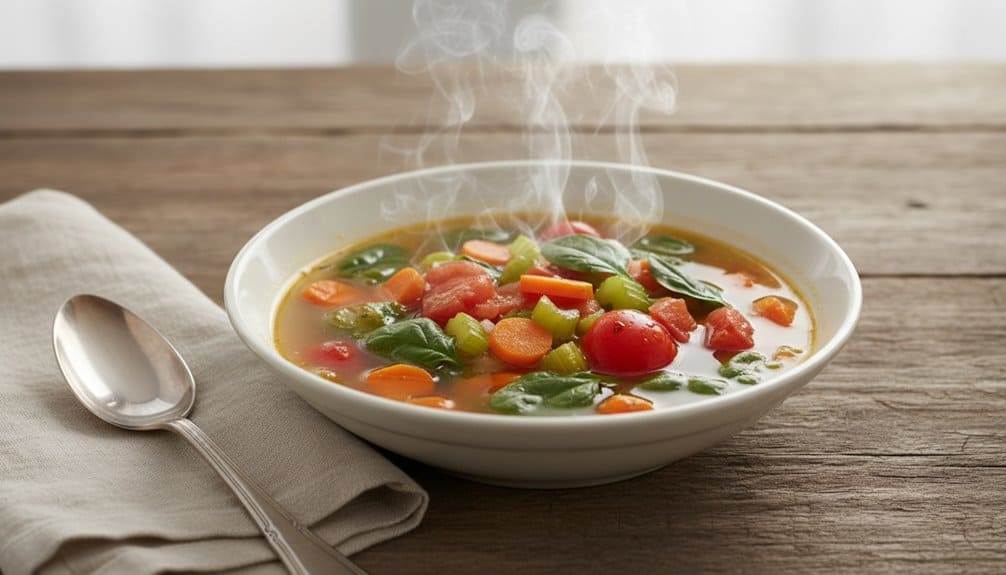
When you’re looking for a filling meal that won’t derail your diet, vegetable soup delivers unmatched nutritional value for minimal calories. You’ll consume essential vitamins, minerals, and antioxidants while staying well under your calorie budget. The high water content and fiber create volume that fills your stomach, triggering satiety signals without excess energy intake.
The impressive nutrient density means you’re getting maximum nutrition per calorie consumed. You’ll benefit from vitamins A, C, and K, plus potassium, folate, and iron from various vegetables.
The digestive benefits are equally remarkable – the fiber promotes healthy gut bacteria, regulates bowel movements, and helps stabilize blood sugar levels. You’re essentially eating a bowl of hydration combined with prebiotics that feed beneficial gut microbes. The warm liquid aids digestion by stimulating gastric juices, while the vegetables’ natural enzymes support nutrient absorption. This combination makes vegetable soup your smartest choice for weight management.
Breaking Down the Calorie Count: What Makes This Recipe Stay Under 300
The secret to keeping this vegetable soup under 300 calories lies in strategic ingredient selection and smart cooking techniques. You’ll achieve this by focusing on vegetables with naturally low calorie density and avoiding calorie-dense additions like cream or excessive oil.
Your calorie density analysis reveals why this approach works:
- Non-starchy vegetables (broccoli, zucchini, spinach) contain 15-30 calories per cup
- Broth-based liquid adds volume with minimal calories (10-15 per cup)
- Herbs and spices provide flavor without any caloric impact
- Lean protein additions (beans, tofu) stay under 100 calories per serving
- Fiber-rich ingredients increase satiety while maintaining low totals
The macronutrient composition stays balanced with approximately 45% carbohydrates from vegetables, 25% protein, and 30% healthy fats. You’re essentially creating a high-volume meal that fills your stomach with nutrient-dense ingredients rather than empty calories. This combination tricks your brain into feeling satisfied while keeping your daily caloric intake in check.
The Complete High-Volume Vegetable Soup Recipe and Preparation Guide
After mastering the calorie-counting principles, you’re ready to create this satisfying soup that delivers maximum volume with minimal calories. You’ll combine high-water vegetables with aromatic seasonings to maximize nutrient density while keeping portions generous.
Start by sautéing onions and garlic in cooking spray. Add your base vegetables according to cooking times—harder vegetables first, softer ones later. Pour in low-sodium broth and simmer for 20 minutes.
| Vegetable Group | Cooking Order & Time |
|---|---|
| Hard (carrots, celery) | First, 20 minutes |
| Medium (zucchini, cabbage) | After 10 minutes |
| Leafy (spinach, kale) | Last 5 minutes |
| Aromatics (herbs) | Final 2 minutes |
| Pre-cooked (beans) | With serving |
This recipe versatility lets you swap vegetables based on preference or availability. You can add white beans for protein or swap cabbage for cauliflower. Season with Italian herbs, smoked paprika, or curry powder to change flavor profiles completely. Store portions in containers for quick reheating throughout the week.
Maximizing Satiety: The Science Behind Why This Soup Keeps You Full for Hours
Because your body processes high-volume, low-calorie foods differently than dense alternatives, you’ll experience prolonged fullness from this vegetable soup through multiple physiological mechanisms. The soup’s high water and fiber content activates stretch receptors in your stomach, signaling satiety to your brain before you’ve consumed excess calories.
Your appetite regulation improves through several key factors:
- Fiber slows digestion – keeping food in your stomach longer
- Protein preserves muscle – maintaining metabolic rate during weight loss
- Water increases volume – triggering fullness sensors without calories
- Complex carbohydrates stabilize blood sugar – preventing energy crashes
- Nutrient density satisfies cravings – reducing urges for additional food
The soup’s combination of soluble and insoluble fiber creates a gel-like substance that delays gastric emptying. You’ll notice hunger signals diminish for 3-4 hours after eating, compared to just 1-2 hours with processed foods. This extended satiety window helps you naturally reduce daily caloric intake without feeling deprived.
Frequently Asked Questions
Can I Freeze This Vegetable Soup, and How Long Will It Last?
Yes, you can freeze this vegetable soup for up to three months. You’ll want to cool it completely before transferring to freezer-safe containers or bags.
Leave about an inch of headspace since liquids expand when frozen. For best freezer storage tips, portion the soup into single servings so you can thaw only what you need. Label containers with the date and contents. The freezing duration maintains quality when stored properly.
Is This Soup Suitable for Diabetics or Those Monitoring Blood Sugar?
Yes, you’ll find this soup works well for managing diabetes. The low carb ingredients like leafy greens, celery, and zucchini won’t spike your glucose levels. You’re getting fiber-rich vegetables that slow digestion and minimize blood sugar impact.
Since it’s under 300 calories with minimal starchy vegetables, you can enjoy a filling meal without worrying about rapid glucose changes. Just watch any added potatoes or corn if you’re strictly monitoring carbohydrates.
What Kitchen Equipment Do I Need to Make This Recipe?
You’ll need basic kitchen equipment including a large pot or Dutch oven, cutting board, sharp knife, and wooden spoon for stirring. If you prefer smooth or partially blended soup, you can use a countertop blender to puree portions in batches, or a hand held immersion blender directly in the pot.
You’ll also need measuring cups and spoons for ingredients, plus a ladle for serving your finished low-calorie vegetable soup.
Can I Make This Soup in a Slow Cooker or Instant Pot?
Yes, you can definitely use both appliances for this recipe. For slow cooker preparation, you’ll combine all ingredients and cook on low for 6-8 hours or high for 3-4 hours.
With Instant Pot preparation, you’ll use the sauté function for aromatics first, then add remaining ingredients and pressure cook for 10 minutes. Both methods produce equally delicious results, though the Instant Pot’s significantly faster when you’re short on time.
How Can I Add More Protein While Keeping It Under 300 Calories?
You’ll boost your soup’s protein content by adding lean protein alternatives like white beans, lentils, or chickpeas – each provides 6-8 grams per half cup.
Stir in egg whites during the last few minutes of cooking for 7 grams of protein with just 35 calories. You can also add diced firm tofu or edamame for increased protein content. These options keep your total under 300 calories while making the soup more satisfying.
Conclusion
You’ve discovered that vegetable soup isn’t just another diet food—it’s your secret weapon for staying satisfied while keeping calories in check. By loading up on fiber-rich vegetables and creating massive volume with minimal calories, you’re setting yourself up for weight loss success. Make a big batch this weekend, portion it out, and you’ll have your go-to meal ready whenever hunger strikes. Your body and your calorie budget will thank you.


No Comments