
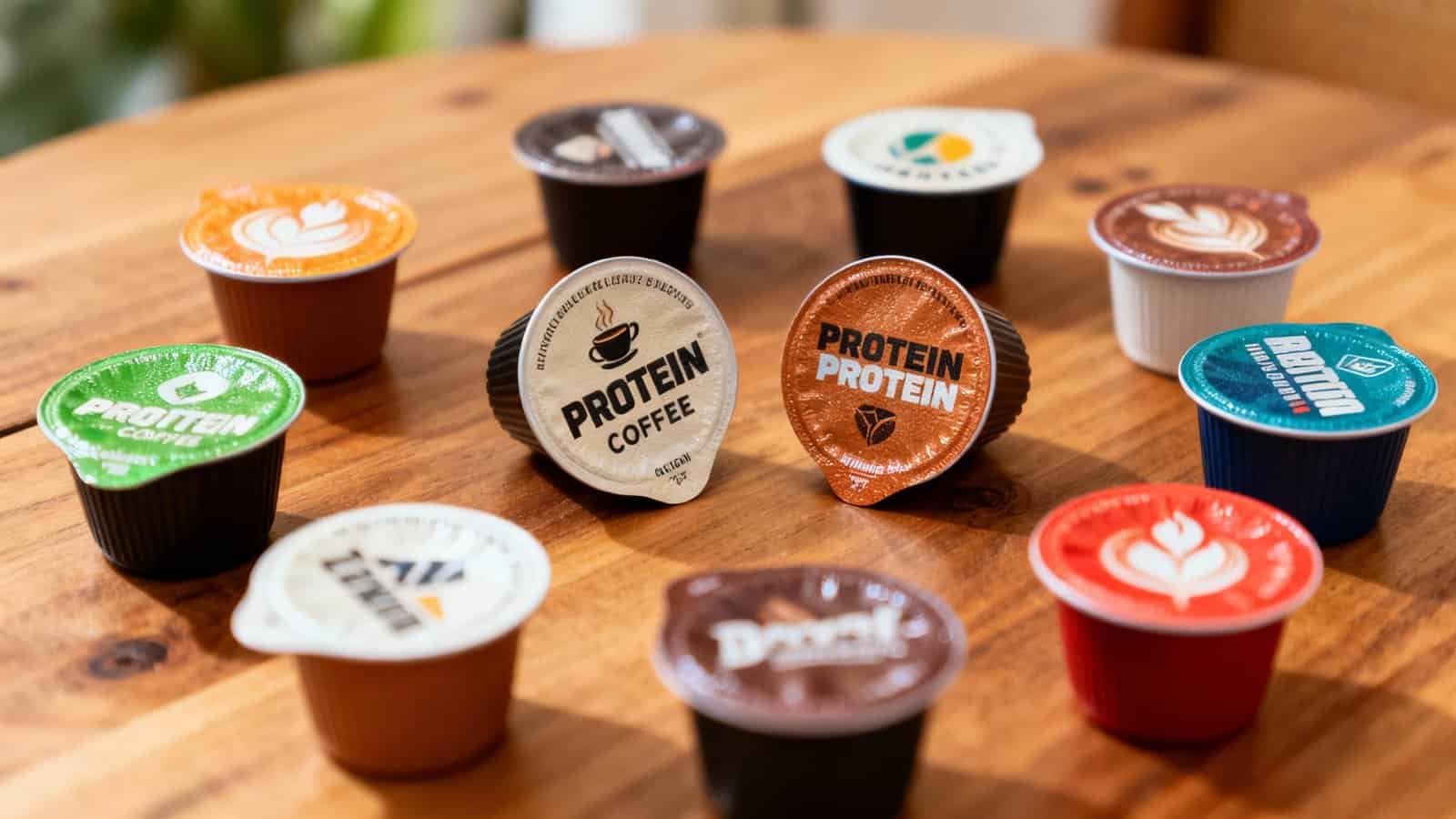
You’ll find protein coffee pods ranging from 10-20 grams of protein per serving, with Chike leading at 20g while Protein2o offers the cheapest option at $1.50 per pod. Premium brands deliver smooth, creamy textures similar to regular lattes, but budget options often turn gritty and chalky within minutes. Watch for hidden sugars in vanilla and mocha flavors that pack 8-10 grams, and check ingredient lists for unnecessary fillers like maltodextrin that can affect both taste and nutrition.
Table of Contents
Key Takeaways
- Chike leads with 20g of protein per pod, while JOCOfe offers 15g of whey isolate, and Super Coffee provides 10g plus vitamins.
- Premium brands deliver smooth, creamy textures, but budget options often have gritty sediment and chalky aftertaste that worsens as coffee cools.
- Most pods contain 10-20g of protein and 80-150 calories, with vanilla and mocha flavors adding 8-10g of hidden sugars.
- Protein2o Coffee Pods cost $1.50 per serving (cheapest), while Kitu Super Coffee reaches $3.00 per pod (most expensive).
- Chike excels in chocolate flavor, Super Coffee shines in vanilla and mocha varieties, and JOCOfe balances taste with nutrition.
Best Protein Coffee Pods: Brand Comparison and Rankings
When you’re searching for protein coffee pods that deliver both nutrition and flavor, the market offers several standout options worth your consideration. Leading brand comparisons reveal that Chike ranks highest for protein content at 20g per pod, while Super Coffee provides 10g with added vitamins. JOCOfe balances taste and nutrition with 15g of whey protein isolate.
Price rankings show significant variation across brands. Budget-friendly options like Protein2o Coffee Pods cost $1.50 per serving, while premium choices like Kitu Super Coffee reach $3.00. Mid-range performers include BuzzFit at $2.25 and High Brew Protein at $2.00 per pod.
You’ll find the best value in multipacks from Chike and JOCOfe, offering 20-30% savings. For taste preferences, Super Coffee excels in vanilla and mocha varieties, while Chike’s chocolate flavor consistently rates highest. Consider your priorities: maximum protein, best taste, or optimal pricing when making your selection.
Taste Test Results: From Smooth Blends to Chalky Disasters
Beyond protein content and pricing, the actual drinking experience can make or break your morning routine. You’ll notice immediate texture contrast between premium and budget protein coffee pods. While top-tier brands deliver smooth, creamy consistencies that rival regular lattes, cheaper alternatives often leave you with gritty sediment and an unpleasant mouthfeel.
Temperature affects flavor stability significantly. You might find that some pods taste perfectly balanced when hot but develop a metallic aftertaste as they cool. Others maintain their chocolate or vanilla notes throughout your entire cup. The worst offenders turn chalky within minutes, coating your mouth with a powdery film that no amount of stirring can fix.
Your best bet? Test pods at different temperatures before committing to bulk purchases. You’ll quickly identify which brands dissolve completely versus those that clump at the bottom, ruining your last few sips with protein chunks.
Nutritional Breakdown: Protein Content, Calories, and Hidden Ingredients
Beneath the marketing promises on every protein coffee pod package, you’ll find wildly varying nutritional profiles that demand careful scrutiny. Most pods deliver 10-20 grams of protein, but you’ll need to examine the amino profile to determine actual quality. Whey-based options offer superior protein bioavailability compared to plant alternatives, though they’re not suitable if you’re lactose intolerant.
You’ll discover hidden sugars lurking in “vanilla” and “mocha” flavors, sometimes reaching 8-10 grams per pod. Many brands substitute artificial sweeteners like sucralose or stevia, which might leave you with an unpleasant aftertaste. Calorie counts range from 80 to 150 per serving, with added MCT oils and creamers driving up the numbers.
Check the ingredient list for unnecessary fillers, thickeners, and preservatives. You’re paying premium prices for protein and coffee—not maltodextrin or guar gum. The cleanest options contain just coffee, protein powder, and natural flavoring.
Frequently Asked Questions
Are Protein Coffee Pods Compatible With Nespresso or Keurig Machines?
You’ll find most protein coffee pods work with Keurig machines directly, while Nespresso compatibility varies by brand.
Some manufacturers design pods specifically for Nespresso’s unique system, but they’re less common.
If you’ve got a Nespresso machine, look for brands offering Nespresso-specific options.
For maximum flexibility, you can buy Keurig adapters that let you use various pod types.
Always check the packaging to confirm your machine’s compatibility before purchasing protein pods.
How Long Do Protein Coffee Pods Stay Fresh After Opening?
You’ll typically have 3-6 months of optimal shelf life once you’ve opened protein coffee pods.
Store them in an airtight container away from heat and moisture to prevent oxidation effects that can degrade both protein quality and coffee taste.
For best flavor preservation, keep pods in a cool, dark pantry and use within two months.
Don’t refrigerate them – condensation can ruin the pods’ brewing mechanism and compromise freshness.
Can I Drink Protein Coffee Pods While Pregnant or Breastfeeding?
You should consult your healthcare provider before drinking protein coffee pods during pregnancy or breastfeeding.
While proteins are generally safe, caffeine intake needs monitoring – experts recommend limiting it to 200mg daily for pregnancy safety.
Your doctor can provide personalized breastfeeding guidance based on the specific ingredients in your chosen pods. They’ll consider the protein source, caffeine content, and any additives that might affect your baby’s development or nursing experience.
Do Protein Coffee Pods Break a Fast During Intermittent Fasting?
Yes, protein coffee pods will break your fast. They typically contain 50-150 calories and 10-15 grams of protein, exceeding most calorie thresholds for fasting (usually 0-50 calories).
The protein content triggers an insulin response, which disrupts autophagy and the metabolic benefits you’re seeking from fasting. If you’re following strict intermittent fasting protocols, you’ll want to save these pods for your eating window rather than consuming them during fasting periods.
Where Can I Buy Protein Coffee Pods Locally or Online?
You’ll find protein coffee pods at major grocery stores like Whole Foods, Target, and Walmart in their health food aisles.
Specialty cafes and nutrition shops often carry premium brands.
Online, you’ve got Amazon‘s vast selection, plus direct-to-consumer sites from brands like Chike, VitaCup, and Bulletproof.
Check GNC’s website for exclusive varieties.
Many companies offer subscription discounts when you order directly from their sites, making online shopping your most cost-effective option.
Conclusion
You’ve got plenty of options when it comes to protein coffee pods, but not all deliver on taste and nutrition. While some brands nail the smooth coffee flavor with 15+ grams of protein, others fall flat with chalky textures and artificial ingredients. Your best bet? Stick with top-rated brands that balance real coffee taste with clean protein sources. Check those nutrition labels carefully – you’ll want minimal sugar and no unnecessary fillers for your morning boost.


No Comments