
What Are the Best Foods to Eat Before Morning Workout?
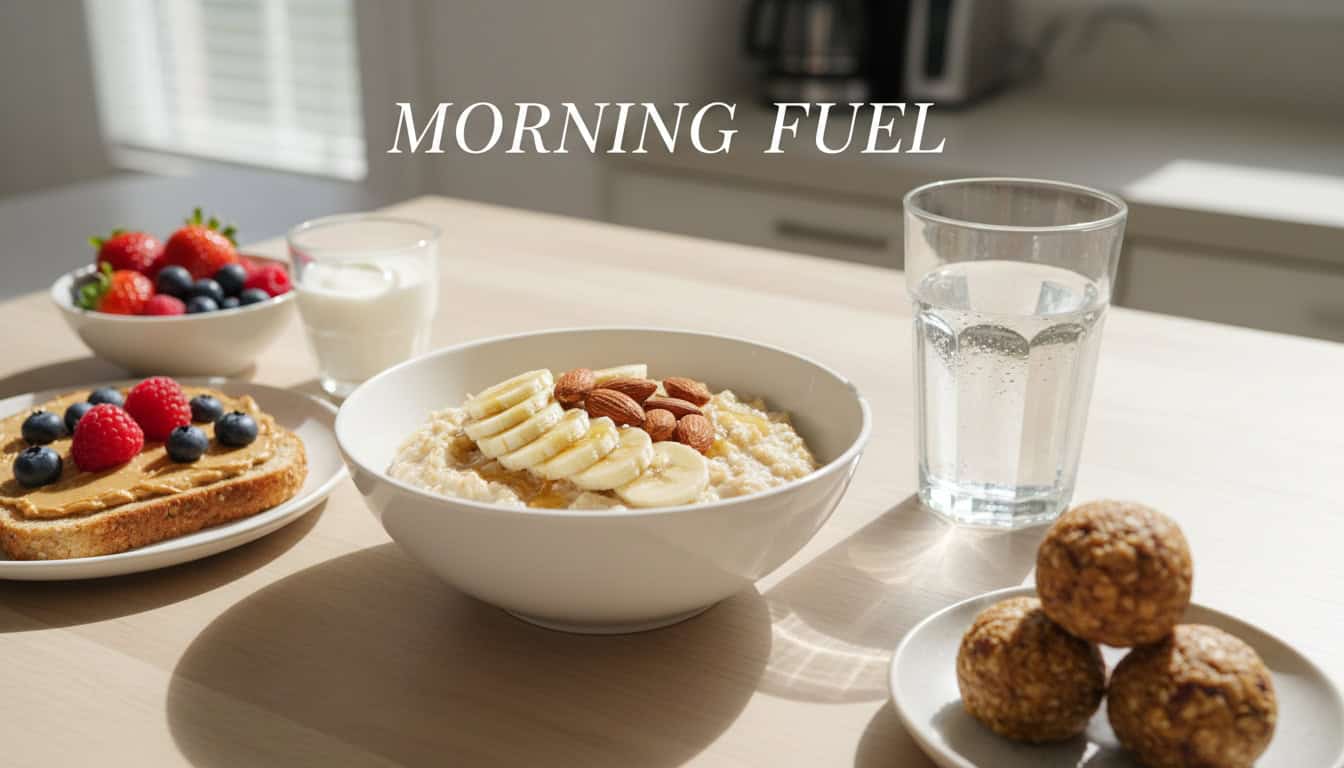
Fuel your early‑morning workout with a quick‑digest carb and lean protein combo: whole‑grain toast topped with almond butter and banana slices, a Greek‑yogurt‑berry smoothie with whey, or a small bowl of oatmeal mixed with protein powder and berries. Keep the snack under 300 kcal, sip 200‑300 ml of water (add a pinch of salt or a modest caffeine boost if you need extra alertness), and aim for a 3:1–4:1 carb‑to‑protein ratio. This will give you steady energy and prevent mid‑set crashes, and the next sections will show you how to fine‑tune timing, portion sizes, and hydration for optimal performance.
Table of Contents
Best Pre‑Workout Breakfasts for Early‑Morning Energy
Ever wonder what to eat before that sunrise sprint? You need a bite that fuels fast without weighing you down. Grab a slice of whole‑grain toast topped with almond butter and banana slices; the carbs spark glycogen, while the healthy fat and potassium keep muscles firing.
A quick oatmeal bowl mixed with a scoop of protein powder, berries, and a drizzle of honey gives steady energy and antioxidants to fight oxidative stress. If you’re pressed for time, blend a smoothie with Greek yogurt, spinach, frozen mango, and a splash of oat milk—creamy, protein‑rich, and loaded with vitamins.
A hard‑boiled egg paired with a handful of raisins offers a compact combo of protein and quick carbs. Finally, consider a small cup of cottage cheese with sliced peaches; the casein protein sustains you through the early‑morning grind while the fruit supplies a gentle sugar lift. Choose one of these balanced options, and you’ll hit the pavement feeling strong and steady.
When to Eat Before a 6 AM or 9 AM Workout?
“When should you eat before a 6 AM or 9 AM workout? Aim to finish a light, balanced snack 30–60 minutes before you start moving. If you’re up at 5:30 AM for a 6 AM session, a quick bite of a banana with a spoonful of almond butter gives carbs and a touch of protein without feeling heavy.
For a 9 AM workout, you have more flexibility; a small bowl of oatmeal topped with berries works well 45 minutes ahead. The key is to avoid a full‑stomach feeling while still supplying enough glucose for your muscles.
If you’re sensitive to early‑morning digestion, keep the portion modest—about 150–200 kcal—and choose easily digestible foods. Hydration matters too; sip water alongside your snack. Adjust timing based on how your body reacts, but generally, a half‑hour to an hour before training hits the sweet spot.”
Pick Quick‑Digest Carbs to Power Your First 30 Minutes
You’ll want fast‑acting carbs that won’t weigh you down, so reach for simple starches like a slice of toast or a banana.
Low‑fiber fruits such as berries give a quick sugar spike without digestive lag.
A warm bowl of quick oatmeal adds steady energy for the first half hour of your workout.
Simple Starches
Looking to boost your first 30 minutes of exercise? Simple starches give you rapid, easy‑to‑digest energy without weighing you down. Choose foods that raise blood glucose quickly, then taper off so you avoid a crash mid‑session. Pair them with a little protein or healthy fat for sustained stamina, but keep the portion modest—your stomach’s still waking up.
- A half‑cup of cooked white rice topped with a drizzle of honey
- A slice of toasted sourdough bread spread with a thin layer of almond butter
- A small bowl of plain instant oatmeal mixed with a splash of maple syrup
These options flood your muscles with glucose, priming you for a strong start and keeping focus sharp through the first half hour.
Low‑Fiber Fruits
Choose a banana for potassium and a smooth texture that’s easy to swallow, pair a peeled apple with a hint of natural sweetness, or slice mango for a burst of vitamin C. These fruits digest in under 20 minutes, so you won’t experience sluggishness or cramping.
Pack them in a portable container, eat them 15–30 minutes before you start, and let the quick carbs fuel your sprints, lifts, or cardio without weighing you down.
Quick Oatmeal Boost
Ever wondered how a bowl of hot oatmeal can jump‑start your workout? You’ll feel the gentle rise of blood sugar within minutes, giving you steady energy for the first 30 minutes of cardio or strength. The warm grains digest quickly, especially when you add a splash of milk and a pinch of cinnamon, so you avoid the crash that heavy meals cause. Pair it with a handful of berries for antioxidants, and you’ve got a balanced, light pre‑exercise snack that fuels muscles without weighing you down.
- ½ cup rolled oats + ¾ cup almond milk, cooked to creamy perfection.
- 1 Tbsp honey drizzled over the top for rapid carbs.
- ¼ cup fresh blueberries scattered for flavor and antioxidants.
Choose 30‑40 g Lean Protein for Muscle Readiness
Pick a lean protein like Greek yogurt, egg whites, or turkey and aim for 30‑40 g.
Mix it with complex carbs such as oats or whole‑grain toast to sustain energy.
Eat it 60–90 minutes before you start so digestion is complete and your muscles are ready.
Choose Lean Protein Sources
A solid pre‑workout meal should include about 30‑40 g of lean protein to prime your muscles. Pick sources that digest quickly and deliver high‑quality amino acids without excess fat. Chicken breast, turkey slices, and low‑fat Greek yogurt each pack the right protein punch while keeping calories in check. Pair them with a splash of lemon or herbs for flavor, and you’ll feel energized without a heavy stomach. Remember, timing matters—aim to eat 30–60 minutes before you start moving so nutrients hit your bloodstream just as your workout begins.
- Grilled chicken breast, seasoned with rosemary
- Turkey breast slices rolled around cucumber sticks
- Low‑fat Greek yogurt topped with a drizzle of honey
Pair With Complex Carbohydrates
Why pair your lean protein with complex carbs? Complex carbohydrates release glucose slowly, sustaining energy throughout your workout while protein fuels muscle repair. Aim for 30‑40 g of lean protein—like Greek yogurt, egg whites, or turkey—plus a cup of oatmeal, sweet potato, or whole‑grain toast. The carbs replenish glycogen stores, preventing early fatigue, and the protein supplies amino acids for muscle synthesis. Together they stabilize blood sugar, curb cravings, and support endurance. Choose low‑glycemic options to avoid a spike‑crash cycle.
Mix a scoop of protein powder into a banana‑rich smoothie, or spread almond butter on a slice of multigrain bread. This balanced combo read you feel alert, powered, and ready to tackle any intensity.
Time Intake for Digestion
Pairing protein with complex carbs sets the stage, but timing matters just as much. You want 30‑40 g of lean protein to be digested enough for muscle readiness without feeling heavy. Aim to eat this protein 60–90 minutes before you hit the gym; that window lets enzymes break down amino acids and glucose levels stabilize. If you’re short on time, a smaller 20‑g serving 30 minutes prior can still boost performance, but avoid larger portions right before exercise to prevent sluggishness. Remember, hydration supports digestion, so sip water alongside your snack.
- Greek yogurt with berries – creamy, quick‑absorbing protein.
- Egg white omelet with spinach – lean, low‑fat, easy on the stomach.
- Cottage cheese and sliced banana – smooth, balanced, and ready in minutes.
Ideal Carb‑to‑Protein Ratio for Sustained Power
Ever wonder how the right carb‑to‑protein mix can keep you powered through a morning sweat session? Aim for a 3:1 to 4:1 ratio—three to four parts carbs for every part protein. This balance supplies quick‑acting glucose while providing amino acids that curb muscle breakdown. Choose easily digestible carbs like a banana, oatmeal, or a slice of toast, and pair them with a modest protein source such as Greek yogurt, a boiled egg, or a scoop of whey. The carbs replenish glycogen stores, fueling high‑intensity bursts, while protein supports muscle repair and steadies blood sugar, preventing the crash mid‑set. If you’re training for longer than an hour, tilt toward the higher end of the range (4:1) to sustain endurance. Adjust portions based on body size and workout intensity, but keep the total snack under 300 kcal to avoid sluggishness. Consistently hitting this ratio will make your morning workouts feel smoother and more powerful.
Optimize Pre‑Workout Breakfast Hydration (Water, Electrolytes, Caffeine)
How much water should you sip before a sunrise sweat? You need enough fluid to start the day hydrated but not so much that you feel bloated. Aim for 200–300 ml of room‑temperature water 15–30 minutes before you begin. If you sweat heavily, add a pinch of sea salt or a sports drink with electrolytes to replace sodium and potassium. A modest caffeine boost—about 50 mg (a small cup of coffee or tea)—can sharpen focus and increase endurance, but keep it under 100 mg to avoid jitters. Drink slowly, letting each sip settle, and give your stomach time to absorb before you start moving.
- Clear water – a glass of 200 ml, gently sipped.
- Electrolyte splash – a pinch of salt or a light sports drink mixed in.
- Caffeine kick – a half‑cup of coffee or tea, delivering ~50 mg.
Low‑Calorie Pre‑Workout Snacks (≤200 kcal) to Add to Your Breakfast
What’s the best way to fuel a sunrise sweat without blowing your calorie budget? Grab a handful of berries mixed with a tablespoon of Greek yogurt—about 120 kcal, plus protein and antioxidants. A small banana sliced onto a rice cake delivers quick carbs and potassium for under 150 kcal. Try a hard‑boiled egg paired with a few cucumber sticks; the egg gives satiety‑ the veggies add crunch for roughly 130 kcal.
Spread a teaspoon of almond butter on a slice of whole‑grain toast, keeping it under 200 kcal while supplying healthy fats and a modest protein boost. Finally, blend ¼ cup of cottage cheese with a dash of cinnamon and a few sliced strawberries for a creamy snack that stays under 180 kcal. These options slip easily into your morning routine, give you steady energy, and keep your calorie count in check before you hit the gym.
5‑Minute Pre‑Workout Breakfast Recipes for Busy Mornings
Ready to power up your morning in under a minute? You can fuel your workout with simple, nutrient‑dense combos that require almost no prep. Grab a bowl, a spoon, and a few staples, then mix, match, and bite your way to energy without delaying your cardio or strength session. The key is balancing quick carbs, protein, and a touch of healthy fat to sustain power and prevent mid‑set crashes.
- Greek yogurt & honey drizzle – Spoon ¾ cup plain Greek yogurt into a cup, swirl in a teaspoon of honey, and sprinkle a handful of chia seeds. The yogurt supplies protein, honey offers rapid glucose, and chia adds omega‑3s and fiber.
- Banana‑peanut butter toast – Spread one tablespoon natural peanut butter on a slice of whole‑grain bread, top with sliced banana, and dust with cinnamon. The bread’s complex carbs, banana’s potassium, and peanut butter’s protein keep you steady.
- Oat‑berry smoothie – Blend ¼ cup rolled oats, ½ cup frozen berries, a splash of almond milk, and a scoop of whey protein. This drink delivers carbs, antioxidants, and muscle‑building protein in seconds.
Frequently Asked Questions
Do I Need to Eat if I’M Fasting Before a Morning Workout?
Yes, you should eat something if you’re fasting before a morning workout; a light snack like a banana or a protein shake fuels your muscles, steadies blood sugar, and improves performance.
How Does My Blood Type Affect Pre‑Workout Food Choices?
Your blood type doesn’t dictate specific pre‑workout foods; focus on carbs, protein, and hydration. Choose easily digestible options like a banana with nut butter, oatmeal, or a smoothie to fuel your session.
Can I Use Protein Bars Instead of Whole Foods for Pre‑Exercise Fuel?
You can swap protein bars for whole foods, but choose bars with balanced carbs, protein, and minimal added sugars; they’ll fuel you quickly, though whole foods often provide steadier, longer‑lasting energy.
What’s the Best Pre‑Workout Snack for a Vegan Who Avoids Dairy?
You’ll love a banana with almond butter and a sprinkle of chia seeds; it delivers carbs, healthy fats, and plant protein, keeping you energized without dairy.
Should I Adjust My Pre‑Workout Intake on Rest Days?
Yes, you should lower carbs and calories on rest days, focusing on protein and healthy fats to support recovery. Skip heavy carbs, keep portions modest, and stay hydrated without over‑eating.
Conclusion
By timing your breakfast right, picking quick‑digest carbs, and adding 30‑40 g of lean protein, you’ll fuel those early‑morning sessions without feeling heavy. Keep the carb‑to‑protein ratio balanced, stay hydrated with water, electrolytes, or a splash of caffeine, and snack on low‑calorie options if you need a boost. These simple, 5‑minute recipes give you sustained power, so you can crush every 6 AM or 9 AM workout feeling strong and focused.


Sorry, the comment form is closed at this time.