
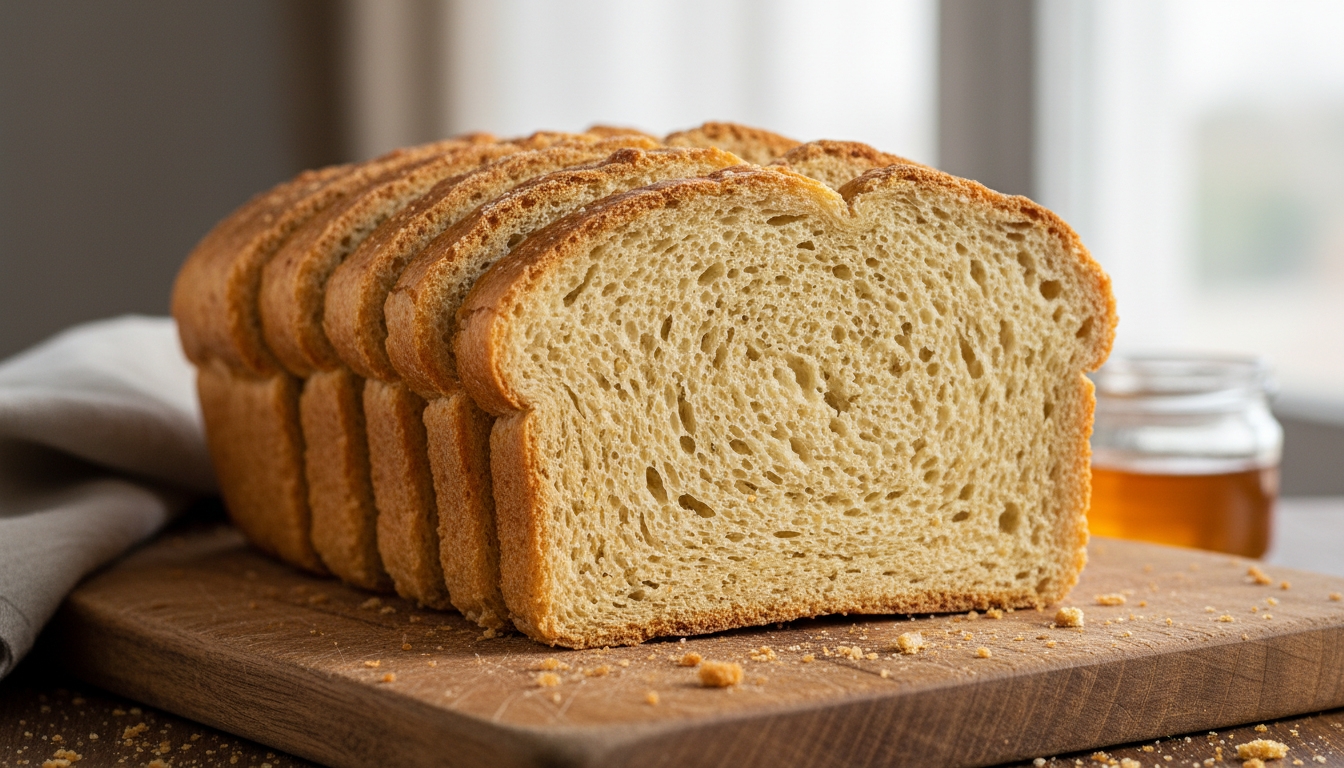
Recreating the soft, sliceable texture of wheat bread can be a challenge when baking gluten-free. The key is balancing alternative flours, binders like xanthan gum, and proper kneading and rising techniques. With the right ingredients and method, you’ll get a bakery-worthy gluten-free loaf you can slice thin and enjoy. And if you’d like to learn more about mastering gluten-free bread baking, keep reading.
Table of Contents
Key Takeaways
- Achieve a bakery-soft texture in gluten-free bread by balancing alternative flours, binders, and leavening agents to recreate the structure and chew of wheat bread.
- Use gluten-free flour, eggs, and a binding agent like xanthan gum or psyllium husk to develop the right consistency for slicing thin, soft gluten-free bread.
- Carefully combine wet and dry ingredients, avoiding overmixing, and properly activate the starches in the flour through kneading and proofing.
- Bake the gluten-free bread at 350°F (175°C) for 50-60 minutes, checking for doneness with a toothpick, and allow it to cool completely before slicing.
- Slice the cooled gluten-free bread approximately 1/2 inch thick using a serrated knife, and store leftovers in an airtight container or freeze for later use.
What Is Gluten-Free Bread and Why It’s Challenging to Make
Although gluten-free bread may seem like a simple alternative to traditional wheat-based bread, it’s actually quite challenging to make. You see, gluten, the protein found in wheat, rye, and barley, is what gives bread its structure, chewiness, and ability to rise. Without gluten, gluten-free bread can easily become dense, crumbly, and difficult to slice. Recreating that texture and functionality requires a careful balance of alternative flours, binders, and leavening agents. It’s a delicate process that can be tricky to master. Additionally, gluten-free bread often lacks the same depth of flavor as its wheat-based counterpart. Achieving a satisfying taste and texture in gluten-free bread is an ongoing challenge for bakers and home cooks alike.
Key Ingredients for Bakery-Soft Gluten-Free Bread
To achieve that coveted bakery-soft texture in gluten-free bread, you’ll need to carefully select your ingredients. The key players are gluten-free flour, eggs, and a binding agent.
| Ingredient | Purpose |
|---|---|
| Gluten-free flour | Provides structure and mimics the chew of traditional bread |
| Eggs | Adds moisture, richness, and helps bind the dough |
| Binding agent (e.g., xanthan gum, psyllium husk) | Replaces the gluten and prevents crumbling |
Additionally, activating the starches in the flour through kneading and letting the dough rise properly are crucial steps. With the right ingredient combination and technique, you can create gluten-free bread that’s soft, sliceable, and indistinguishable from its wheat-based counterpart.
Step-by-Step Instructions for Baking Gluten-Free Bread
Gather your ingredients and preheat the oven to 350°F (175°C). You’re ready to bake your gluten-free bread!
- Grease a 9×5-inch loaf pan and set it aside.
- In a large bowl, whisk together the dry ingredients: gluten-free flour, baking powder, salt, and any additional seasonings.
- In a separate bowl, combine the wet ingredients: eggs, milk or milk alternative, oil, and honey or maple syrup.
- Carefully pour the wet ingredients into the dry ingredients and mix until just combined, being careful not to overmix.
Transfer the batter to the prepared loaf pan and bake for 50-60 minutes, until a toothpick inserted into the center comes out clean. Allow the bread to cool in the pan for 10 minutes before removing it to a wire rack to cool completely.
Tips for Slicing and Serving Gluten-Free Bread
How do you slice and serve your freshly baked gluten-free bread? First, let it cool completely before slicing. Gluten-free bread is more delicate, so use a serrated knife and saw gently to avoid crumbling. Slice it thin, about 1/2-inch thick, for optimal texture and ease of handling. Toast the slices for a crisper bite or enjoy them plain. Top with your favorite spreads, sandwiches, or serve as an accompaniment to soups and stews. Store any leftover slices in an airtight container at room temperature for up to 3 days. For longer storage, slice and freeze the bread, then thaw individual slices as needed. With these simple tips, you can savor the soft, bakery-style texture of your homemade gluten-free bread.
Frequently Asked Questions
Can I Substitute Regular Flour for Gluten-Free Flour?
No, you can’t substitute regular flour for gluten-free flour in this recipe. Gluten-free flours have a different texture and composition than regular flour, so they won’t produce the same results.
Trying to use regular flour would likely result in a dense, crumbly bread that doesn’t have the soft, sliceable texture the recipe is aiming for.
How Long Does Gluten-Free Bread Last on the Counter?
Gluten-free bread typically lasts on the counter for 3-5 days. Its shelf life is shorter than traditional bread due to the lack of gluten, which acts as a natural preservative. To extend its freshness, you can store the bread in an airtight container or wrap it tightly in plastic. Refrigeration may also help, but it can dry out the bread faster. Proper storage is key to enjoying your gluten-free loaf for as long as possible.
Can I Freeze Gluten-Free Bread for Later Use?
Yes, you can absolutely freeze gluten-free bread for later use. It’s a great way to extend its shelf life. Simply wrap the loaf tightly in plastic wrap or foil, then place it in a freezer-safe bag or container. The bread will keep for up to 3 months in the freezer. When you’re ready to enjoy it, thaw it at room temperature before slicing and serving.
Does Gluten-Free Bread Taste the Same as Regular Bread?
No, gluten-free bread doesn’t taste exactly the same as regular bread. It has a different texture and flavor profile. Gluten-free breads are often denser, chewier, and can have a slightly gritty or nutty taste. The absence of gluten, which provides structure and elasticity, affects the overall taste and mouthfeel. However, with the right recipe and ingredients, you can create gluten-free breads that are surprisingly close to their wheat-based counterparts.
What Are the Health Benefits of Eating Gluten-Free Bread?
Eating gluten-free bread can provide several health benefits. It’s an excellent choice for individuals with celiac disease or gluten intolerance, as it eliminates the harmful effects of gluten. Gluten-free bread is often made with alternative grains, which can be higher in fiber and nutrients. Additionally, it may be easier to digest, reducing digestive discomfort. Ultimately, incorporating gluten-free bread into your diet can support your overall health and well-being, especially if you have specific dietary requirements.
Conclusion
You’ve now got the recipe for baking soft, sliceable gluten-free bread. Remember to use the right ingredients and follow the instructions closely. With a bit of practice, you’ll be enjoying delicious homemade gluten-free bread in no time. Slice it thin and serve it up however you like – you deserve bakery-worthy gluten-free bread, and now you can make it yourself.


No Comments