
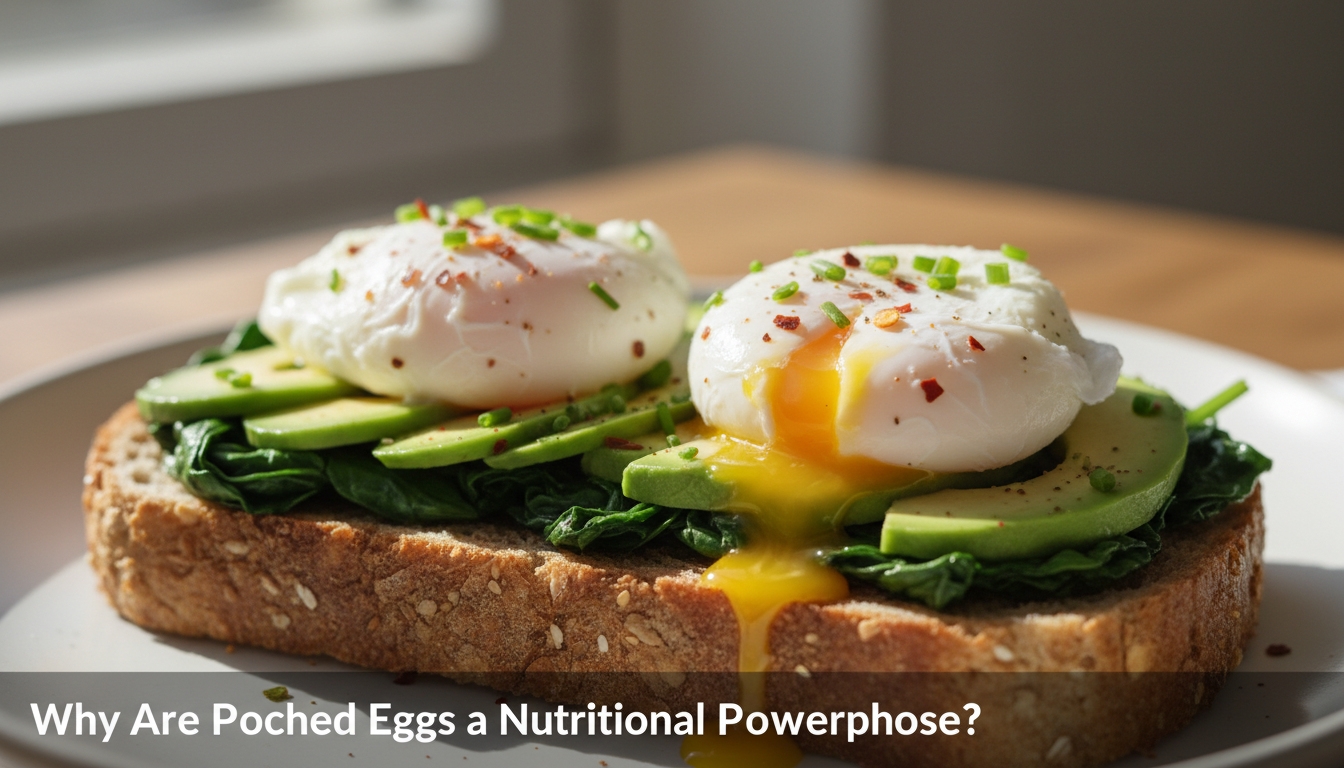
Poached eggs give you high‑quality, complete protein—about 6 g per egg—with all nine essential amino acids, especially leucine, which jump‑starts muscle synthesis. Their gentle cooking locks in fat‑soluble vitamins A, D, E, K and B‑complex nutrients, plus minerals like selenium and zinc, while keeping calories low (≈70 kcal) and fat modest. This combo boosts satiety, steadies blood sugar, and supports recovery without adding excess calories. Want to see how to fit them into meals and balance your daily intake?
What Makes Poached Eggs a Nutritional Powerhouse?
Ever wonder why poached eggs pack such a nutritional punch? You get a perfect blend of high‑quality protein, essential vitamins, and minerals—all without added fat. The gentle cooking method keeps the yolk’s delicate nutrients intact, while the white supplies clean, digestible protein. You also absorb vitamins A, D, E, and K, plus B‑complex vitamins that support energy metabolism. Minerals like selenium, phosphorus, and zinc boost immune function and bone health. Because you’re not scrambling in butter or oil, the calorie count stays low, making poached eggs a dense source of nutrients per calorie. The bioavailability of these nutrients is high, so your body can use them efficiently. In short, the combination of intact proteins, vitamins, and minerals, plus minimal added fat, turns a simple poached egg into a compact, nutrient‑rich powerhouse for any diet.
How Protein and Essential Amino Acids in Poached Eggs Support Muscle Health
You get a high‑quality complete protein that supplies all essential amino acids in one serving. Those amino acids trigger muscle‑repair pathways and fuel growth after workouts. That’s why poached eggs become a convenient, lean boost for your muscle health.
High‑Quality Complete Protein
Poached eggs deliver a high‑quality complete protein, supplying all nine essential amino acids your muscles need to repair and grow. You’ll find roughly 6 grams of protein per egg, and the protein’s biological value ranks among the highest of animal foods.
Because the egg’s protein is fully digestible, your body absorbs it quickly, delivering amino acids right when you need them—whether after a workout or during a busy day.
The balanced amino‑acid profile supports muscle protein synthesis, helping you maintain lean mass and recover faster.
Plus, the cooking method preserves the protein’s structure, avoiding the denaturation that can occur with over‑cooking.
Incorporating poached eggs into meals gives you a reliable, convenient source of premium protein without excess fat or carbs.
Essential Amino Acid Profile
What makes poached eggs a muscle‑building ally is their complete, balanced essential amino acid (EAA) profile. You’ll find all nine EAAs—leucine, isoleucine, valine, lysine, methionine, phenylalanine, threonine, tryptophan, and histidine—present in proportions that match human needs.
Leucine, the key trigger for protein synthesis, peaks at about 0.9 g per large egg, while the others support neurotransmitter production, hormone balance, and tissue repair.
Because the egg’s protein is fully digestible, your body absorbs these amino acids quickly, delivering a steady stream to muscles during and after a workout.
This synergy between quantity and quality means you can rely on poached eggs for efficient, natural muscle support without extra supplementation.
Muscle Repair & Growth Support
Ever wonder why recovery feels faster after a post‑workout meal that includes poached eggs? You’re getting high‑quality protein and a full suite of essential amino acids that jump‑start muscle repair. Each egg supplies about 6 g of protein, rich in leucine, isoleucine, and valine—key drivers of muscle protein synthesis. The bioavailability is high, so your body can absorb and use them quickly, reducing downtime and supporting growth. Pairing poached eggs with carbs further spikes insulin, ferrying amino acids into fibers when you need them most.
| Nutrient | Approx. Amount per Egg |
|---|---|
| Protein | 6 g |
| Leucine | 0.5 g |
| Vitamin D | 1 µg |
Why Poached Eggs Keep You Full Without Overeating?
You’ll feel satisfied because poached eggs pack low‑calorie density with high‑quality protein that curbs hunger.
The protein digests slowly, keeping blood‑sugar levels steady and preventing cravings.
Meanwhile, the modest amount of healthy fat adds lasting satiety without excess calories.
Low‑Calorie Density
Ever wonder why a single poached egg can curb cravings? You’ll discover that its low‑calorie density lets you eat a satisfying portion without loading up on calories.
A large poached egg contains about 70 kcal, yet its volume feels larger because the whites are mostly water and protein, while the yolk adds creamy richness. This high‑water, high‑protein mix expands in your stomach, signaling fullness to your brain.
Because you’re not ingesting dense fats or sugars, blood‑sugar spikes stay minimal, keeping hunger at bay longer.
Pair it with a handful of greens or a slice of whole‑grain toast, and you’ll stay satiated through mid‑morning without exceeding your calorie budget.
High‑Quality Protein
A poached egg delivers high‑quality protein that signals satiety faster than most snacks. You’ll notice the protein’s complete amino‑acid profile hits your muscles and brain quickly, curbing cravings before they start. Because the egg’s protein is easily digested, it raises blood‑amino‑acid levels, which triggers hormones like GLP‑1 and PYY that tell your stomach it’s full. That means you can enjoy a satisfying breakfast without piling on extra calories, keeping energy steady until lunch.
| Nutrient | Approx. Amount per Egg |
|---|---|
| Protein | 6 g |
| Essential Amino Acids | 9 |
| Calories | 68 |
| Fat | 5 g |
| Cholesterol | 186 mg |
Slow‑Digesting Fats
Why do the modest fats in a poached egg keep you satisfied longer? You’ll notice the fat is mostly monounsaturated and polyunsaturated, which digests slowly and steadies blood sugar. This gradual release fuels you past the mid‑morning dip, curbing cravings before they start. When you pair the egg’s fat with its protein, the combo slows gastric emptying, extending satiety without excess calories.
- Monounsaturated fats (oleic acid) linger in the bloodstream, promoting fullness.
- Polyunsaturated omega‑3s modulate appetite hormones, reducing hunger signals.
- The egg’s natural emulsification aids nutrient absorption, keeping energy steady.
Do Poached Eggs Lose More Nutrients Than Fried or Boiled Eggs?
How much nutrient loss actually occurs when you poach an egg compared to frying or boiling it? You’ll find that poaching retains most vitamins and minerals because the egg never contacts hot oil and spends only a few minutes in gentle water. Vitamin B‑12 and riboflavin drop less than 5 % in poached eggs, while boiled eggs lose a similar amount of water‑soluble vitamins. Fried eggs, however, can lose up to 10 % of these vitamins due to higher temperatures and longer exposure. The main difference lies in fat content: poaching adds no fat, so you keep the egg’s natural lipid profile, whereas frying adds oil that can oxidize and alter nutrient quality. Protein denaturation is comparable across all methods; the heat‑induced change in amino acids is minimal. Overall, poached eggs preserve nutrients as well as, if not better than, boiled eggs and outperform fried eggs in vitamin retention and fat stability.
Practical Tips for Adding Poached Eggs to a Balanced Diet
Wondering how to make poached eggs fit seamlessly into your meals? You can boost protein, healthy fats, and micronutrients without overcomplicating your plate. Start by pairing a poached egg with whole‑grain toast, avocado, or a leafy salad for balanced macros. Use the egg’s runny yolk as a natural dressing—no extra sauces needed. Swap sugary breakfasts for a savory egg‑on‑grain combo, and you’ll stay fuller longer while keeping blood sugar steady.
- Add a poached egg to a quinoa bowl with roasted vegetables and a drizzle of olive oil for a complete lunch.
- Top a mixed‑green salad with a poached egg, cherry tomatoes, and a sprinkle of nuts for extra protein and crunch.
- Replace processed cheese in a whole‑grain wrap with a poached egg, hummus, and cucumber slices for a lighter, nutrient‑dense dinner.
These simple swaps let you enjoy poached eggs daily while maintaining a balanced, varied diet.
How Many Poached Eggs Should You Eat Each Day?
Ever wondered how many poached eggs you can safely include in your daily routine? You can enjoy one to two eggs a day without overloading on cholesterol, especially if you pair them with fiber‑rich veggies or whole‑grain toast. Each egg supplies about 70 mg of cholesterol, so staying under 300 mg total daily cholesterol is a common guideline; two poached eggs keep you comfortably within that limit. If you have heart‑healthy concerns or a family history of high cholesterol, aim for a single egg and balance the rest of your protein with legumes, fish, or lean meat. Active individuals who need extra protein may stretch to three eggs occasionally, but monitor your overall saturated‑fat intake and keep saturated fat below 10 % of total calories. Remember, the key is moderation and pairing eggs with a varied diet that includes plenty of vegetables, fruits, and whole grains.
Frequently Asked Questions
Do Poached Eggs Affect Cholesterol Levels Differently Than Other Cooking Methods?
Poached eggs don’t add extra fat, so they generally raise cholesterol less than fried or buttery‑cooked eggs. You’ll get the same protein and nutrients, but with fewer added saturated fats that can spike cholesterol.
Can Poached Eggs Be Safely Stored and Reheated Without Nutrient Loss?
You can store poached eggs in the fridge for up to two days and reheat them gently; most nutrients stay intact, though a slight loss of heat‑sensitive vitamins may occur.
Are Poached Eggs Suitable for People With Egg Allergies?
You can’t eat poached eggs if you’re allergic to eggs; the cooking method doesn’t change the proteins that trigger reactions, so they’ll still cause the same immune response as any other egg preparation.
What Is the Environmental Impact of Poached Eggs Compared to Other Egg Preparations?
You’ll find poached eggs have the lowest carbon footprint among egg dishes because they require no oil or butter, reducing energy use and waste; steaming or boiling consumes less power than frying.
Do Poached Eggs Provide Any Unique Antioxidants Not Found in Raw or Cooked Eggs?
You get the same antioxidants—like lutein and zeaxanthin—as in raw or fried eggs; poaching doesn’t create unique compounds, but it preserves those nutrients better than high‑heat methods.
Conclusion
By now you’ve seen why poached eggs are a lean, protein‑rich powerhouse that fuels muscle health, curbs hunger, and retains most of their nutrients compared to other cooking methods. Slip them into salads, toast, or bowls for a quick, balanced boost. Aim for one to two eggs daily—enough to reap benefits without overdoing calories. Enjoy the simplicity and nutrition of perfectly poached eggs in every meal.


No Comments