
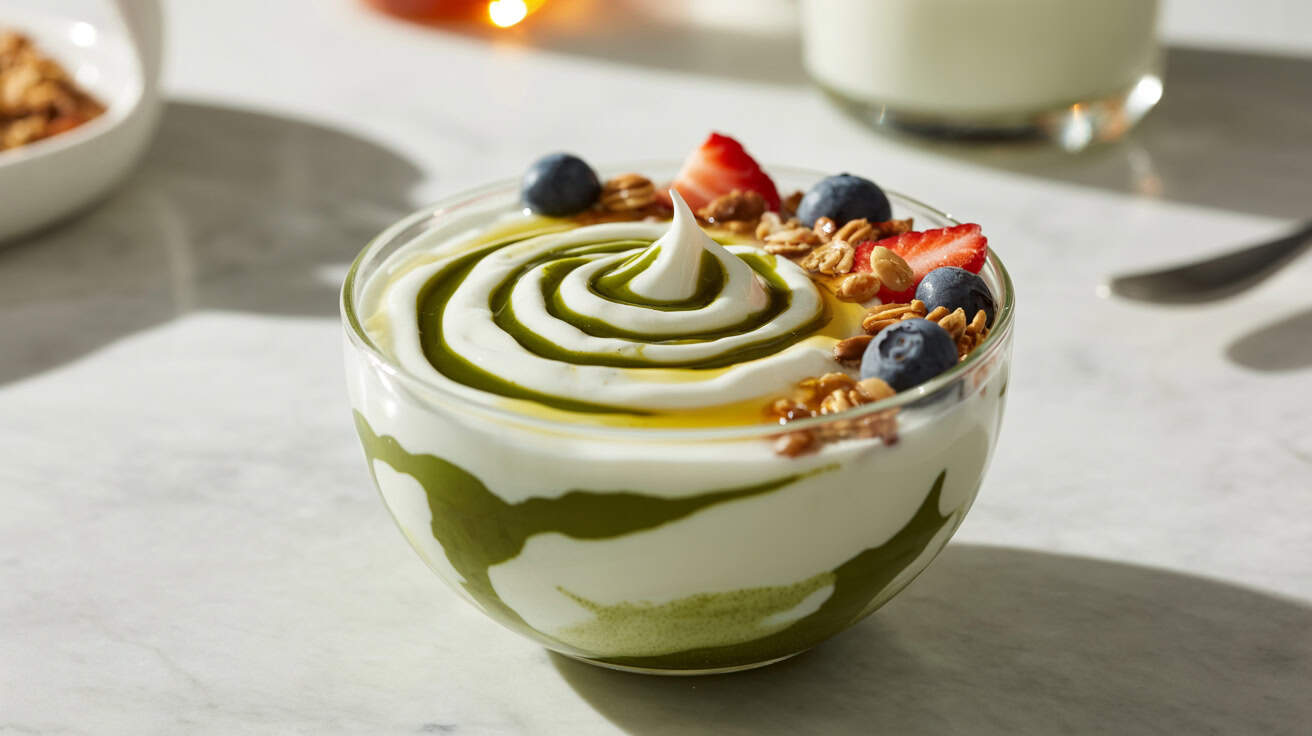
You can make a nutrient-dense matcha yogurt snack in minutes by whisking 1 tsp sifted culinary matcha into 1 tbsp warm water, then folding it into 1 cup Greek yogurt. Use Greek for protein or a plant option if you prefer. Sweeten lightly with honey or maple and add berries, nuts or chia for texture and fiber. Matcha adds antioxidants and calm alertness from L‑theanine. Keep it chilled; you’ll find more tips and swaps below.
Table of Contents
Key Takeaways
- Use high-quality plain Greek or plant-based yogurt, culinary-grade matcha, a liquid sweetener, and vanilla for a balanced base.
- Sift matcha, whisk into warm water to a smooth paste, then gently fold into measured yogurt for a consistent texture.
- Matcha adds antioxidants, modest caffeine with L-theanine, and may support focus, metabolism, and recovery when paired with protein-rich yogurt.
- Customize with berries, chia seeds, toasted nuts, or a light drizzle of honey to boost fiber, healthy fats, and flavor.
- Store in airtight containers refrigerated for 3–5 days or portion and freeze up to two months for meal prep.
Ingredients You’ll Need
Before you start, gather high-quality ingredients so the final yogurt has the right texture, flavor, and nutritional profile. You’ll need plain Greek yogurt (or a plant-based alternative) for a creamy base; pick full-fat for richness or low-fat for fewer calories, depending on goals.
Use a culinary-grade sweetener like honey or maple syrup sparingly, and add vanilla extract for balance. For a smooth matcha integration, sift the powder and whisk with a small amount of warm water before folding into yogurt.
Consider texture: toasted nuts, seeds, or fresh fruit add crunch and micronutrients. If you want probiotics beyond yogurt’s native cultures, choose a verified probiotic supplement with CFU counts you can reference.
When selecting matcha, compare matcha varieties (ceremonial for delicate flavor, culinary for baking and thicker blends) and check origin, color, and aroma to ensure freshness regularly.
Measure ingredients you’ll need precisely to maintain consistency and track outcomes.
Why Matcha Boosts This Snack
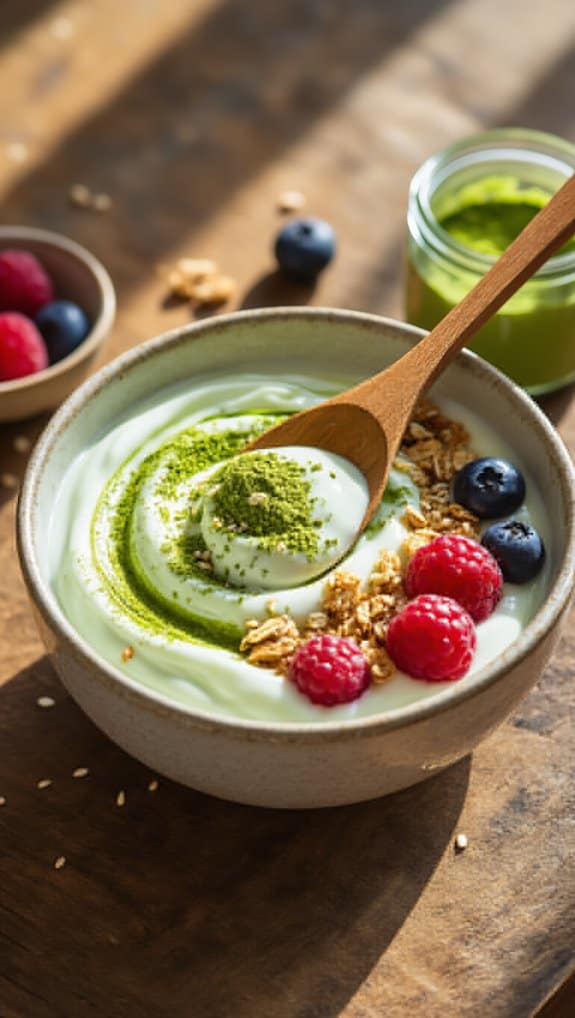
Because matcha concentrates green tea’s beneficial compounds, it gives your yogurt a measurable nutritional and sensory boost: it’s rich in catechins (especially EGCG), antioxidants, and a modest dose of caffeine balanced by L-theanine, which together can promote alertness with a calmer, sustained focus than coffee.
You’ll gain matcha benefits beyond flavor: studies link EGCG to metabolic and vascular support, and L-theanine moderates caffeine’s jitteriness, improving attention without spikes. The antioxidant properties help neutralize free radicals and may support recovery after activity, making this snack sensible around workouts or midday slumps.
Practically, a small scoop delivers concentrated phytonutrients, so you don’t need large quantities to see effects. Pairing matcha with protein-rich yogurt also supports satiety and steady blood sugar, enhancing the snack’s overall utility.
Use portion control and monitor how you respond to the caffeine; you’ll adjust timing to match energy needs and maximize benefits efficiently and long-term enjoyment.
Choosing the Right Yogurt and Matcha
When choosing yogurt and matcha, focus on nutrient profile and quality so your snack supports both flavor and function.
Pick a yogurt that matches your goals: Greek or strained options deliver higher protein and creamier texture, while regular or skyr give varied fat and calorie profiles. If you need probiotics, choose yogurts labeled with live and active cultures; check sugar content and choose plain or low-sugar varieties to control added sweeteners.
For matcha, prioritize ceremonial or culinary grades based on intended use, but always verify matcha quality through color (vivid green), aroma (fresh, vegetal), and origin notes—higher quality contains more antioxidants and a smoother taste.
Balance portions to maintain caloric goals and satiety. If you have lactose sensitivity, try lactose-free or plant-based yogurts fortified with calcium and protein.
Consult nutrition labels and, when in doubt, ask a dietitian for personalized choices. This keeps your snack effective and enjoyable.
Step-by-Step Preparation
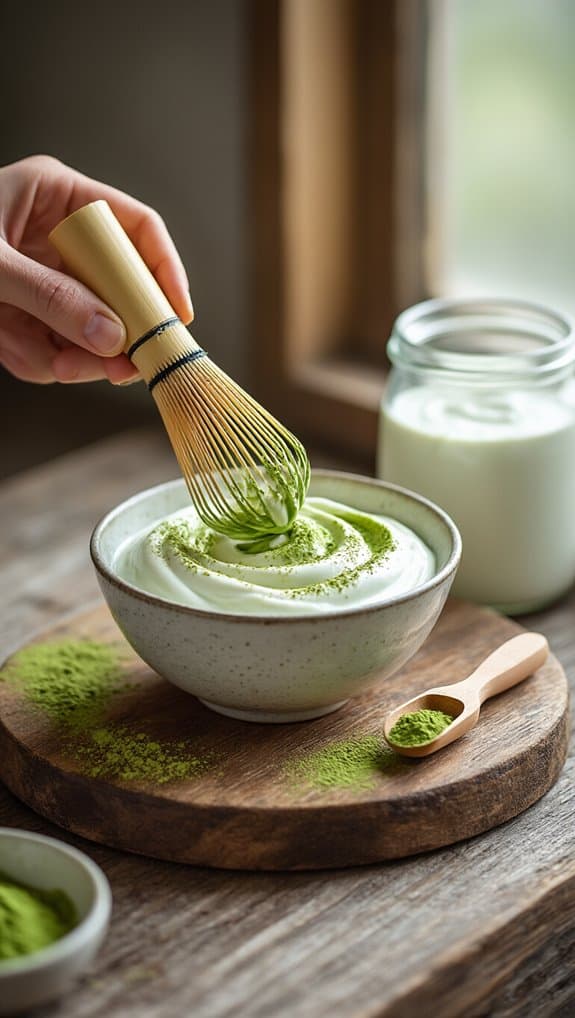
As you prepare this matcha yogurt, gather your ingredients and tools so the process stays efficient and consistent: measure yogurt (about ¾–1 cup per serving), sift ½–1 teaspoon of culinary or ceremonial matcha to avoid clumps, have a small bowl and a fine whisk or bamboo chasen ready, and choose any sweetener or mix-ins you’ll add. Begin by whisking matcha with a small amount of warm water to create a smooth paste; this mixing method reduces lumps and preserves the aroma. Spoon yogurt into your serving bowl, then fold in the matcha paste using gentle preparation techniques to keep the structure. Sweeten to taste and stir briefly. Chill briefly for a more blended result. Serve promptly or store covered up to 24 hours. Use the table below for quick reference.
| Step | Action |
|---|---|
| 1 | Sift matcha |
| 2 | Make paste |
| 3 | Measure yogurt |
| 4 | Fold gently |
| 5 | Chill/store |
Enjoy mindfully.
Texture and Flavor Tips
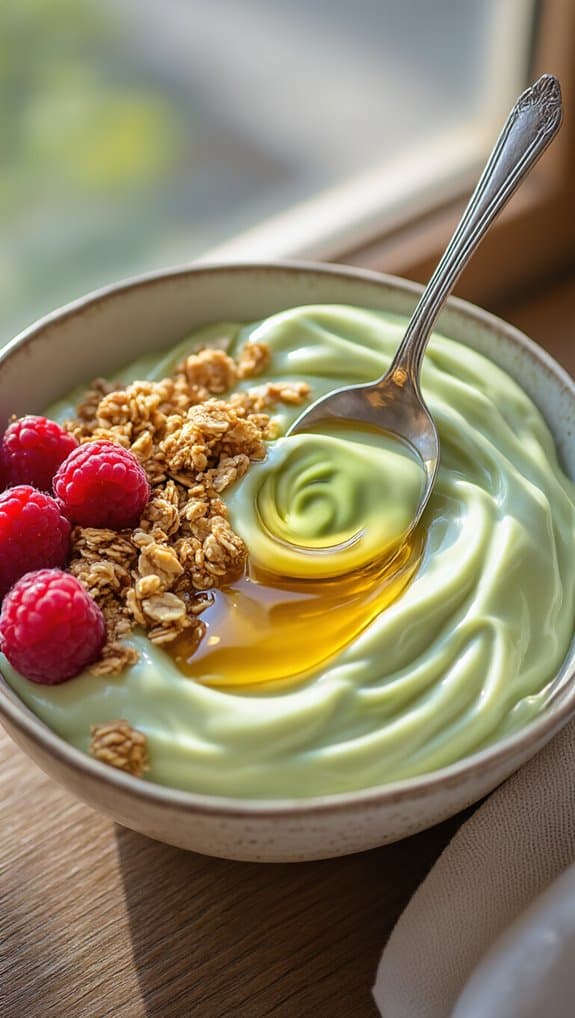
You’ll tailor the yogurt’s creaminess by choosing full-fat or low-fat yogurt and stirring in a spoonful of cream or Greek yogurt for extra thickness.
If you want a lighter texture, whisk in a little milk or water until you reach the consistency you prefer.
Start with a small amount of sweetener—honey, maple, or sugar—and adjust by tasting so the sweetness complements the matcha’s natural bitterness rather than masking it.
Adjusting Creaminess
Because fat and protein drive mouthfeel, adjusting creaminess starts with your base: choose full-fat or Greek yogurt for a naturally richer texture, or thin plain yogurt with a little cream or whole milk if you prefer a softer consistency.
When adjusting thickness, measure additions: add 1 tablespoon cream per 1/2 cup yogurt to increase richness, or stir in 1–2 tablespoons cold water or milk to loosen without diluting flavor.
Consider protein content and fat percentage as creaminess factors; higher protein gels and fat coats the palate.
For texture balance, fold in finely ground nuts or chia for body, or strain yogurt through cheesecloth for a denser result.
Taste after small adjustments and record what works for your goals. Adjust gradually to meet dietary needs.
Balancing Sweetness
Matcha’s grassy bitterness will change how much sweetener you need, so match the sweetness to the yogurt’s texture and fat rather than adding a lot at once.
Start by tasting plain yogurt with a small pinch of matcha; the smooth bitterness of fattier yogurts, so you’ll often need less sugar. Measure incremental additions and reassess after stirring to avoid over-sweetening.
Consider sweetener options like honey, maple, agave, or stevia; each shifts mouthfeel and perceived sweetness differently. Use minimal amounts of liquid sweeteners with thicker yogurts, and try powdered or granular sweeteners for lighter ones.
Aim for flavor balance by pairing a single sweetener with a citrus twist or sea salt pinch to enhance complexity. Track what works and adjust portions to your preferences for consistent results daily.
Customization and Mix-In Ideas
When you’re customizing matcha yogurt, aim for a balance of flavor, texture, and nutrition so each add-in complements the tea’s grassy bitterness. You can design custom toppings, flavor infusions, and nutrient boosts based on goals: protein, fiber, or antioxidants. Choose Greek or plant-based yogurt to match macronutrient targets. Add seeds or nuts for omega-3s and crunch; add fruit for vitamin C and natural sweetness. Use unsweetened dried fruit or a drizzle of honey if you need more sweetness, monitoring portions. For texture contrasts, fold in granola, cacao nibs, or toasted coconut. If you want probiotic variety, choose yogurts with live cultures and pair them with resistant starch like cooled oats. Test small batches, note client preferences, and adjust salt or acid to enhance matcha’s brightness. Practical combos are shown below.
| Add-in | Benefit | Use (per serving) |
|---|---|---|
| Chia seeds | Fiber, omega-3 | 1 tbsp |
| Berries | Antioxidants | 1/3 cup |
| Almonds | Protein, crunch | 10g |
Serving Suggestions and Pairings
Although you can enjoy matcha yogurt solo, pairing it thoughtfully boosts both flavor and nutrition: Start by selecting high-protein Greek or plant-based yogurt to stabilize blood sugar and support satiety.
For toppings suggestions, choose a balance: fresh berries for vitamin C and antioxidants, toasted nuts or seeds for texture and omega-3s, and a drizzle of honey or maple for quick carbohydrate when you need energy.
For savory occasions, add sliced cucumber, sesame seeds, and a dash of soy or tamari for umami—this works well as a dip.
Consider portion control: keep toppings to a small handful to maintain macronutrient goals.
Use evidence-based flavor pairings—citrus brightens matcha, and nutty elements complement its grassy notes.
If you’re serving others, offer a mini topping bar so individuals can customize to dietary needs and preferences.
These practical pairings maximize taste while supporting nutrition goals.
Rotate combinations weekly to prevent palate fatigue and boredom.
Storage, Make-Ahead, and Meal Prep Tips
Store your matcha yogurt in an airtight container in the fridge and consume within about 3–5 days for best safety and flavor.
For make-ahead meal prep, portion into single-serving containers so you can grab-and-go and minimize exposure.
You can freeze yogurt in freezer-safe containers for up to 2 months; thaw overnight in the fridge and stir or briefly blend to restore texture, noting that slight separation is normal.
Refrigeration Guidelines
To keep matcha yogurt safe and tasting its best, refrigerate it at or below 40°F (4°C) in a clean, airtight container and label it with the prep date.
Store small portions to minimize opening time; a consistent refrigeration temperature preserves texture and slows bacterial growth. Use plain, unsweetened yogurt within 5–7 days of opening for best quality—note that shelf life varies by culture strength and added ingredients.
If you’re prepping servings for the week, cool yogurt quickly before sealing, avoid cross-contamination with utensils, and keep containers on a middle shelf away from door fluctuations.
When in doubt, rely on sight, smell, and a short taste; discard if you detect off-odors, separation that won’t reblend, or mold.
Follow these steps to maintain safety and quality.
Freezing and Thawing
If you’ve been keeping matcha yogurt chilled for short-term use, freezing offers a convenient make-ahead option but it alters texture and culture activity, so plan accordingly.
Use single-serve portions in airtight, freezer-safe containers or silicone molds; this minimizes thawing and refreezing and preserves quality. Label containers with the date and consume within one month for the best flavor.
When you’re ready, transfer to the refrigerator and thaw slowly for 12–24 hours; this preserves probiotic viability better than rapid warming. Stir gently after thawing to reincorporate separated whey; avoid high heat which kills cultures.
For smoothies or baking, frozen yogurt works well without full thawing. These freezing methods and thawing techniques balance safety, texture, and probiotic retention for practical meal prep.
Test small batches for personal preference.
Nutritional Breakdown and Health Benefits
While keeping portions reasonable, this matcha yogurt delivers a balanced mix of macronutrients—protein from the yogurt for satiety and muscle support, modest fats if you add nuts or full-fat dairy, and carbohydrates from fruit or sweeteners—alongside fiber if you include berries or seeds.
Its nutrient density supports steady energy and, according to studies on green tea compounds and dairy proteins, may offer modest metabolic and cognitive health impacts. You can tailor servings to meet calorie or protein goals while keeping added sugars low.
Practically, choose plain Greek yogurt for higher protein and lower sugar, and measure toppings: a tablespoon of chia seeds adds omega‑3s and fiber without excess calories.
If you track macros or goals, log portions, and adjust mix-ins. For clients with lactose sensitivity, consider lactose-free or plant-based yogurts fortified with calcium and vitamin D to maintain bone health benefits.
This approach keeps choices evidence-aligned and personalized.
Troubleshooting Common Issues
Although small issues like clumping, bitterness, or watery texture are common, you can fix them quickly with a few evidence-backed steps: You’ll address texture problems and flavor adjustments.
First, whisk matcha into some hot water to make a smooth paste before folding it into yogurt; this prevents clumps. If yogurt turns watery, stir in a teaspoon of powdered milk or Greek yogurt to restore body and chill.
For excessive bitterness, add a touch of honey, maple, or a pinch of baking soda to neutralize tannins while tasting as you go. If you see separation after resting, re-emulsify with high-speed stirring.
Lastly, adjust sweetness and acidity in small increments and document what works for your preference.
- Whisk matcha into hot water first
- Use thick yogurt or powdered milk to combat thinness
- Sweeten gradually to fix bitterness
- Re-emulsify the separated yogurt quickly
- Taste and record adjustments
Frequently Asked Questions
Is Matcha Yogurt Safe During Pregnancy?
Yes, you’ll enjoy matcha yogurt in pregnancy in moderation, but you’ll watch caffeine intake and choose high-quality, low-caffeine matcha.
For pregnancy nutrition, aim to limit daily caffeine to under 200 mg; a typical teaspoon of matcha has about 35–70 mg.
Matcha benefits include antioxidants and modest energy, yet you’ll avoid excess, check added sugars, and talk with your care provider about your overall diet and tolerances regularly too as needed.
Can Toddlers or Young Children Eat Matcha Yogurt?
Yes, but you’ll want to limit intake and consult your pediatrician.
Young children are more sensitive to caffeine, so offer small, infrequent portions and choose decaffeinated or low-matcha amounts.
Prioritize whole milk yogurt for toddler nutrition, and use matcha sparingly to get matcha benefits yet avoid sugar.
Watch for reactions, track total daily caffeine, and consider alternatives like fruit puree if you want a similar texture without stimulant risks and moderation.
Will Matcha Yogurt Stain Teeth or Dental Work?
Matcha can cause mild surface staining on natural teeth and composite dental work, so you’ll want to be cautious.
Consider Matcha benefits but weigh staining risk and use staining prevention: rinse with water after eating, drink water alongside yogurt, and wait 30 minutes before brushing to protect enamel.
Choosing high-quality whisked matcha and maintaining dental cleanings reduces long-term discoloration.
Discuss concerns with your dentist for tailored advice and follow guidance.
Does Freezing Affect Matcha’s Antioxidant Potency?
Freezing doesn’t substantially reduce matcha’s antioxidant levels; you’ll retain most catechins if you freeze promptly and avoid thaw-refreeze cycles.
Evidence suggests freezing effects are minor compared with heat or prolonged light exposure.
To preserve potency, store airtight in dark, cold conditions and use within months.
This practical approach minimizes nutrient loss and keeps flavor stable, so you can confidently incorporate frozen matcha into smoothies or yogurt without major antioxidant degradation.
Can Matcha Yogurt Be Used as a Topical Face Mask?
Yes, you can use matcha yogurt as a topical face mask. You’ll gain matcha benefits like antioxidants and mild anti-inflammatory effects, while yogurt properties such as lactic acid and probiotics can gently exfoliate and hydrate.
Patch-test first, avoid eyes, and leave on 10–15 minutes. If you have sensitive or acne-prone skin, consult a dermatologist before regular use and stop if irritation occurs for personalized advice and ingredient adjustments as needed.
Conclusion
You’ve now got a simple, evidence-based matcha yogurt snack that supports steady energy and gut health when you choose probiotic yogurt and quality matcha. Use the texture and flavor tips to match your preferences, and prep portions ahead for convenience. If you’re managing caffeine or calories, adjust serving sizes and sweeteners. Try pairings that fit your goals, and monitor how you feel to fine-tune this snack for lasting benefit and enjoy it as a snack.


No Comments