
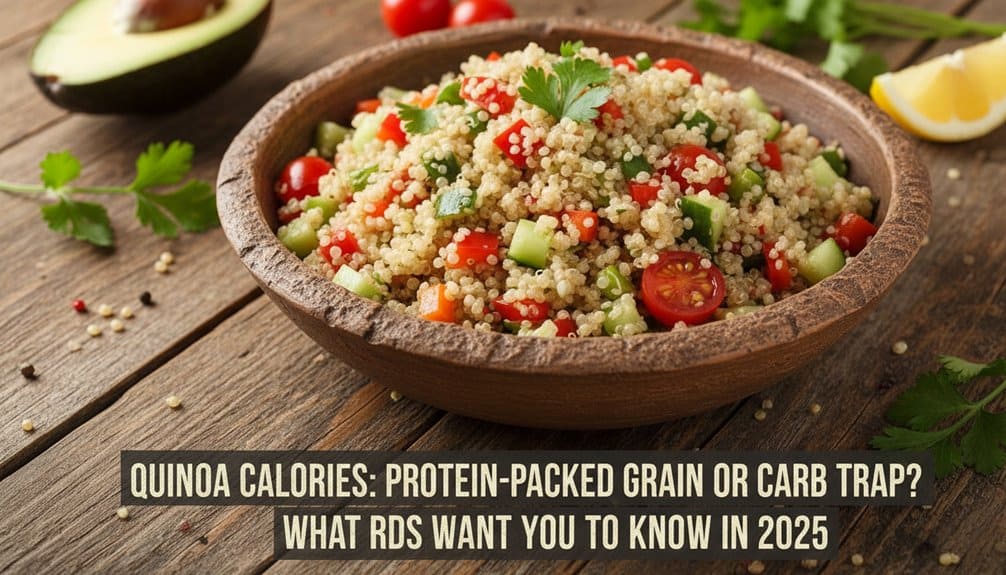
Quinoa Calories: Protein-Packed Grain or Carb Trap? What RDs Want You to Know
You’re getting 120 calories per cooked cup of quinoa with 4.4 grams of complete protein containing all nine essential amino acids—something rice and oats can’t match. While it’s got 21 grams of carbs, quinoa’s fiber content and 89% protein digestibility score make it a nutritional powerhouse, not a carb trap. RDs recommend it for weight management when paired with vegetables and lean proteins. The strategic timing and portion adjustments can transform your results.
Table of Contents
Key Takeaways
- At 120 calories per 100g cooked serving, quinoa provides complete protein with all nine essential amino acids unlike other grains.
- Quinoa contains 21g carbohydrates per serving but offers 2.8g fiber and superior protein quality matching casein.
- With 4.4g complete protein per serving, quinoa delivers more protein than rice while maintaining moderate calorie density.
- Registered dietitians recommend quinoa for weight management when paired with vegetables and lean proteins in controlled portions.
- Quinoa’s 89% protein digestibility score and sustained energy release make it ideal for muscle building and athletic performance.
Breaking Down Quinoa’s Complete Nutritional Profile: Calories, Macros, and Micronutrients
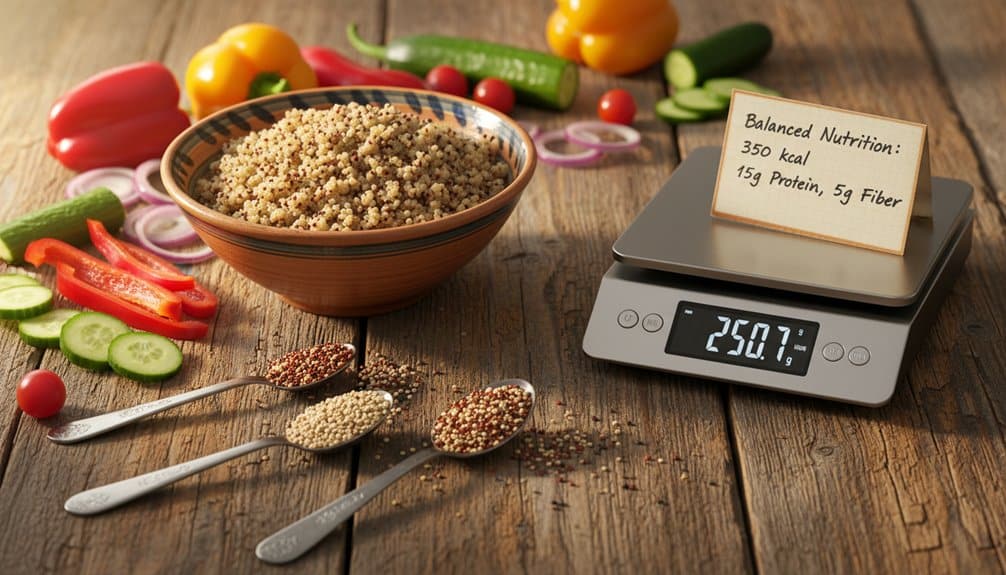
When you’re tracking your nutritional intake, quinoa stands out as a nutrient-dense grain that packs approximately 120 calories per 100 grams of cooked serving. You’ll get 4.4 grams of complete protein containing all nine essential amino acids, 21 grams of carbohydrates, and 2.8 grams of fiber. The fat content remains minimal at 1.9 grams, primarily consisting of heart-healthy unsaturated fats.
Your body benefits from quinoa’s impressive micronutrient profile. You’re getting significant amounts of manganese, magnesium, phosphorus, and folate. The nutrient density considerations make quinoa superior to refined grains—you’re receiving more vitamins and minerals per calorie consumed.
The glycemic impact analysis reveals quinoa’s advantage over white rice and pasta. With a glycemic index of 53, it won’t spike your blood sugar rapidly. The fiber and protein content slow digestion, helping you maintain steady energy levels throughout the day while supporting better appetite control.
The Science Behind Quinoa’s Unique Protein Quality and Amino Acid Advantage
Beyond the basic macronutrient numbers, quinoa’s protein stands apart from other grains through its exceptional amino acid composition. You’re getting all nine essential amino acids in proper ratios, making quinoa a complete protein source that rivals animal products. This amino acid balance means your body can efficiently use quinoa’s protein for muscle repair, enzyme production, and immune function.
What’s more impressive is quinoa’s protein digestibility score of 89%, surpassing rice at 60% and wheat at 45%. You’ll absorb and utilize more of quinoa’s protein compared to traditional grains. The lysine content particularly stands out—it’s typically lacking in cereals but abundant in quinoa at 6.3g per 100g of protein.
When you combine quinoa’s superior digestibility with its balanced amino profile, you’re getting protein quality that matches casein and approaches egg whites. This makes quinoa invaluable if you’re reducing animal proteins or following plant-based diets.
How Quinoa Stacks Up Against Rice, Oats, and Other Popular Grains
Three key nutritional advantages set quinoa apart from rice, oats, and other common grains in your pantry. First, you’ll get more protein per serving – quinoa delivers 8 grams compared to brown rice’s 5 grams and white rice’s 4 grams. Second, quinoa’s complete protein status means you’re getting all essential amino acids, unlike oats or barley. Third, its fiber content surpasses white rice while matching brown rice and oats at roughly 5 grams per cooked cup.
When considering grain yield comparison, quinoa produces less per acre than rice or wheat, but its sustainability considerations make it attractive. You’re choosing a crop that requires minimal water, thrives in poor soil, and doesn’t need synthetic fertilizers. While quinoa costs more than conventional grains, you’re investing in superior nutrition. It contains more iron than barley, more magnesium than rice, and matches oats’ heart-healthy benefits while providing better protein quality.
Strategic Ways to Include Quinoa in Your Diet Based on Your Health Goals
Since you’re looking to optimize your nutrition through strategic food choices, quinoa’s versatility makes it an ideal grain for targeting specific health objectives. For weight management, you’ll want to pair half-cup servings with lean proteins and vegetables, creating nutrient dense recipes that keep you satisfied longer. If you’re building muscle, increase portions to three-quarters cup and combine with Greek yogurt or eggs post-workout.
For blood sugar control, quinoa’s protein content helps stabilize glucose levels when you eat it as fiber rich side dishes alongside salmon or chicken. Athletes should consume it two hours before training for sustained energy.
If you’re managing cholesterol, replace white rice with quinoa three times weekly, adding heart-healthy nuts and olive oil.
Time your intake strategically—morning quinoa bowls fuel busy days, while dinner portions should stay moderate to avoid excess calories. Mix it into salads for lunch to maintain steady energy without afternoon crashes.
Frequently Asked Questions
Is Quinoa Safe for People With Celiac Disease or Gluten Sensitivity?
Yes, you can safely eat quinoa if you have celiac disease or gluten sensitivity since it’s naturally gluten-free. However, you’ll want to check for gluten free certification on packaging because cross-contamination during processing can occur.
While quinoa isn’t technically a grain (it’s a seed), some people with grain sensitivity concerns might still experience digestive issues. You should introduce it gradually and monitor your body’s response to determine your personal tolerance.
How Should I Properly Store Cooked and Uncooked Quinoa at Home?
Store uncooked quinoa in airtight containers in cool dry storage areas like your pantry, where it’ll last up to three years.
Once you’ve cooked quinoa, transfer it to airtight containers and refrigerate immediately. You’ll want to use refrigerated quinoa within five days.
For longer storage, freeze cooked quinoa in portion-sized containers for up to eight months. Always let cooked quinoa cool completely before storing to prevent moisture buildup.
Why Does Quinoa Sometimes Taste Bitter and How Can I Prevent It?
Quinoa tastes bitter because of saponins, natural compounds coating the seeds that protect them from pests. You’ll prevent this by preparing quinoa properly through thorough rinsing.
Place your quinoa in a fine-mesh strainer and rinse under cold water for 30-60 seconds while rubbing the grains together. This removes most saponins effectively.
Some brands pre-rinse their quinoa, but you should still rinse again at home for the best taste results.
Can Pregnant or Breastfeeding Women Safely Consume Quinoa Regularly?
You can safely eat quinoa regularly during pregnancy and breastfeeding. It’s actually recommended as part of your nutritional considerations since it provides complete protein, folate, iron, and fiber.
Current dietary guidelines encourage whole grains like quinoa for expecting and nursing mothers. You’ll benefit from its magnesium and B vitamins too. Just rinse it well before cooking and ensure it’s properly cooked. There aren’t any known risks when you consume quinoa in normal amounts.
Does Quinoa Cause Digestive Issues or Bloating in Some People?
Yes, you might experience digestive discomfort from quinoa due to its saponins and high fiber content. These natural compounds can trigger gut irritation, bloating, and gas, especially if you’re not used to eating fiber-rich foods.
You’ll reduce these effects by rinsing quinoa thoroughly before cooking to remove saponins, starting with smaller portions, and gradually increasing your intake. Drinking plenty of water also helps your body process quinoa’s fiber more easily.
Conclusion
You’ve learned that quinoa isn’t just another trendy grain—it’s a nutritional powerhouse that deserves its reputation. While it’s higher in calories than some expect, you’re getting complete protein, fiber, and essential minerals with every bite. Don’t fear quinoa’s carbs; they’re balanced by nutrients that support your overall health. Whether you’re building muscle, managing weight, or simply eating better, you can confidently make quinoa work for your goals. It’s about smart portions, not restriction.


No Comments