
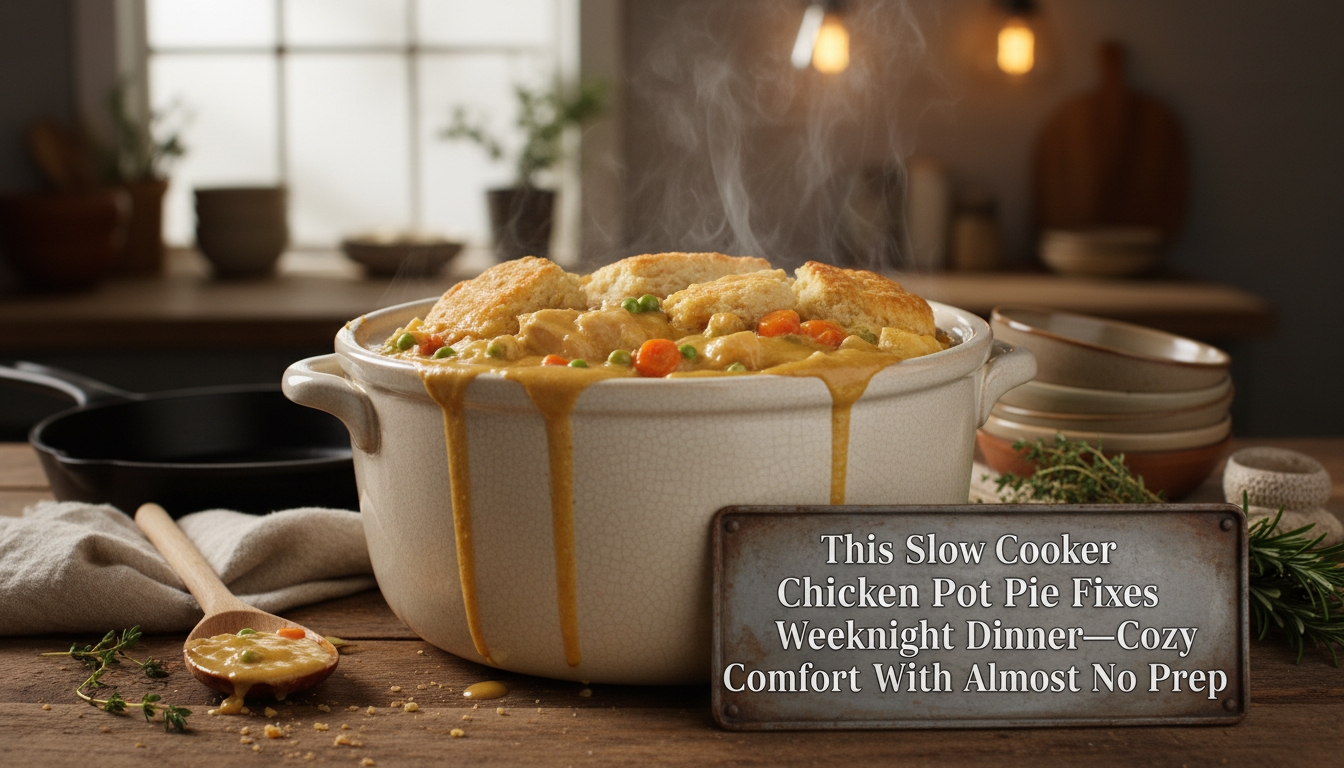
This Slow Cooker Chicken Pot Pie Fixes Weeknight Dinner—Cozy Comfort With Almost No Prep
You’ll toss frozen crust, mixed veggies, rotisserie chicken, broth, and a splash of cream into the slow‑cooker, season with thyme, salt, and pepper, then layer sauce, chicken, veggies, and crust pieces on top. Cook on high for four hours (or low for eight) and the cooker does the rest, giving you a creamy, mess‑free pot pie with minimal effort. Adjust timing for your model, add a crunchy topping at the end, and discover variations, storage tips, and reheating tricks.
Table of Contents
Key Takeaways
- Assemble frozen crust, mixed veggies, rotisserie chicken, and broth; stir in cream and season for a quick, rich sauce.
- Cook on high for 4 hours or low for 8 hours; adjust 12 minutes for hot or cool slow‑cookers.
- Thicken sauce with a roux or cornstarch slurry; finish with heavy cream, half‑and‑half, or dairy‑free alternatives.
- Layer sauce, chicken, vegetables, then top with biscuit dough or puff‑pastry squares; steam vents keep crust crisp.
- Store leftovers airtight, refrigerate up to 4 days or freeze; reheat covered with foil or damp towel, adding broth to retain moisture.
How to Prep a Slow‑Cooker Chicken Pot Pie in Under 10 Minutes
Ready to whip up a comforting chicken pot pie in a flash? Grab a frozen pie crust, a can of mixed veggies, a rotisserie chicken, and a carton of chicken broth. Toss the veggies and shredded chicken into the slow‑cooker, pour the broth, and stir in a splash of cream for richness. Sprinkle in thyme, salt, and pepper, then give everything a quick mix. Cover and set the cooker to high for four hours or low for eight—no further prep needed.
While it simmers, roll out the crust, cut a few slits for steam, and place it on top of the filling. The heat will melt the butter, crisp the edges, and seal in the flavor.
When the timer dings, the crust will be golden, the filling bubbling, and you’ll have a home‑cooked pot pie ready to serve in under ten minutes of effort.
Why a Slow‑Cooker Is Ideal for Chicken Pot Pie
Why does a slow‑cooker work so well for chicken pot pie? You’ll find that the low, steady heat gently melds flavors while keeping the crust flaky and the filling moist. The cooker’s sealed environment traps steam, so the vegetables stay tender without turning mushy, and the chicken stays juicy. You also love the hands‑off convenience: set it, walk away, and return to a fully cooked, aromatic pie that needs only a quick top‑crust bake.
| Benefit | Reason |
|---|---|
| Even cooking | Low temperature circulates heat uniformly |
| Moisture retention | Steam‑sealed lid prevents drying |
| Time efficiency | Set‑and‑forget, freeing up stovetop space |
Creamy Ingredients That Keep the Pie Mess‑Free
How can you keep the filling creamy yet mess‑free? Start with a roux made from equal parts butter and flour; cook it just until golden, then whisk in low‑sodium broth and milk. The roux thickens the sauce without clumping, and the dairy adds silkiness. Add a splash of heavy cream or half‑and‑half at the end for extra richness; it won’t curdle in the slow cooker because the temperature stays low. Use a small amount of cornstarch slurry (cornstarch mixed with cold water) if you need a quicker set—just stir it in during the last 30 minutes. For dairy‑free options, swap butter for coconut oil and milk for oat or almond milk, then finish with a dollop of cashew cream. Keep the vegetables cut uniformly so they release juices evenly, preventing watery pockets. Finally, stir gently before serving to maintain a smooth, cohesive texture.
Step‑by‑Step Instructions for Layering Chicken, Veggies, and Crust
With the sauce already silky and set, you can now build the pie’s layers.
First, spoon a thin blanket of sauce onto the bottom of the slow‑cooker insert, ensuring it coats the surface evenly.
Gently arrange the cooked chicken pieces over the sauce, spreading them out so every bite gets meat.

Next, sprinkle the pre‑cooked vegetable mix—carrots, peas, corn, and potatoes—over the chicken, distributing evenly to avoid clumps.
Drizzle a little extra sauce if the mixture looks dry, then lightly press the veggies into the chicken for a cohesive fill.
Now, prepare the crust topping.
If you’re using a biscuit dough, tear it into bite‑size pieces and scatter them across the filling, leaving a small gap around the rim for steam to escape.
For a puff‑pastry sheet, cut it into squares that fit the cooker’s diameter, then lay the pieces side‑by‑side, overlapping slightly.
Finally, sprinkle a pinch of salt and pepper over the crust, and you’re ready to cook.
Adjusting Time & Temp for Different Slow‑Cooker Models
You’ll need to match your cooker’s power setting to the recipe’s low‑heat recommendation, then tweak the cooking time accordingly. If your unit runs hotter, shave a few minutes off; if it’s a low‑wattage model, add a bit more time. This simple adjustment keeps the filling creamy and the crust perfectly browned.
Match Power Settings
Wondering how to sync your slow‑cooker’s power level with the recipe’s timing? First, locate the wattage rating on the back of the unit. Low‑wattage models (600‑800 W) need a longer cooking window, while high‑wattage ones (1000‑1200 W) run hotter faster. Adjust the dial to “Low” for gentle simmering; “High” for a quicker bake. If your cooker offers a “Medium” setting, treat it as a midpoint between the two extremes. Use the table below to match common wattages to the appropriate dial position for this pot‑pie recipe.
| Wattage (W) | Recommended Dial |
|---|---|
| 600‑800 | Low |
| 800‑1000 | Medium |
| 1000‑1200 | High |
Adjust Cooking Times
How much longer should you let the pot pie simmer if your cooker runs hotter or cooler than the standard model? If your slow‑cooker runs hot, cut the time by 10‑15 minutes; if it’s cool, add the same amount. Keep an eye on the broth’s bubble pattern and the chicken’s internal temperature—165 °F is safe. Adjusting time and temperature prevents overcooked veggies or underdone meat, preserving the creamy texture you love.
- Hot model (≥ 10 °F above standard): Reduce total cook time by 12 minutes; set low to medium‑low.
- Cool model (≥ 10 °F below standard): Extend cook time by 12 minutes; keep on low.
- Mid‑range model: Follow the recipe’s 6‑hour low or 3‑hour high guideline.
- Altitude adjustment: Add 5 minutes per 1,000 ft above sea level, regardless of model.
How to Add a Crunchy Topping Without Over‑Baking
Ever wondered why the topping on a slow‑cooker chicken pot pie can turn soggy before the filling is done? The secret is timing and moisture control. First, pre‑bake your crust or crumble mixture on a sheet pan for 5–7 minutes at 400 °F. This creates a barrier that resists steam.

While the pie cooks, toss the topping—panko, crushed biscuits, or grated cheese—with melted butter and a pinch of salt. When the cooker signals the final 15 minutes, carefully lift the lid and spread the mixture evenly over the surface.
Return the lid, but switch the cooker to “high” or use the “broil” function on a stovetop griddle for the last 3–4 minutes. Watch closely; the topping should turn golden‑brown and crisp without burning. Let the pie rest a couple of minutes before serving so the crust stays crunchy while the filling stays hot.
Variations: Gluten‑Free, Low‑Carb, or Vegetarian Chicken Pot Pie
Looking to tailor your slow‑cooker chicken pot pie to specific dietary needs? You can keep the comforting vibe while swapping ingredients to fit gluten‑free, low‑carb, or vegetarian preferences. The base sauce—broth, cream, and herbs—remains the same; just adjust the thickener, starch, and protein. Use almond flour or rice flour for a gluten‑free roux, replace potatoes with cauliflower rice for a low‑carb version, and swap chicken for chickpeas or diced tofu for a vegetarian twist. Remember to taste as you go, adding extra salt or pepper to balance the new textures. With these simple swaps, you’ll serve a pie that feels familiar yet respects your diet.
- Gluten‑Free: almond flour + gluten‑free broth
- Low‑Carb: cauliflower rice + shirataki noodles
- Vegetarian: chickpeas or tofu + vegetable broth
- Hybrid: combine gluten‑free and low‑carb for maximum flexibility
Storing, Reheating & Freezing Leftovers
Grab airtight containers and portion the pie into single‑serve bags so you can chill it for up to four days or freeze it for later.
When you’re ready to eat, reheat it covered on the stovetop or in the microwave, adding a splash of broth to keep the crust from drying out.
If you freeze, thaw overnight in the fridge and then follow the same reheating steps for best texture.
Optimal Storage Containers
Where should you stash your leftover chicken pot pie to keep it fresh, easy to reheat, and ready for a quick freezer meal? Choose containers that seal tightly, resist odor transfer, and handle temperature swings without warping. Opt for glass or BPA‑free plastic with snap‑lock lids for fridge storage, and switch to freezer‑grade zip‑top bags or rigid containers for long‑term freezing. Label each piece with the date and reheating instructions so you never guess. This system preserves texture, flavor, and nutrition while cutting prep time when you need a comforting bite.
- Glass casserole dishes with airtight lids
- BPA‑free plastic containers with snap‑lock seals
- Heavy‑duty freezer zip‑top bags
- Rigid, freezer‑grade plastic trays with lids
Reheat Without Drying
Ever wonder how to keep your chicken pot pie from turning into a dry, crumbly mess when you reheat it? First, store leftovers in a shallow, airtight container so the sauce stays moist. When reheating, cover the pie with foil or a damp paper towel to trap steam. Microwave on 50 % power for 2‑3 minutes, then flip the crust side down and heat another minute uncovered to crisp it. For oven reheating, preheat to 350 °F, add a splash of broth or water, cover with foil, and bake 15‑20 minutes; remove foil for the last 5 minutes to restore golden edges. Freeze in individual portions, then thaw overnight in the fridge before using the same steaming technique. This method preserves juiciness and texture.
Frequently Asked Questions
Can I Use a Pressure Cooker Instead of a Slow Cooker?
Yes, you can swap the slow cooker for a pressure cooker, just reduce the cooking time to about 15‑20 minutes, then let the pressure release naturally for a creamy, comforting chicken pot pie.
Will the Crust Become Soggy if I Add Extra Vegetables?
You’ll likely notice a soggier crust if you bulk up the filling with extra veggies, because the added moisture seeps into the dough; try draining or sautéing them first to keep the crust crisp.
How Many Servings Does the Recipe Yield?
You’ll get about six generous servings from this slow‑cooker chicken pot pie, enough to feed a small family or leftovers for lunch. It scales nicely if you need more or fewer portions.
Is It Safe to Leave the Slow Cooker on Overnight?
Yes, you can leave it on overnight if you set it to low and ensure the cooker’s temperature stays above 140°F; otherwise, the food could enter the danger zone and spoil.
Can I Substitute Dairy Milk With Almond Milk?
You can swap dairy milk for almond milk, but expect a thinner sauce and a slightly nutty flavor. Use unsweetened almond milk, keep the ratio one‑to‑one, and add a pinch of cornstarch if you need extra thickness.
Conclusion
Now you’ve got a cozy, creamy chicken pot pie ready with barely any effort, and it’s all done in your slow cooker. The gentle heat locks in flavor while the crust stays tender, and you can tweak the toppings or diet tweaks to suit any craving. Store leftovers quickly, reheat with ease, and even freeze for future comfort meals. Enjoy the warm, hassle‑free dinner you’ve earned.


No Comments