
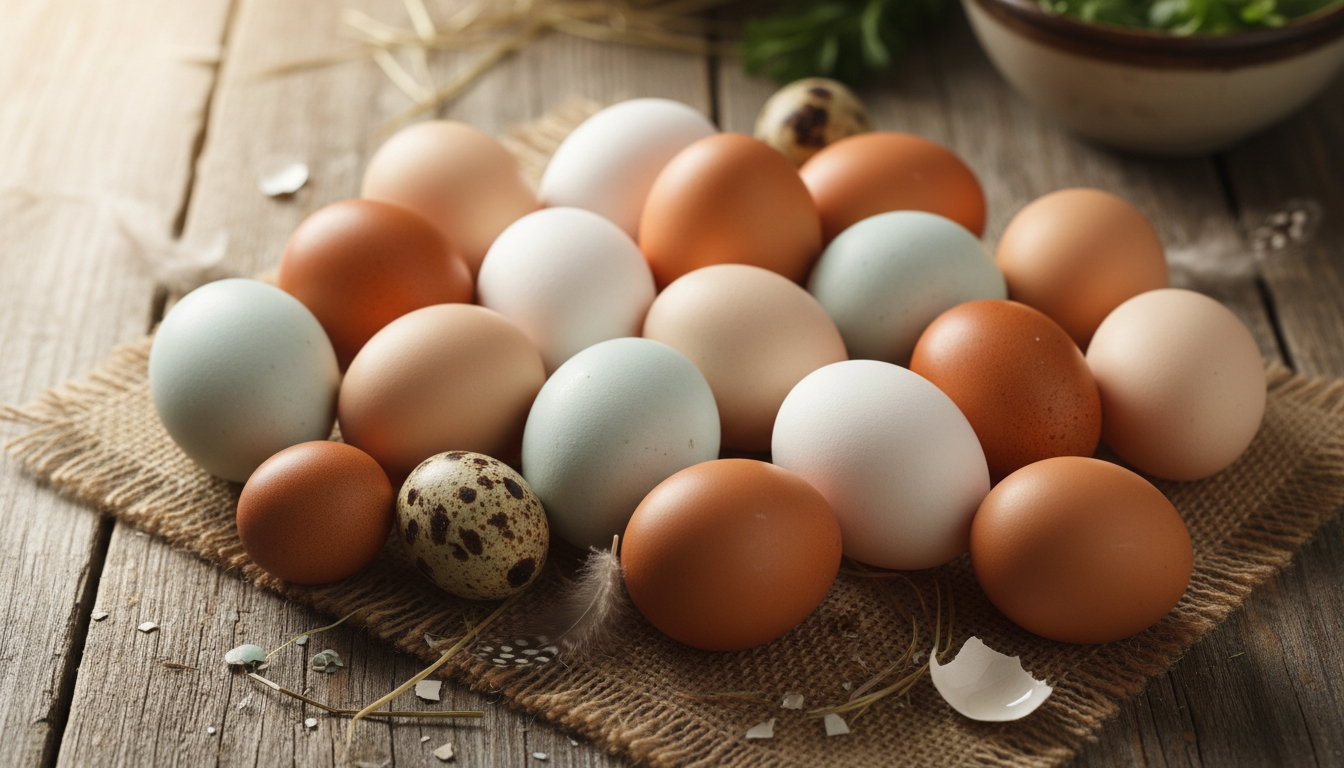
Why Do Organic Eggs vs Regular Egg Calorie Have Difference?
You’ll notice organic eggs sometimes list slightly different calorie counts because the numbers depend on egg size and the yolk‑to‑white ratio, not the “organic” label itself. Feed variations—like omega‑3‑rich or high‑protein diets—can raise or lower yolk fat, shifting calories a few points. Shell thickness, color, or calcium add virtually no energy. So the calorie difference comes from the hen’s diet and egg size, and if you keep going you’ll discover how to compare labels and choose the best low‑calorie option.
Table of Contents
How Many Calories Are in an Organic Egg Compared to a Conventional Egg?
So, how many calories does an organic egg actually contain compared to a conventional one? You’ll find that a large organic egg typically packs about 70–75 calories, while a conventional large egg averages 68–72 calories. The slight difference stems mainly from variations in feed and farming practices, not the egg’s size or shell. Organic farms often use feed richer in omega‑3s and without synthetic additives, which can add a few extra calories from healthy fats. However, the protein content stays around 6 grams for both types, and the bulk of the calories—about 55 %—still comes from the yolk’s fat. When you compare the two, the calorie gap is minimal, usually less than five calories per egg. So, if you’re counting calories, you can treat organic and conventional eggs as virtually interchangeable, focusing instead on nutrient profiles and personal dietary preferences.
How Does a Hen’s Diet Affect Organic Eggs Calories and Nutrients?
What exactly does a hen’s diet do to the calorie count and nutrient profile of organic eggs? Your flock’s feed determines the fat, protein, and micronutrient makeup of each egg, which in turn nudges the calorie total. If you give hens a diet rich in omega‑3‑laden flaxseed or fish oil, their yolks absorb more healthy fats, raising calories slightly but boosting omega‑3 levels. Conversely, a high‑protein, low‑fat feed—think soy‑based pellets—keeps yolk fat low, trimming calories while preserving protein. Grain‑heavy diets increase carbohydrates in the egg white, modestly adding calories. Micronutrients follow the same pattern: vitamin D, vitamin E, and selenium climb when hens eat pasture or fortified feed, while iron and B‑vitamins rise with legumes. So, by tweaking feed composition, you directly shape both the energy content and the nutrient density of organic eggs.
Does Shell Type Change Organic Eggs Calories and Energy Density?
Your hen’s diet shapes the egg’s calorie content, but the shell itself doesn’t add or subtract calories. The shell is mostly calcium carbonate, a mineral that contributes virtually no energy. Whether the shell is brown, white, or speckled, its composition stays the same, so the caloric value of the edible interior remains unchanged.
However, shell thickness can affect perceived energy density. Thicker shells may slightly reduce the volume of albumen and yolk you can eat, making each bite feel a bit denser, but the actual kilocalories per gram of edible material stay constant.
If you compare two eggs of identical size, the one with a heavier shell will have a marginally lower edible weight, yet the calorie count per edible gram doesn’t shift.
In short, shell color or texture doesn’t alter calories; only the amount of edible flesh matters.
How Do Free‑Range and Pasture‑Raised Practices Alter Organic Eggs Calories?
When you choose free‑range or pasture‑raised eggs, the varied diet the hens enjoy can boost the egg’s energy content.
Their increased activity also ramps up metabolism, which can shift nutrient composition.
Plus, the more spacious housing often leads to a slightly higher fat proportion in the yolk.
Diet Variety Impacts Energy
Why does the way hens eat matter for the calories in your organic eggs? Your eggs reflect the nutrients hens absorb, and diet variety directly reshapes their energy stores. Free‑range hens that graze on grass, insects, and seeds ingest more protein and healthy fats, which translate into slightly higher caloric density in the yolk. Pasture‑raised birds, exposed to a broader spectrum of plants, receive a richer mix of micronutrients that can boost metabolic efficiency, subtly altering the balance between yolk and white calories. Even modest changes in feed composition ripple through the egg’s macronutrient profile, affecting the total energy you get per serving.
- Grass and bug intake raises yolk fat content.
- Diverse plant sources increase protein quality.
- Seasonal feed shifts tweak overall caloric count.
Activity Levels Influence Metabolism
How much does a hen’s activity level affect the calories in your organic eggs? When hens roam, they burn more energy, which can lower the fat stored in their yolks and slightly reduce caloric density. Free‑range and pasture‑raised birds spend hours pecking, flapping, and walking, boosting metabolism and shifting nutrient balance toward protein and essential fatty acids. This heightened activity often yields eggs with marginally fewer calories per gram compared to confined hens, whose sedentary lifestyle encourages higher fat deposition. However, the difference is modest—typically a 5‑10 % reduction—because the egg’s core composition remains largely unchanged. So, if you choose eggs from active hens, you’re getting a slightly lighter calorie count while still enjoying the same protein punch.
Housing Conditions Modify Fat Content
Ever wonder how a hen’s living space reshapes the calories in her eggs? When hens roam freely in pasture‑raised systems, they eat a varied diet of insects, grasses, and seeds, which boosts omega‑3 fatty acids and can slightly raise total fat content. Free‑range birds, while still outdoors, often have limited foraging time, so their eggs contain a more modest fat increase compared to conventional cage eggs. The richer fat profile doesn’t dramatically spike calories, but it does shift the nutrient balance, making pasture eggs a bit heart‑healthier. You’ll notice subtle differences in yolk texture and flavor, too.
- Pasture‑raised hens eat insects → higher omega‑3s
- Free‑range hens get limited foraging → modest fat boost
- Both raise fat slightly, not calories dramatically
How Can You Read Nutrition Labels to Compare Organic and Regular Eggs?
You’ll start by checking the serving size on each label, because the calorie count is tied to that portion. Then compare the calories per serving to see if organic eggs are higher, lower, or about the same as regular ones.
Spotting any differences lets you decide which option fits your diet goals.
Decoding Serving Sizes
When you glance at a nutrition label, the serving size tells you exactly how many eggs the listed calories, protein, and fat refer to, so you can compare organic and regular eggs on an equal footing. First, note whether the label counts a single egg, a half‑dozen, or a 100‑gram portion—this standardizes the math. Next, adjust the numbers if you eat a different amount; multiply or divide the values accordingly. Finally, watch for “large” versus “extra‑large” designations, because size variations shift the nutrient totals even before you factor in organic versus conventional differences.
- Check the serving‑size unit (egg, dozen, grams).
- Convert the listed nutrients to the amount you actually eat.
- Verify egg size labeling to keep comparisons fair.
Spotting Calorie Differences
How can you spot the subtle calorie gap between organic and regular eggs on a nutrition label?
First, locate the “Calories” line per serving. Check the serving size—usually one large egg (≈50 g). Organic eggs often list the same serving size, so any difference appears directly next to the calorie count. Compare the numbers: a conventional egg typically shows 70–75 kcal, while an organic egg may read 78–85 kcal. If the label includes “Calories from fat,” subtract that from the total to see if the extra calories come from fat or protein. Also verify “Calories per 100 g” to standardize across brands. By aligning serving sizes and examining per‑100‑gram values, you can quickly gauge whether the organic option truly carries more calories.
What Myths About Organic Eggs Calories Are Actually Wrong?
Ever wondered why some people claim organic eggs pack far fewer calories than conventional ones? You’ve probably heard that “organic” automatically means “low‑calorie,” but the science tells a different story. The calorie count of an egg depends on its size and protein‑fat ratio, not on farming practices. Organic feed, pasture access, and no synthetic pesticides don’t strip away the fat or protein that contribute to calories. Likewise, the idea that “organic eggs are lighter” confuses weight with caloric content; a larger egg may weigh more but still contains roughly the same calories per gram as a conventional one.
- Myth 1: Organic eggs have fewer calories because they’re “purer.”
- Myth 2: Pasture‑raised hens produce lower‑calorie eggs.
- Myth 3: Organic labeling guarantees a calorie reduction.
Understanding these misconceptions lets you compare eggs based on size and nutrition, not on misleading labels.
Which Egg Type Best Fits a Low‑Calorie Diet?
After clearing up the calorie myths, the next step is figuring out which egg type actually helps you keep your intake low. Whole eggs contain about 70 kcal per large egg, but most of those calories come from the yolk. If you’re targeting a low‑calorie diet, opt for egg whites or liquid egg white products, which deliver roughly 15 kcal per large‑egg‑equivalent serving with virtually no fat.
Some brands sell “light” eggs that replace a portion of the yolk with whites, cutting calories to about 50 kcal while preserving protein.
When you compare organic, conventional, and pasture‑raised eggs, the calorie difference is negligible; the main variable is yolk versus white. Choose pure whites for the lowest calorie count, or blend one white with a half‑yolk if you need a touch of flavor without blowing your budget. This strategy keeps protein high and calories low.
Frequently Asked Questions
Do Organic Eggs Contain More Cholesterol Than Conventional Eggs?
You’ll find that organic eggs don’t contain significantly more cholesterol than conventional ones; the cholesterol level is essentially the same, so you can enjoy either without worrying about a big difference.
How Does Egg Size Affect the Calorie Count of Organic Eggs?
You’ll notice larger organic eggs contain more calories because they have more yolk and white mass; each extra gram adds roughly 1.5 kcal, so size directly scales the total energy.
Are There Any Differences in Calorie Content Between Brown and White Organic Eggs?
You’ll find virtually no calorie difference between brown and white organic eggs; the shell color doesn’t affect the yolk or white’s energy content, so both varieties deliver essentially the same calories.
Does the Age of the Hen Impact the Calories in Organic Eggs?
You’ll find that a hen’s age barely changes an organic egg’s calories; older hens lay slightly larger eggs, but the energy content stays roughly the same, so age isn’t a significant factor.
Can Cooking Methods Change the Calorie Value of Organic Eggs?
You can change the calorie count by cooking methods; frying adds oil, increasing calories, while boiling or poaching keeps them unchanged. The heat doesn’t alter the egg’s intrinsic energy, just what you add.
Conclusion
So, when you compare organic to conventional eggs, the calorie difference is barely noticeable—usually a handful of calories at most. Your hen’s diet, housing, and shell type might tweak the nutrient profile, but the energy content stays roughly the same. If you’re counting calories, any egg works; just focus on the overall quality and how it fits your dietary goals.


Sorry, the comment form is closed at this time.