
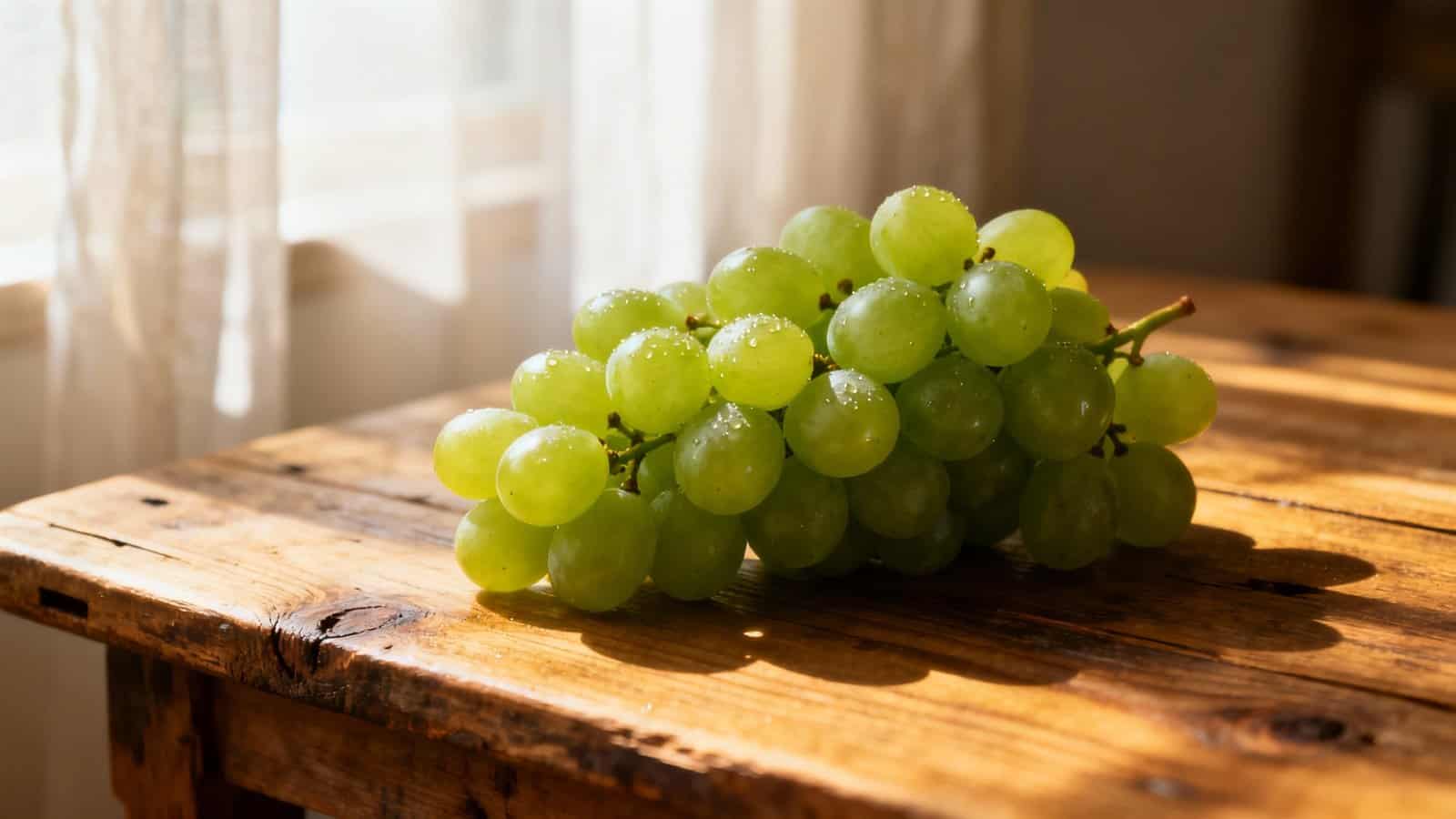
You’ll find that most grapes contain between 62 and 67 calories per 100 grams, making them a naturally sweet treat that won’t derail your daily calorie goals. A standard one-cup serving (151g) provides about 104 calories, while a small handful of 10 grapes has just 34 calories. Red and green varieties have similar counts, though factors like ripeness and variety can cause slight variations in the final numbers you’re tracking.
Key Takeaways
- Fresh grapes contain 60-70 calories per 100 grams, with most varieties averaging 62-67 calories depending on color and type.
- A standard 1-cup serving (151g) provides 104 calories, while 10 grapes contain approximately 34 calories.
- Raisins are significantly more caloric at 434 calories per cup versus 62 calories for fresh grapes due to water removal.
- Fully ripe grapes can contain up to 20% more calories than unripe ones due to higher sugar content.
- Wine grapes contain more calories (77-85 per 100g) than table grapes (60-70 per 100g) because of higher sugar concentration.
Calorie Content by Grape Color and Variety
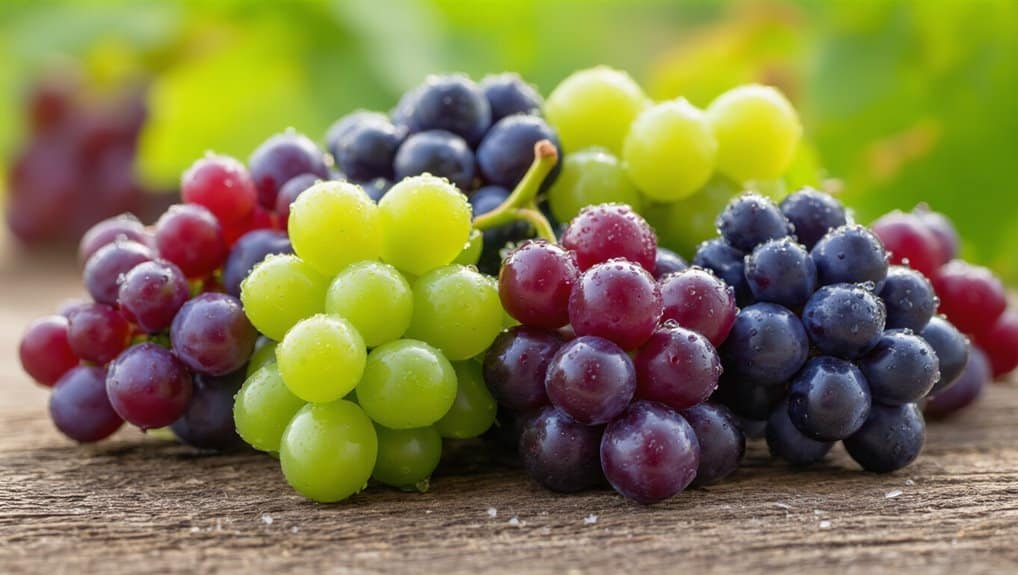
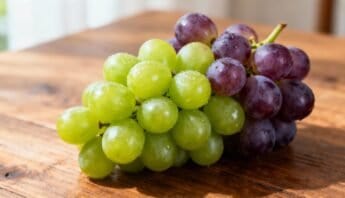
Most grapes contain roughly the same number of calories regardless of color, but you’ll find slight variations between varieties. Red and green grapes typically have 62 calories per 100 grams, while black grapes contain about 65 calories. Purple varieties fall somewhere in between at 63-64 calories.
When comparing seedless vs. seeded grapes, you won’t notice a significant caloric difference. Seeded grapes have approximately 67 calories per 100 grams, just slightly more than their seedless counterparts. The seeds themselves contribute minimal calories since you typically don’t consume them.
Table vs. wine grapes show more notable differences. Table grapes, bred for eating fresh, contain 60-70 calories per 100 grams. Wine grapes pack more sugar and calories—around 77-85 per 100 grams—because they’re harvested at peak ripeness for fermentation. Their concentrated sugars make them sweeter but less suitable for snacking. If you’re counting calories, stick to table varieties for everyday consumption.
Standard Serving Sizes and Their Caloric Values
Several standard serving sizes help you track grape calories accurately in your diet. Understanding portion sizes ensures you’re meeting your nutritional goals without overdoing calories.
| Serving Size | Weight | Calories |
|---|---|---|
| 1 cup | 151g | 104 |
| 1/2 cup | 75g | 52 |
| 10 grapes | 49g | 34 |
| 1 small bunch | 100g | 69 |
| 1 oz | 28g | 19 |
You’ll find that a standard one-cup serving contains about 104 calories, making grapes a satisfying snack that won’t break your calorie budget. If you’re watching portions closely, ten grapes provide just 34 calories—perfect for mindful snacking.
Consider serving swaps to manage intake: replace a cup of grapes with half a cup plus some berries for variety while maintaining similar calories. You can also freeze grapes for a longer-lasting treat that naturally slows consumption. These portion sizes work well whether you’re adding grapes to salads, enjoying them fresh, or incorporating them into meal prep.
Fresh Grapes vs. Dried Raisins: Calorie Comparison
Drying grapes into raisins concentrates their natural sugars and dramatically changes their calorie density. While you’re eating 62 calories in a cup of fresh grapes, the same cup of raisins packs about 434 calories. That’s seven times more calories because the water’s removed during dehydration.
The sugar concentration process transforms everything about these fruits:
- Fresh grapes contain 84% water; raisins only 15%
- One ounce of grapes has 19 calories versus 85 in raisins
- Texture changes from crisp and juicy to chewy and dense
- Fresh grapes fill you up faster due to water content
- Raisins’ sweetness intensifies, making them easier to overeat
You’ll find portion control harder with raisins since they’re smaller and don’t trigger fullness signals as quickly. If you’re watching calories, stick to fresh grapes for snacking. Save raisins for recipes where you need concentrated sweetness without adding moisture.
Nutritional Benefits Beyond Calories
Grapes consistently deliver impressive health benefits that extend far beyond their modest calorie count. You’ll find these small fruits pack a powerful antioxidant profile, including resveratrol, quercetin, and anthocyanins that protect your cells from oxidative stress. These compounds help reduce inflammation and may lower your risk of heart disease and certain cancers.
You’re also getting valuable vitamins when you eat grapes. They’re rich in vitamin K for bone health and vitamin C for immune support. The fiber content in grapes, though moderate at about 1 gram per cup, aids your digestive health and helps stabilize blood sugar levels.
Don’t overlook the potassium in grapes—it supports healthy blood pressure and muscle function. You’ll benefit from their natural polyphenols too, which improve cognitive function and may slow aging. The water content keeps you hydrated while the natural sugars provide quick energy without the crash you’d get from processed snacks.
How Grape Calories Compare to Other Popular Fruits
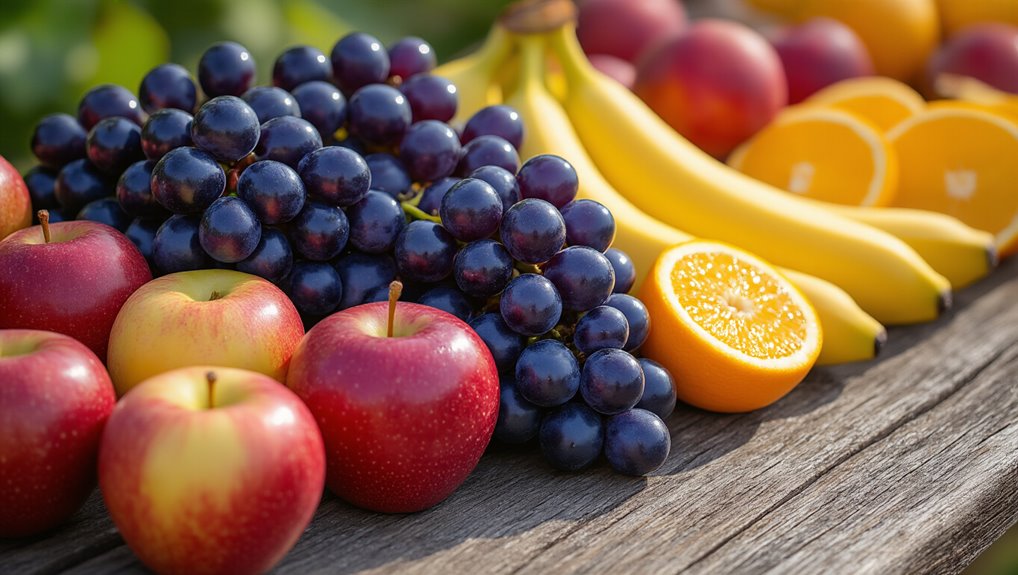
When you’re tracking calories, you’ll find that grapes fall right in the middle of the fruit spectrum at about 62 calories per 100 grams.
They’re higher than watermelon but lower than bananas, making them a moderate-calorie choice for your diet.
Here’s how grapes compare to other fruits per 100g serving:
- Watermelon: 30 calories
- Strawberries: 32 calories
- Grapes: 62 calories
- Bananas: 89 calories
- Avocados: 160 calories
You’ll notice that grape glycemic levels also place them moderately at 59 on the index, similar to their calorie positioning.
If you’re looking for fruit swaps, you can replace grapes with berries for fewer calories or choose apples for similar counts with more fiber.
When you need quick energy, grapes offer more calories than melons but won’t spike your blood sugar as much as tropical fruits like pineapple.
This balanced profile makes grapes versatile for snacking without the caloric burden of dried fruits.
Factors That Affect Calorie Count in Grapes
While all grapes contain roughly the same base calories, several factors can significantly alter their caloric density. You’ll find that vine ripeness plays a crucial role – fully ripe grapes accumulate more natural sugars, increasing their calorie content by up to 20%. When you pick grapes at peak ripeness, they’re sweeter and more caloric than those harvested early.
Your grape’s vineyard terroir directly impacts its sugar development and final calorie count. Warmer climates produce grapes with higher sugar concentrations, while cooler regions yield lower-calorie fruit. The soil’s mineral composition and drainage also affect how the vine metabolizes nutrients into sugars.
Processing methods matter too. If you’re eating raisins, you’re consuming concentrated calories – about 85 calories per ounce versus 19 for fresh grapes. Frozen grapes maintain their original calorie count, but grape juice removes fiber while keeping all the sugar, making it more calorie-dense per serving.
Best Ways to Include Grapes in a Calorie-Controlled Diet
You’ll find that incorporating grapes into your calorie-controlled diet becomes easier when you master portion control strategies and discover creative, healthy recipes that showcase their natural sweetness.
By learning when to eat grapes throughout your day, you can maximize their nutritional benefits while staying within your calorie goals.
These practical approaches will help you enjoy grapes regularly without derailing your diet plans.
Portion Control Strategies
Most people find it easier to control their grape portions by pre-measuring servings rather than eating directly from a large bunch.
You’ll develop better portion awareness by using these practical strategies:
- Use small bowls – Transfer one cup of grapes instead of bringing the entire container
- Count your grapes – Stick to 15-20 grapes for a standard serving
- Freeze portions – Pre-portion grapes in snack bags for grab-and-go options
- Set visual cues – Fill half your plate with vegetables before adding grapes
- Practice mindful snacking – Eat grapes slowly without distractions like TV
When you’re craving something sweet, measure your grapes first.
You’ll satisfy your hunger while maintaining control over your calorie intake throughout the day.
Healthy Grape Recipes
| Recipe | Calories |
|---|---|
| Grape & Greek Yogurt Parfait | 125 |
| Frozen Grape Pops | 60 |
| Grape Spinach Smoothie | 150 |
| Grape Walnut Salad | 180 |
| Roasted Grape Chicken | 220 |
Try roasting grapes with chicken for caramelized sweetness without added sugar. You can even pack healthy snacks for vineyard tours using portioned grape bags. Mix red and green varieties in salads for visual appeal and varied nutrients. These recipes prove you don’t need to sacrifice flavor while managing caloric intake.
Meal Timing Tips
When you’re managing your daily calorie intake, timing your grape consumption strategically can maximize their nutritional benefits while keeping hunger at bay.
You’ll find that grapes work best at specific times throughout your day.
Consider these optimal timing strategies:
- Morning boost: Add grapes to breakfast for natural energy without heavy calories
- Mid-afternoon slump: Combat 3 PM fatigue with a handful instead of processed snacks
- Post workout snacking: Replenish glycogen stores with grapes’ natural sugars after exercise
- Pre-dinner appetite control: Eat grapes 30 minutes before meals to reduce overeating
- Late night cravings solution: Choose frozen grapes over ice cream when you need something sweet
You’ll maintain better portion control by pre-portioning grapes into 100-calorie servings.
This approach prevents mindless eating while ensuring you stay within your daily targets.
Common Mistakes When Estimating Grape Calories
When tracking grape calories, you’ll often make three critical errors that can derail your diet goals. You might assume all grapes contain the same calories regardless of variety, grab handfuls without weighing them, or forget to account for sugars in processed grape products like raisins or juice.
These mistakes can add hundreds of unexpected calories to your daily intake.
Ignoring Grape Variety
Not all grapes pack the same caloric punch, yet many people assume they’re nutritionally identical across varieties. You’re making a mistake if you treat red Globe grapes the same as tiny Champagne grapes. Seedless varieties typically contain more sugar and calories than their seeded counterparts because they’ve been bred for sweetness.
Different grape varieties show notable caloric variations:
- Red grapes: 62-69 calories per 100g
- Green Thompson seedless: 67 calories per 100g
- Black Concord grapes: 62 calories per 100g
- Cotton Candy grapes: 72 calories per 100g
- Muscat varieties: 70-75 calories per 100g
Vineyard terroir also influences sugar development and final calorie content. You’ll find grapes from warmer regions contain more natural sugars than those from cooler climates, directly impacting their caloric density.
Not Weighing Portions
Beyond variety differences, you’re likely underestimating your grape intake by eyeballing portions instead of weighing them. Most people’s portion guessing leads to consuming 40-50% more grapes than they think. A “handful” varies dramatically between individuals, and visual estimation fails because grapes cluster irregularly on stems.
You’ll find that what looks like one cup often weighs significantly more than the standard 92-gram serving. Small grapes pack tighter, creating denser portions, while larger varieties leave air gaps that deceive your eyes. Without a food scale, you can’t accurately track whether you’re eating 62 calories or 95 calories worth of grapes. This measurement error compounds daily, potentially adding hundreds of unaccounted calories to your weekly intake. Investing in a kitchen scale eliminates this guesswork entirely.
Overlooking Added Sugars
Watch out for these common sources of added sugars:
- Dried grapes often have sugar coatings for extra sweetness
- Grape juice drinks contain high-fructose corn syrup
- Canned grapes swim in heavy syrup solutions
- Trail mixes feature sweetened raisins with additional glazes
- Yogurt-covered raisins pack multiple sugar layers
You’ll underestimate calories if you don’t check labels carefully.
That “healthy” grape snack might contain 40% more calories from sweeteners alone.
Fresh grapes have about 62 calories per 100 grams, but processed versions can double that amount.
Always read ingredient lists to spot sneaky sugars.
Frequently Asked Questions
Do Frozen Grapes Have the Same Calories as Fresh Grapes?
You’ll get the same calories from frozen grapes as fresh ones since freezing doesn’t change their nutritional content.
While texture differences exist – frozen grapes become firmer and ice-like – the calorie count stays identical.
For storage tips, you can freeze grapes directly on the stem or remove them first.
They’ll last up to 12 months frozen versus just a week fresh.
You’re essentially eating the same fruit, just temperature-transformed.
Can Eating Too Many Grapes Cause Weight Gain?
Yes, you can gain weight from eating too many grapes since they’re relatively high in natural sugars and calories.
While grapes aren’t extremely high in calorie density compared to dried fruits or nuts, they’re easy to overeat. You’ll consume about 62 calories per 100 grams, which adds up quickly without portion control. If you’re snacking mindlessly on grapes, you might easily eat 300-400 calories without realizing it.
Are Organic Grapes Lower in Calories Than Conventional Grapes?
No, organic grapes aren’t lower in calories than conventional grapes. You’ll find both types contain about 62 calories per 100 grams.
While organic farming methods improve soil quality and eliminate synthetic pesticide residues on your fruit, they don’t change the natural sugar and calorie content. The main differences you’ll notice are in environmental impact and chemical exposure, not calories. Nutrient content remains virtually identical between organic and conventional varieties.
Do Seedless Grapes Contain Fewer Calories Than Seeded Varieties?
You’ll find seedless and seeded grapes have virtually identical calorie counts, both containing about 62 calories per 100 grams. The seedless sweetness doesn’t mean fewer calories – they’re bred for convenience, not reduced sugar content.
While you might notice texture differences between varieties, with seedless grapes offering smoother eating experiences, these variations don’t affect their caloric value. Seeds themselves contribute negligible calories since they’re typically not digested when swallowed whole.
How Many Calories Do Grapes Add to Wine?
You’ll find that grapes don’t directly add calories to wine since fermentation transforms their sugars into alcohol.
The fermentation yield determines the final caloric content – typically, wine calories come from alcohol (7 calories per gram) and residual sugar. A 5-ounce glass contains 120-130 calories for dry wines and up to 165 for sweet wines.
The grapes’ original 60-70 calories per 100 grams completely change through fermentation’s chemical process.
Conclusion
You’ve learned that grapes contain roughly 60-70 calories per 100 grams, varying slightly by color and variety. Whether you’re snacking on fresh grapes or adding raisins to your meals, you can now accurately track their caloric impact. Remember to measure your portions, account for the concentrated calories in dried grapes, and enjoy them as part of your balanced diet. You’ll find grapes are a nutritious, relatively low-calorie choice compared to many other sweet snacks.


Table of Contents




No Comments