
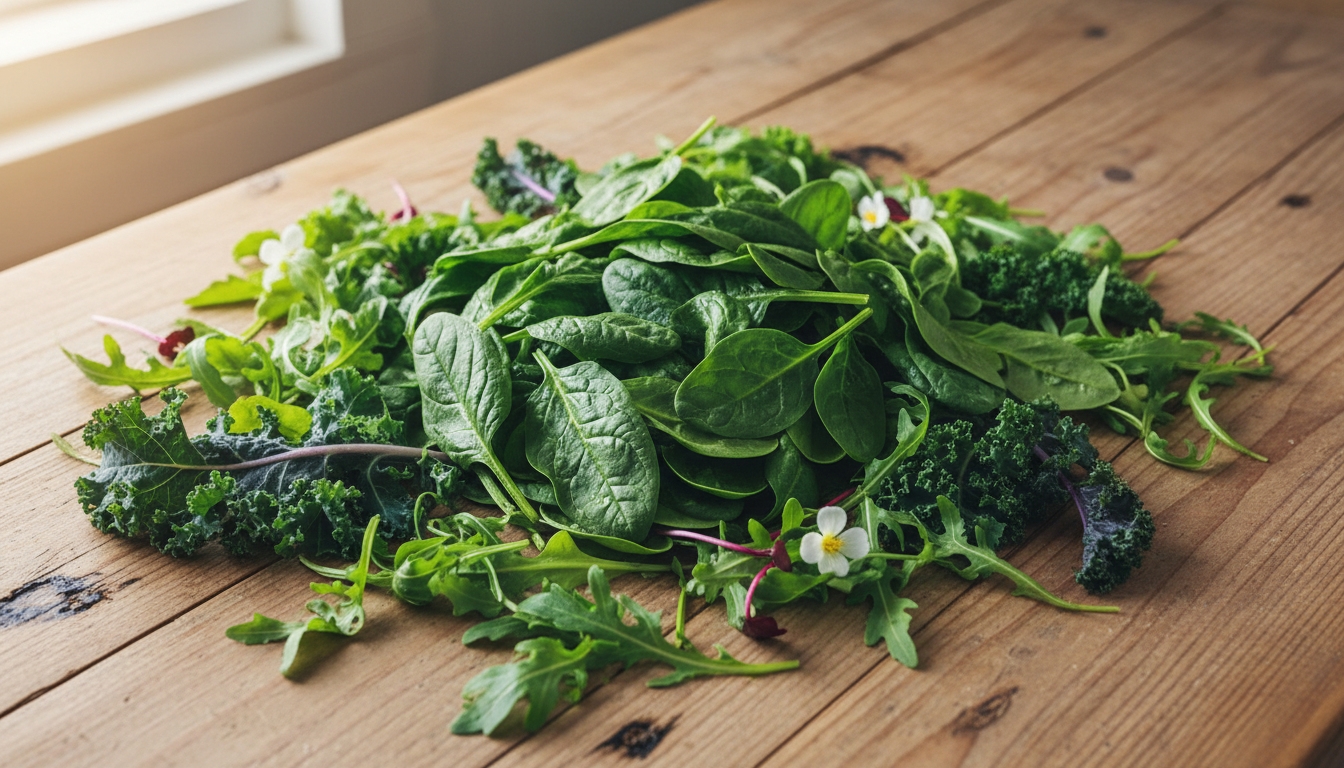
What Fresh Leafy Greens Suit Mediterranean Diet Meals?
You’ll love adding kale, spinach, arugula, watercress, Swiss chard, beet greens, endive, radicchio, broccoli rabe, and collard greens to Mediterranean plates. They bring texture, color, and antioxidant‑rich flavor while keeping meals light. Pair them with olives, capers, grilled fish, or whole‑grain couscous for extra depth. Fresh herbs—parsley, mint, and basil—boost brightness and aroma. Finish dishes with a splash of lemon‑olive oil and a pinch of sea salt, and you’ll discover even more tasty combos.
Kale & Spinach – Versatile Mediterranean Base
Ever wondered how a single leafy blend can transform Mediterranean meals? You’ll find kale and spinach perfect for creating hearty, nutrient‑dense dishes that still feel light. Toss raw spinach into a chickpea salad, drizzle with lemon‑olive oil, and sprinkle feta for a quick lunch.
For a warm option, sauté kale with garlic, cherry tomatoes, and a splash of red wine vinegar, then serve over whole‑grain couscous. Both greens thrive in Mediterranean sauces; blend spinach with Greek yogurt, dill, and cucumber for a refreshing tzatziki twist.
Kale’s sturdy leaves hold up well in stews—add them late in the cooking process to retain texture while absorbing broth flavors. Pair these greens with olives, capers, and grilled fish for balanced meals rich in iron, calcium, and antioxidants. By rotating kale and spinach, you keep your menu varied, colorful, and aligned with the heart‑healthy principles of the Mediterranean diet.
Arugula & Watercress – Peppery Greens for Salads
You’ll love how the peppery bite of arugula and watercress lifts any salad, turning simple greens into a flavor star.
Their bold taste pairs perfectly with Mediterranean staples like lemon, olive oil, and feta.
Plus, they pack a nutrient punch, delivering vitamins A, C, and K while keeping the dish light and refreshing.
Peppery Flavor Boost
Looking for a quick way to add bite and brightness to your Mediterranean salads? Toss arugula and watercress into the mix; their peppery punch lifts simple veggies into bold, satisfying dishes. The natural heat pairs perfectly with lemon‑olive oil dressings, feta crumbs, and grilled halloumi, creating a lively contrast without overwhelming the palate. Use a handful of each green to keep flavors balanced, and let the peppery notes shine through.
| Green | Flavor Note |
|---|---|
| Arugula | Spicy, mustard‑like |
| Watercress | Sharp, sea‑fresh |
| Endive | Mild, slightly bitter |
| Radicchio | Earthy, peppery |
These greens also add texture, making every bite interesting and refreshing. Enjoy the zing they bring to your Mediterranean meals.
Nutrient‑Rich Salad Base
Adding arugula and watercress to your Mediterranean salad creates a nutrient‑rich base that’s both vibrant and health‑boosting. Their peppery bite awakens your palate while delivering calcium, iron, and vitamin K, essential for bone health and blood clotting. You’ll also get folate, which supports cell division, and antioxidants like lutein that protect eye health. Because both greens thrive in cool, moist soils, they retain high water content, keeping you hydrated and aiding digestion. Mix them with olives, tomatoes, and a drizzle of olive oil for a balanced, heart‑friendly meal. The slight bitterness pairs perfectly with feta or citrus vinaigrette, turning a simple side into a powerhouse of flavor and nutrition.
Swiss Chard & Beet Greens – Earthy Sauté Options
If you’re craving an earthy side that pairs perfectly with Mediterranean flavors, toss Swiss chard and beet greens in a hot skillet with olive oil, garlic, and a splash of lemon juice; the quick sauté brings out their natural sweetness while delivering a vibrant, nutrient‑rich boost to any meal. Start by washing the greens thoroughly, then roughly chop the stems and leaves. Heat a tablespoon of extra‑virgin olive oil over medium‑high heat, add minced garlic, and let it sizzle for 30 seconds. Add the chopped stems first—they’re denser—and cook for two minutes before stirring in the leaves. Season with sea salt, cracked black pepper, and a pinch of red‑pepper flakes for subtle heat. Finish with the lemon juice and a drizzle of aged balsamic if you like. Serve immediately alongside grilled fish, roasted vegetables, or a simple quinoa bowl for a satisfying, earth‑forward Mediterranean bite.
Endive & Radicchio – Bitter Leaves for Balanced Flavors
You’ll find that a drizzle of olive oil softens the natural bitterness of endive and radicchio, making them more approachable. Tossing the leaves with a citrus vinaigrette adds a bright contrast that lifts the flavor profile. Mix them into grain bowls for a crunchy texture that balances the creamy and earthy components.
Balancing Bitter With Olive Oil
A splash of olive oil instantly softens the sharp bite of endive and radicchio, turning their natural bitterness into a harmonious backdrop for Mediterranean dishes. You’ll notice how the oil’s fruitiness lifts the greens, creating depth without masking their character. Drizzle a generous glug, then toss gently so each leaf coats evenly; the fat carries the peppery notes while mellowing the edge. Use a high‑quality extra‑virgin oil for the best balance, and remember to season lightly with sea salt to enhance mouthfeel.
- Choose oil with low acidity for subtle sweetness.
- Warm the oil slightly to release aromatics.
- Toss greens immediately after drizzling to prevent sogginess.
- Finish with a pinch of smoked paprika for a smoky hint.
Pairing With Citrus Vinaigrette
Olive oil’s fruitiness already softens the bite of endive and radicchio, so a bright citrus vinaigrette can lift those bitter leaves into a lively, balanced bite.
You’ll whisk together fresh lemon or orange juice, a splash of white wine vinegar, a teaspoon of honey, and a pinch of sea salt, then drizzle the mixture over the greens.
The acidity cuts the bitterness while the subtle sweetness rounds the flavor profile.
Toss the leaves gently to coat each frond evenly, ensuring the vinaigrette clings without drowning the crisp texture.
Finish with a sprinkling of toasted pine nuts or shaved Parmesan for an extra layer of richness.
This simple pairing transforms a potentially sharp salad into a harmonious Mediterranean starter that excites your palate.
Enhancing Textures in Grain Bowls
How can you turn the natural bite of endive and radicchio into a satisfying crunch in a grain bowl? Toss them raw with a light vinaigrette, then let them sit for five minutes to soften slightly while keeping a firm bite. Slice the leaves thinly so they mingle with quinoa, farro, or bulgur without overwhelming the grain’s texture. Add a splash of citrus juice to brighten the bitterness and balance the overall flavor profile.
- Thinly slice endive and radicchio for even distribution.
- Drizzle with olive oil and lemon, then rest 5 minutes.
- Mix into warm grains to create contrast.
- Top with toasted nuts for extra crunch.
Broccoli Rabe & Collard Greens – Hearty Greens for Stews
Why not let the bold, slightly bitter bite of broccoli rabe and the sturdy, earthy texture of collard greens anchor your winter stews? You’ll find both greens thrive in slow‑cooked dishes, soaking up broth while retaining a satisfying bite.
Start by trimming the rabe’s tough stems and slicing collard leaves into wide ribbons; this speeds up cooking and prevents sogginess.
Toss them into a pot of simmering tomatoes, garlic, and olive oil, then let the mixture bubble gently for 15‑20 minutes.
The rabe’s peppery edge balances the collards’ mellow, slightly sweet notes, creating depth without overwhelming the palate.
Add a splash of lemon juice at the end to brighten the flavors and a pinch of sea salt to enhance the natural bitterness.
Serve the stew over whole‑grain couscous or barley for a wholesome, Mediterranean‑style meal that keeps you warm and nourished throughout the colder months.
Fresh Herbs (Parsley, Mint, Basil) – Flavor Boosters for Every Dish
A handful of fresh herbs—parsley, mint, and basil—can instantly lift any Mediterranean dish, adding bright, aromatic layers without overwhelming the core flavors. You’ll find that a quick chop transforms simple salads, grilled fish, or roasted veggies into vibrant plates that feel both rustic and refined. The herbs also bring health benefits: antioxidants, digestive aid, and a burst of vitamin K. When you sprinkle them at the end of cooking, you preserve their delicate oils and keep the flavor lively.
- Parsley – garnish salads, tabbouleh, and lemon‑olive oil sauces.
- Mint – brighten yogurt dips, lamb kebabs, and watermelon salads.
- Basil – finish tomato‑based stews, pesto, and grilled chicken.
- Combined blend – toss a trio into grain bowls for a balanced, herbaceous punch.
Use these herbs strategically, and you’ll notice each bite feels fresher, more nuanced, and unmistakably Mediterranean.
Frequently Asked Questions
Can I Eat These Greens Raw Without Cooking?
Yes, you can eat them raw—just wash them well, toss them into salads or wraps, and enjoy their crisp texture and bright flavor without any cooking needed.
Do These Greens Affect Blood Pressure?
You’ll find that these greens usually lower blood pressure because they’re rich in potassium, magnesium, and nitrates; they help relax blood vessels and improve circulation, especially when you eat them raw or lightly cooked.
Are Any of These Greens Seasonal?
You’ll find most of them—spinach, arugula, kale, and chard—are year‑round, but baby lettuce, mustard greens, and beet tops peak in spring, while collard and Swiss chard thrive in fall.
How Long Can I Store Fresh Greens?
You can keep fresh greens in the fridge for about five to seven days if you store them in a breathable bag or container, keep them dry, and check regularly for wilting or spoilage.
Do These Greens Interact With Common Medications?
You should check each herb’s vitamin K content, as it can thin blood‑thinners, and watch for oxalates that may affect kidney stones. Generally, Mediterranean greens are safe, but consult your doctor before mixing meds.
Conclusion
You’ve got a vibrant palette of greens that fit perfectly into Mediterranean meals. Kale, spinach, arugula, and watercress give you fresh, peppery bases for salads and bowls. Swiss chard, beet greens, broccoli rabe, and collard greens add hearty, earthy depth to sautés and stews. Don’t forget the bright lift from parsley, mint, and basil. Mix, match, and enjoy the flavors and health benefits of these Mediterranean‑friendly greens.


No Comments