
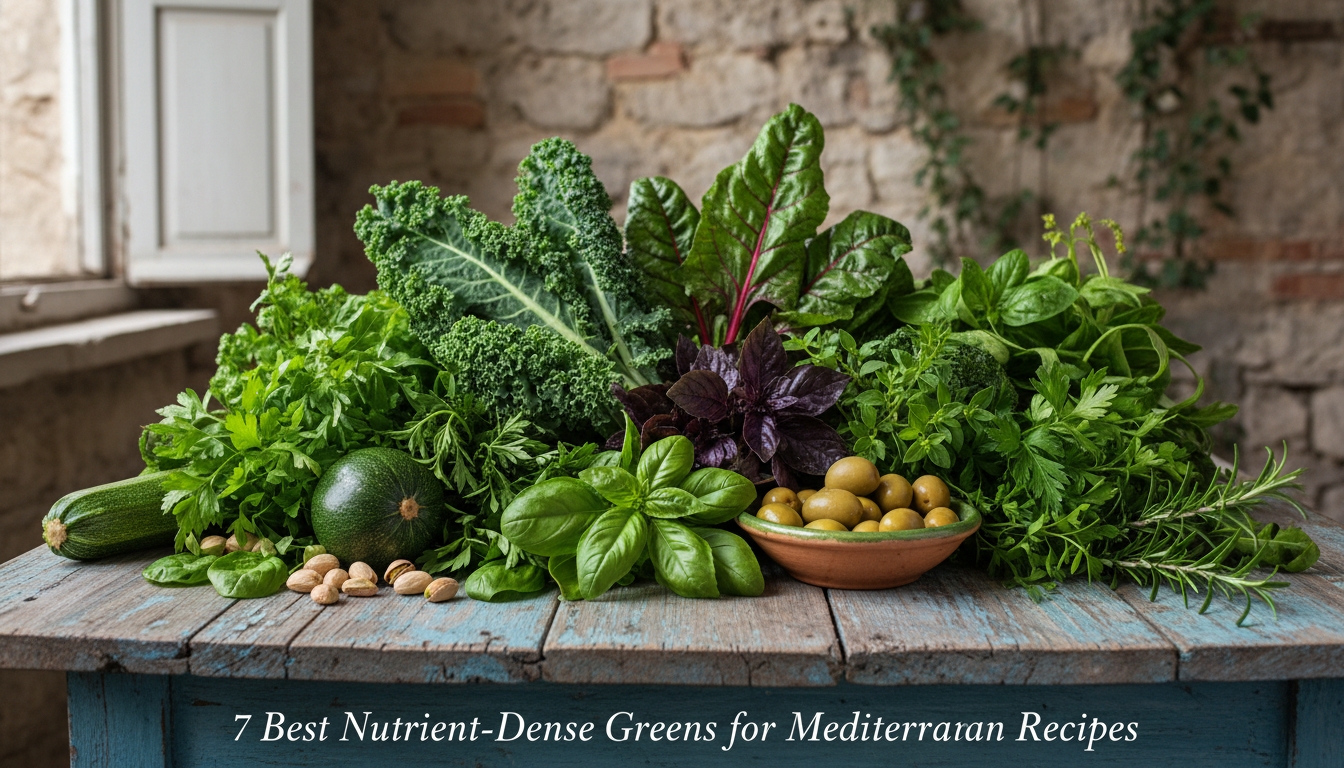
7 Best Nutrient Dense Greens for Mediterranean Recipes
You’ll boost flavor and nutrition in Mediterranean dishes by picking from spinach, kale, arugula, Swiss chard, collard greens, mizuna, and another powerhouse green. Spinach gives a quick, crisp boost of iron and vitamin K; kale adds hearty texture and antioxidants; arugula brings a peppery bite; Swiss chard offers versatility with its earthy stems; collards provide fiber‑rich depth; mizuna delivers a light crunch and vitamin C. Each pairs perfectly with olive oil, lemon, and herbs, and the next part will show you how to match each green to specific recipes.
How to Choose the Right Mediterranean Green for Your Dish
Which Mediterranean green fits your recipe best? First, match the flavor profile. If you need a peppery bite, reach for arugula; for a mild, buttery texture, choose baby spinach or chard.
Next, consider cooking method. Heat‑tolerant greens like kale and collard thrive in sauté or braise, while tender leaves such as mizuna wilt quickly in a brief stir‑fry.
Texture matters too—crisp lettuce adds crunch to salads, whereas silky purslane blends into sauces.
Look at color intensity; deep‑green leaves signal higher chlorophyll and antioxidants, but lighter greens still pack nutrients.
Finally, check seasonal availability and price. Fresh, locally sourced greens taste better and cost less.
Spinach: Mediterranean‑Friendly Powerleaf for Quick Salads
You’ll get a quick nutrient boost when you toss fresh spinach into a Mediterranean salad. Its mild flavor pairs effortlessly with olives, feta, and lemon‑olive oil dressings. Plus, the leaves stay crisp and vibrant with just a few minutes of prep.
Quick Nutrient Boost
Ever wondered how a handful of spinach can transform a Mediterranean salad into a nutrient powerhouse? You can boost iron, calcium, vitamin K, folate, and antioxidants in seconds, keeping the dish light yet satisfying. Toss raw leaves with olive oil, lemon, and a pinch of sea salt, then let the heat of the sun‑dried tomatoes and olives awaken the flavors. The quick nutrient boost means you’ll feel energized without sacrificing the fresh, bright profile you love in Mediterranean cuisine.
- Add a squeeze of fresh lemon for vitamin C that enhances iron absorption.
- Sprinkle toasted pine nuts for healthy fats and crunch.
- Mix in crumbled feta for calcium and protein.
- Toss with sliced cucumber for hydration and texture.
- Finish with a drizzle of extra‑virgin olive oil for antioxidants.
Versatile Mediterranean Pairings
Spinach’s mild, slightly peppery flavor makes it a perfect canvas for Mediterranean staples, letting you pair it with bright herbs, briny olives, and tangy cheeses without overwhelming the dish. Toss fresh baby spinach with chopped mint, dill, and a splash of lemon‑olive oil for a fragrant side that brightens grilled fish. Mix in sliced Kalamata olives and crumbled feta for a salty punch that balances the leafy sweetness. Add roasted red peppers and toasted pine nuts to create texture and depth, turning the greens into a hearty topping for lamb kofta. Blend spinach with sun‑dried tomatoes, garlic, and a dash of cumin for a quick dip that pairs beautifully with warm pita. These combinations keep your meals vibrant, nutritious, and unmistakably Mediterranean.
Easy Fresh Salad Prep
A handful of fresh spinach leaves can turn a simple pantry into a vibrant, Mediterranean‑inspired salad in minutes. You’ll love how the tender, slightly peppery leaves soak up lemon‑olive oil dressings and pair instantly with feta, olives, and sun‑dried tomatoes. Toss the spinach with a splash of red‑wine vinegar, a drizzle of extra‑virgin olive oil, and a pinch of sea salt for a quick, nutrient‑dense side that feels luxurious yet effortless. The bright green color lifts any table, and the iron‑rich leaf boosts your energy without any fuss. Keep a bag of pre‑washed spinach on hand, and you’ll always have a foundation for a fresh, Mediterranean‑style salad.
- Pre‑wash and spin dry for crisp texture
- Add sliced cucumber, cherry tomatoes, and Kalamata olives
- Crumble feta or goat cheese for creamy tang
- Dress with lemon juice, olive oil, and a dash of oregano
- Toss gently and serve immediately for maximum freshness
Kale: Antioxidant‑Rich Mediterranean Green for Greek‑Style Salads
You’ll love the crisp bite kale adds to a Greek‑style salad, giving the dish texture that stands up to chunky veggies and feta. Toss the leaves with a simple olive‑oil dressing, and the healthy fats help release kale’s powerful antioxidants. The result is a vibrant, nutrient‑rich salad that feels both fresh and satisfying.
Greek-Style Salad Crunch
Craving a salad that packs both crunch and a powerful antioxidant punch? You’ll love the Greek‑Style Salad Crunch, where kale’s sturdy leaves meet Mediterranean classics. Toss raw kale with cucumber, cherry tomatoes, red onion, and a sprinkle of feta. The kale stays crisp when mass‑massaged with olive oil and lemon, creating a texture that holds up to hearty toppings. Add a handful of olives for briny depth, and finish with a pinch of oregano. This combo delivers vitamin K, vitamin C, and phytonutrients while staying light enough for any meal.
- Mass‑massage kale with lemon‑olive oil dressing
- Slice cucumbers thin for refreshing bite
- Halve cherry tomatoes for juicy bursts
- Dice red onion for mild sharpness
- Crumble feta and scatter olives for savory finish
Olive‑Oil Dressing Boost
Ever wondered how a simple olive‑oil dressing can transform kale into a vibrant, antioxidant‑rich base for Greek‑style salads? You’ll find that the oil’s healthy fats dissolve fat‑soluble nutrients, making lutein, zeaxanthin, and vitamin K more bioavailable. Start by massaging kale leaves with a splash of extra‑virgin olive oil, a pinch of sea salt, and a squeeze of lemon. The friction softens the fibrous texture, while the oil coats each leaf, locking in flavor and moisture. Add a dash of red‑wine vinegar, a few crushed garlic cloves, and a sprinkle of oregano for authentic Mediterranean notes. Let the mixture rest for ten minutes, then toss with feta, olives, and cucumber. The result is a glossy, nutrient‑dense salad that feels indulgent yet remains light.
Arugula: Peppery Mediterranean Green That Elevates Levantine Wraps
When you toss arugula into a Levantine wrap, its peppery bite instantly lifts the flavors, turning a simple bite into a vibrant, Mediterranean experience. The leaf’s natural bitterness balances the richness of hummus, grilled lamb, or feta, while its crisp texture adds a refreshing crunch. Because arugula thrives in cooler seasons, it brings a fresh, slightly spicy note that pairs perfectly with sumac, za’atar, and lemon‑olive‑oil drizzles. It’s also a nutrient powerhouse, delivering vitamin K, calcium, and polyphenols that support heart health and inflammation reduction. Use it raw for maximum bite, or give it a quick massage with olive oil and lemon to soften the edge for those who prefer a milder profile.
- Mix arugula with toasted pine nuts for added texture.
- Pair with pomegranate seeds for a sweet‑tart contrast.
- Sprinkle sumac to amplify the peppery flavor.
- Add a drizzle of tahini for creamy balance.
- Wrap in warm pita to meld flavors instantly.
Swiss Chard: Versatile Mediterranean Green for Italian Pasta
Looking for a green that can hold its own in a hearty Italian pasta dish? Swiss chard delivers sturdy, slightly sweet leaves that soften without turning mushy, making it perfect for sauces, sautés, and stuffing. Toss the ribs and stems in olive oil, garlic, and chili flakes until they’re just tender, then fold them into al dente spaghetti or orecchiette. The deep‑green veins add a subtle earthiness, while the bright stems contrast with a pop of color. Chard’s high vitamin K, A, and C content boosts nutrition without overwhelming flavor, and its natural minerals keep the dish balanced. Use a handful of chopped chard per serving; it cooks in three minutes, preserving texture and nutrients. Finish with a sprinkle of Pecorino or Parmigiano for richness, and you’ll have a Mediterranean‑inspired pasta that feels both comforting and light.
Collard Greens: Hearty Fiber‑Rich Mediterranean Green for Provençal Stews
Why not add collard greens to your Provençal stew for a boost of heart‑healthy fiber and bold flavor? These sturdy leaves hold up well against long simmering, delivering a slightly bitter edge that balances tomatoes, olives, and herbs. Their high fiber content keeps you full, supports digestion, and helps regulate blood sugar. Plus, collards bring a dose of vitamin K, A, and C, plus antioxidants that complement the Mediterranean diet’s emphasis on plant‑based nutrition. When you toss them in early, they soften without turning mushy, preserving a pleasant bite that adds texture to the broth. Pair them with garlic, rosemary, and a splash of white wine for a rustic, nutrient‑dense stew that feels both comforting and vibrant.
- Slice stems thinly to reduce toughness
- Add leaves in the last 15 minutes of simmering
- Finish with a drizzle of extra‑virgin olive oil
- Sprinkle toasted pine nuts for crunch
- Pair with a glass of dry rosé for balance
Mizuna: Light‑Crunch Mediterranean Green Perfect for Spanish Tapas Bowls
Ever tried adding mizuna to your Spanish tapas bowls? You’ll love its peppery bite and feathery texture, which brighten each bite without overwhelming the dish. Mizuna thrives in Mediterranean climates, so it’s readily available at farmers’ markets during spring and fall. Its tender leaves pack vitamin K, vitamin C, and folate, while its roots supply a modest amount of calcium and iron—perfect for boosting nutrition in small plates. Toss raw mizuna with sliced chorizo, marinated olives, and a drizzle of sherry‑vinegar vinaigrette for a crisp contrast to rich, cooked elements. If you prefer a warm touch, quick‑sauté the greens with garlic and smoked paprika, then fold them into a patatas bravas topping. The subtle heat complements the smoky flavors of pimentón, and the crunch stays intact even after brief cooking. Keep mizuna fresh by storing it in a damp paper towel inside a sealed bag; it’ll stay crisp for up to five days.
Frequently Asked Questions
Can I Freeze Mediterranean Greens Without Losing Nutrients?
Yes, you can freeze Mediterranean greens and retain most nutrients, especially if you blanch them briefly first. Store them in airtight bags, keep the freezer at 0°F, and use within three months for best quality.
Are There Mediterranean-Friendly Greens Suitable for Vegan Diets?
You can use kale, spinach, arugula, Swiss chard, and collard greens—they’re Mediterranean‑friendly, vegan‑approved, and packed with vitamins, minerals, and antioxidants for hearty, nutritious dishes.
How Do I Store Fresh Mediterranean Greens to Extend Shelf Life?
Store them in a damp paper towel inside a sealed bag, keep the bag in the crisper drawer, and place any wilted leaves in a bowl of cold water; change the water daily.
Which Mediterranean Greens Are Low in Oxalates for Kidney Health?
You should choose kale, collard greens, bok choy, and Swiss chard—these Mediterranean‑style greens are low in oxalates, supporting kidney health while still adding flavor and nutrients to your dishes.
Can I Grow These Mediterranean Greens in a Home Indoor Garden?
Yes, you can grow Mediterranean greens indoors. Choose compact varieties like arugula, spinach, and kale; use well‑draining soil, a sunny windowsill or grow lights, and keep the soil consistently moist.
Conclusion
Now you’ve got a vibrant toolbox of Mediterranean greens, each bringing its own texture, flavor, and health boost to your cooking. Mix and match them to keep meals interesting, and let their natural goodness shine in every bite. By choosing the right green for each recipe, you’ll create dishes that are not only delicious but also packed with nutrients—making every Mediterranean-inspired meal a winning,.


Table of Contents
Related posts:
 16 Irresistible Reasons to Embrace the Mediterranean Diet for a Healthier You
 16 Flavor-Packed Tasty Mediterranean Diet Recipes You Need to Try for a Healthier Lifestyle!
 Kickstart Your Day: 21 Delicious Mediterranean Diet Breakfast Recipes for a Healthy Lifestyle
 Kickstart Your Health: The Ultimate 14-Day Mediterranean Diet Meal Plan for Beginners!


No Comments