
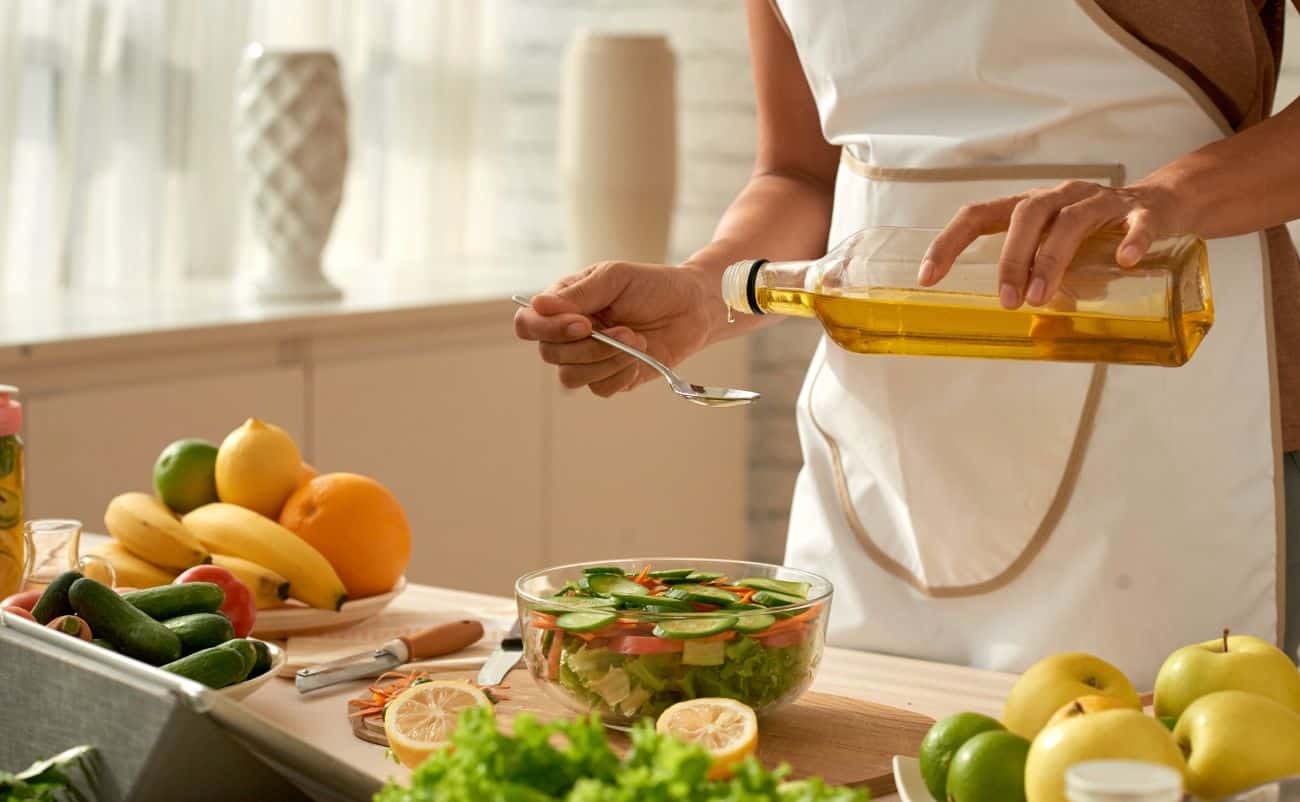
You’ll discover Mediterranean salad Recipes that offer vibrant flavors through fresh ingredients like tomatoes, cucumbers, herbs, and tangy dressings. Try classic Greek salad with feta and olives, herb-packed tabbouleh with bulgur, or fattoush featuring crispy pita chips. Branch out with Moroccan carrot-orange salad, Italian panzanella, or protein-rich lentil variations. These no-fuss recipes celebrate quality ingredients with simple olive oil and lemon dressings. Master these authentic combinations to transform everyday vegetables into exciting, healthy meals.
Table of Contents
Key Takeaways
- Classic Mediterranean salads include Greek Village Salad, Tabbouleh, and Fattoush, featuring fresh vegetables, herbs, and simple olive oil-lemon dressings.
- Unique combinations like Moroccan Carrot-Orange Salad and Watermelon-Feta Salad blend sweet and savory flavors with aromatic herbs.
- Lentil and chickpea salads provide plant-based protein and fiber while incorporating Mediterranean ingredients like roasted peppers and fresh herbs.
- Essential ingredients include extra virgin olive oil, fresh herbs, feta cheese, olives, lemon juice, and quality vegetables.
- Many Mediterranean salads improve with resting time and store well, making them ideal for meal prep and entertaining.
Classic Greek Village Salad (Horiatiki)
When you’re craving authentic Mediterranean flavors, nothing beats a traditional Greek village salad, known locally as Horiatiki. You’ll love how this rustic dish celebrates fresh, quality ingredients without lettuce – just ripe tomatoes, crisp cucumbers, sliced onions, green bell peppers, Kalamata olives, and a generous block of feta cheese.
You don’t need complicated dressing variations for this salad. Simply drizzle extra virgin olive oil over the vegetables, add a splash of red wine vinegar, and season with dried oregano and salt. That’s it. The tomatoes’ natural juices combine with the oil to create a light, flavorful dressing at the bottom of your bowl.
For the best results, you’ll want to use room-temperature tomatoes and high-quality Greek feta. Cut your vegetables into large, rustic chunks rather than small pieces. This isn’t a delicate salad – it’s meant to be hearty and satisfying.
Tabbouleh With Fresh Parsley and Bulgur
Moving from Greece to the Levant, tabbouleh offers a completely different take on Mediterranean salads with its herb-forward approach.
You’ll find this vibrant dish relies on fresh parsley as its star ingredient, not just a garnish.
For proper tabbouleh preparation, you’ll need fine bulgur wheat, which requires only a brief soak in water.
Don’t over-hydrate it – you want distinct grains, not mush.
Chop your parsley finely but avoid bruising the leaves.
Mix it with diced tomatoes, minced onions, and fresh mint.
The parsley benefits extend beyond flavor.
It’s packed with vitamins K, C, and A, while providing powerful antioxidants.
You’re essentially eating a nutrient-dense salad disguised as a side dish.
Dress your tabbouleh simply with lemon juice and olive oil.
Let it rest for 30 minutes before serving to allow the flavors to meld.
You’ll achieve the perfect balance of tangy, fresh, and herbaceous notes that define authentic Levantine cuisine.
Fattoush Salad With Crispy Pita Chips
You’ll build authentic fattoush by combining fresh vegetables like tomatoes, cucumbers, and radishes with herbs such as mint and parsley, then tossing everything in a tangy sumac-lemon dressing.
To make the signature crispy pita chips, you’ll brush torn pita pieces with olive oil and bake them at 375°F until they’re golden and crunchy.
The contrast between the crisp pita and juicy vegetables creates the perfect texture that makes this Lebanese salad so irresistible.
Traditional Lebanese Ingredients
If you’re craving the vibrant flavors of the Middle East, fattoush salad delivers an irresistible combination of fresh vegetables, herbs, and crispy pita chips that’ll transform your Mediterranean meal.
You’ll need these authentic ingredients to capture true Lebanese spices and Mediterranean flavors:
- Sumac – This tangy, lemony spice gives fattoush its distinctive taste
- Fresh mint and parsley – Essential herbs that brighten every bite
- Pomegranate molasses – Adds sweet-tart complexity to the dressing
- Za’atar – Blend of thyme, oregano, and sesame seeds for earthy depth
Don’t skip the radishes and purslane if you can find them.
They’re traditional additions that provide peppery crunch and subtle sourness.
Your fattoush won’t taste authentic without quality olive oil and fresh lemon juice binding everything together.
Pita Chip Preparation
Two crispy preparation methods will transform your pita bread into the perfect fattoush topping.
First, you’ll cut fresh pita into triangles and bake them at 400°F for 8-10 minutes until golden. Alternatively, you can deep-fry the pieces for 2-3 minutes for extra crunch.
Before cooking, brush your pita with olive oil and experiment with different pita chip flavors. You’ll love adding za’atar, sumac, or garlic powder for authentic taste.
Some cooks prefer mixing cumin with paprika for a spicier version.
Your pita chip toppings can include sesame seeds, dried herbs, or sea salt flakes. Just remember to add these seasonings before baking or after frying while the chips are still warm.
Store any extras in an airtight container for up to three days.
Moroccan Carrot and Orange Salad
You’ll transform simple carrots into an exotic side dish by mastering the traditional Moroccan spice blend of cumin, cinnamon, and paprika.
Start by julienning fresh carrots and segmenting oranges, then toss them with the warm spices, fresh herbs, and a honey-lemon dressing.
The key technique involves briefly blanching the carrots to achieve the perfect tender-crisp texture that absorbs the aromatic flavors.
Traditional Spice Blend
When you’re crafting an authentic Moroccan carrot and orange salad, the traditional spice blend transforms simple ingredients into something extraordinary.
This North African combination reflects centuries-old spice origins from trade routes crossing the Sahara and Mediterranean.
You’ll create distinct flavor profiles by combining:
- Cumin – earthy warmth that grounds the blend
- Cinnamon – sweet complexity balancing citrus notes
- Paprika – subtle smokiness with vibrant color
- Cayenne – gentle heat that awakens your palate
Mix equal parts cumin and cinnamon with half portions of paprika and just a pinch of cayenne.
You’ll toast whole spices briefly before grinding to intensify their aromatic compounds.
This blend marries perfectly with carrots’ natural sweetness and orange’s bright acidity, creating the signature taste that defines authentic Moroccan cuisine.
Preparation Techniques
After you’ve assembled your spice blend, the preparation techniques for this vibrant salad require careful attention to texture and timing.
You’ll want to peel your carrots using long, continuous strokes to create thin ribbons rather than traditional rounds. This preparation method maximizes surface area for better spice absorption.
For the oranges, use a sharp knife to remove all pith before segmenting. Cut between the membranes to release clean citrus pieces.
Your ingredient chopping should focus on creating uniform sizes—julienne the mint leaves finely and slice the red onion paper-thin.
Combine the carrot ribbons with orange segments immediately before serving to prevent wilting. Toss gently to maintain the delicate textures you’ve created through these precise cutting techniques.
Italian Panzanella With Tomatoes and Basil
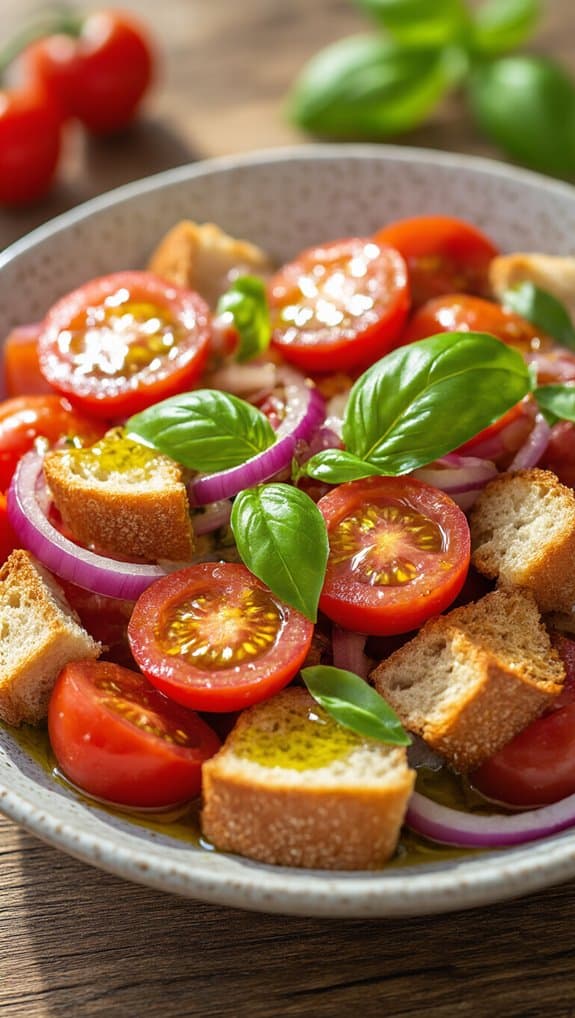
Panzanella transforms stale bread into one of Italy’s most beloved summer salads, combining crusty ciabatta chunks with ripe tomatoes and fresh basil.
You’ll love how this Tuscan classic rescues day-old bread while celebrating peak-season produce.
To create authentic panzanella, follow these essential steps:
- Tear bread into chunks – Don’t cut; tearing creates irregular edges that absorb dressing better.
- Salt tomatoes first – Draw out their juices for 15 minutes before mixing.
- Soak bread briefly – Sprinkle with water until slightly softened, not soggy.
- Rest before serving – Let flavors meld for 30 minutes at room temperature.
Popular Panzanella variations include adding cucumbers, red onions, or bell peppers.
You can experiment with summer ingredient swaps like peaches for tomatoes or mint for basil.
The key is maintaining the bread-to-vegetable ratio that makes this salad satisfying yet light.
Always use high-quality olive oil and red wine vinegar for the best results.
Turkish Shepherd’s Salad (Çoban Salatası)
You’ll need just a handful of fresh ingredients to create an authentic Turkish Shepherd’s Salad that bursts with Mediterranean flavors.
Start by selecting firm tomatoes, crisp cucumbers, sweet peppers, and pungent onions as your vegetable base.
The traditional dressing couldn’t be simpler—just whisk together olive oil, lemon juice, and salt to let these fresh vegetables shine.
Fresh Vegetable Selection
When you’re making Turkish Shepherd’s Salad, the quality and freshness of your vegetables makes all the difference.
You’ll want to select produce at its peak ripeness for the best flavor and texture.
Here’s what to look for when shopping:
- Tomatoes – Choose firm, bright red ones with smooth skin.
- Cucumbers – Pick dark green, crisp varieties without soft spots.
- Peppers – Select glossy, heavy peppers with taut skin.
- Onions – Look for dry, papery outer layers without sprouting.
Always prioritize seasonal vegetables since they’re naturally sweeter and more flavorful.
You’ll also want to ensure color variety in your selection – vibrant reds, deep greens, and crisp whites create visual appeal that matches the salad’s fresh taste.
Traditional Dressing Recipe
With your fresh vegetables chopped and ready, it’s time to bring them together with the perfect dressing. Turkish Shepherd’s Salad relies on traditional ingredients that create its signature tangy flavor profile.
You’ll need extra virgin olive oil, fresh lemon juice, and a pinch of salt – that’s it. Mix three parts olive oil to one part lemon juice, then add salt to taste.
While purists stick to this simple combination, you can explore dressing variations based on regional preferences. Some cooks add pomegranate molasses for sweetness, while others incorporate sumac for extra tang.
You might also try adding crushed garlic or dried mint. Whatever variation you choose, pour the dressing over your vegetables just before serving to maintain their crispness and vibrant flavors.
Chickpea and Roasted Red Pepper Salad
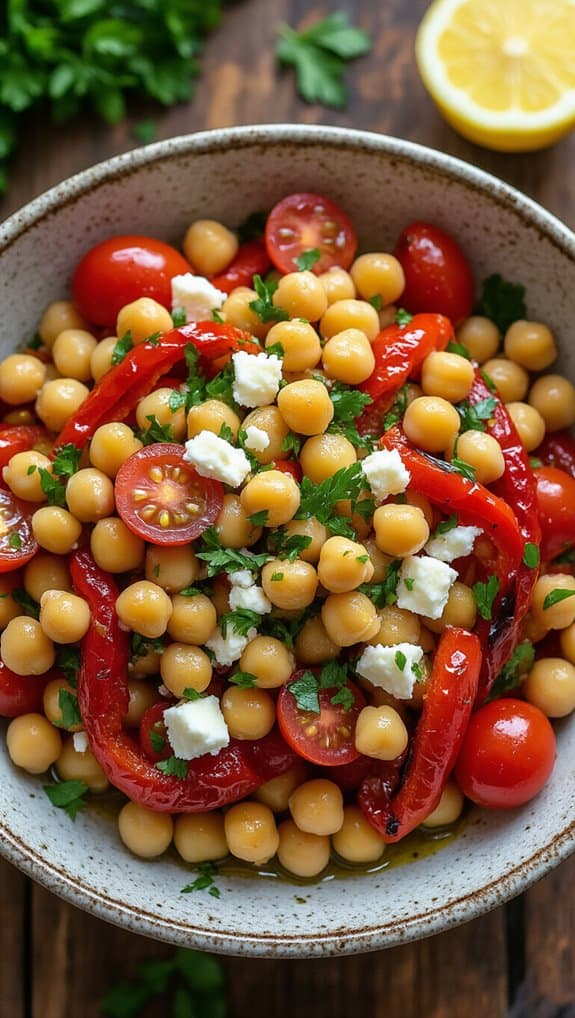
This protein-packed salad brings together two Mediterranean favorites in perfect harmony. You’ll love how the creamy chickpeas complement the smoky sweetness of roasted red peppers. The chickpea benefits include high fiber content, plant-based protein, and essential minerals that’ll keep you satisfied for hours.
Here’s what makes this salad exceptional:
- Texture contrast – Tender chickpeas against silky roasted peppers
- Versatile base – Add feta, olives, or fresh herbs
- Make-ahead friendly – Flavors improve overnight
- Budget-conscious – Uses affordable pantry staples
You can experiment with roasted pepper variations like yellow or orange bells for different flavor profiles. Some cooks prefer jarred peppers for convenience, while others char fresh peppers directly over a gas flame.
Don’t forget to reserve the pepper juices—they’ll enhance your dressing. Toss everything with lemon juice, olive oil, and fresh parsley.
You’ve created a satisfying meal that’s both nutritious and delicious.
Lentil Salad With Herbs and Lemon Vinaigrette
Three simple ingredients transform humble lentils into a Mediterranean masterpiece that’ll become your go-to lunch option. You’ll appreciate the lentil benefits—packed with protein, fiber, and iron—while enjoying countless flavor combinations.
Start with green or black lentils for the best texture. Cook them until tender but not mushy. Mix fresh herb varieties like parsley, mint, and dill for authentic Mediterranean taste.
Your vinaigrette tips: whisk lemon juice with olive oil, garlic, and Dijon mustard for perfect emulsification.
Create salad variations by adding cherry tomatoes, cucumber, or feta cheese. The nutritional value skyrockets when you include colorful vegetables.
For serving suggestions, pair with grilled fish or stuff into pita bread.
Meal prep couldn’t be easier—this salad keeps for five days refrigerated.
When ingredient sourcing, choose organic lentils and fresh herbs from local markets. Dietary adaptations are simple: it’s naturally vegan and gluten-free, making it perfect for everyone’s table.
Watermelon Feta Salad With Mint
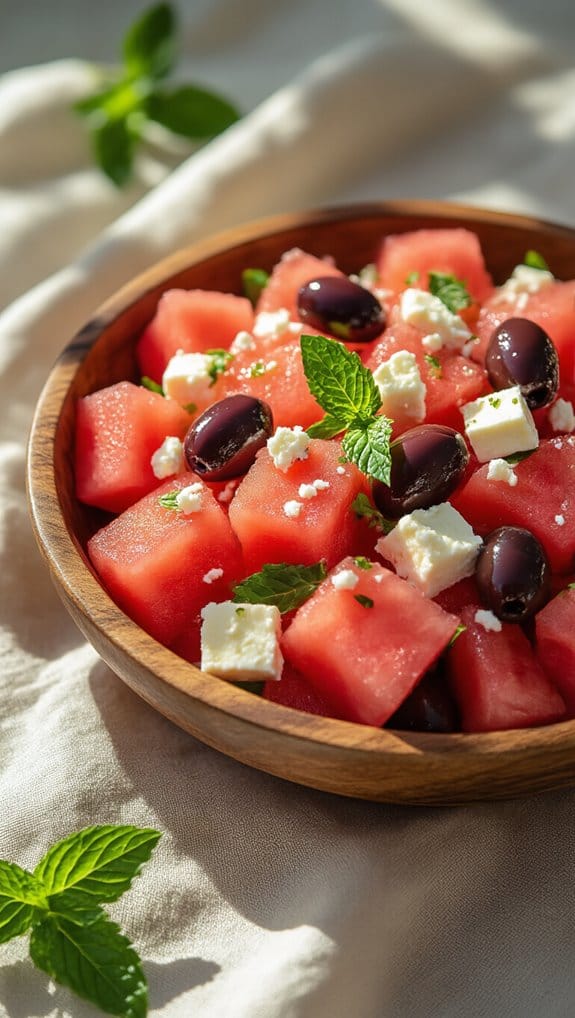
When summer heat demands something refreshing, you can’t beat the sweet-salty combination of watermelon and feta cheese enhanced with fresh mint. This vibrant salad epitomizes the Mediterranean diet’s genius for simple yet sophisticated flavors.
You’ll love how this watermelon pairing creates the perfect balance:
- Juicy watermelon provides natural sweetness and hydration
- Crumbled feta adds tangy, creamy richness
- Fresh mint leaves bring cooling aromatic notes
- Lime juice ties everything together with citrus brightness
The feta benefits extend beyond taste—you’re getting protein, calcium, and probiotics in every bite.
To prepare, simply cube seedless watermelon, toss with crumbled feta, torn mint leaves, and a squeeze of lime. Add a drizzle of olive oil and cracked black pepper for authenticity.
This no-cook salad takes five minutes to assemble and delivers maximum impact at barbecues or picnics.
You’ll find it’s equally satisfying as a light lunch or palate-cleansing side dish.
Orzo Salad With Sun-Dried Tomatoes and Olives
Moving from fresh fruit to hearty pasta, orzo salad brings substance to your Mediterranean spread while maintaining those signature bold flavors.
You’ll love how this rice-shaped pasta absorbs the tangy dressing and mingles with each ingredient. Start by cooking orzo until al dente, then toss it with oil-packed sun-dried tomatoes and briny Kalamata olives.
The sun dried tomato benefits include concentrated lycopene and intense umami flavor that’ll elevate your entire dish. Add crumbled feta, fresh basil, and a lemon-olive oil dressing to tie everything together.
You can create countless orzo salad variations by incorporating artichoke hearts, roasted red peppers, or chickpeas.
Try serving it warm as a side dish or chilled for picnics and meal prep. The pasta’s unique shape catches dressing in every ridge, ensuring each bite delivers maximum flavor.
This versatile salad keeps well in the fridge for up to four days.
Frequently Asked Questions
How Long Do Mediterranean Salads Stay Fresh in the Refrigerator?
You’ll find that properly stored salads typically last 3-5 days in your refrigerator.
For best freshness tips, store your salad components separately – keep dressing, greens, and toppings in different storage containers. You’ll maintain crispness longer this way.
Don’t dress the entire salad unless you’re eating it immediately.
Always use airtight storage containers and place paper towels with leafy greens to absorb excess moisture that causes wilting.
Can I Make Mediterranean Salads Ahead for Meal Prep?
You can definitely meal prep salads ahead of time!
For optimal salad storage, keep wet ingredients like tomatoes and cucumbers separate from leafy greens until you’re ready to eat. Store dressings in small containers on the side.
Your meal prep will stay fresher when you layer heartier vegetables at the bottom and delicate greens on top. Properly stored components will last 3-5 days in airtight containers.
What Are the Best Dressing Alternatives for Dairy-Free Diets?
You’ll find plenty of delicious dairy free dressings that make perfect healthy alternatives to traditional options.
Try tahini-based sauces, which offer creamy richness without dairy. Olive oil and lemon juice create a simple vinaigrette that’s naturally dairy-free.
You can also blend avocado with herbs for a creamy texture, or use nut-based dressings like cashew cream.
These options aren’t just substitutes – they’re flavorful choices that enhance any dish you’re making.
Which Mediterranean Salads Are Naturally Gluten-Free?
When you’re seeking gluten-free options, you’ll find many naturally compliant choices. Fresh herbs like parsley, mint, and basil enhance flavors without gluten concerns.
You can substitute traditional grains with gluten free grains such as quinoa or rice. Greek salads with cucumbers, tomatoes, and feta are inherently gluten-free.
Tabbouleh made with quinoa instead of bulgur works perfectly. You’ll discover most vegetable-based Mediterranean salads naturally avoid gluten while delivering incredible taste.
How Many Calories Are Typically in Mediterranean Salads?
You’ll find most salads vary in caloric content from 200-500 calories depending on ingredients and portions.
When you add proteins, nuts, cheese, and dressings, you’re increasing both calories and nutritional benefits. You can control portions to manage intake while maximizing nutrients.
Mediterranean salads specifically pack fiber, healthy fats, vitamins, and minerals that’ll keep you satisfied.
They’re nutrient-dense options that provide substantial nutritional benefits beyond just calorie counting.
Conclusion
You’ve discovered nine vibrant Mediterranean salads that’ll transform your meals from ordinary to extraordinary. Whether you’re craving the simplicity of Greek horiatiki or the complex flavors of Moroccan carrot salad, you’ve got options for every occasion. These recipes aren’t just delicious—they’re packed with fresh vegetables, herbs, and healthy ingredients that’ll nourish your body. Start with one recipe this week, then work your way through the list. Your taste buds will thank you.


No Comments