
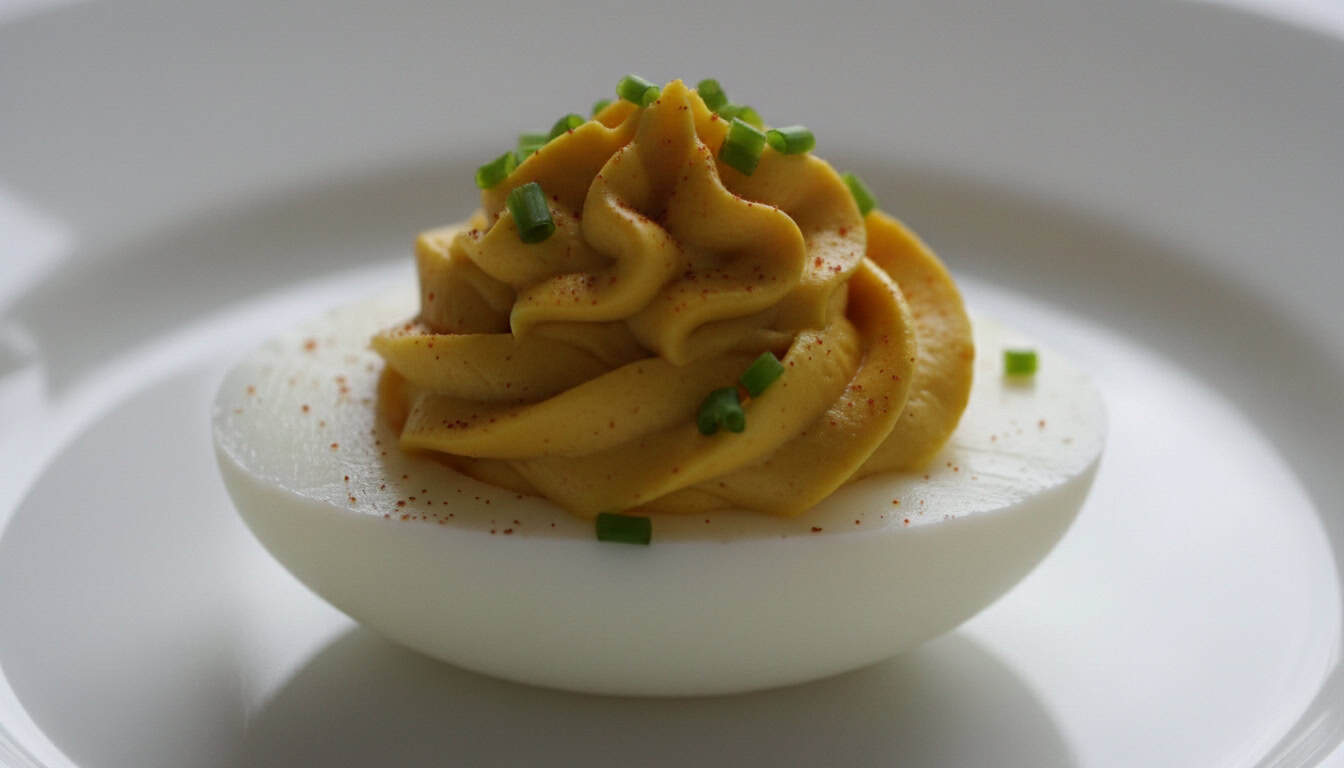
A half‑deviled egg packs roughly 60 kcal, about 5 g of protein, 4 g of fat and under 2 g of carbs, making it a low‑calorie, keto‑friendly snack. The exact count can shift with the filling—mayo adds more calories, while Greek yogurt or avocado lowers them. Portion size matters too; a single half keeps you under 100 kcal, while a full egg can double that. If you keep reading, you’ll discover how to tweak ingredients for even lighter bites.
Table of Contents
How Many Calories Are in a Half‑Deviled Egg?
Wondering how many calories you get from a half‑deviled egg? You’ll get roughly 59 kcal per 30‑gram serving, which is about half the energy of a whole deviled egg. That single half supplies about 5 g of protein, 4 g of fat, and under 1 g of carbs, keeping the carbohydrate count low enough for keto plans. The fat component dominates, accounting for roughly 74 % of the calories, while protein contributes about 23 %. If you’re watching cholesterol, note that a half‑deviled egg contains roughly 195 mg, so a couple of halves can quickly approach the daily limit. Sodium varies widely, ranging from 300 mg to over 1,000 mg per half, so check the recipe or label if you’re monitoring blood pressure. For most calorie‑controlled diets, one half‑deviled egg makes a satisfying snack, delivering protein and fat without excess carbs.
What’s Inside a Half‑Deviled Egg? A Macro Snapshot
You’ll see that a half‑deviled egg packs roughly 59 kcal, with fat supplying about three‑quarters of those calories and protein covering most of the rest. The macro balance also means a low carb count, making it keto‑friendly, while key micronutrients like vitamin A, calcium and iron add modest nutritional value.
This snapshot sets the stage for comparing its calorie density and nutrient profile to other egg‑based dishes.
Macroutrient Profile
A half‑deviled egg—about 30 g—packs roughly 59 kcal, with fat supplying the bulk of its energy at 74% (≈8 g), protein contributing 23% (≈5.5 g), and carbs barely 3% (≈0.4 g).
You’ll notice the fat comes mostly from the mayonnaise, delivering about 4 g saturated fat and a modest amount of cholesterol.
The protein derives from the egg white and yolk, supporting muscle repair and satiety.
Carbohydrates are negligible, making the snack keto‑friendly.
Sodium can vary widely, often reaching 300–1,000 mg per half, so check the label if you’re watching blood pressure.

Calorie Density Snapshot
Ever wondered how many calories a half‑deviled egg really packs? At roughly 30 g, it delivers about 59 kcal, giving you a calorie density of nearly 2 kcal per gram. Fat dominates the profile, accounting for roughly 74 % of those calories—about 16 g of fat per 100 g, or 5 g in a half‑egg. Protein supplies another 23 % (≈11.5 g per 100 g, or 3–4 g per half), while carbs barely register at 3 % (≈1.3 g per 100 g). Saturated fat sits around 4 g per 100 g, and cholesterol spikes to 390 mg per 100 g, meaning a half‑egg contributes roughly 195 mg. This compact, high‑fat snack packs a solid calorie punch for its size, making it a handy option for low‑carb or keto meals.
Key Micronutrient Highlights
A half‑deviled egg packs a modest but noteworthy dose of micronutrients: roughly 2 µg of vitamin D, 47 mg of calcium, 1.1 mg of iron, 118 mg of potassium, and 161 µg of vitamin A per 30‑gram serving. You’ll find these nutrients clustered in a tiny portion, supporting bone health, immune function, and vision. While the calorie count stays low, the micronutrient profile adds value to a balanced diet, especially when you pair the egg with other foods.
- Vitamin D and calcium aid bone strength and calcium absorption.
- Iron and potassium help oxygen transport and fluid balance.
- Vitamin A supports eye health and immune response.
These highlights show why a half‑deviled egg can be a smart, nutrient‑dense snack.
Why Do Half‑Deviled Egg Recipes Yield Different Calorie Counts?
Why do half‑deviled egg recipes show varying calorie counts? Because the filling isn’t a single, fixed ingredient. You might use mayonnaise, Greek yogurt, avocado, or a blend, each with distinct fat and protein levels. A tablespoon of mayo adds roughly 90 kcal, while the same amount of low‑fat yogurt contributes only 15 kcal. Some recipes sprinkle cheese, bacon bits, or herbs, which introduce extra calories or none at all. Portion size matters, too—if you spoon a larger dollop onto each half, you raise the total caloric load. Even the type of egg influences the base: a large boiled egg contains about 78 kcal, whereas a smaller one offers fewer. Finally, commercial mixes often contain hidden sugars or preservatives that increase calories. By checking ingredient labels and measuring your fillings, you can predict the exact calorie count for each half‑deviled egg you serve.
How Does Portion Size Affect Half‑Deviled Egg Calories and Nutrients?
Because the filling’s calorie density varies, the amount you place on each half‑deviled egg directly changes the total energy and nutrient profile. A single half (≈30 g) typically delivers about 59 kcal, but adding extra mayo or bacon can push it past 80 kcal. Conversely, a light spread of Greek‑yogurt‑based filling keeps it near 50 kcal while still offering protein. Adjusting portion size also shifts macronutrients: more fat raises saturated‑fat grams, while extra egg white boosts protein without many calories. Keep an eye on sodium and cholesterol—each extra half adds roughly 150 mg sodium and 200 mg cholesterol.
- 1 half: ~59 kcal, ~5 g fat, ~3 g protein.
- 2 halves: ~118 kcal, ~10 g fat, ~6 g protein.
- 4 halves: ~236 kcal, ~20 g fat, ~12 g protein.
Choosing the right number of halves lets you meet calorie goals while balancing fat, protein, and micronutrients.
Low‑Calorie Swaps for Half‑Deviled Eggs
You can cut the calorie count by swapping regular mayo for a Greek‑based version that keeps the creamy texture with less fat.
Mixing Greek yogurt with herbs creates a tangy dressing that slashes calories while adding protein.
Adding mashed avocado to the filling gives healthy fats and a buttery feel without the extra calories of traditional mayo.
Greek‑Based Mayo Alternatives
Ever considered swapping regular mayo for a Greek‑based alternative to cut calories on half‑deviled eggs? You’ll keep the creamy texture while slashing fat and calories. Greek yogurt blends with lemon, mustard, and herbs creates a tangy, protein‑rich spread that delivers roughly half the calories of traditional mayo. It also adds calcium and probiotics, boosting nutrition without sacrificing flavor.

- Greek yogurt + olive oil: a drizzle of oil restores mouthfeel, keeping calories low.
- Greek yogurt + avocado: creamy, buttery, and full of heart‑healthy fats.
- Greek yogurt + cottage cheese: extra protein, light texture, minimal fat.
Mix any of these combos, season to taste, and enjoy a lighter half‑deviled egg that fits keto, low‑calorie, or high‑protein goals.
Greek‑Yogurt Dressing Options
If you’re looking to trim calories without sacrificing the creamy bite of a traditional deviled egg, swapping the mayo for a Greek‑yogurt‑based dressing works wonders. Start with plain, low‑fat Greek yogurt and thin it with a splash of lemon juice, a dash of Dijon, and a pinch of smoked paprika. For extra tang, stir in a spoonful of capers or chopped pickles; they add flavor without many calories. Want a herbaceous twist? Mix in fresh dill, chives, or parsley, then season with salt and pepper to taste.
This combo cuts the fat contribution from ~74 % to roughly 30 % while keeping protein high, delivering a silky, low‑calorie topping that still feels indulgent.
Avocado‑Infused Filling Ideas
When you swap mayo for ripe avocado, you keep the creamy texture while slashing calories and boosting healthy fats. The buttery green fruit adds monounsaturated fat, potassium, and vitamin E, turning a traditional half‑deviled egg into a nutrient‑dense snack. Mix mashed avocado with lime juice, a pinch of smoked paprika, and chopped cilantro for a bright, low‑calorie filling. You can also blend it with Greek yogurt for extra protein or stir in sriracha for a spicy kick. These swaps keep each half under 70 kcal, perfect for keto or calorie‑controlled meals.
- Mashed avocado + lime + coriander
- Avocado + Greek yogurt + dill
- Avocado + sriracha + chives
When Are Half‑Deviled Eggs Appropriate for Your Daily Nutrition?
Why might you choose half‑deviled eggs for a snack or meal boost? You get about 59 kcal, 5–7 g protein, and a modest fat hit in a portable portion. If you’re on a low‑carb or keto plan, the ≤2 g carbs per half keep you in ketosis while the fat supplies energy. For a quick post‑workout bite, two halves deliver roughly 12 g protein, supporting muscle repair without excess calories. When you need to curb sodium, pick a half‑deviled egg with reduced‑salt mayo, because a full egg can hit 300–1,030 mg sodium. If you’re watching cholesterol, limit to one half per snack, as a cup of deviled eggs tops 800 mg. Use halves as a bridge between meals: pair with veggies for fiber, or add to a salad for texture. In calorie‑controlled diets, a single half fits neatly under a 100‑kcal snack ceiling, keeping you satisfied while staying on track.
Frequently Asked Questions
Can Deviled Eggs Be Safely Frozen?
Yes, you can freeze deviled eggs, but you should separate the yolk mixture from the whites, store them in airtight containers, and use them within two months for best texture and flavor.
Do Deviled Eggs Cause Allergic Reactions?
You may experience an allergic reaction if you’re sensitive to egg proteins or the mayo’s ingredients, so watch for hives, swelling, or respiratory issues after eating deviled eggs.
How Does Avocado Mayo Affect Calorie Count?
You’ll add roughly 40‑50 kcal per tablespoon of avocado mayo, so a deviled egg with a tablespoon bumps its total to about 100‑120 kcal, depending on the egg size and other fillings.
Are Deviled Eggs Suitable for Vegans?
You’ll find deviled eggs aren’t vegan because they contain egg yolks and often mayo made with eggs. If you need a plant‑based version, swap the yolk for tofu or avocado and use vegan mayo.
What’s the Environmental Impact of Egg Production?
You’ll find egg production drives significant greenhouse‑gas emissions, uses massive water, and creates waste; shifting to plant‑based proteins cuts those impacts dramatically, saving resources and reducing your carbon footprint.
Conclusion
You’ve seen how a half‑deviled egg packs roughly 35‑45 calories, depending on the yolk‑to‑mayo ratio and any add‑ins. By tweaking the filling—using Greek yogurt, avocado, or a dash of hot sauce—you can shave off extra calories while keeping the flavor punch. Whether you’re counting macros or just craving a quick snack, these eggs fit nicely into most daily plans when you watch portion size and ingredient choices.


Sorry, the comment form is closed at this time.