
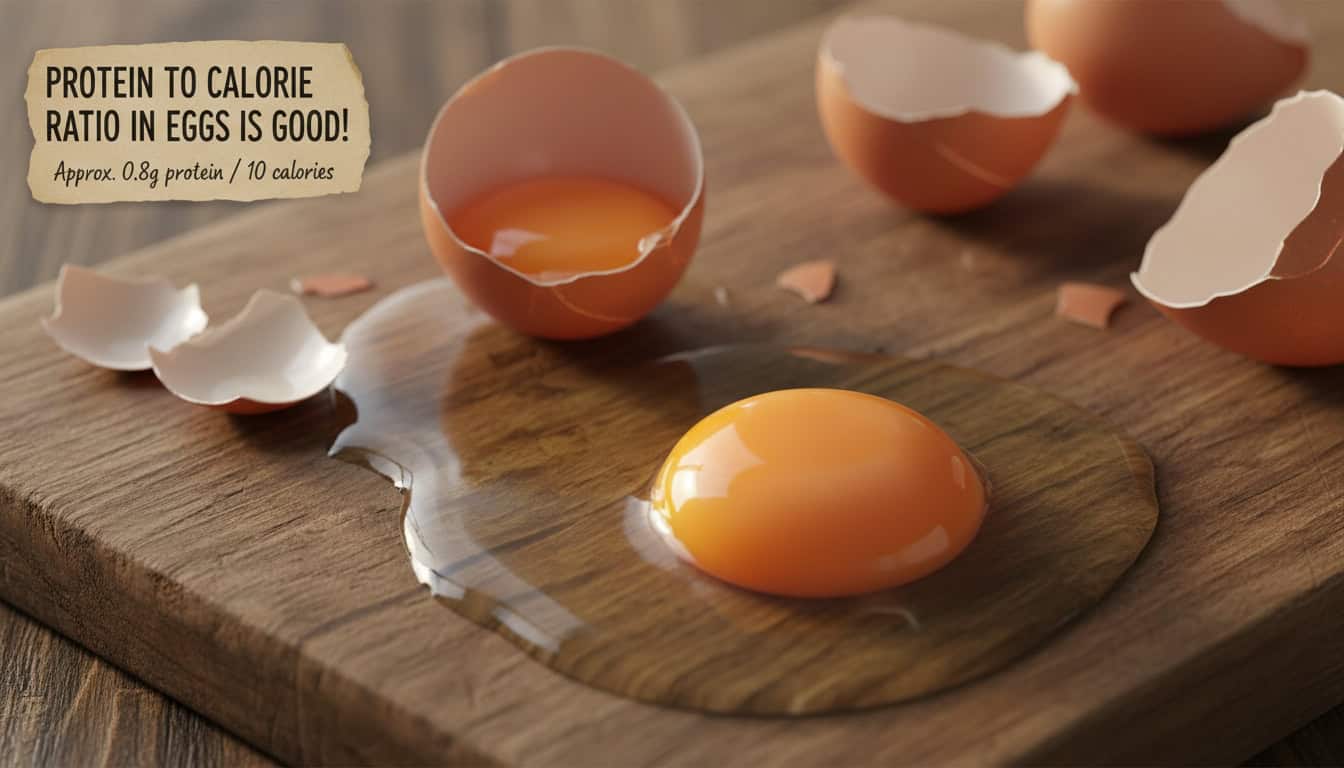
A large egg gives you roughly 6 g of high‑quality protein and about 70 kcal, which works out to about 0.086 g of protein per calorie—or around 34 % of its calories coming from protein. This ratio matters because it tells you how efficiently the egg fuels muscle repair and keeps you full without excess calories. Compared with other foods, eggs sit in the middle of protein efficiency, beating many legumes but falling short of lean meats and some dairy. Keep going and you’ll see how to fit eggs into a balanced nutrition plan.
Table of Contents
Why the Protein‑to‑Calorie Ratio Matters for Nutrition
Why does the protein‑to‑calorie ratio matter? You’re looking to maximize muscle repair, satiety, and metabolic efficiency without blowing your calorie budget. A higher ratio means each calorie delivers more building blocks, so you stay fuller longer and preserve lean tissue while cutting excess energy. This helps regulate blood sugar, curbs cravings, and supports weight‑loss or maintenance goals.
When you compare foods, the ratio guides you toward options that fuel activity without unnecessary fat storage. It also informs nutrient timing; consuming high‑ratio foods post‑workout replenishes muscles quickly.
In diet planning, the ratio simplifies balancing macro‑nutrients, letting you hit protein targets without over‑eating. Ultimately, focusing on the protein‑to‑calorie ratio ensures you get the most nutritional bang for your calorie buck, aligning your meals with performance, health, and body‑composition objectives.
What’s the Protein Content of a Typical Whole Egg?
How much protein does a typical whole egg actually provide? You get roughly 6 grams of high‑quality protein from a large egg, which translates to about 12 percent of its 70‑calorie total. This protein is split between the white (about 3.6 g) and the yolk (around 2.7 g), so you’re not losing any by eating the whole thing. The amino‑acid profile mirrors that of dairy and meat, delivering all essential building blocks in a single, portable package.
Because the egg’s protein is highly digestible—about 94 percent absorption—you’ll meet a sizable portion of your daily requirement with just one or two. If you’re tracking macro‑nutrients, count each egg as 6 g protein, 5 g fat, and a handful of vitamins and minerals. This makes eggs an efficient, low‑calorie source for muscle repair, satiety, and overall nutrition.
How Do You Calculate the Protein‑to‑Calorie Ratio?
Ever wondered how to gauge an egg’s nutritional efficiency? You can calculate the protein‑to‑calorie ratio in a few simple steps. First, find the protein grams and total calories on the label or nutrition database. Next, convert protein grams to calories (multiply by 4, because each gram of protein supplies about 4 kcal). Then, divide the protein calories by the total calories and multiply by 100 to get a percentage. This number tells you what portion of the egg’s energy comes from protein.
“`markdown
- Protein = 6 g (typical whole egg)
- Protein calories = 6 g × 4 kcal/g = 24 kcal
- Total calories ≈ 70 kcal
- Ratio = (24 ÷ 70) × 100 ≈ 34 %
“`
A 34 % ratio means roughly a third of the egg’s energy is protein, indicating a solid protein source relative to its calorie load. Use this method for any food to compare nutritional efficiency quickly.
How Does the Egg’s Protein‑to‑Calorie Ratio Compare to Other Common Protein Sources?
Do you know how an egg’s protein‑to‑calorie ratio stacks up against other staples? A large egg delivers about 6 g of protein for roughly 70 kcal, giving a ratio of 0.086 g/kcal. Compare that to chicken breast, which offers 31 g protein per 165 kcal (0.188 g/kcal)—almost double the egg’s efficiency. Greek yogurt (plain, non‑fat) provides 10 g protein for 59 kcal (0.169 g/kcal), also outpacing eggs. Tuna in water tops the list with 20 g protein for 90 kcal (0.222 g/kcal). Plant‑based options vary: lentils give 9 g protein for 115 kcal (0.078 g/kcal), slightly lower than eggs, while tofu supplies 8 g protein for 70 kcal (0.114 g/kcal), marginally better. So, eggs sit in the middle—better than many legumes, but behind lean meats and some dairy. Use this perspective to balance nutrition, cost, and convenience in your meals.
Frequently Asked Questions
Can Egg Whites Provide More Protein per Calorie Than Whole Eggs?
Yes, egg whites give you more protein per calorie than whole eggs. They contain about 3.6 g protein for just 17 kcal, while a whole egg offers roughly 6 g protein for 70 kcal, lowering the ratio.
Do Cooking Methods Affect the Protein‑To‑Calorie Ratio of Eggs?
You’ll find that cooking methods barely change the protein‑to‑calorie ratio; boiling, poaching, or scrambling keep the numbers almost identical, since heat doesn’t alter protein content or calorie count significantly.
How Does the Protein‑To‑Calorie Ratio Differ Between Duck and Chicken Eggs?
You’ll find duck eggs have roughly 6 g protein per 130 kcal, while chicken eggs give about 6 g protein per 70 kcal—so duck eggs’ protein‑to‑calorie ratio is lower, almost half.
Is the Ratio Consistent Across Different Egg Sizes (Small, Medium, Large)?
You’ll find the ratio stays roughly the same across sizes—small, medium, and large eggs all deliver about 0.07 g protein per calorie, so size doesn’t meaningfully alter the protein‑to‑calorie proportion.
Can Fortified or Enriched Eggs Alter the Protein‑To‑Calorie Ratio?
You’ll find fortified or enriched eggs don’t change the protein‑to‑calorie ratio much; the added nutrients usually affect vitamins or omega‑3s, while protein and calories stay roughly the same.
Conclusion
In short, eggs give you a solid protein punch for the calories they contain—about 6 g of protein for roughly 70 kcal, which translates to a protein‑to‑calorie ratio near 0.09 g/kcal. That’s higher than most processed snacks and comparable to lean meats, making eggs an efficient, affordable way to hit your protein goals without blowing your calorie budget. Use this ratio to balance meals and keep your nutrition on track.


Sorry, the comment form is closed at this time.