
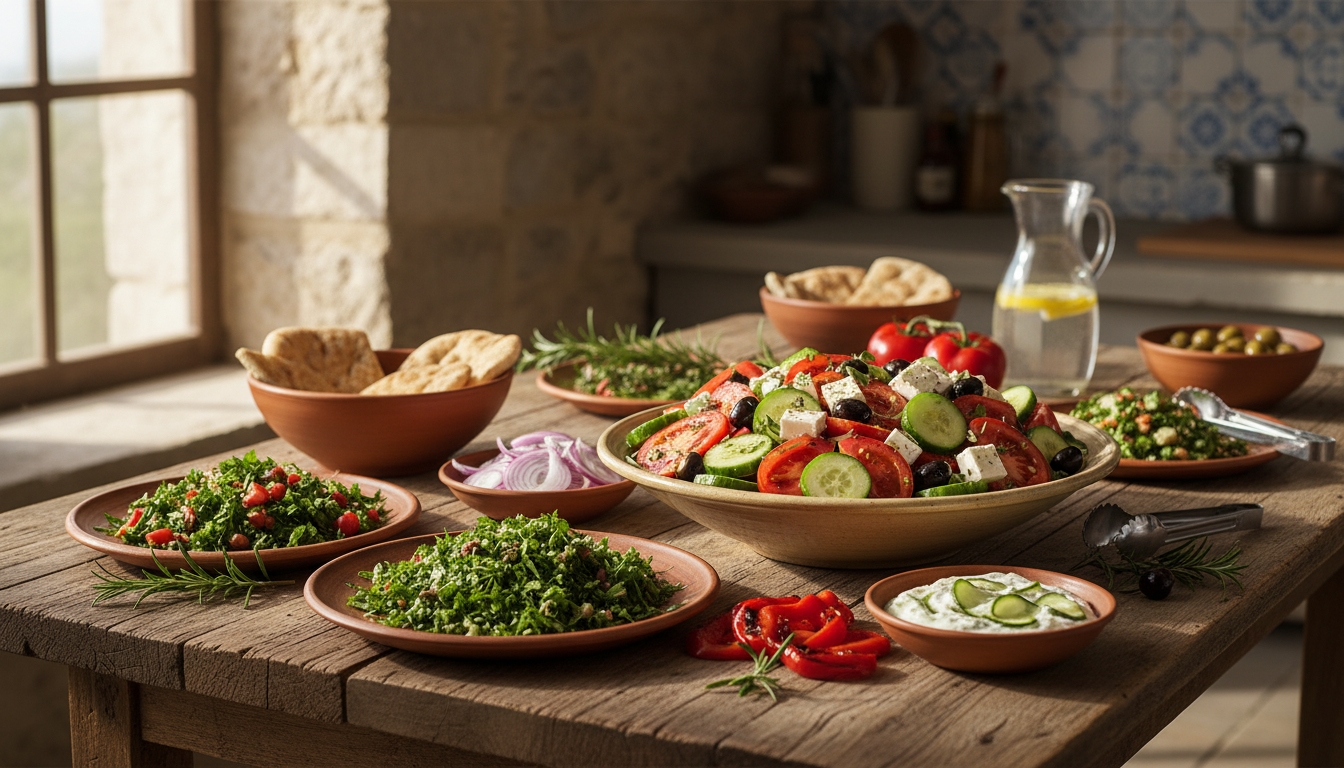
Why Mediterranean Cooks Favor Raw Vegetables Daily?
You love the crisp bite and nutrient boost of raw veggies because Mediterranean cooks know that fresh, seasonal produce—like a chilled cucumber or snap peas—preserves vitamin C, polyphenols, and fiber while adding texture contrast to olive oil, feta, and grilled fish. The climate keeps greens crisp year‑round, and the raw crunch balances creamy and salty elements, making meals lighter and more satisfying. If you keep exploring, you’ll discover simple prep tricks and perfect pairings that turn raw vegetables into a daily Mediterranean staple.
How to Make Raw Vegetables a Daily Mediterranean Staple
Ever wonder how you can turn raw vegetables into a daily Mediterranean staple? Start by picking fresh, seasonal produce—cucumbers, tomatoes, bell peppers, and leafy greens. Wash, dry, and slice them into bite‑size pieces. Toss the mix with extra‑virgin olive oil, a squeeze of lemon, and a pinch of sea salt. Add a handful of olives, crumbled feta, and a sprinkle of oregano for authentic flavor. Keep a bowl of this salad in the fridge; it stays crisp for days. Pair it with whole‑grain pita or a drizzle of tahini for protein. When you crave a snack, reach for carrot sticks or cherry tomatoes—no cooking required. Rotate varieties weekly to avoid monotony and to capture the region’s diverse nutrients. By prepping once and storing in airtight containers, you’ll have a ready‑to‑eat Mediterranean side that fuels you every day.
Why Mediterranean Cooks Love Raw Veggies Every Day
You’ll notice that raw veggies keep their nutrients intact, so you get a freshness boost with every bite.
Because they’re in season, you waste less and enjoy vibrant flavors all year round.
Their crisp texture also adds a perfect balance to Mediterranean dishes.
Freshness Boosts Nutrient Retention
Why does freshness matter? You’ll notice that crisp, newly harvested vegetables keep vitamins and antioxidants intact. When you bite into a bright carrot or a leafy cucumber, enzymes haven’t broken down the nutrients yet, so your body absorbs more vitamin C, K, and polyphenols. That’s why Mediterranean cooks favor raw veggies—they preserve the health‑boosting compounds that cooking can diminish.
| Nutrient | Freshness Effect |
|---|---|
| Vitamin C | 30‑40 % retained in raw form |
| Folate | Minimal loss when eaten raw |
| Polyphenols | Highest concentration before oxidation |
Seasonal Availability Reduces Waste
Fresh, seasonal produce hits the market in abundance during its peak months, so Mediterranean cooks grab it straight from the farm and serve it raw. You notice that buying in season means lower prices and fresher vegetables, which you can toss into salads without worrying about spoilage. By aligning meals with the harvest calendar, you cut the distance between field and plate, reducing transportation emissions and packaging waste. This practice also encourages you to plan menus around what’s available, preventing over‑purchase and the inevitable trash that comes from forgotten produce.
- Purchase only what’s ripe, minimizing excess that would rot.
- Store vegetables at optimal temperatures to extend shelf life.
- Rotate crops in your garden, ensuring continuous supply and less waste.
Texture Enhances Culinary Balance
What makes a Mediterranean salad so satisfying isn’t just the bright flavors; it’s the crisp, juicy bite that balances each dish. When you bite into fresh cucumber, pepper, or radish, the crunch interrupts the silkiness of feta and the smoothness of olive oil, creating a rhythm your palate follows instinctively. That contrast prevents monotony and keeps you engaged from first forkful to last. You’ll notice how the firm texture of carrots holds up against a drizzle of lemon, while leafy greens soften just enough to wrap the bite without turning soggy. By mixing crisp, tender, and juicy elements, you achieve a harmonious mouthfeel that mirrors the Mediterranean’s balance of sea, sun, and earth.
How the Mediterranean Climate Keeps Raw Vegetables Fresh Year‑Round
You’ll notice that mild winters keep the greens crisp and flavorful, so you can enjoy them any time of year.
The abundant sunshine warms the soil, letting crops mature faster and stay ripe longer.
As a result, the Mediterranean climate lets you reach for fresh, raw vegetables year‑round.
Mild Winters Preserve Freshness
Ever wonder why Mediterranean kitchens can serve crisp, raw vegetables all year? You’ll find that mild winters are the secret sauce that keeps produce fresh. The temperature rarely drops below 10 °C, so cellular metabolism slows without freezing, preserving texture and flavor. Nighttime humidity stays high, preventing dehydration that would make greens wilt. Plus, the gentle climate reduces pest pressure, so you avoid heavy pesticide use that can degrade quality.
- Consistently cool nights keep chlorophyll intact, sustaining vivid colors.
- Moderate humidity curbs water loss, maintaining crispness.
- Low frost risk eliminates the need for storage,, so vegetables ready for immediate consumption.
Sun‑Kissed Harvest Extends Availability
Sun‑kissed days and gentle evenings let Mediterranean farms harvest vegetables early and keep them crisp through the season. You’ll notice that the mild, stable temperatures slow down respiration, so greens stay vibrant longer. The sea breezes reduce humidity spikes, preventing premature wilting or decay.
You can walk market stalls year‑round and find tomatoes, cucumbers, and leafy herbs that were picked weeks ago yet still taste like they just left the garden. This climate rhythm lets you plan salads, mezze, and side dishes without worrying about seasonal gaps.
You benefit from a steady supply, lower transport costs, and the confidence that each bite delivers peak nutrition and flavor, all thanks to the region’s sun‑kissed harvest cycle.
Health Benefits of Raw Vegetables in Mediterranean Cooking
Often the crunch of fresh tomatoes, cucumbers, and bell peppers delivers a burst of vitamins and antioxidants that boost immunity and reduce inflammation. When you eat these raw vegetables, you preserve heat‑sensitive nutrients like vitamin C, folate, and polyphenols that often degrade during cooking. The high water content keeps you hydrated, while the fiber aids digestion and stabilizes blood sugar. You also benefit from the Mediterranean diet’s emphasis on plant‑based foods, which supports heart health, weight management, and a lower risk of chronic diseases.
- Antioxidant power: Lycopene in tomatoes, lutein in peppers, and flavonoids in cucumbers combat oxidative stress.
- Gut microbiome boost: Raw fiber acts as prebiotic, feeding beneficial bacteria and enhancing nutrient absorption.
- Blood pressure regulation: Potassium‑rich vegetables help balance sodium, supporting vascular function.
Simple Prep Techniques to Keep Raw Veggies Crunchy & Nutritious
How can you keep those crisp, nutrient‑dense veggies fresh and crunchy all day? First, wash them in cold water, then soak in an ice‑water bath for 5–10 minutes; the shock locks in texture. Pat them dry with a clean kitchen towel or spin in a salad‑spinner—moisture is the enemy of crunch. Slice or julienne just before serving; larger pieces retain bite longer than thin ribbons.
Store in airtight containers lined with paper towels to absorb excess humidity. Add a splash of lemon juice or a pinch of sea salt; acidity slows enzymatic decay and keeps colors vivid. For carrots, cucumbers, and bell peppers, keep the stems attached; they act as natural moisture barriers. If you need a longer shelf life, freeze herbs separately and sprinkle them on top right before eating—this preserves flavor without wilting the veggies.
How to Pair Raw Vegetables With Mediterranean Staples for Balanced Meals
Keeping those crisp veggies fresh is just the first step; now you can turn them into satisfying Mediterranean meals by pairing them with protein‑rich staples like grilled halloumi, chickpea‑based spreads, or flaky fish. Start by layering sliced cucumbers, cherry tomatoes, and radishes over a bed of mixed greens, then drizzle extra‑virgin olive oil and a squeeze of lemon. Toss in a handful of olives and a sprinkle of feta for salty depth, then add your chosen protein for texture and satiety. The key is balancing crunchy raw vegetables with creamy or flaky Mediterranean, letting each bite deliver fiber, healthy fats, and protein without overwhelming the palate.
- Halloumi & Tomato‑Cucumber Salad: grill halloumi cubes, toss with diced tomatoes, cucumbers, mint, and a drizzle of balsamic reduction.
- Chickpea Hummus Plate: spread thick hummus on a platter, surround with sliced carrots, bell peppers, and snap peas, sprinkle with paprika.
- Grilled Sardines & Radish Slaw: serve warm sardines atop a radish‑parsnip slaw dressed in olive oil, lemon zest, and capers.
Frequently Asked Questions
How Do Mediterranean Chefs Store Raw Vegetables for Long Periods?
You’ll keep raw vegetables fresh by washing, drying, then sealing them in airtight containers or zip‑lock bags with a paper towel to absorb moisture, and storing them in the crisper drawer at 35‑40 °F.
What Spices Are Traditionally Used With Raw Mediterranean Vegetables?
You’ll season raw Mediterranean vegetables with olive oil, lemon juice, sea salt, cracked black pepper, oregano, thyme, rosemary, garlic, and a pinch of sumac or za’atar for bright, earthy flavor.
Can Raw Vegetables Be Incorporated Into Traditional Mediterranean Soups?
You can toss chopped raw veggies into Mediterranean soups just before serving, letting heat soften them slightly while preserving crunch and bright flavor, and you’ll still get the fresh, nutrient‑rich boost the cuisine celebrates.
Do Mediterranean Diets Recommend Specific Raw Vegetable Portion Sizes?
You should aim for about two to three cups of raw vegetables daily, split across meals, because Mediterranean guidelines emphasize abundant, colorful plant foods for nutrients and fiber.
How Do Cultural Festivals Influence Raw Vegetable Consumption in the Mediterranean?
You’ll notice festivals showcase fresh markets, prompting you to snack on raw veggies between events; the vibrant, communal atmosphere celebrates seasonal produce, so you gravitate toward crisp, colorful salads and garnish spreads.
Conclusion
Embrace the habit of slicing, tossing, and munching fresh veggies every day, and you’ll feel the Mediterranean rhythm in your kitchen. The climate keeps them crisp, the flavors stay bright, and the health perks pile up. Pair them with olive oil, herbs, or whole grains, and you’ve got a balanced, vibrant meal without the fuss. Make raw vegetables a daily staple, and let their natural goodness energize your cooking and your life.


No Comments