
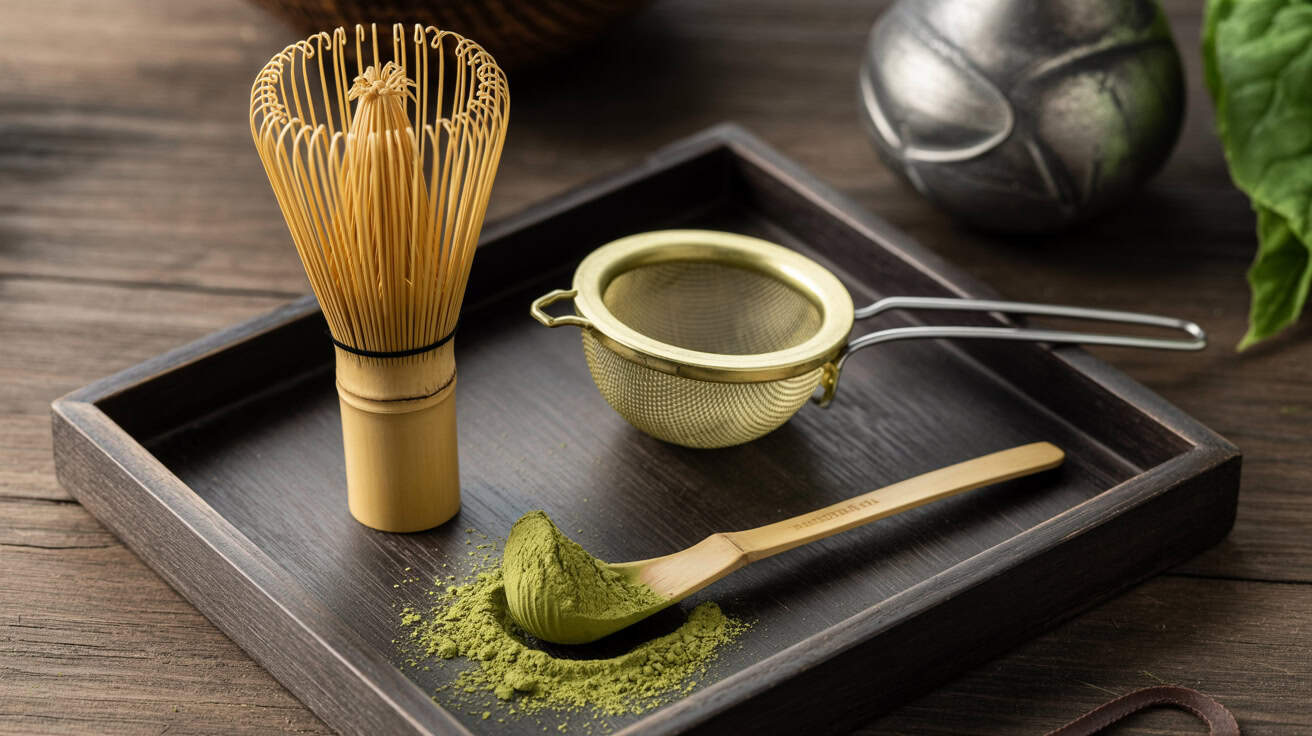
You’ll get flawless, velvety matcha foam with a complete whisk set that pairs a chasen, chashaku, chawan, and kusenaoshi for precision. Choose a flexible, single-piece bamboo whisk sized to fit your bowl for fine, airy froth. Use the scoop to dose and the sifter to eliminate grit. Heat the water to approximately 80°C, whisk in a “M” motion, and dry the whisk upright to preserve its shape. Keep going to discover tips on selection, technique, and care.
Table of Contents
Key Takeaways
- A complete set includes a chasen, chashaku, chawan, and kusenaoshi for consistent preparation and texture.
- Choose a high-quality bamboo chasen sized to your bowl; the tine’s flexibility affects foam and lifespan.
- Use the chashaku to measure and level 1–2 teaspoons of sifted matcha for a predictable flavor.
- Heat water to 70–80°C (158–176°F), use 60–80 ml per teaspoon, and whisk in an “M” or “W” motion.
- Rinse the chasen gently, dry it upright on a kusenaoshi, and replace it when the tines split to prevent mold and splinters.
Why a Complete Matcha Whisk Set Matters
Because a proper matcha ritual depends on tools that work together, a complete whisk set matters: the bamboo chasen shapes airy, velvety froth, the chashaku meters the precise powder, the chawan gives the tea its sound and temperature, and the kusenaoshi preserves the whisk’s tines.
You’ll notice that consistent tools let you reproduce flavor, aroma, and texture: the whisk’s tines aerate slurry into a creamy, bright green foam while the bowl’s curvature guides your wrist. That controlled frothing enhances the extraction of catechins and L-theanine, so the health benefits are realized alongside flavor.
Paying attention to brewing techniques — water temperature, powder dose, and brisk, centered whisking — yields a clean, sustained crema and smoother mouthfeel. You’ll also sense when a whisk needs reshaping or replacement; proper care prolongs life and keeps each session precise.
In short, a matched set sharpens your technique and deepens sensory rewards every time.
Key Components of a Complete Set
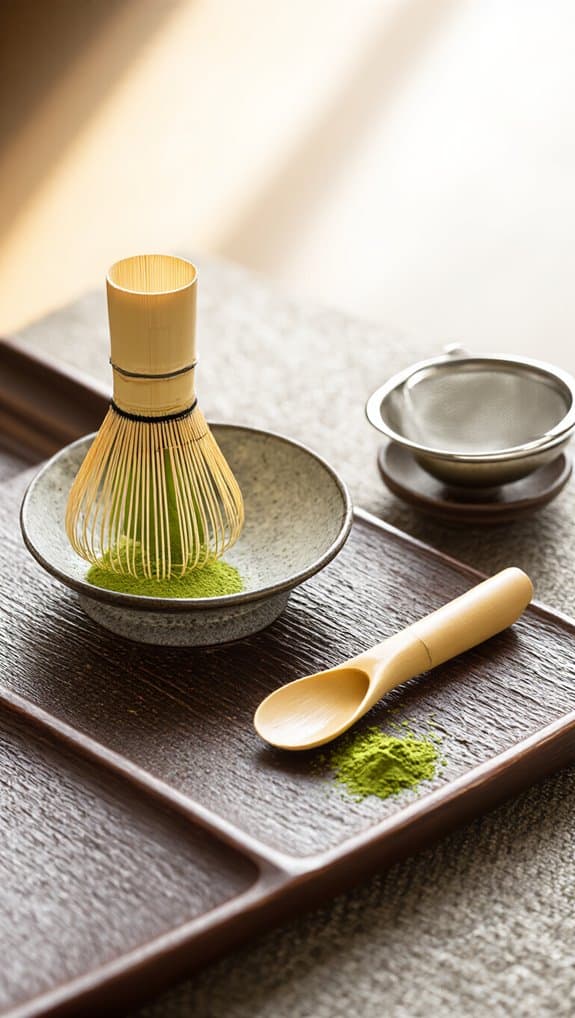
When you assemble a complete matcha whisk set, each piece contributes a distinct sensory and functional role: the bamboo chasen’s springy tines whisk a bright, velvety crema and lift faint grassy aromas; the slender chashaku measures and deposits powdered green with a smooth, deliberate slide; the chawan’s curved rim guides your wrist and gathers heat so the tea sings and feels balanced in the mouth; and the kusenaoshi preserves the whisk’s shape, keeping those delicate tines aligned for consistent foam and extraction. You’ll want coordinated matcha accessories to control dose, temperature, and rhythm. A minimal set highlights how tools support whisking techniques and flavor clarity.
| Component | Function | Sensory effect |
|---|---|---|
| Chasen | Aerates | Creamy foam |
| Chashaku | Doses | Clean sweetness |
| Chawan | Holds heat | Balanced mouthfeel |
| Kusenaoshi | Shapes whisk | Stable crema |
Use each tool deliberately; your hands and rhythm finish the infusion. Practice yields consistent extraction, brighter aromatics, and a silkier texture.
How to Choose the Right Chasen
As the tool that sculpts foam and teases out aroma, your chasen determines texture, crema stability, and how the tea smells in the cup. Choose bamboo quality first: denser, aged bamboo yields resilience and crisp snap that produces fine microfoam.
Consider chasen materials—single-piece versus laminated bamboo—and you’ll notice differences in flexibility and lifespan. Match chasen sizes to bowl volume and matcha grade: narrow whisks (80–100 tines) excel for thin bowls and delicate ceremonial matcha; wider heads (120–160 tines) build dense crema in larger bowls or thicker koicha.
Handle comfort matters—balanced weight and a smooth base let your wrist move in quick, controlled W or M motions that release aroma. Inspect tine spacing: tighter arrays create silkier foam; looser tines give airier bubbles.
Maintain and shape your chasen with warm water after each use to preserve the spring and scent. Pick one that fits your ritual, bowl, and desired mouthfeel.
Chashaku and Measuring Tips
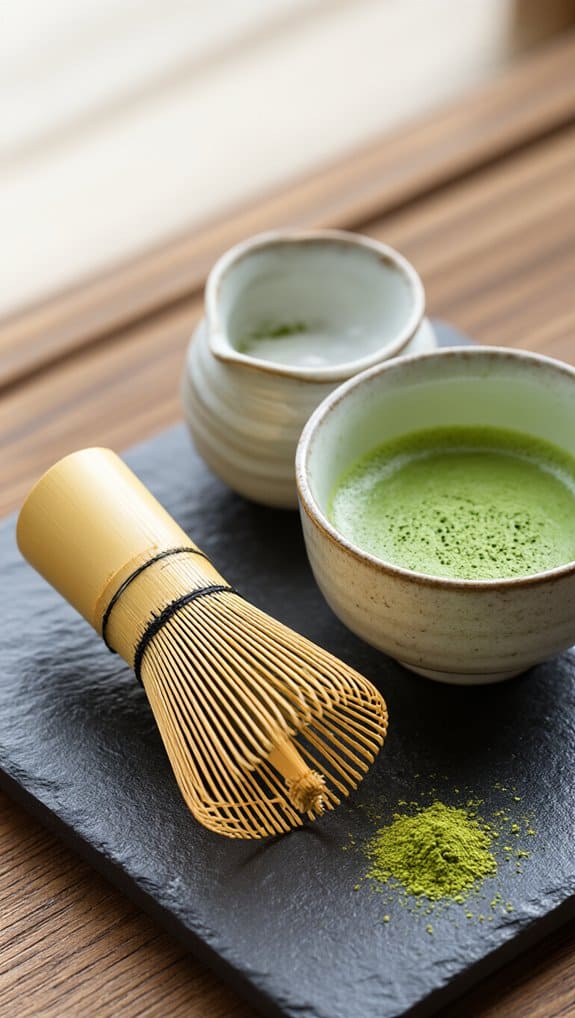
You grip the slender bamboo chashaku between thumb and forefinger, feeling its smooth curve guide a clean scoop.
Use consistent scoops—about 1 g per level chashaku for usucha, two for a thicker koicha—so the powder settles velvety in the bowl.
Tap the handle lightly to level, avoiding compression of the powder, and adjust ratios to taste for a balanced, bright cup.
Proper Chashaku Handling
Although small, the chashaku plays a significant role in the matcha ritual: its smooth, warm bamboo curve allows you to scoop precise measures with a single, graceful motion.
You hold it lightly between your thumb and forefinger, letting the curve rest against your middle finger; this grip honors the chashaku design and gives control without crushing the bamboo.
Move deliberately: a soft wrist flick, not force, releases powder cleanly.
After use, brush away residue with a dry cloth and air-dry on a tray, avoiding water that can warp the grain.
Store it flat or hung to preserve shape and scent.
Inspect for splinters; sand gently with fine paper if needed.
Treat it gently, and the utensil will age into a subtle, fragrant companion.
Handle routinely, and enjoy a quiet ritual.
Accurate Matcha Measurements
Having cared for your chashaku and felt its curve in your fingers, turn attention to how much matcha you actually lift—measurements shape flavor and texture.
You’ll want consistency: a digital scale with 0.01‑gram resolution guarantees matcha scale accuracy, so the tea’s vegetal sweetness and umami hit predictably. Tare the bowl, add powder slowly, and watch the numbers settle; the scent of powdered green should be bright, not dusty.
If you lack a precision scale, consider using alternatives such as calibrated scoops or a set of nested spoons to reduce variability. Store spoons clean and dry, and note the humidity’s effect on clumping.
Record your preferred weight for each preparation style so every bowl you whisk recreates the intended aroma, body, and mouthfeel. Adjust and refine with practice.
Scooping Techniques and Ratios
One steady scoop with a chashaku—about 1 gram when lightly leveled—sets the baseline for predictable flavor and texture.
You’ll learn scooping techniques that deliver consistent crema, color, and mouthfeel: use slow, deliberate lifts from the tin’s center, avoid clumping, and tap excess back gently.
For usucha, aim for two scoops (2 g) whisked with 70–90 ml hot water; for koicha, measure five to six scoops (5–6 g) with 30–40 ml.
These precise ratios guide bitterness, sweetness, and viscosity. If you want micro-adjustments, add 0.5‑gram increments and note sensory shifts.
Store your chashaku and scale nearby so measuring becomes ritual—clean, dry, and repeatable—so every bowl tastes as intended.
Keep a small notebook to record ratios, water temperature, and your sensory notes after each preparation session.
Bowls, Sifters, and Accessory Options
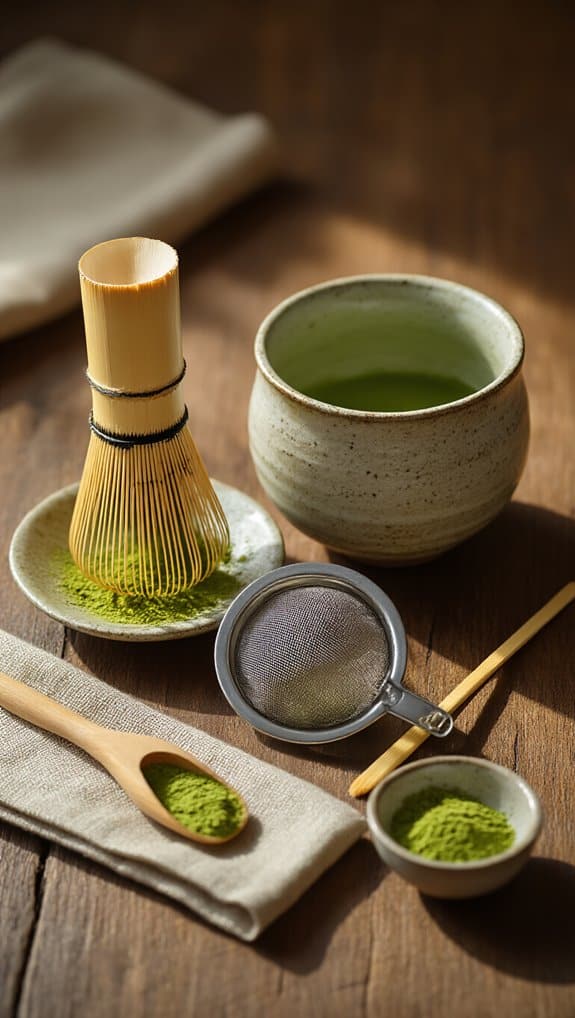
A good chawan feels balanced in your hands, its glazed interior cool and smooth while the wide rim lets the bamboo whisk aerate the powder into a bright, velvety foam.
Choose bowl materials that suit temperature retention and tactile preference: thick stoneware holds heat for longer, porcelain stays lighter, and rustic clay gives organic grip.
Size matters — a shallow, wide chawan exposes more surface for easier blending; a deeper bowl reduces splash.
For powder preparation, pick a sifter and know sifter types: fine mesh for silky, clump-free matcha, and coarser sifters for quicker, less fussy sessions with thicker blends.
Accessory options include a chasen holder to preserve whisk shape, a chashaku for precise scooping, and a cloth for gentle drying and polishing.
Consider storage: breathable boxes prevent moisture, while padded cases protect fragile ceramics.
Match your kit to ritual and daily use so each element feels purposeful.
How to Whisk Matcha: Step-by-Step Technique
Measure and sift one to two teaspoons of matcha into your bowl so the powder feels fine and light.
Heat water to about 175°F (80°C) and pour roughly 60–90 ml, watching the steam and bead size to judge temperature.
Hold your chasen vertically and whisk briskly in a relaxed “M” or “W” motion until a bright green crema of fine bubbles forms.
Measure and Sift
Before whisking, weigh out 1–2 grams (about one chashaku scoop) of matcha on a digital scale and push it through a fine-mesh sifter into your bowl. You’ll feel the powder fall light and dry; sifting removes clumps and aerates for a silkier suspension. Good matcha preparation relies on precise measurement and consistent sifting techniques to avoid grit and ensure even flavor. Use a small spoon to coax any stubborn bits through the mesh.
| Step | Purpose |
|---|---|
| Measure | Consistent strength |
| Sift | Remove clumps, aerate |
| Tap | Settle powder evenly |
| Inspect | Check for foreign bits |
Proceed to whisk immediately to preserve aroma. Keep your sifter clean, dry, and stored away from moisture.
Water Temperature and Amount
When you heat water to 70–80°C (158–176°F), you’ll coax out matcha’s grassy sweetness and floral aroma without drawing harsh bitterness or astringency.
Use about 60–80 ml (2–2.7 oz) of hot water per teaspoon (1–2 g) of sifted matcha for a traditional thin koicha or slightly thicker usucha, adjusting to taste.
Monitor water temperature with a thermometer or by cooling boiled water for several minutes; this precise water temperature prevents scorching the powder.
Pour gently to wet the powder evenly, then proceed to whisk.
Note that higher volumes dilute flavor—if you want a pronounced mouthfeel, reduce water; for a lighter cup, increase it.
These measurements give you consistent, optimal steeping and balanced flavor.
Record your preferences to replicate the exact cup next time as well.
Whisking Motion Technique
As you begin, grip the chasen lightly between your thumb and two fingers and angle the tips just above the powder so they skim the liquid without plunging.
You’ll start with short, brisk back-and-forth motions in the wrist, not the arm, producing a rapid whisking rhythm that aerates the brew. Aim for a smooth “M” or “W” motion, keeping tines near the surface to create fine bubbles and a silky foam.
Listen for a soft hiss; feel the resistance change as the powder suspends. Adjust speed to refine matcha consistency—too slow yields clumps, too hard breaks foam.
Finish with gentle circular strokes to settle crema. Rinse the chasen immediately; let it dry upright to preserve tines and balance, and avoid pressing the bristles together during.
Care and Maintenance for Bamboo Whisks
If you want your bamboo whisk to last, treat it with simple, consistent care: rinse it under warm water immediately after use, gently loosen tea particles with your fingers, and never scrub with a metal brush or harsh detergent that can strip the bamboo’s oils. For bamboo whisk care, dry it upright on a holder to preserve shape, avoid soaking, and rotate use to let ribs recover. Follow whisk maintenance tips: air-dry away from direct heat, reshape gently if tines splay, and avoid microwave or dishwasher.
| Action | Reason |
|---|---|
| Rinse warm | Removes matcha residue without damage |
| Dry upright | Maintains curve and prevents mold |
| Store loosely | Preserves airflow and bamboo oils |
You’ll feel the whisk lighten as it dries; the scent of warm bamboo signals readiness. Minimal, tactile care keeps your chasen responsive and long-lived. Replace worn chasen when ribs permanently split to protect flavor and texture quality.
Budget-Friendly vs. Premium Matcha Sets
Because you want vibrant flavor and a ritual that feels right, choosing between budget-friendly and premium matcha sets comes down to clear trade-offs in leaf quality, utensil craftsmanship, and provenance.
You’ll notice budget-friendly options emphasize accessibility: powdered tea from blended grades, a simple bamboo whisk with fewer tines, and a glazed bowl that’s durable but less refined. Those choices still yield a bright cup if you whisk with care, and they allow you to explore texture and tempo without a large investment.
Premium features, by contrast, include single-origin ceremonial leaves, a finely split chasen that froths quickly, and a hand-thrown chawan with tactile balance—elements that enhance aroma, mouthfeel, and visual pleasure.
When you decide, prioritize what you value most: the best extraction and sensory nuance, or practical, reliable tools that keep daily practice easy.
Either path rewards attentive preparation and the quiet focus of the tea moment every morning.
Gift Presentation and Packaging Ideas
When you present a matcha whisk set in an elegant gift box—matte black or textured washi paper lined with soft crème padding—you’ll signal care and elevate the ritual.
Add a custom gift tag with the recipient’s name, a brewing tip, or a short note printed on recycled card to make the package feel personal.
Coordinate ribbon color and tuck in a small sachet of ceremonial matcha for an immediate, fragrant tasting experience.
Elegant Gift Boxes
A single well-crafted box can transform a matcha whisk set into a memorable ritual before the tea’s first whisk. You choose boxes with tactile linen covers, soft foam nests, and subtle closures that whisper ceremony.
Elegant designs in muted greens, charcoal, and cream frame the chasen and scoop, while inner satin or recycled kraft accentuates scent and silhouette. You’ll feel the weight and balance as you lift the lid; the brush bristles peek like a promise.
Consider boxes that reflect unique themes—seasonal motifs, minimalist Japanese aesthetics, or botanical prints—to match the recipient’s taste. Precise measurements, protective inserts, and clean typography ensure the presentation protects the tools and communicates care without excess.
You’ll also appreciate sustainable sourcing and archival-quality materials for longevity and subtle branding.
Custom Gift Tags
Although small, a custom gift tag sets the tone before the lid lifts, hinting at ceremony through touch and sight. You pick textures—heavy cotton, rice paper—that whisper as you run fingertips over embossed kanji or matte foil.
Use custom designs to echo the whisk’s bamboo grain and the box’s hue; color and die-cut shape prime expectations. Include short, clear personalized messages to guide ritual: warming note, serving tip, or provenance line. Attach tags with twine or silk cord so weight and sound feel gently intentional.
Consider these options:
- Minimal tag: single word, neutral paper, tucked under ribbon.
- Instructional tag: brew time, whisking rhythm, dosages.
- Story tag: maker, origin, care.
These choices sharpen presentation and invite ritual and enhance unboxing pleasure subtly.
Top Picks: Best Complete Matcha Whisk Sets
Five standout complete matcha whisk sets bundle hand-carved bamboo chasens, textured bowls, and precise scoops so you get a lush, creamy froth with minimal effort.
You’ll notice the aroma of steamed powder bloom as you whisk; high-grade chasens echo traditional whisk artistry and honor matcha culture while delivering consistent foam.
Choose a set with a slightly wider bowl if you like vigorous, aerated froth, or a narrower one for gentle, velvety crema.
Look for finely split tines that flex without snapping and a scoop (chashaku) carved to level measurements, so your brews stay balanced batch after batch.
If you travel, a compact kit with a protective case preserves the chasen’s shape.
Prefer a tactile glaze? Select stoneware bowls with an interior texture to help with whisking.
Each recommended set here balances form, function, and sensory detail so you can craft the exact cup you want, every time with confident ease.
Frequently Asked Questions
Are There Vegan or Sustainably Sourced Matcha Accessories Available?
Yes — you can find vegan matcha accessories and sustainable chasen options that feel authentic and work beautifully.
You’ll get bamboo-style whisks made from FSC-certified bamboo alternatives, silicone tippings, and plant-based scoops with smooth, warm textures.
Sellers often list provenance and carbon-conscious packaging, so you can smell natural fibers and see minimal waste.
You’ll enjoy robust froth, clear flavor, and ethical sourcing when you choose these eco-friendly tools and durable craftsmanship.
Can I Use a Chasen to Froth Milk for Lattes?
Yes, you can use a chasen to froth milk for lattes.
You’ll coax tiny, creamy bubbles with brisk, wrist-driven M strokes; warm milk to about 60–65°C for silkiness.
For milk alternatives, choose barista blends for better protein and foam.
Focus on texture: listen for light hum, feel resistance, watch glossy peaks.
These frothing techniques give you delicate microfoam ideal for pouring and tasting nuanced, warm sweetness in every cup now.
How Long Does Powdered Matcha Stay Fresh After Opening?
You’ll enjoy powdered matcha at peak freshness for 3 to 6 months after opening if you store it properly.
Keep it sealed, cool, dark, and dry; you’ll preserve bright vegetal aroma, vibrant green color, and creamy umami.
Refrigerate in an airtight container for longer life, but avoid moisture.
Freshness tips: use a dry spoon, minimize air exposure, and buy small amounts so you use them while flavors stay vivid.
Are Travel-Friendly Matcha Whisk Kits Available?
Yes, you can find travel-friendly matcha whisk kits that keep preparation simple and tidy.
You’ll get a compact bamboo chasen or silicone whisk, a snug carrying case, and often a small sifter and scoop. They feel light in your hand, stow neatly in a bag, and whisk froth quickly for creamy, vibrant green tea.
Look for sturdy cases and leakproof containers when choosing portable matcha travel kits anytime, anywhere, easily.
Do Professional Tea Ceremonies Require Specific Regional Chasen Styles?
Yes, professional traditional tea ceremonies often require regional chasen styles; you’re expected to choose a whisk whose tine firmness, curve, and bamboo scent match local technique.
You’ll feel subtle differences: softer tines produce creamier froth, stiffer ones snap cleanly. Masters train to sense tempo, whisk angle, and rhythm, so you’ll select and care for the chasen to honor ceremony protocol and achieve authentic texture and aroma, and preserve daily tradition.
Conclusion
You’ll taste the difference when you use a complete matcha whisk set: the bamboo chasen hums as it froths, the chashaku scoops smooth, verdant powder, and the bowl cradles warmth. Choose a whisk that matches your ritual, sift to avoid grit, and store sticks dry to keep tines springy. With simple care and the right accessories, you’ll confidently prepare bright, velvety matcha every time—an effortless ceremony that rewards attention to texture, aroma, and balance always.


No Comments