
You’ll create the perfect protein coffee by brewing strong coffee (2 tbsp grounds per 6 oz water) and cooling it to 140°F before mixing. First, make a slurry with one scoop of whey or plant-based protein powder and room-temperature milk, then whisk vigorously for 30 seconds. Pour the smooth slurry into your coffee while stirring continuously. This energizing drink delivers 20-30g of complete protein and 100-150 calories, keeping you satisfied for hours while supporting muscle growth.
Table of Contents
Key Takeaways
- Mix one scoop (20-30g) of whey or plant-based protein powder with brewed coffee for 20-25g protein per serving
- Create a smooth slurry by mixing protein powder with room-temperature liquid before adding to 140°F coffee to prevent clumping
- Use a blender, frother, or shaker bottle with wire whisk ball for 30 seconds to achieve a silky texture
- Try flavor variations like vanilla-hazelnut with cinnamon or chocolate protein with caramel extract for enhanced taste
- Add MCT oil, collagen peptides, or ground flaxseed for extra nutrition while maintaining steady energy without crashes
Essential Ingredients for the Perfect Protein Coffee
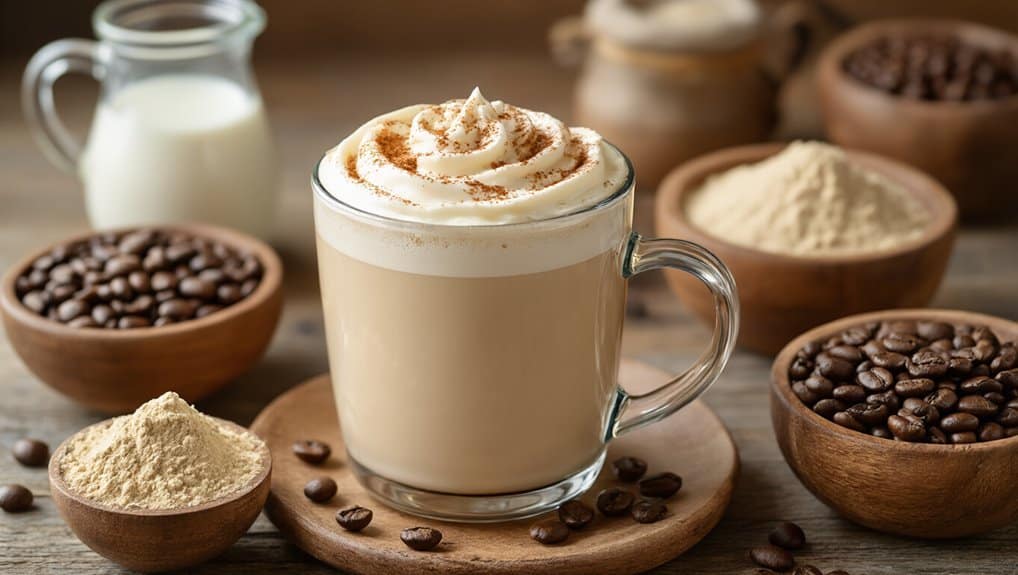
Grab your favorite mug and let’s dive into what you’ll need for a protein coffee that actually tastes good. You’ll want quality coffee as your foundation—fresh beans make all the difference in flavor. Choose medium or dark roast for a bold taste that won’t get lost when mixed with protein powder.
Your protein powder selection matters. Opt for vanilla or chocolate whey protein, or try plant-based options if you’re dairy-free. You’ll need one scoop (20-30 grams) per cup of coffee.
For creaminess, milk alternatives like almond, oat, or coconut milk work beautifully. They’ll blend seamlessly with your protein while adding subtle flavor notes. If you prefer dairy, whole milk creates the richest texture.
Don’t forget a blender or frother—you can’t just stir protein into hot coffee. Ice cubes are essential if you’re making it cold. Sweeteners like stevia or honey are optional but help balance any protein aftertaste.
Step-by-Step Brewing Instructions
Now that you’ve gathered your ingredients, you’ll need to master the brewing process to create your protein coffee. You can choose between the smooth, less acidic cold brew method or the quick hot coffee preparation, but either way, you’ll need to mix your protein powder correctly to avoid clumps.
These step-by-step instructions will walk you through each brewing technique and the proper mixing sequence for a perfectly blended drink.
Cold Brew Method
When you’re making cold brew for protein coffee, the process requires patience but delivers exceptionally smooth results. You’ll need coarse ground coffee and cold water at a 1:4 ratio. Combine them in a jar or pitcher, stirring thoroughly to saturate all grounds.
The cold extraction method pulls fewer acids from the beans, creating a naturally sweeter concentrate. Cover your container and refrigerate for 12-24 hours—this steep time ensures optimal flavor development without bitterness. Once ready, strain through a fine-mesh filter or cheesecloth twice to remove all sediment.
Your cold brew concentrate’s now perfect for protein drinks. Mix equal parts concentrate and water, then add your protein powder. The smooth, mellow base won’t overpower the protein’s taste while providing steady caffeine release.
Hot Coffee Preparation
If you prefer your protein coffee hot instead of cold, traditional brewing methods work perfectly with protein powder additions.
You’ll achieve the best results by brewing your coffee slightly stronger than usual since the protein powder will dilute the flavor.
Here’s your hot preparation method:
- Brew strong coffee – Use 2 tablespoons of grounds per 6 ounces of water to maintain bold flavor after mixing
- Cool slightly – Let coffee reach 140°F to prevent protein denaturation while preserving the coffee crema
- Blend thoroughly – Mix protein powder with a small amount of coffee first, then add the remaining liquid
For enhanced texture, try milk steaming techniques with your protein-coffee mixture.
Steam to 150°F for optimal protein preservation and creamy consistency.
This method creates a rich, frothy beverage that rivals any café creation.
Mixing Protein Properly
Breaking down the mixing process into clear steps ensures you’ll avoid the dreaded protein clumps that ruin perfectly good coffee.
First, let your hot coffee undergo temperature adjustment by cooling it to about 140°F – hot protein powder clumps instantly in boiling liquid.
Add your protein powder to a small amount of room-temperature water or milk in a separate container. Use the shake technique: vigorously shake or whisk this mixture for 30 seconds until it’s completely smooth.
Pour this protein slurry into your cooled coffee while stirring continuously. If you’re using a blender bottle, combine everything and shake for another 20 seconds.
For extra smoothness, blend the entire mixture for 10 seconds.
You’ll achieve a creamy, clump-free protein coffee that’s ready to energize your day.
Best Protein Powders for Coffee Mixing
Zeroing in on the right protein powder can make or break your coffee drink’s taste and texture. You’ll want powders that dissolve smoothly without clumping and complement coffee’s natural flavor profile.
Whey isolate stands out as the top choice for coffee mixing. It’s virtually lactose-free, dissolves quickly in hot liquids, and won’t overpower your brew’s taste. Its neutral flavor profile makes it perfect for maintaining that rich coffee experience you’re after.
For non-dairy options, a plant-based blend works exceptionally well. Look for combinations of pea and rice protein that offer complete amino acids while mixing seamlessly into your morning cup.
Consider these key factors when selecting your powder:
- Heat stability – Choose proteins that won’t denature at coffee temperatures
- Mixability score – Opt for instantized formulas that dissolve without vigorous blending
- Flavor compatibility – Select unflavored or vanilla varieties that enhance rather than mask coffee notes
Flavor Variations and Add-In Options
Now that you’ve selected your protein powder, you’ll want to explore exciting ways to customize your coffee drink.
You can transform your basic protein coffee with popular combinations like vanilla-cinnamon, chocolate-hazelnut, or caramel-sea salt while boosting nutrition with collagen peptides, MCT oil, or superfood powders.
These variations let you create a personalized drink that matches your taste preferences and fitness goals.
Popular Flavor Combinations
Once you’ve mastered the basic protein coffee recipe, you’ll want to explore flavor combinations that transform your daily drink into something special. The right pairing elevates both taste and nutritional value while keeping preparation simple.
Try these crowd-pleasing combinations:
- Vanilla Hazelnut Delight – Mix vanilla protein powder with hazelnut syrup and a dash of cinnamon for a nutty, sweet profile that complements coffee’s natural bitterness.
- Caramel Mocha Indulgence – Blend chocolate protein powder with caramel extract and unsweetened cocoa for a dessert-like experience without excess sugar.
- Coconut Almond Dream – Combine unflavored protein with coconut milk and almond extract for a tropical twist that’s dairy-free.
Each combination delivers 20-30g of protein while satisfying specific flavor cravings you’re experiencing throughout your day.
Nutritional Boost Options
Beyond basic flavor profiles, you can enhance your protein coffee’s nutritional value with strategic add-ins that support specific health goals. You’ll find plant-based boosters like spirulina, maca powder, and chia seeds blend seamlessly while delivering antioxidants and omega-3s. For energy enhancement, add matcha or adaptogenic mushroom powders that won’t overpower your coffee’s taste.
Consider micronutrient fortifiers such as collagen peptides for joint health or MCT oil for sustained energy and mental clarity. You can also incorporate fiber-rich options like ground flaxseed or psyllium husk to support digestive health. Start with small amounts—typically a teaspoon—and adjust based on your tolerance and taste preferences.
These additions transform your morning brew into a comprehensive wellness drink that fuels your body beyond simple protein supplementation.
Nutritional Benefits and Macros Breakdown
When you combine protein powder with your morning coffee, you’re creating a nutritional powerhouse that delivers far more than just caffeine. You’re getting essential macronutrients that support muscle recovery, metabolism, and sustained energy throughout your day.
A typical protein coffee contains:
- 20-25g protein – Complete amino profile supporting muscle synthesis and repair
- 100-150 calories – Optimal calorie distribution with 70-80% from protein
- 2-5g carbs – Minimal sugar impact while maintaining energy levels
This combination transforms your regular coffee into a functional beverage that’ll keep you satisfied for hours. The amino profile from quality protein powder provides all nine essential amino acids your body can’t produce naturally.
You’re essentially drinking a meal replacement that won’t spike your blood sugar or leave you crashing mid-morning. The balanced macros make it perfect for weight management, muscle building, or simply maintaining steady energy levels without the typical coffee jitters.
Tips for Achieving the Smoothest Texture
Now that you understand the nutritional value of protein coffee, let’s make sure your drink actually tastes good and goes down smooth. The biggest challenge you’ll face is preventing clumps and achieving a creamy consistency.
First, warm gently your coffee to about 140°F—hot enough to help dissolve fully your protein powder but not so hot it denatures. Never dump powder directly into hot liquid. Instead, create a slurry with a small amount of room-temperature liquid first.
For cold versions, use ice and shake vigorously in a shaker cup for 30 seconds. Better yet, emulsify with blender bottle using the wire whisk ball for superior mixing. The agitation breaks down powder particles completely.
If you’re still getting chunks, strain the mixture through a fine-mesh sieve. You’ll lose minimal protein while ensuring a silky-smooth drink that’s actually enjoyable to consume rather than a lumpy mess.
Frequently Asked Questions
Can I Drink Protein Coffee While Intermittent Fasting?
You can’t drink protein coffee during your fasting window since protein breaks a fast by triggering an insulin response and halting autophagy.
However, you can enjoy black coffee with zero-calorie sweeteners like stevia during fasting hours. Save your protein coffee for eating windows when it’ll support muscle recovery.
As your body develops fasting adaptations over time, you’ll find plain black coffee becomes more satisfying and helps suppress hunger naturally.
How Long Does Prepared Protein Coffee Stay Fresh in the Refrigerator?
You’ll keep prepared protein coffee fresh for 2-3 days in the refrigerator. Your refrigeration timeframes depend on the protein type used – whey-based drinks last longer than plant proteins.
Choose airtight storage containers, such as glass jars or BPA-free plastic bottles, to prevent oxidation and maintain flavor. You should shake well before drinking since protein can settle.
Don’t store beyond three days as bacterial growth increases and taste deteriorates significantly.
Is Protein Coffee Safe to Consume During Pregnancy or Breastfeeding?
You should consult your healthcare provider before drinking protein coffee during pregnancy or breastfeeding.
While protein powder is generally safe, prenatal safety depends on the specific ingredients and caffeine content.
Most doctors recommend limiting caffeine to 200mg daily when pregnant.
Breastfeeding considerations include how caffeine and certain protein additives might affect your baby.
Choose pregnancy-safe protein powders without artificial sweeteners or herbs, and monitor your total daily caffeine intake carefully.
Will Heating Protein Coffee Denature the Protein Content?
Yes, heating your protein coffee will partially denature the protein content. Most proteins’ heat tolerance varies, but temperature thresholds above 140°F start affecting protein stability.
You’ll notice denaturation kinetics accelerate as temperatures rise – whey protein begins unfolding around 160°F. However, you won’t lose nutritional value; denatured proteins still provide amino acids. You’re simply changing the structure, not destroying the protein’s benefits for muscle recovery and satiety.
Can Protein Coffee Replace a Post-Workout Protein Shake?
Yes, you can replace your post-workout shake with protein coffee if it contains enough protein for your muscle recovery needs.
You’ll want to ensure you’re getting 20-30 grams of protein to support optimal amino balance after training. The caffeine boost can enhance your workout benefits, but you’ll miss out on carbohydrates typically found in recovery shakes.
Consider adding a banana or oats if you’re refueling after intense exercise.
Conclusion
You’ve discovered how simple it is to create your own protein coffee that rivals any café version. With the right protein powder, proper mixing technique, and your favorite flavor additions, you’ll fuel your mornings with both caffeine and muscle-building nutrients. Whether you’re rushing to the gym or need sustained energy for work, this versatile drink fits perfectly into your routine. Start experimenting with different combinations tomorrow – your taste buds and fitness goals will thank you.


No Comments