
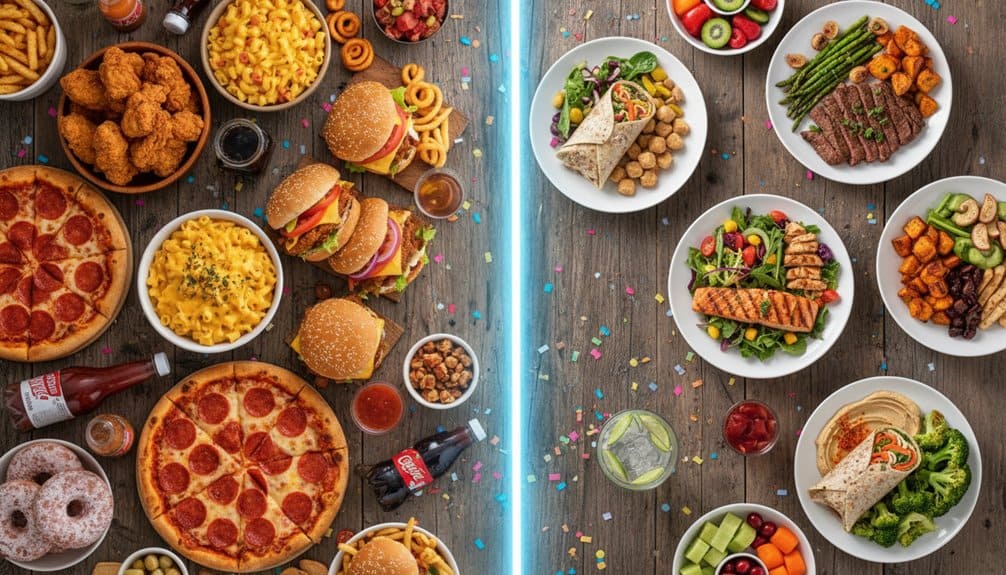
Daily Calorie Average: What Americans Actually Eat Vs What You Need – Reality Check
You’re consuming nearly twice the calories your body needs—around 3,600 daily compared to the 1,800 to 2,400 most adults actually require. That morning coffee drink packs 500 calories before you’ve even eaten breakfast, while your “healthy” restaurant salad contains 1,200 calories. Ultra-processed foods bypass your satiety signals, and portion sizes have doubled since the 1980s. Simple strategies like using smaller plates and drinking water before meals can help close this dangerous gap.
Table of Contents
Key Takeaways
- Americans consume approximately 3,600 calories daily, nearly double what most adults actually need for healthy weight maintenance.
- Individual calorie needs vary significantly based on age, activity level, and muscle mass, ranging from 1,600-2,400 for most adults.
- Ultra-processed foods and oversized restaurant portions drive overconsumption, with single meals often exceeding 1,500 calories.
- Restaurant portions have doubled since the 1980s, creating “portion distortion” that normalizes excessive calorie intake.
- Sustainable reduction strategies include using smaller plates, drinking water before meals, and prioritizing nutrient-dense whole foods over processed options.
The 3,600-Calorie Reality: Breaking Down America’s Daily Food Intake
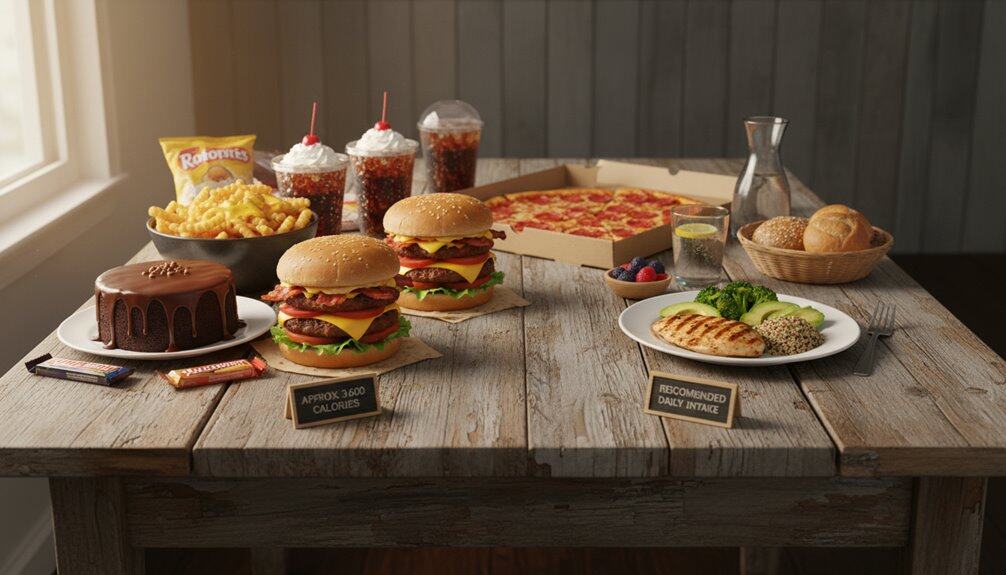
Everyone knows they should watch their calorie intake, but you’d be shocked to learn what Americans actually consume each day. The average American eats approximately 3,600 calories daily—nearly double what most adults need. You’re likely consuming far more than you realize through hidden sources and oversized portions.
Your morning coffee drink packs 500 calories before you’ve eaten breakfast. That “healthy” restaurant salad contains 1,200 calories thanks to calorie dense ingredients like creamy dressings, cheese, and croutons. You’re getting minimal nutrition content from processed snacks that deliver 300-400 calories per serving.
The problem isn’t just quantity—it’s quality. You’re eating foods engineered to bypass satiety signals, loaded with sugar, salt, and unhealthy fats. Fast food meals routinely exceed 1,500 calories in one sitting. Even home cooking has shifted toward richer, more indulgent recipes. You’ve normalized portion sizes that would’ve seemed absurd decades ago, making overconsumption feel standard.
Your Personal Calorie Needs: Age, Activity, and Body Size Factors
While most diet advice treats calorie needs as one-size-fits-all, your body’s actual requirements depend on specific factors unique to you. Your age directly impacts your basal metabolic needs—you’ll burn fewer calories at rest as you get older. A 25-year-old naturally requires more energy than someone who’s 55, even at the same weight.
Your activity level dramatically shifts your exercise requirements. If you’re sedentary, you’ll need 400-800 fewer calories than someone training for marathons. Body composition matters too—muscle tissue burns more calories than fat, even when you’re sleeping.
| Factor | Low Impact | High Impact |
|---|---|---|
| Age | 70+ years (-300 cal) | 18-25 years (+200 cal) |
| Activity | Desk job (-400 cal) | Construction work (+800 cal) |
| Muscle Mass | Low muscle (-150 cal) | Athletic build (+250 cal) |
These variations explain why you might maintain weight on 1,800 calories while your friend needs 2,500. Understanding your personal multipliers helps you set realistic targets.
The Hidden Calorie Culprits: Ultra-Processed Foods and Portion Distortion
Even though you’re tracking calories carefully, ultra-processed foods can sabotage your efforts through hidden sugars, oils, and sodium that manufacturers add during production. That seemingly healthy granola bar you’re eating contains 200 calories from added sweeteners you didn’t account for.
Food labeling confusion makes this worse—terms like “natural” and “wholesome” don’t mean low-calorie, and serving sizes rarely match what you actually eat.
You’ve probably noticed restaurant portions have doubled since the 1980s. What looks like one meal often contains 1,500 calories—nearly your entire daily requirement. This portion distortion extends to packaged foods too. That bag of chips isn’t three servings; you’ll likely finish it in one sitting.
Combat these culprits through nutritious meal planning focused on whole foods. When you prep vegetables, lean proteins, and whole grains at home, you control exactly what goes into your meals. You’ll slash hundreds of hidden calories while actually feeling more satisfied.
Practical Strategies for Closing the Calorie Gap Without Restrictive Dieting
Three simple shifts in your daily routine can close that 200-calorie gap without counting every morsel or eliminating food groups. First, you’ll naturally reduce portions by using smaller plates—your brain perceives the same amount of food as more satisfying on a 9-inch plate versus a 12-inch one.
Second, drink water before each meal. You’ll consume 75-90 fewer calories when you’re properly hydrated because thirst often masquerades as hunger.
Third, implement mindful meal planning by preparing vegetables first when cooking. You’ll automatically increase nutrient-dense foods while crowding out calorie-dense options. These sustainable eating habits don’t require willpower or restriction. Instead, they’re environmental tweaks that work with your psychology, not against it.
You won’t feel deprived because you’re not removing foods—you’re restructuring how you approach them. The key isn’t perfection; it’s consistency in these small adjustments that compound over time.
Frequently Asked Questions
How Do American Calorie Consumption Patterns Compare to Other Developed Countries?
You’ll find Americans consume significantly more calories than most developed nations, averaging 3,600-3,800 daily compared to Japan’s 2,700 or France’s 3,200. These nutritional disparities stem from portion sizes, processed food reliance, and sugar intake that’s double European levels.
While dietary trends in countries like Italy emphasize whole foods and smaller meals, you’re seeing American eating patterns dominated by convenience foods, creating a 500-1,000 calorie gap with healthier nations.
What Medical Conditions Can Affect Individual Calorie Requirements Beyond Standard Calculations?
Your calorie needs can shift dramatically with certain medical conditions. Metabolic disorders like mitochondrial diseases slow your body’s energy production, while hyperthyroidism speeds it up.
You’ll burn fewer calories with hypothyroidism or Cushing’s syndrome. Endocrine imbalances from PCOS or growth hormone deficiency alter your metabolism. Diabetes affects how you process nutrients, and medications for depression or epilepsy can increase appetite.
These conditions require personalized nutrition planning beyond standard formulas.
How Accurate Are Restaurant Menu Calorie Counts Compared to Actual Servings?
You’ll find restaurant menu calorie counts can be off by 20% or more from what’s actually on your plate. While chains must post calories by law, nutritional accuracy varies wildly due to inconsistent serving sizes and preparation methods.
Your burger might contain 200 extra calories because the cook used more oil or cheese than specified. Independent restaurants aren’t required to provide counts, making their meals even harder to track accurately.
Do Calorie Needs Change Significantly During Pregnancy or Breastfeeding?
Yes, your calorie needs increase significantly during both pregnancy and breastfeeding. You’ll need about 340 extra calories daily in the second trimester and 450 in the third to support healthy gestational weight gain.
While breastfeeding, you’ll burn an additional 500 calories per day producing milk. These increased calorie needs ensure proper fetal development during pregnancy and adequate milk supply afterward, making proper nutrition crucial during both periods.
How Does Alcohol Consumption Impact Daily Calorie Totals for Average Americans?
Alcohol adds significant empty calories to your daily intake—about 100-150 calories per standard drink. If you’re following typical American drinking habits, you’ll consume an extra 300-600 calories on drinking days.
Binge drinking patterns can add 1,000+ calories in one night, drastically increasing your weekly average. You’re essentially drinking a meal’s worth of calories without any nutritional benefit, which explains why alcohol contributes roughly 5% of Americans’ total caloric intake.
Conclusion
You don’t need to obsess over every calorie, but understanding the gap between what you’re eating and what your body needs is crucial. Start by tracking your intake for just three days—you’ll likely discover you’re consuming more than you think. Focus on swapping ultra-processed foods for whole options and right-sizing your portions. Small, consistent changes will naturally bring your daily calories closer to what you actually need without feeling deprived or restricted.


No Comments