
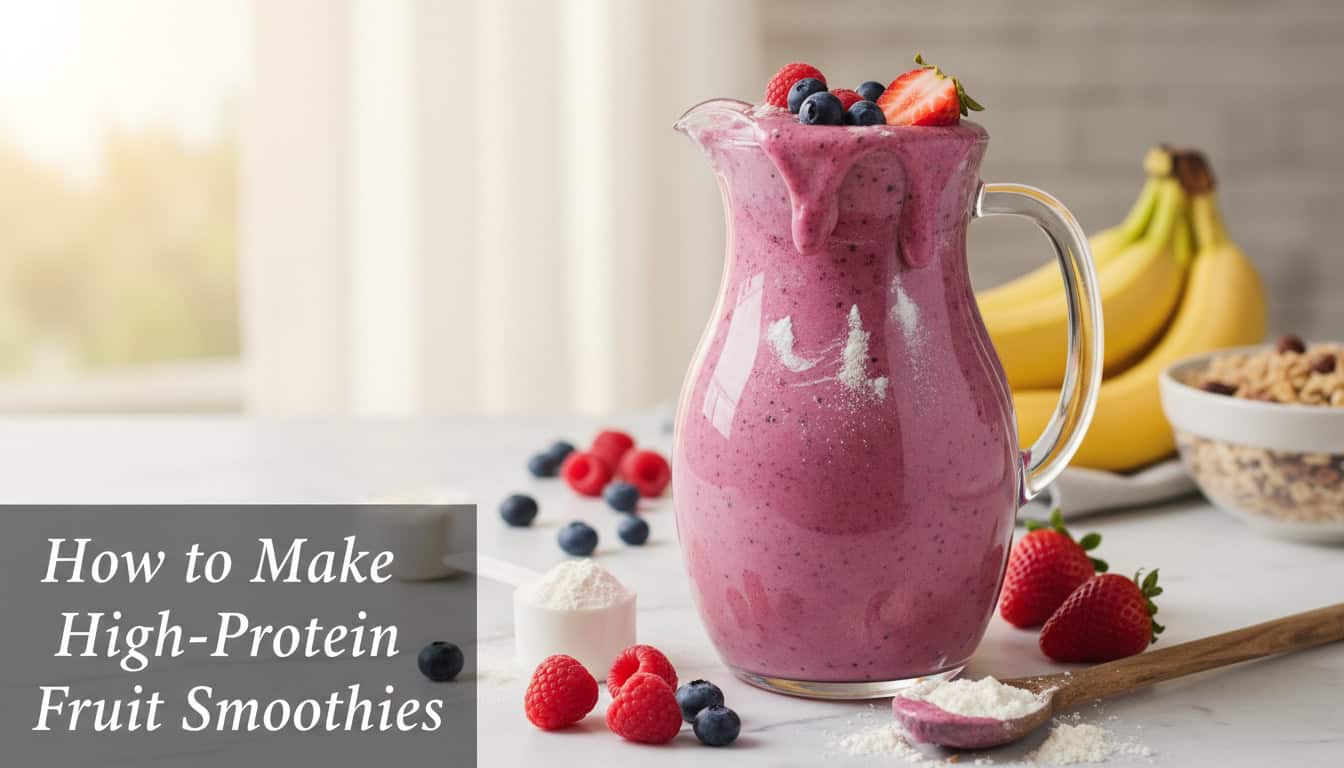
How to Make High Protein Fruit Smoothies
Grab a scoop of plant‑based protein powder, ¾ cup frozen berries, a tablespoon of chia or hemp seeds, and a splash of unsweetened soy milk. Add a dollop of almond butter for extra protein and creaminess, then blend 30‑45 seconds until smooth. Let it rest a couple of minutes so the seeds thicken, give it a quick pulse, and sip chilled. You’ll hit about 25 g protein without excess calories, and the next tips will show you how to fine‑tune flavor, texture, and macro goals.
Table of Contents
Pick the Protein That Powers Your Protein Smoothie
Which protein will you choose to power your smoothie? You need a source that hits at least 25 g protein per serving while blending smoothly. Greek‑style yogurt delivers 10‑15 g per half‑cup, adds probiotics, and gives a creamy texture. Cottage cheese offers about 24 g per cup, low fat, and calcium, though its tang can be strong. Silken tofu contributes 11 g per three‑quarters cup and stays neutral, perfect for a bland base. Hemp seeds supply 10 g per three tablespoons plus omega‑3s, but they add a nutty grit. Chia seeds give 12 g per two tablespoons while thickening the drink, though they need a brief soak. Choose the option that matches your flavor preference, texture goal, and nutrient priorities. Blend the protein with your fruit, liquid, and optional fats, then let it rest a couple of minutes for optimal consistency.
Select High‑Fiber Fruit for a Balanced Protein Smoothie
Looking for fruit that boosts fiber without sacrificing flavor? Reach for berries—strawberries, raspberries, and blackberries each deliver 3–4 g fiber per cup and a burst of antioxidants. Add a half‑cup of sliced kiwi for 2 g fiber and a tangy zing, or toss in a small banana for 2.5 g fiber and creamy texture. If you crave tropical notes, blend a quarter‑cup of mango with a quarter‑cup of pineapple; together they supply roughly 5 g fiber and natural sweetness. For a low‑calorie base, mix frozen watermelon chunks—about 1 g fiber per cup—with a splash of orange juice to keep the smoothie refreshing. Remember to balance fruit fiber with your protein source, aiming for 15–20 g total fiber per serving. This mix ensures steady digestion, sustained energy, and a satisfying mouthfeel without overwhelming calories.
Add Fats & Omega‑3s to Your Protein Smoothie for Satiety
Adding healthy fats and omega‑3s to your protein smoothie boosts satiety, steadies blood‑sugar spikes, and supports heart health. You’ll feel fuller longer, which curbs mid‑day cravings and keeps energy steady. A modest 5‑10 g of fat per serving is enough to slow digestion without adding excess calories. Choose sources that blend smoothly and bring extra nutrients, like avocado for creamy texture, nut butter for monounsaturated fats, and seeds for plant‑based omega‑3s. Balance these with your protein and fruit base to hit your macro goals while keeping the drink enjoyable.
- Avocado: adds 2‑3 g fat, potassium, and a velvety mouthfeel.
- Nut butter (almond, peanut): supplies 7‑8 g protein and healthy monounsaturated fats.
- Flaxseed meal: provides 2‑3 g omega‑3s and lignans for hormone support.
- Hemp seeds: deliver 10 g protein, 3‑4 g omega‑3s, and a mild nutty flavor.
Mix your chosen fats after the main blend to avoid clumping, then give the smoothie a quick pulse before serving. This approach ensures a smooth texture, optimal nutrient absorption, and lasting fullness.
Sweeten Your Protein Smoothie Without a Sugar Crash
Ever wondered how to sweeten your protein smoothie without spiking blood sugar? Swap refined sugar for natural low‑glycemic sweeteners. Add a handful of frozen berries; they bring sweetness and antioxidants while keeping carbs modest. Blend in a few pitted dates—each date adds about 5 g sugar but also fiber that blunts glucose spikes. For a zero‑calorie lift, drizzle a teaspoon of liquid stevia or a pinch of monk‑fruit powder; both are 300‑hot without‑ impact. Incorporate vanilla extract or cinnamon; they enhance perceived sweetness without adding carbs. If you tolerate dairy, stir in a splash of unsweetened Greek yogurt; its tang balances flavor and its protein slows sugar absorption. Finally, consider adding a scoop of protein powder flavored with cocoa or caramel; the sweetness comes from the formulation, not added sugar. These tricks keep your smoothie tasty, high‑protein, and blood‑sugar‑friendly.
Blend, Rest, and Serve Your Protein Smoothie Perfectly
You’ll want to blend just long enough—about 30‑45 seconds—to fully emulsify the protein, fruit, and seeds without over‑processing.
Let the smoothie rest for a couple of minutes so the chia or flaxseed can form a smooth gel that thickens the texture.
Serve it slightly chilled, not ice‑cold, to keep the flavors bright and the consistency creamy.
Blend Timing
When you blend the ingredients, aim for 30‑45 seconds on a high‑speed setting so the frozen fruit, liquid, and powders become fully emulsified; then let the mixture rest for 2‑3 minutes, allowing chia or flaxseed to thicken and any air bubbles to settle, and finally give it a quick pulse before pouring into a glass to serve at the perfect temperature and texture. Timing matters because a short, vigorous spin creates a smooth, frothy base, while the brief rest lets fibers hydrate without turning the drink gummy. A final pulse re‑integrates settled particles, ensuring consistent mouthfeel.
- Use a sealed lid to prevent splatter during the high‑speed phase.
- Pause halfway to scrape the sides for uniform blending.
- Keep the blender container chilled to maintain a cold texture.
- Avoid over‑blending; beyond 45 seconds can break down delicate proteins.
Rest Gel Formation
A brief rest after blending lets the chia, flaxseed, or psyllium swell into a smooth gel, turning the smoothie into a creamy, spoon‑able texture without sacrificing its chill. Let the mixture sit for 2–4 minutes; the fibers absorb liquid and thicken uniformly. During this pause, give the container a gentle shake or stir once to break any surface skin and keep the gel consistent. If you used protein powder, the rest allows it to hydrate fully, preventing gritty pockets.
For thicker results, extend the rest to five minutes, then give a quick pulse to blend any settled particles. This controlled gel formation yields a balanced mouthfeel, ensuring each sip feels rich and satisfying.
Serve Temperature Tips
After the gel sets, serving the smoothie at the right temperature locks in its creamy texture and flavor. You’ll want it cool enough to keep the chia gel firm, yet warm enough to release aromatic notes from fruit and protein powder. Start by chilling the glass for a minute, then pour the smoothie in. If it’s too thick, let it sit 30 seconds; if it’s thin, add a few ice cubes and re‑blend briefly. The goal is a sip‑ready drink that feels refreshing without diluting nutrition.
- Chill the serving glass for 30 seconds to maintain consistency.
- Serve at 40‑45 °F for a thick, velvety mouthfeel.
- Add a splash of cold milk or juice right before serving to boost flavor.
- Avoid reheating; temperature loss reduces protein denaturation benefits.
Tailor the Protein Smoothie for Weight Loss, Muscle Gain, or Vegan Diets
You can swap Greek‑style yogurt for silken tofu or hemp seeds to keep the protein high while staying vegan.
If weight loss is your goal, choose low‑fat cottage cheese or a plant‑based powder and limit added fats to a tablespoon of nut butter.
For muscle gain, boost the protein to 30‑40 g by adding whey or a pea‑protein scoop and keep the carbs from fruit around 30‑45 g.
Specific Protein Sources
Which protein source you choose shapes the smoothie’s purpose—lean yogurt or cottage cheese for weight‑loss satiety, whey or silken tofu for muscle‑gain protein spikes, and hemp, chia, or plant‑based powders for vegan nutrition. Pick a base that matches your goal, then balance it with fruit, liquid, and healthy fats. You’ll hit the 25 g protein target without excess calories, and each option brings a unique texture and micronutrastic profile.
- Greek yogurt: thick, tangy, 12 g protein per ½ cup, adds probiotics.
- Silken tofu: neutral flavor, 11 g protein per ¾ cup, blends smoothly for muscle‑gain.
- Hemp seeds: 10 g protein per 3 Tbsp, omega‑3s, creates a nutty finish.
- Plant‑based powder: 20‑30 g protein per scoop, customizable for vegan diets.
Vegan‑Friendly Ingredient Swaps
Choosing a vegan‑friendly protein base lets you hit the 25‑gram target while keeping calories low and plant nutrients high. Swap Greek yogurt for silken tofu or unsweetened soy milk; both deliver 10‑12 g protein per cup and blend smoothly.
Replace cottage cheese with a scoop of pea‑protein powder to add 20 g protein without extra fat. Use hemp or chia seeds instead of whey for omega‑3s and fiber, aiming for 3 Tbsp each to reach 10‑12 g protein.
Add a tablespoon of almond butter for creamy texture and 7 g protein, but watch the calorie count.
Incorporate spinach or kale for iron and micronutrients; they won’t affect flavor. Finish with frozen berries, mango, or watermelon for antioxidants, natural sweetness, and a thick, satisfying mouthfeel.
Frequently Asked Questions
Can I Use Frozen Tofu Instead of Silken Tofu for Protein?
Yes, you can swap frozen tofu for silken tofu, but thaw it first and blend well to avoid graininess. It still gives about 10 g protein per cup, keeping the smoothie protein‑rich and creamy.
How Much Protein Does a Tablespoon of Almond Butter Actually Add?
You’ll get roughly 7 grams of protein per tablespoon of almond butter, so it boosts your smoothie’s protein content nicely without adding too many calories or carbs.
Is There a Difference in Protein Quality Between Dairy and Plant Powders?
You’ll find dairy powders usually have higher biological value, delivering all essential amino acids in optimal ratios, while plant powders can be slightly lower in some amino acids but still provide solid protein when you blend complementary sources.
What’s the Best Way to Keep Smoothies From Separating Overnight?
You’ll keep them together by adding a thickener like chia or xanthan gum, blending thoroughly, and storing in a sealed container; give it a quick shake or stir before drinking.
Can I Replace Fruit With Vegetable Puree Without Losing Flavor?
Yes, you can swap fruit for vegetable puree and keep flavor by adding a splash of orange juice or a dash of honey, using naturally sweet veggies like carrots, and balancing with a pinch of cinnamon.
Conclusion
You now have a roadmap to craft the perfect high‑protein fruit smoothie—choose your protein source, load up on fiber‑rich fruit, add healthy fats for staying power, sweeten wisely, and let it rest before sipping. Whether you’re cutting calories, bulking up, or keeping it vegan, these steps let you fine‑tune each batch for flavor, nutrition, and lasting satisfaction. Enjoy the boost and keep experimenting!


Sorry, the comment form is closed at this time.