
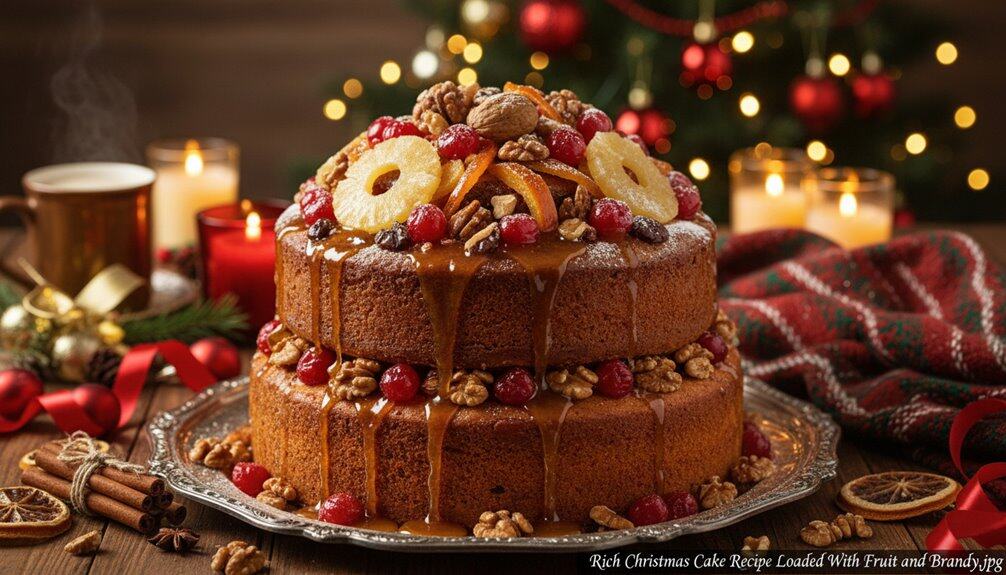
Rich Christmas Cake Recipe Loaded With Fruit and Brandy
You’ll create an incredibly rich Christmas cake by soaking sultanas, currants, raisins, and dates in brandy for 24-72 hours until plump and glossy. Cream butter with brown sugar, add eggs one at a time, then gently fold in flour, mixed spice, and your boozy fruits. Bake at 325°F, then feed weekly with brandy for 4-6 weeks while wrapped in parchment and foil. This aging process develops complex flavors that’ll transform your holiday celebration.
Table of Contents
Key Takeaways
- Soak dried fruits (sultanas, currants, raisins, dates) in brandy for 24-72 hours until plump and glossy.
- Cream butter and brown sugar until fluffy, add eggs individually, then gently fold in flour and soaked fruits.
- Bake at 325°F for conventional ovens or 300°F for convection ovens until golden and cooked through.
- Feed cake with brandy weekly for 4-6 weeks, wrapping tightly in parchment and foil between applications.
- Store in cool, dark place and remove 30 minutes before serving for optimal texture and flavor.
Essential Ingredients for Traditional Christmas Cake
Several key ingredients form the foundation of an authentic Christmas cake that’ll fill your home with festive aromas. Your dried fruit selection determines the cake’s character – combine sultanas, currants, raisins, and chopped dates for traditional flavor. Add candied peel, glacé cherries, and chopped almonds for texture and richness.
Butter provides essential fat, while brown sugar adds deep molasses notes. Use large eggs at room temperature for proper binding. Plain flour creates structure, and mixed spice delivers that signature Christmas warmth.
Brandy serves dual purposes in your recipe. It enhances flavor complexity and addresses moisture content considerations by keeping the cake moist for weeks. You’ll need it for soaking fruit beforehand and feeding the finished cake.
Don’t forget vanilla extract and a pinch of salt to balance flavors. Fresh lemon zest brightens the heavy ingredients, while treacle deepens the color and adds sticky sweetness that binds everything together perfectly.
Preparing and Soaking the Dried Fruits
Before you begin mixing your cake batter, you’ll need to prepare the dried fruits through proper soaking, which transforms tough, chewy pieces into plump, flavorful gems that’ll distribute evenly throughout your cake.
Your fruit medley composition should include currants, sultanas, raisins, mixed peel, and glacé cherries. Rinse the fruits in warm water to remove excess sugar and dust, then pat them dry with clean kitchen towels. Place everything in a large bowl and pour brandy or rum over them, ensuring they’re completely covered.
Soaking duration considerations are crucial for optimal results. You’ll want to soak your fruits for at least 24 hours, though 48-72 hours produces even better flavor absorption. Stir the mixture occasionally to ensure even soaking. Cover the bowl with plastic wrap to prevent evaporation. The fruits should appear plump and glossy when ready, having absorbed most of the alcohol while retaining their shape and texture.
Step-by-Step Mixing and Baking Instructions
Now that your fruits have soaked up all those wonderful flavors, it’s time to bring your Christmas cake together through careful mixing and precise baking. You’ll need to follow specific techniques when combining your ingredients to ensure the perfect texture and crumb.

Getting your oven temperature just right will make the difference between a dense, moist cake and one that’s dry or unevenly baked.
Proper Mixing Technique
When you’re ready to combine your ingredients, start by creaming the butter and sugar together until the mixture becomes light and fluffy—this typically takes 3-4 minutes with an electric mixer on medium speed. This process is crucial for incorporating air into your cake base.
| Mixing Stage | Technique | Duration |
|---|---|---|
| Butter & Sugar | Cream on medium speed | 3-4 minutes |
| Add Eggs | Beat one at a time | 30 seconds each |
| Flour Addition | Fold gently by hand | Until just combined |
| Fruit Integration | Fold with wooden spoon | 1-2 minutes |
| Final Mix | Gentle stirring motions | 30 seconds |
Add eggs individually, beating well after each addition. When combining ingredients like flour, fold gently to prevent overmixing. Finally, incorporate your soaked fruit using a wooden spoon with careful folding motions.
Baking Temperature Guidelines
After you’ve mixed your rich cake batter to perfection, temperature control becomes your most critical factor for success. Set your oven to 325°F (163°C) for conventional ovens, or 300°F (149°C) for convection oven settings. The lower temperature prevents burning while ensuring even cooking throughout the dense, fruit-laden batter.
Bake time variations depend on your pan size and oven type. A 9-inch round pan typically requires 2.5 to 3 hours, while smaller pans need 1.5 to 2 hours. Check doneness by inserting a skewer into the center—it should come out clean or with just moist crumbs.
Line your pan with parchment paper and wrap the outside with foil to prevent over-browning. This protection ensures your cake develops a golden crust without becoming dry.
Feeding Your Cake With Brandy
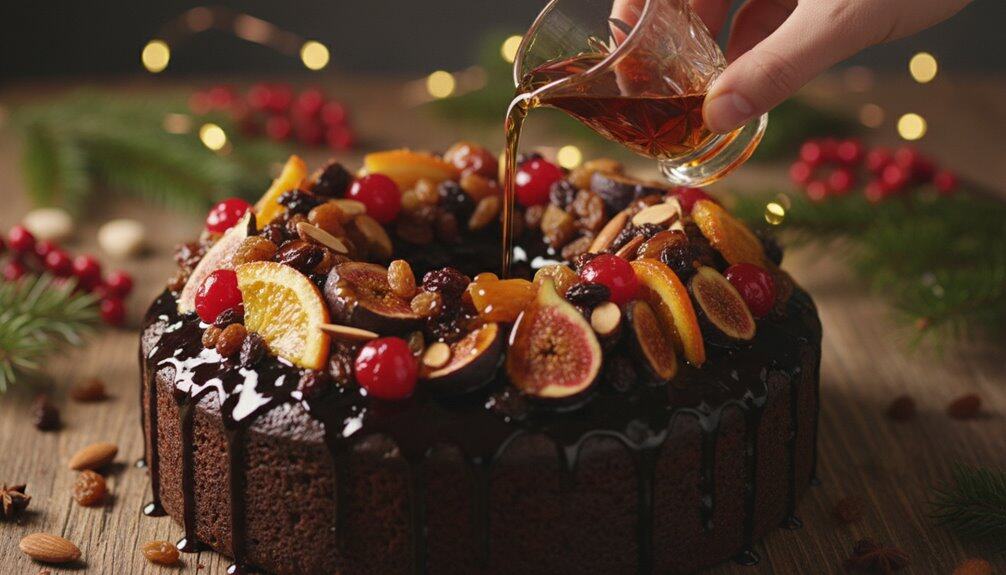
The secret to transforming your rich Christmas cake from good to extraordinary lies in the ancient tradition of feeding it with brandy. This process enhances flavor depth while ensuring your cake stays moist for months.
After your cake has cooled completely, you’ll begin the feeding ritual. Use a skewer to pierce holes across the surface, then slowly drizzle brandy over the top. The cake’s dense texture allows for optimal brandy absorption without becoming soggy.
| Feeding Schedule | Brandy Amount | Purpose |
|---|---|---|
| Week 1-2 | 2-3 tablespoons | Initial saturation |
| Week 3-4 | 1-2 tablespoons | Flavor development |
| Final week | 1 tablespoon | Final enhancement |
The soaking duration should span 4-6 weeks minimum. Wrap your cake tightly in parchment paper and foil between feedings. Store in a cool, dry place, and you’ll notice the alcohol mellows while the fruit flavors intensify beautifully.
Proper Storage and Aging Techniques
After you’ve fed your cake with brandy, you’ll need to store it properly to develop those deep, complex flavors. The wrapping method and container you choose will directly impact how well your cake ages over the coming weeks.

Understanding the right aging duration ensures you’ll achieve that perfect balance of moisture and concentrated taste that makes Christmas cake truly special.
Wrapping and Container Methods
Proper storage transforms your freshly baked rich Christmas cake from a simple dessert into a deeply flavored masterpiece. You’ll need the right wrapping and container methods to ensure optimal aging and flavor development.
Choose from these effective storage approaches:
- Double-wrap technique – First wrap your cooled cake in parchment paper, then aluminum foil, creating an airtight seal that prevents moisture loss while allowing gradual alcohol absorption.
- Airtight reusable containers – Place wrapped cake in plastic containers with tight-fitting lids, ensuring no air exposure that could dry out your creation.
- Food grade wraps – Use plastic wrap designed for long-term food storage, pressing directly against the cake’s surface to eliminate air pockets.
Store your wrapped cake in a cool, dark place for four to six weeks.
Aging Duration Guidelines
Once you’ve secured your cake with proper wrapping, timing becomes your next consideration for achieving peak flavor development. Your rich Christmas cake requires a minimum maturing duration of four weeks to reach its full potential. However, you’ll achieve superior results with an extended maturation period of eight to twelve weeks.
During the first month, feed your cake weekly with brandy or rum using a skewer to create small holes. Gradually reduce feeding frequency to every two weeks after the initial month. The alcohol not only enhances flavor complexity but also acts as a natural preservative.
For optimal results, begin your cake preparation in late September or early October. This timeline ensures your cake reaches perfect maturity by Christmas, delivering the deep, rich flavors that make this dessert exceptional.
Decorating and Finishing Touches
Everyone knows the final appearance of your rich Christmas cake can make or break the holiday presentation. After weeks of aging, you’ll want to showcase your masterpiece with thoughtful garnishing options that complement the cake’s deep, brandy-soaked flavors.
Consider these classic finishing approaches:
- Traditional Royal Icing – Create smooth white peaks or intricate piped designs that contrast beautifully with the dark fruit cake beneath
- Marzipan Layer – Roll almond paste into a smooth covering, then dust with powdered sugar for an elegant, professional look
- Simple Dusting – Lightly sift powdered sugar over the top for a minimalist, rustic appearance
Your flavor accompaniments should enhance rather than compete with the cake’s complexity. Fresh berries, candied citrus peels, or toasted nuts make excellent garnishes. A light brushing of warmed apricot jam before decorating helps any toppings adhere while adding subtle sweetness. Remember, restraint often creates the most stunning results.
Serving Suggestions and Pairing Ideas
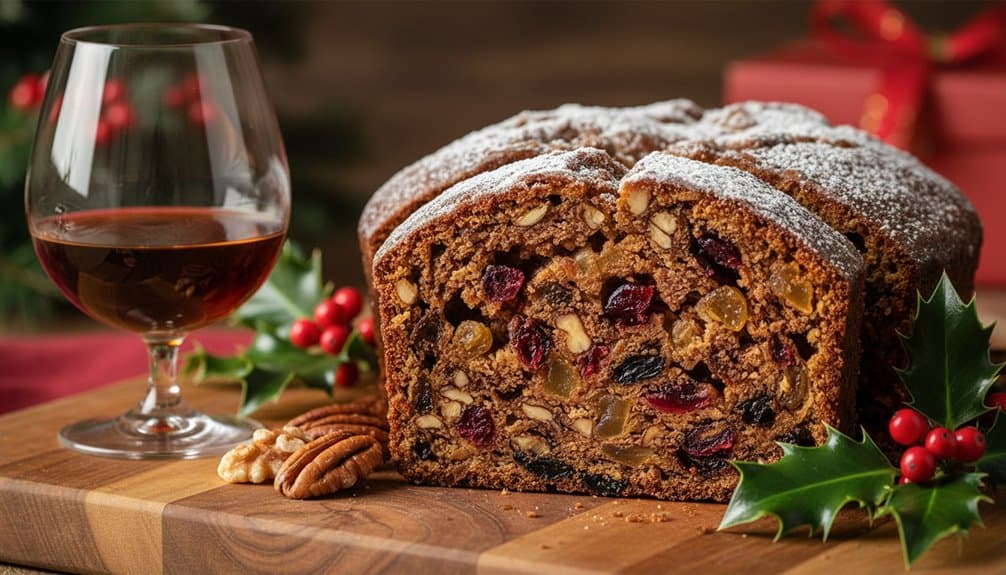
When you’re ready to serve your rich Christmas cake, timing and accompaniments can transform a simple slice into a memorable holiday experience. Remove your cake from the refrigerator 30 minutes before serving to allow it to reach optimal temperature and texture.
For festive presentation ideas, dust each slice with powdered sugar or garnish with fresh cranberries and rosemary sprigs. Arrange slices on vintage china or wooden boards alongside seasonal fruits like pears and grapes.
Complementary dessert pairings enhance the cake’s complex flavors beautifully. Serve with vanilla bean ice cream or freshly whipped cream infused with rum. Hard sauce made with butter, powdered sugar, and brandy creates a traditional accompaniment. For beverages, pair with aged port, dessert wine, or Irish coffee.
Consider creating a dessert platter featuring your Christmas cake alongside mince pies, shortbread, and chocolate truffles for variety. This approach lets guests sample multiple treats while highlighting your cake as the centerpiece.
Frequently Asked Questions
Can I Make This Cake if I Don’t Drink Alcohol?
Yes, you can absolutely make this cake without drinking alcohol! You’ll find excellent non alcoholic alternatives that work perfectly in baking.
Try substituting the brandy with apple juice, grape juice, or strong black tea for soaking the fruit. These alcohol free recipe modifications won’t compromise the cake’s rich flavor or moist texture.
You’ll still get that traditional Christmas taste everyone loves.
How Far in Advance Should I Start Making This Christmas Cake?
You should start preparing months in advance for the best results. Begin baking weeks early, ideally 6-8 weeks before Christmas, to allow proper aging and flavor development.
Start soaking your dried fruits in liquid at least 24 hours beforehand, though longer soaking creates richer flavors. The cake actually improves with time, becoming more moist and flavorful as it sits wrapped.
What’s the Difference Between Light and Dark Christmas Cake Recipes?
Light Christmas cakes use less dried fruit content and more flour, creating a lighter texture and color. You’ll find they’ve shorter baking time variations compared to dark versions.
Dark Christmas cakes pack more dried fruit content, molasses, and brown sugar, resulting in a richer, denser cake with deeper flavors. They require longer baking time variations due to their moisture and density.
Choose based on your preferred richness level.
Can I Freeze Christmas Cake for Longer Storage Periods?
You can definitely freeze Christmas cake for extended storage. When properly wrapped in plastic wrap and aluminum foil, your cake will maintain quality for up to six months in the freezer.
Ensure optimal storage conditions by keeping the freezer temperature consistent at 0°F or below. This freezing duration allows you to make your cake well ahead of the holidays while preserving its rich, fruity flavor and moist texture perfectly.
Is It Safe to Give Homemade Christmas Cake as Gifts?
Yes, you can safely give homemade Christmas cake as gifts when you follow proper gifting hygiene practices. Ensure you’re using clean utensils, storing the cake properly, and packaging it in food-safe containers.
While food safety regulations don’t typically restrict homemade gifts between friends and family, you shouldn’t sell them commercially without proper licensing. Always include preparation dates and ingredient lists for recipients with allergies.
Conclusion
You’ve created a luxurious Christmas centerpiece that’ll be the highlight of your holiday table. Your patience in soaking fruits, careful mixing, and regular brandy feeding has produced a cake that’s deeply flavorful and beautifully moist. Each slice reveals the perfect balance of rich fruits, warm spices, and brandy’s complexity. You’ll find this traditional recipe becomes a cherished family tradition, bringing loved ones together for years to come.


No Comments