

Daily Calorie Intake to Lose Weight: The 3-Number Framework Trainers Use for Consistent Fat Loss
Instead of eating the same calories daily, you’ll rotate between three strategic targets: a deficit day (20-25% below baseline), a baseline day (your BMR plus light activity), and a refeed day (10-15% above baseline). This approach prevents metabolic slowdown by mimicking your body’s natural rhythm – you’ll eat more on strength training days, moderate amounts on cardio days, and less on rest days. This framework keeps your metabolism firing while you consistently lose fat.
Table of Contents
Key Takeaways
- Calculate three calorie targets: deficit day (20-25% below baseline), baseline day (BMR plus light activity), and refeed day (10-15% above baseline)
- Rotate between low, moderate, and high calorie days to prevent metabolic slowdown and maintain consistent fat loss
- Align higher calories with strength training days, moderate calories with cardio, and lowest calories with rest days
- Track weekly weight averages rather than daily fluctuations and adjust calories by 100 if progress stalls for 10 days
- This framework preserves muscle mass, maintains energy levels, and creates sustainable fat loss by working with your body’s natural rhythm
The Science Behind the 3-Number Calorie Framework and Why It Works Better Than Traditional Dieting
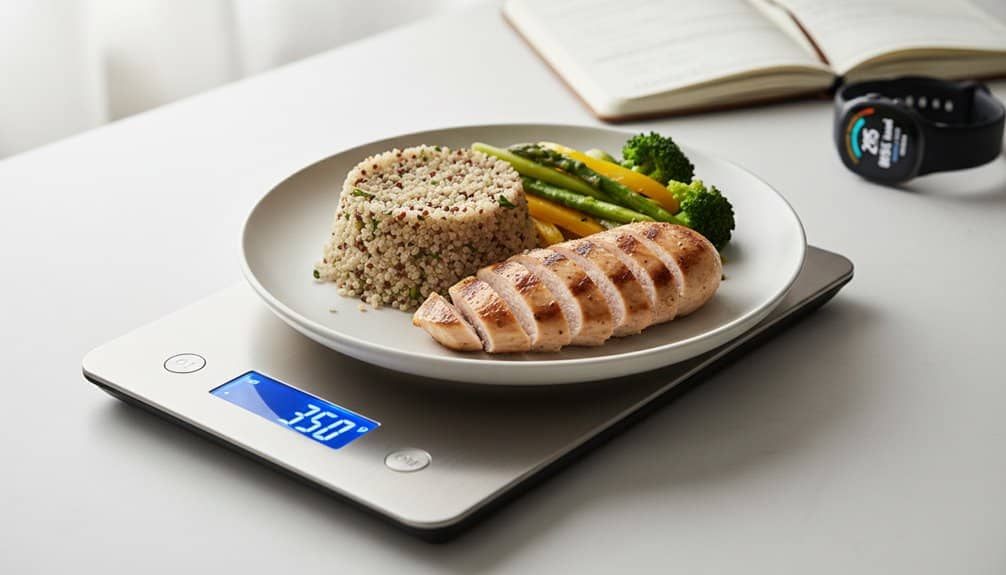
When you’re trying to lose weight, traditional dieting often fails because it treats your calorie needs as a single, fixed number that doesn’t account for your body’s natural fluctuations. Your metabolism isn’t static—it changes based on activity levels, stress, sleep, and hormonal cycles.
The 3-number framework works by establishing three distinct calorie targets: low, moderate, and high days. This approach mimics your body’s natural rhythm and prevents the metabolic slowdown that kills most diets. By cycling between these numbers, you’ll maintain your metabolic rate while creating the deficit needed for fat loss.
These metabolic adaptation strategies prevent your body from entering starvation mode, where it desperately holds onto fat. Instead of fighting your biology, you’re working with it. This creates sustainable dietary approaches that don’t leave you exhausted or constantly hungry. You’ll preserve muscle mass, maintain energy levels, and avoid the binge-restrict cycle that derails progress.
Calculating Your Three Strategic Calorie Targets Based on Your Body and Activity Level
Before you can implement the 3-number framework, you’ll need to calculate your specific calorie targets based on your unique metabolism and lifestyle. Your basal metabolic rate estimation forms the foundation—multiply your body weight by 10-12 for a baseline.
Then, factor in your activity level by adding 200-400 calories for light exercise, 400-600 for moderate, or 600-800 for intense training.
Your three strategic targets emerge from smart calorie intake planning:
- Baseline Day: BMR plus light activity (maintains energy)
- Deficit Day: 20-25% below baseline (accelerates fat loss)
- Refeed Day: 10-15% above baseline (prevents metabolic slowdown)
- Weekly Average: Creates sustainable 500-750 calorie deficit
- Monthly Results: 4-6 pounds of pure fat loss
You’ll rotate these targets based on your training schedule and social commitments. Heavy workout days align with refeed calories, while rest days match deficit targets. This strategic variation prevents the plateau effect that derails traditional dieting.
How to Rotate Between Your Calorie Levels Throughout the Week for Maximum Fat Loss
Now that you’ve calculated your three strategic calorie targets, you’ll implement a rotation pattern that maximizes fat burning while protecting your metabolism. You’ll use your highest calories on strength training days, moderate calories on cardio days, and lowest calories on rest days.
Your carb cycling strategies align with this rotation—higher carbs fuel intense workouts while lower carbs on rest days enhance fat oxidation. You’ll adjust meal timing adjustments based on training: pre-workout carbs on lifting days, post-cardio protein on moderate days.
| Day Type | Emotional Benefit |
|---|---|
| High Cal Days | Feel strong and energized |
| Moderate Days | Stay satisfied without bloat |
| Low Cal Days | Wake up leaner and tighter |
| Weekly Average | See consistent scale drops |
This strategic rotation prevents metabolic adaptation that kills progress. You’re not just restricting calories—you’re cycling them intelligently. Your body can’t adapt to a moving target, keeping fat loss consistent week after week.
Tracking Progress and Adjusting Your Numbers to Break Through Plateaus
Once you’ve implemented your calorie rotation for two weeks, you’ll need precise tracking methods to identify when adjustments are necessary. Monitoring weight changes requires weekly weigh-ins at the same time, preferably morning after using the bathroom. Track your average weekly weight, not daily fluctuations.
When progress stalls for ten days, you’re facing a plateau. Here’s what you’ll experience when breaking through:
- Renewed energy flooding through your workouts
- Clothes fitting looser despite scale resistance
- Increased confidence seeing measurements drop
- Relief from frustration as progress resumes
- Pride in mastering your body’s adaptation
Evaluating calorie adjustments becomes straightforward: if weight loss stops, reduce each number by 100 calories. If you’re losing over two pounds weekly, increase by 50 calories to preserve muscle. Measure waist, hips, and arms biweekly—sometimes the scale lies while inches disappear. Adjust only after two consecutive weeks without progress, giving your body time to respond before making changes.
Frequently Asked Questions
Can I Follow the 3-Number Framework While Pregnant or Breastfeeding?
You shouldn’t follow the 3-number framework for weight loss while pregnant or breastfeeding. Your nutritional needs dramatically increase during these periods, and restricting calories can harm both you and your baby.
Your caloric requirements rise by 300-500 calories during pregnancy and 450-500 while breastfeeding. You’ll need adequate nutrition for your baby’s development and milk production. Always consult your healthcare provider about appropriate eating plans during these crucial times.
How Does This Framework Work With Intermittent Fasting Schedules?
You’ll apply the 3-number framework within your fasting window duration by consuming your calculated daily calories during eating hours. Whether you’re doing 16:8 or 20:4, your calorie intake timing doesn’t change the total amount needed for fat loss.
You’ll still cycle between high, moderate, and low calorie days – just compress those calories into your eating window. Track your weekly average to ensure you’re hitting your targets regardless of when you eat.
What if I Have Diabetes or Other Metabolic Conditions?
You’ll need to modify the framework significantly if you have diabetes or metabolic conditions. Your insulin sensitivity affects how your body processes calories, so standard calculations won’t apply.
Metabolic rate variations mean you might burn calories differently than predicted. Work with your doctor to adjust calorie targets based on blood sugar responses and medication timing. You’ll likely need more frequent monitoring and smaller deficit ranges to maintain stable glucose levels while losing weight safely.
Can Teenagers Safely Use This Calorie Rotation Method?
You shouldn’t use this calorie rotation method as a teenager without medical supervision. Your body’s still developing and needs consistent nutrition to support growth, not restricted calories.
Your adolescent activity levels vary greatly from adults, and you’re burning energy for both daily activities and physical development. Any underlying health factors make this even riskier.
Instead, focus on balanced meals and regular exercise. If you’re concerned about weight, consult your doctor first.
Should I Adjust the Framework When Taking Fat-Burning Supplements?
Yes, you’ll need to adjust your calorie framework when taking fat-burning supplements. These products can affect your metabolism and appetite, creating potential supplement interactions with your eating pattern.
Monitor your energy levels closely and consider raising your low-day calories if you’re feeling overly fatigued. For supplement safety, don’t drastically cut calories while using thermogenics – they’re already increasing your metabolic rate. Always consult your doctor before combining aggressive calorie cycling with supplements.
Conclusion
You’ve now got your three strategic calorie targets and know exactly how to rotate them throughout your week. Start with your calculated numbers, track your progress for two weeks, then adjust based on your results. Remember, you’re not stuck eating the same calories every day – that’s what makes this framework so effective. Your metabolism stays responsive, you’ll avoid plateaus, and you’ll actually enjoy the process. Now it’s time to put these numbers into action.


No Comments