
Homemade Mince Pies With Buttery Shortcrust
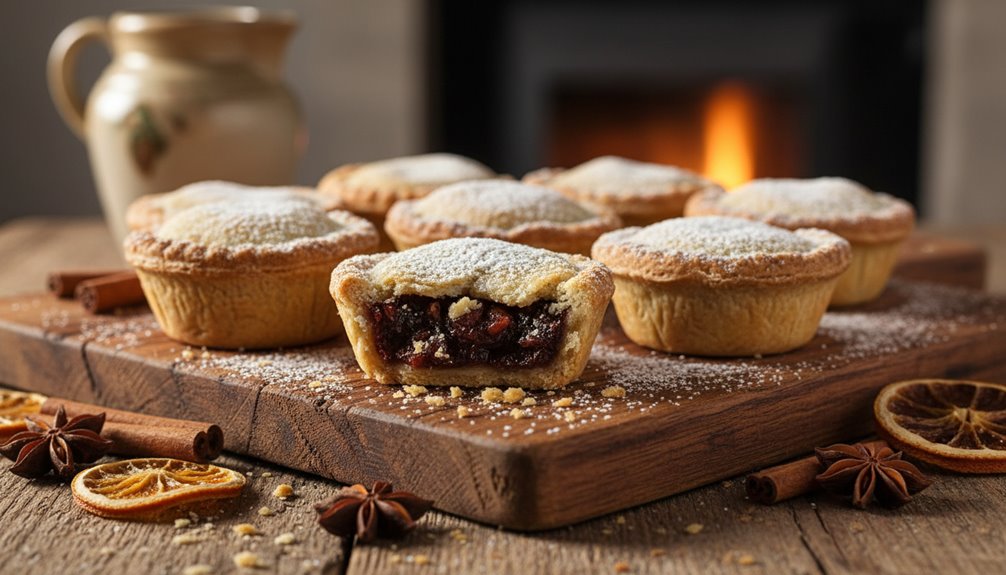
You’ll create perfect homemade mince pies by making buttery shortcrust pastry with a 2:1 flour-to-butter ratio, chilling the dough for 30 minutes to relax gluten. Roll it to 3-4mm thickness, line your tins with pastry bases, and fill with quality mincemeat. Top with pastry lids, seal edges, cut steam vents, and brush with egg wash for golden color. Bake until crisp and golden, then cool completely. The techniques below will ensure your pies achieve bakery-quality results every time.
Table of Contents
Key Takeaways
- Use a 2:1 flour to butter ratio with cold ingredients to create perfectly flaky shortcrust pastry texture.
- Chill the pastry dough for at least 30 minutes before rolling to prevent shrinkage during baking.
- Roll pastry to 3-4mm thickness working from center outward for even, uniform pie bases and tops.
- Choose quality mincemeat with dried fruits, spices, and alcohol, or make homemade filling with suet for richness.
- Egg wash pastry tops before baking for golden color and bake until crisp and fully cooked.
Essential Ingredients for Perfect Mince Pies
When creating authentic mince pies, you’ll need quality mincemeat as your foundation—either store-bought or homemade with dried fruits, spices, and a splash of brandy or rum.
For the buttery shortcrust pastry, you’ll require plain flour, cold unsalted butter, a pinch of salt, and just enough cold water to bind everything together.
Getting your ingredient ratios right is crucial—use a 2:1 ratio of flour to butter for the perfect texture. Cut the butter into small cubes and rub it into the flour until it resembles fine breadcrumbs. Add water gradually, mixing until the dough just comes together without overworking it.
Don’t skip the dough resting time—wrap your pastry in cling film and refrigerate for at least 30 minutes. This allows the gluten to relax and prevents shrinkage during baking. You’ll also want an egg for glazing, which gives your pies that beautiful golden finish.
Making the Buttery Shortcrust Pastry From Scratch
You’ll start by gathering your essential pastry ingredients: plain flour, cold butter, a pinch of salt, and just enough cold water to bring everything together.
Next, you’ll mix and form the dough using the rubbing-in method, working quickly to keep the butter cold and create that coveted flaky texture. Finally, you’ll master the rolling and shaping technique to achieve perfectly thin pastry that won’t crack when you line your mince pie tins.
Gathering Essential Pastry Ingredients
Why settle for store-bought pastry when creating your own buttery shortcrust base requires just four simple ingredients? You’ll need these pantry staples to craft perfectly tender pastry that crumbles beautifully around spiced mincemeat.
- Plain flour – 225g provides structure and creates the pastry’s foundation
- Cold unsalted butter – 115g cubed, straight from the fridge for optimal texture
- Caster sugar – 25g adds subtle sweetness that complements the mincemeat
- Large egg yolk – 1 yolk binds everything together
- Cold water – 2-3 tablespoons helps achieve the right consistency
When measuring dry ingredients, use digital scales for accuracy. Start mixing wet ingredients gradually to prevent overworking the dough. Keep everything cold throughout the process – this ensures your pastry remains light and flaky rather than tough.

Mixing and Forming Dough
Transform your simple ingredients into silky pastry dough by rubbing the cold butter cubes into flour using your fingertips until the mixture resembles fine breadcrumbs. Work quickly to prevent the butter from warming up, which ensures a flaky texture.
Create a well in the center and gradually add beaten egg yolk mixed with cold water. Use a knife to bring the mixture together, then gently knead with your hands until it forms a cohesive dough.
Blending ingredients properly is crucial—don’t overwork the dough or it’ll become tough. Focus on controlling dough texture by adding liquid gradually; you mightn’t need all of it. The finished dough should feel smooth but not sticky. Wrap it tightly in plastic wrap and refrigerate for at least thirty minutes before rolling.
Rolling and Shaping Technique
Once your chilled dough has firmed up, remove it from the refrigerator and let it sit at room temperature for five minutes to soften slightly. This prevents cracking during rolling. Achieving uniform thickness requires proper technique and patience.
Follow these essential rolling steps:
- Lightly flour your work surface and rolling pin to prevent sticking
- Roll from the center outward in different directions for even rolling
- Rotate the dough 90 degrees periodically to maintain round shape
- Aim for 3-4mm thickness throughout for consistent baking
- Use gentle, steady pressure rather than aggressive force
Roll the pastry large enough to cut circles that’ll line your muffin tins with slight overhang. Cut bases and tops using a floured cutter, then gather scraps and re-roll once for maximum dough usage.
Preparing and Rolling the Pastry Dough
You’ll start by combining your cold butter pieces with the flour mixture, working them together until you achieve a breadcrumb-like texture with some larger butter flakes remaining. The key is knowing when your dough has reached the perfect consistency—it should hold together when pressed but not feel overly wet or sticky.
Once formed, you’ll need to roll it to the right thickness using proper techniques that prevent the pastry from becoming tough or uneven.
Mixing Butter and Flour
While cold butter creates the flakiest pastry, you’ll need to work quickly to prevent it from warming up too much. Cut your chilled butter into small cubes before incorporating creamed butter into the flour mixture. Use your fingertips to rub the butter into the flour until it resembles coarse breadcrumbs.
Key techniques for achieving desired texture:

- Keep butter cold by chilling it for at least 30 minutes beforehand
- Work in a cool kitchen environment when possible
- Use a light rubbing motion rather than heavy kneading
- Stop mixing once you see small butter pieces throughout the flour
- Add ice water gradually to bring the dough together
You’ll know you’ve achieved the perfect consistency when the mixture holds together without being sticky or overworked.
Achieving Perfect Dough Consistency
After your butter-flour mixture reaches the breadcrumb stage, it’s time to transform it into workable pastry dough. Add cold water gradually, one tablespoon at a time, mixing gently with a knife until the mixture just begins to clump together. Proper dough hydration is crucial—too much water creates tough pastry, while too little makes it crumbly and difficult to roll.
Temperature control remains essential throughout this process. Keep your hands cool and work quickly to prevent the butter from warming up. The dough should feel slightly tacky but not sticky when you gently press it together. Once it forms a cohesive ball, wrap it in plastic wrap and refrigerate for at least thirty minutes before rolling. This chilling period allows the gluten to relax.
Rolling Techniques and Thickness
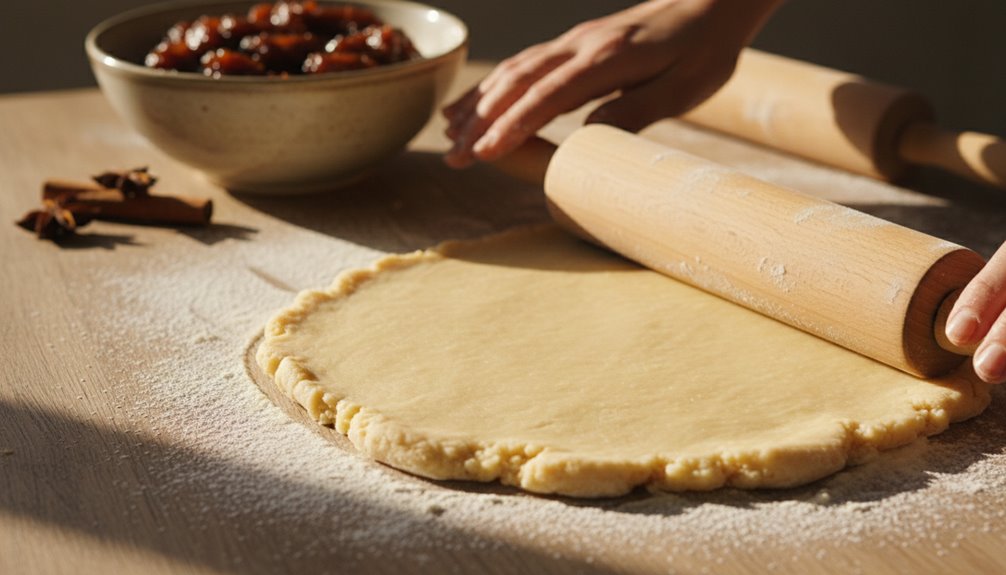
Remove your chilled dough from the refrigerator and let it sit at room temperature for 5-10 minutes to soften slightly before rolling. This brief warming period prevents cracking and makes the dough more manageable.
Master proper rolling pin technique by working from the center outward with gentle, even pressure. Your dough thickness should measure approximately 3mm (⅛ inch) for optimal results.
Dust your work surface and rolling pin lightly with flour to prevent sticking. Roll in different directions to maintain an even circular shape. Lift and rotate the dough quarter-turns frequently during rolling. Check thickness consistently using a ruler or pastry guides. Avoid overworking the dough to maintain tender texture.
Consistent dough thickness ensures even baking and prevents soggy bottoms or burnt edges in your finished mince pies.
Choosing and Preparing Your Mincemeat Filling
The heart of every exceptional mince pie lies in its filling, and you’ve got two delicious paths to choose from: store-bought convenience or homemade excellence. When sourcing premium mincemeat from stores, read labels carefully and choose brands with real butter, quality dried fruits, and minimal preservatives. Look for options containing brandy or rum for depth of flavor.
For homemade filling, picking mincemeat ingredients becomes an art. Start with a mix of sultanas, currants, and chopped apples for texture variety. Add candied peel, chopped almonds, and warm spices like cinnamon, nutmeg, and allspice. Don’t skip the suet or butter – it’s essential for richness and binding.
Prepare your filling at least 24 hours ahead, allowing flavors to meld beautifully. If making homemade mincemeat, combine ingredients thoroughly and add a splash of brandy or sherry. Store-bought varieties benefit from enhancement too – stir in extra spices, chopped nuts, or a tablespoon of your favorite spirit.
Assembling and Shaping the Mince Pies
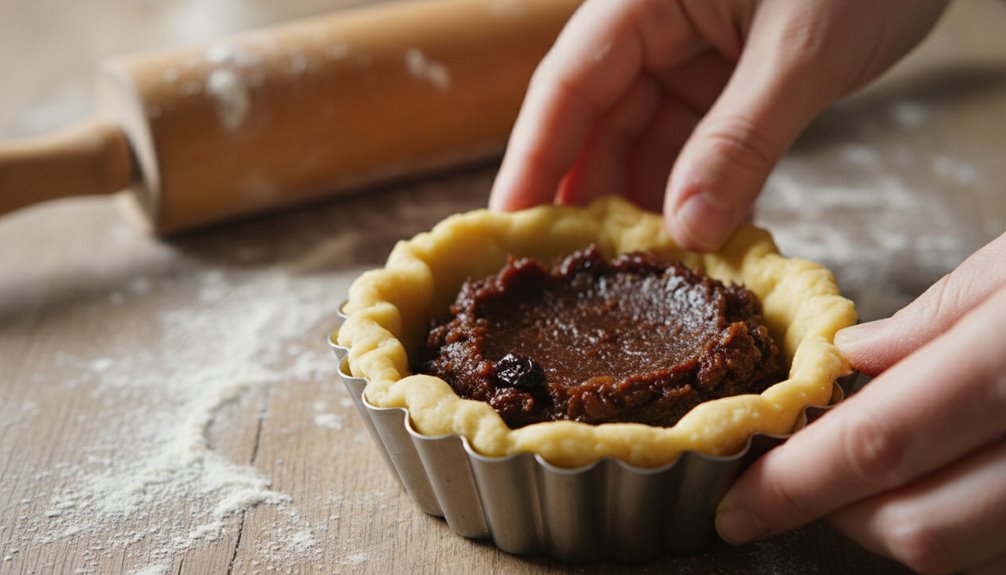
Once you’ve rolled your pastry to the perfect thickness, assembling your mince pies becomes a delightfully methodical process that’ll reward your patience with bakery-quality results. Begin cutting dough shapes using a 4-inch round cutter for bases and a 3-inch cutter for tops. Work efficiently to prevent the pastry from warming up too much.
For perfect assembly:
- Press each base circle gently into muffin tin wells, ensuring no air bubbles remain trapped underneath
- Spoon one generous tablespoon of mincemeat into each pastry case, leaving space around the edges
- Brush the rim with beaten egg to create a secure seal between layers
- Position the smaller pastry circles on top, pressing edges firmly together with a fork
- Cut small decorative slits in each lid to allow steam to escape during baking
When arranging pies on baking sheet or in your muffin tin, ensure adequate spacing between each pie. Brush the tops with remaining beaten egg for that golden, professional finish.
Baking Techniques for Golden, Flaky Results
While your oven preheats to 425°F (220°C), position the rack in the center to ensure even heat distribution around your carefully assembled mince pies. If you’ve properly handled resting dough during preparation, your pastry will bake more evenly and resist shrinking.
Place your filled mince pies on a lined baking sheet, ensuring adequate spacing between each one. Brush the tops with beaten egg for that coveted golden finish. Bake for 15-20 minutes until the pastry turns golden brown and feels firm to touch.
For extra-crispy bottoms, consider blind baking crust bases for 5-7 minutes before adding filling. This prevents soggy pastry and creates better texture contrast. Watch carefully during the final minutes—pastry can brown quickly at this temperature.
Remove when golden and allow cooling for 10 minutes before transferring to a wire rack. The filling will be extremely hot, so resist immediate tasting despite the tempting aroma.
Storage Tips and Serving Suggestions
Fresh mince pies stay at their best when stored properly in an airtight container at room temperature for up to five days. For optimal storage longevity, you can freeze them for up to three months, wrapping each pie individually before placing in freezer bags.
Consider these serving suggestions to enhance your mince pies:
- Warm them gently in a 350°F oven for 5-7 minutes before serving
- Dust with powdered sugar for an elegant presentation
- Serve alongside brandy butter, vanilla ice cream, or custard
- Pair with mulled wine or spiced tea for festive occasions
- Drizzle with caramel sauce for extra indulgence
The ideal serving temperature is slightly warm rather than piping hot, which allows the buttery pastry’s texture to shine while the mincemeat filling remains pleasantly spiced. You’ll find that day-old pies often taste even better as the flavors have time to meld together perfectly.
Frequently Asked Questions
Can I Make Mince Pies Ahead of Time and Freeze Them?
Yes, you can prepare mince pies in advance and freeze them successfully. You’ll get best results if you freeze baked mince pies rather than unbaked ones.
Once they’re completely cooled, wrap them individually in plastic wrap or store in freezer bags. They’ll keep for up to three months.
When you’re ready to serve, thaw at room temperature for about an hour, then warm briefly in the oven.
What’s the Difference Between Homemade and Store-Bought Mincemeat?
You’ll find homemade mincemeat uses fresher, higher-quality ingredients you can control – real butter, premium dried fruits, fresh spices, and quality alcohol. The preparation process lets you adjust sweetness, spice levels, and texture to your taste.
Store-bought versions often contain preservatives, artificial flavors, and cheaper ingredients. You can also customize homemade mincemeat with unique additions like citrus zest or different spirits that aren’t available commercially.
How Do I Prevent the Pastry From Becoming Soggy?
You’ll prevent soggy pastry by taking a few key steps. First, blind bake your pastry shells for 10-15 minutes before adding the mincemeat filling. This creates a barrier against moisture.
Additionally, use less liquid in your mincemeat mixture and drain any excess juices before filling the cases. You can also brush the pastry base with beaten egg white to seal it completely.
Can I Substitute Butter With Margarine or Other Fats?
You can substitute butter with margarine or vegetable shortening, though you’ll notice changes in the nutritional profile – margarine typically contains more trans fats while shortening lacks butter’s vitamins. The texture won’t be quite as rich and flaky.
For storage considerations, margarine-based pastry often keeps slightly longer at room temperature, but butter creates superior flavor and crumb structure that’s worth the shorter shelf life.
Why Did My Mince Pie Pastry Crack During Baking?
Your pastry likely cracked due to possible dough temperature issues or improper kneading technique.
If you overworked the dough, you developed too much gluten, making it tough and prone to cracking. Cold dough that wasn’t properly rested can also crack when rolled.
You might’ve rolled it too thin or baked at too high a temperature, causing rapid moisture loss and surface cracking.
Conclusion
You’ve mastered the art of creating homemade mince pies with perfectly buttery shortcrust pastry. Your kitchen’s now filled with the warm, spiced aroma of freshly baked treats that’ll impress family and friends. Whether you’re serving them warm with brandy butter or storing them for later enjoyment, you’ve created something truly special. These golden, flaky delights won’t last long once people taste your homemade perfection. You’ll definitely want to make another batch soon.


No Comments