
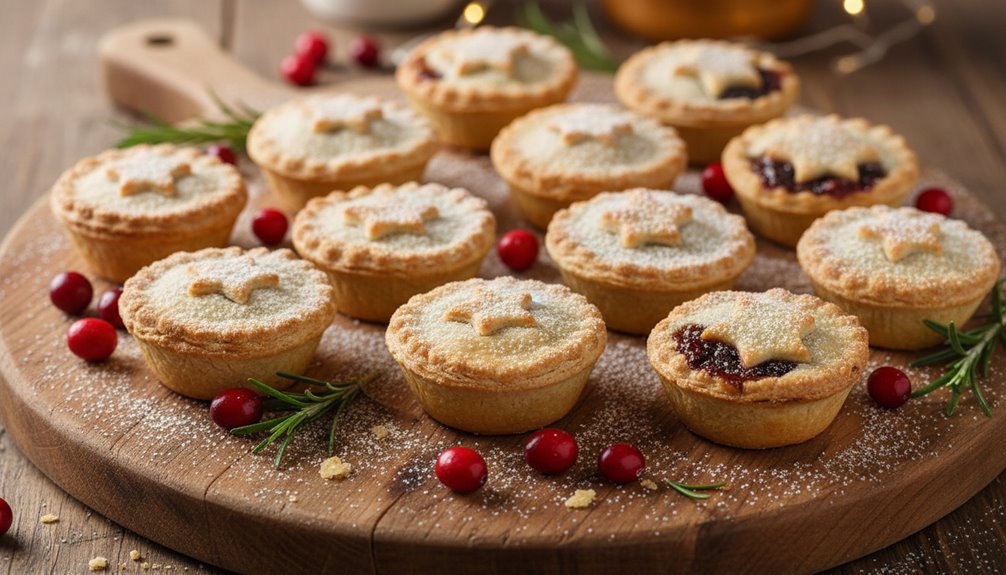
Traditional Christmas Mince Pie Recipe With Shortcrust
You’ll create perfect traditional Christmas mince pies by making buttery shortcrust pastry with cold butter, plain flour, caster sugar, and egg yolk. Combine butter and flour until it resembles breadcrumbs, then add ice-cold water gradually. Roll the chilled pastry to 3mm thickness, cut circles for your muffin tin, and fill with quality mincemeat enhanced with orange zest or brandy. Seal with pastry tops and crimp edges before baking. Master these techniques to discover the secrets of authentic festive baking.
Table of Contents
Key Takeaways
- Make shortcrust pastry with plain flour, cold butter, caster sugar, and egg yolk for rich, flaky texture.
- Rub cold butter into flour until mixture resembles breadcrumbs, then add ice-cold water gradually until dough forms.
- Roll pastry to 3mm thickness and cut circles to line muffin tins, avoiding overworking the dough.
- Fill pastry cases with mincemeat containing dried fruits, fresh apples, mixed spice, and brandy for authentic flavor.
- Seal pies by brushing pastry rims with beaten egg before adding tops and crimping edges firmly.
Essential Ingredients for Perfect Mince Pies
Success hinges on selecting the right combination of ingredients that’ll transform ordinary pastry into festive perfection. Choosing high quality ingredients forms the foundation of exceptional mince pies that’ll impress your guests.
For the shortcrust pastry, you’ll need plain flour, cold butter, caster sugar, and egg yolk. Cold butter creates flaky texture, while the egg yolk adds richness and helps bind everything together.
Your mincemeat requires dried fruits like sultanas, raisins, and currants. Add fresh apples for moisture, mixed spice for warmth, and brandy for depth. Include candied peel, almonds, and brown sugar to enhance complexity.
The secret lies in blending flavors harmoniously. Balance sweet and tart elements by combining dried fruits with fresh citrus zest. Warm spices like cinnamon, nutmeg, and allspice create that distinctive Christmas flavor. Don’t skimp on quality – premium ingredients make the difference between good and extraordinary mince pies.
Preparing the Traditional Shortcrust Pastry
You’ll start by combining cold butter with flour using your fingertips or a pastry cutter until the mixture resembles coarse breadcrumbs.
Next, you’ll gradually add ice-cold water, one tablespoon at a time, while gently mixing until the dough just comes together. Don’t overwork the pastry—you want it to hold together without becoming tough or elastic.
Mixing Flour and Butter
The foundation of exceptional mince pies starts with creating perfectly textured shortcrust pastry through proper flour and butter integration. You’ll need to use the cutting technique to break cold butter into small, pea-sized pieces throughout the flour. Work quickly with your fingertips or a pastry cutter, rubbing the butter into flour until the mixture resembles fine breadcrumbs.
Don’t overwork the dough, as this develops gluten and creates tough pastry. The key to incorporating ingredients successfully is maintaining cold temperatures throughout the process. Keep your butter chilled and work in a cool kitchen when possible. You’ll know you’ve achieved the right consistency when the mixture looks sandy with visible butter flecks.

Adding Water and Binding
Once your butter-flour mixture reaches the proper breadcrumb consistency, gradually add ice-cold water one tablespoon at a time while gently mixing with a fork. You’ll need approximately 2-3 tablespoons total, but add slowly to avoid overworking the dough. Watch for the pastry consistency to transform from loose crumbs to a cohesive mass that holds together when pressed.
The binding ingredients work best when the water’s cold temperature prevents the butter from melting. Stop adding water once the mixture forms a soft dough that doesn’t stick to your hands. Gently gather the dough into a ball, wrap it in plastic wrap, and refrigerate for 30 minutes before rolling. This resting period ensures optimal texture for your mince pie shells.
Rolling and Shaping the Pastry Cases
After your pastry has rested and chilled, remove it from the refrigerator and divide it into two portions—one slightly larger for the bases and one smaller for the tops. Roll the larger portion on a lightly floured surface, ensuring uniform thickness of approximately 3mm. Even rolling prevents uneven baking and ensures consistent texture throughout your mince pies.
Cut circles using a fluted cutter that’s slightly larger than your muffin tin holes—typically 4 inches works well. Gently press each circle into the tin, making sure there aren’t any air bubbles trapped underneath. The pastry should come up the sides without overhanging.
For the tops, roll the remaining pastry to the same thickness and cut smaller circles or festive shapes like stars. These’ll sit perfectly on your filled bases. Work quickly to keep the pastry cool, returning it to the fridge if it becomes too soft.
Selecting and Preparing Your Mincemeat Filling
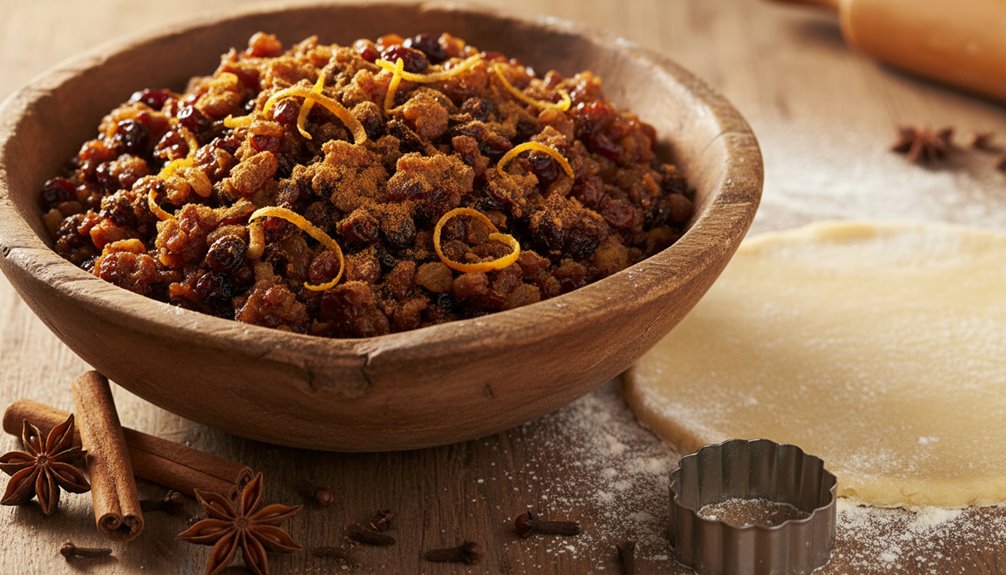
Quality mincemeat forms the heart of exceptional mince pies, so you’ll want to choose carefully between store-bought and homemade options. When choosing quality mincemeat, look for varieties with generous chunks of fruit, visible spices, and minimal artificial preservatives. Premium brands typically contain more dried fruits and less filler.
If you’re using store-bought mincemeat, you can enhance it by adding fresh orange zest, a splash of brandy, or chopped almonds. This customization helps achieve better flavor depth.
For homemade mincemeat, combine dried fruits, suet, brown sugar, spices, and alcohol at least a week before baking. This aging process allows flavors to meld beautifully.
Ensuring flavor balance requires tasting your mincemeat before filling pastry cases. The mixture should balance sweet, spiced, and tart notes without any single element overpowering others. Add lemon juice if it’s too sweet, or extra brown sugar if it’s too tart.
Assembling and Decorating Your Mince Pies
How do you transform your prepared pastry and mincemeat into perfectly formed mince pies? Start by rolling your shortcrust pastry to 3mm thickness on a floured surface. Cut circles using a 4-inch cutter for bases and 3-inch cutter for tops. Press larger circles into your muffin tin, ensuring they fit snugly without air pockets.

Spoon a generous tablespoon of mincemeat into each pastry case, leaving space at the edges. Brush pastry rims with beaten egg, then place smaller circles on top. Press down gently and create crimped edges using a fork or your fingers for a professional seal.
For festive toppings, cut decorative shapes like stars or holly leaves from remaining pastry. Brush tops with egg wash and add your chosen decorations.
- Texture contrast: Crimped edges provide both visual appeal and practical sealing
- Personal expression: Decorative shapes reflect your creative holiday spirit
- Tradition continuation: Handcrafted details honor generations of Christmas baking
Baking Instructions and Temperature Guidelines
Once you’ve crafted your decorated mince pies, proper baking technique ensures they achieve that perfect golden finish and flaky texture. Preheat your oven to 200°C (180°C fan/Gas Mark 6) before placing your pies inside. This oven temperature creates the ideal environment for the shortcrust pastry to develop its characteristic crispness.
Baking times typically range from 18-22 minutes, depending on your oven’s efficiency and the size of your pies. You’ll know they’re ready when the pastry turns a beautiful golden-brown color and feels firm to the touch. The tops should be evenly colored without any pale or doughy areas.
Place your mince pies on the middle oven rack for even heat distribution. Avoid opening the oven door frequently, as this causes temperature fluctuations that can affect the pastry’s texture. If the tops brown too quickly, cover them loosely with foil and continue baking until the bases are cooked through.
Serving Suggestions and Storage Tips
Nothing beats the moment when your freshly baked mince pies emerge from the oven, filling your kitchen with their warm, spiced aroma. You’ll want to let them cool for 10-15 minutes before serving. They’re delicious warm with a dollop of brandy butter, cream, or custard.
Refrigerating mince pies keeps them fresh for up to five days in an airtight container. Simply reheat them in a 350°F oven for 5-8 minutes before serving.
Freezing mince pies extends their life significantly. Wrap cooled pies individually in plastic wrap, then store in freezer bags for up to three months. Thaw overnight in the refrigerator and reheat as needed.
- Perfect pairings: Serve with traditional accompaniments like brandy butter or vanilla ice cream to enhance the festive flavors
- Gifting opportunity: Package cooled pies in decorative tins for thoughtful holiday presents
- Make-ahead advantage: Prepare and freeze batches early in the season for stress-free entertaining
Frequently Asked Questions
Can I Make Mince Pies Without Alcohol in the Mincemeat?
Yes, you can absolutely make mince pies without alcohol in the mincemeat. You’ll find plenty of non alcoholic mincemeat options that use fruit juices, apple cider, or extra spices instead of brandy or rum.
When preparing mincemeat ahead, these alcohol-free versions still develop rich flavors over time. You can buy ready-made alcohol-free mincemeat or make your own using traditional fruits and spices.
How Far in Advance Can I Prepare Mince Pies Before Christmas?
You can prepare mincemeat well in advance – even months ahead if stored properly in sterilized jars.
For the pies themselves, you’ll get best results if you store mince pies unbaked in the freezer up to three months before Christmas. Simply assemble them completely, then freeze on baking trays before transferring to containers. Bake directly from frozen, adding extra time.
Can I Freeze Unbaked Mince Pies for Later Baking?
Yes, you can absolutely freeze unbaked mince pies for convenient later baking.
When freezing unbaked mince pies, place them on baking trays and freeze until solid, then transfer to freezer bags.
For storing unbaked mince pies, they’ll keep frozen for up to three months. You don’t need to defrost them before baking – just add an extra five minutes to your usual cooking time.
What’s the Best Way to Reheat Leftover Mince Pies?
You’ll get the best results with oven reheating at 350°F for 8-10 minutes until warmed through. This restores the pastry’s crispness beautifully.
For quicker microwave reheating, heat individual pies for 20-30 seconds on medium power, though the pastry won’t be as crispy. Always check they’re heated thoroughly before eating, and let them cool slightly as the filling gets extremely hot.
Can I Substitute Butter With Margarine in the Shortcrust Pastry?
Yes, you can substitute butter with margarine in shortcrust pastry, though it’ll affect the flavor and texture.
Among butter substitutes, margarine works well but produces a slightly different taste. For best results with margarine alternatives, use block margarine rather than soft tub varieties, as it contains less water.
The pastry may be less flaky than traditional butter versions, but it’ll still work perfectly for your mince pies.
Conclusion
You’ve mastered the art of traditional mince pie making! Your golden shortcrust pastry filled with rich, spiced mincemeat will be the star of any Christmas gathering. Don’t forget to dust them with powdered sugar before serving, and store any leftovers in an airtight container. These homemade treats taste even better the next day when the flavors have melded together perfectly.


No Comments