
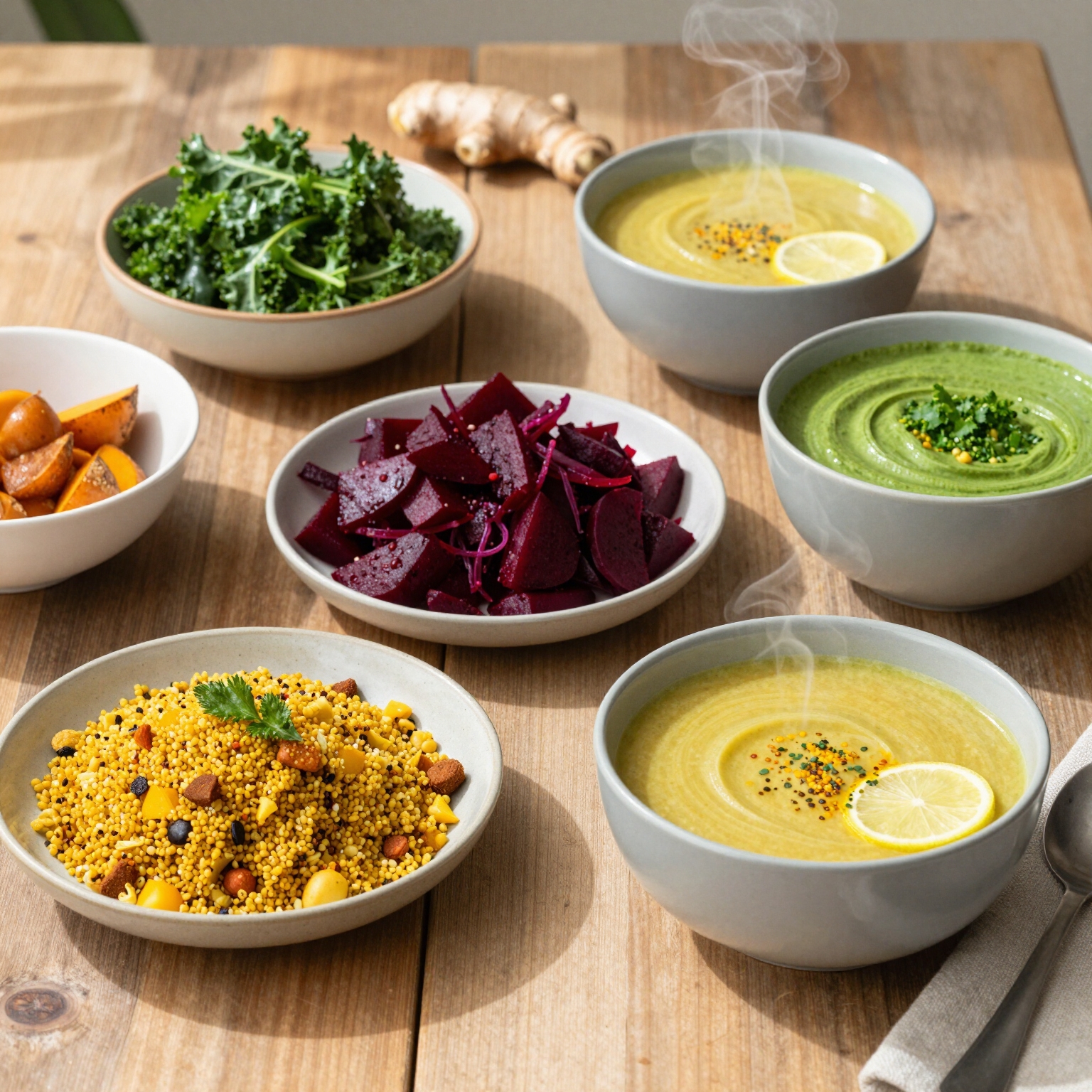
You can cut pain, bloating, and fatigue fast by swapping everyday staples for omega‑3‑rich proteins, polyphenol‑laden veggies, fiber‑dense grains, and gut‑soothing herbs. Try salmon or sardines with leafy greens, quinoa or sweet‑potato bases, and turmeric‑ginger seasonings for quick, anti‑inflammatory meals. Add probiotic kefir, rosemary, basil, and hydrating teas to boost benefits. Follow simple swaps, pair protein with fiber, and track daily symptoms to see results, and the guide will show you the 15 easy recipes.
Table of Contents
Why Anti‑Inflammatory Foods Matter: The Science Behind Reducing Inflammation
When you eat anti‑inflammatory foods, you’re actually calming the molecular fire that fuels chronic disease. Your body’s immune cells constantly patrol for threats, releasing cytokines and prostaglandins when they spot danger. In excess, these messengers ignite a low‑grade inflammation that damages tissues, spikes insulin resistance, and fuels pain. Omega‑3 fatty acids in salmon and sardines interrupt this cascade by competing with omega‑6s for the same enzymatic pathways, producing less inflammatory eicosanoids.
Polyphenols and antioxidants found in leafy greens, berries, and olive oil neutralize reactive oxygen species, preventing oxidative stress that would otherwise amplify cytokine signaling. Fiber‑rich whole grains and legumes feed gut microbes, which generate short‑chain fatty acids that reinforce the intestinal barrier and suppress systemic inflammation.
Herbs such as turmeric and ginger add curcumin and gingerol, compounds that directly inhibit NF‑κB, a key transcription factor driving inflammatory gene expression. By choosing these foods, you lower the biochemical triggers of chronic disease and support healthier, calmer cells.
5 Anti‑Inflammatory Breakfasts to Jump‑Start Your Day
You’ll love the rich morning options that combine whole grains, nuts, and fresh fruit for sustained energy. Try probiotic‑boosted breakfast bowls like kefir with berries or overnight oats with cherries to support gut health and curb inflammation. These simple combos set a vibrant tone for the day while keeping your body calm.
Rich Morning Options
A vibrant anti‑inflammatory breakfast can kick‑start your metabolism and calm lingering inflammation, so reach for foods that combine omega‑3s, antioxidants, and fiber. Try a warm quinoa porridge stirred with ground flaxseed, topped with sliced strawberries and a drizzle of extra‑virgin olive oil; the quinoa supplies protein and fiber, flaxseed delivers omega‑3s, and berries pack vitamin C.
Pair it with a side of sautéed kale and garlic, seasoned with a pinch of turmeric for extra polyphenols.
For a richer option, blend a smoothie using frozen blueberries, a spoonful of almond butter, spinach, and oat milk, then finish with a sprinkling of chia seeds.
These combos keep you full, steady blood sugar, and combat inflammation all morning.

Probiotic‑Boosted Breakfast Bowls
Swapping a fruit‑heavy bowl for a probiotic‑rich breakfast gives your gut a quick boost while still delivering anti‑inflammatory power. Start with plain kefir or yogurt, then stir in a handful of rolled oats for soluble fiber that feeds good bacteria. Add sliced kiwi, blueberries, and a drizzle of raw honey for antioxidants and a touch of sweetness. Sprinkle chia seeds for omega‑3s and a dash of cinnamon to calm inflammation. Top with toasted almond slivers for crunch and healthy fats. This combo balances gut microbiota, stabilizes blood sugar, and supplies phytonutrients that curb swelling. You’ll feel lighter, steadier, and ready to tackle the day without the sluggish crash that sugary cereals cause.
5 Anti‑Inflammatory Lunches That Keep Inflammation in Check
Ever wondered how a midday meal can actually dial down inflammation? Try a sweet‑potato avocado “toast”: slice a baked sweet potato, spread mashed avocado, sprinkle pumpkin seeds, and drizzle olive oil for fiber, healthy fats, and antioxidants.
Next, wrap shrimp and avocado in crisp lettuce leaves, add a splash of lemon juice and a pinch of turmeric for omega‑3s and anti‑inflammatory spice.
A coconut‑basil chicken bowl mixes shredded chicken, coconut milk, fresh basil, and sliced bell peppers; the coconut delivers medium‑chain fats while basil adds polyphenols.
For a plant‑forward option, spread hummus on whole‑wheat bread, layer turkey breast, spinach, and sliced tomato, then press lightly—this sandwich supplies protein, fiber, and lycopene.
Finally, toss whole‑wheat pasta with grilled chicken, spinach, cherry tomatoes, and a garlic‑olive‑oil vinaigrette; the garlic and olive oil boost lycopene absorption and provide lasting anti‑inflammatory benefits.
5 Anti‑Inflammatory Dinner Recipes to Calm Pain, Bloating, and Fatigue
Wondering how dinner can soothe pain, reduce bloating, and lift fatigue? Try these five anti‑inflammatory meals that deliver omega‑3s, antioxidants, and gut‑friendly fiber.
- Salmon‑zucchini skewers – toss salmon chunks and sliced zucchini in olive oil, lemon, and dill; grill until caramelized. The omega‑3s calm joint pain while the cucumber‑dill sauce aids digestion.
- Cauliflower‑crust pizza – blend roasted cauliflower with almond flour and egg, bake a thin crust, then top with tomato sauce, fresh basil, and a sprinkle of mozzarella. Lycopene from the sauce and calcium from cheese support muscle recovery.
- Quick chicken stir‑fry – sauté chicken strips with broccoli, bok choy, ginger, and garlic in avocado oil. Fiber‑rich greens reduce bloating, and ginger’s anti‑inflammatory compounds boost energy.
- Fish tacos with red‑cabbage slaw – fill corn tortillas with grilled sardines, avocado, and a slaw of shredded red cabbage, lime, and cilantro. The slaw’s crunch aids satiety, while sardines supply omega‑3s.
- Sheet‑pan chicken, tomatoes, and garlic – roast chicken thighs alongside cherry tomatoes, garlic cloves, and rosemary. The heat releases lycopene and the herbs add polyphenols, easing fatigue.
Serve each dish with a side of quinoa or brown rice for extra fiber, and enjoy a calmer, lighter evening.
How to Swap Common Inflammatory Ingredients for Anti‑Inflammatory Alternatives
You can start by swapping out processed snacks for crunchy veggies like carrots or bell peppers, which cut down on additives and add nutrients.
Trade white bread and pasta for whole‑grain options such as quinoa or whole‑wheat bread to boost fiber and stabilize blood sugar.

These simple swaps let you keep the flavors you love while turning inflammatory culprits into anti‑inflammatory allies.
Swap Process Foods With Veggies
One simple swap that makes a big impact is replacing processed charcuterie with a plate of hummus‑dressed raw veggies. Trade salty chips for crunchy carrot sticks, cucumber slices, and bell‑pepper strips; the fiber stead you full and the antioxidants calm inflammation.
Swap store‑bought deli salads, heavy mayo for a vinaigrette of olive oil, lemon, and mustard, then toss in mixed greens, cherry tomatoes, and avocado.
Replace sugary ketchup with a fresh salsa of diced tomatoes, jalapeño, cilantro, and lime, served over roasted cauliflower “steaks.”
When you crave a creamy dip, blend silken tofu with garlic and turmeric instead of sour cream.
These straightforward exchanges cut processed fats, sodium, and additives, while boosting phytonutrients that support joint health and digestion.
Replace Refined Carbs With Whole Grains
When you swap refined carbs for whole grains, you instantly boost fiber, vitamins, and minerals while keeping blood‑sugar spikes in check. Trade white rice for brown rice or quinoa; the extra fiber steadies glucose and feeds gut‑friendly bacteria. Replace all‑purpose flour with whole‑wheat or spelt flour in muffins, pancakes, and pizza crusts—these grains retain the B‑complex vitamins and antioxidants that combat inflammation.
Swap sugary cereal for rolled oats topped with berries and nuts for a heart‑healthy breakfast that curbs cravings. Use barley or farro in soups and stews for a chewy texture and added magnesium. Finally, keep a stash of whole‑grain tortillas or pita for quick wraps, pairing them with leafy greens, avocado, and lean protein to maintain an anti‑inflammatory diet.
Fast Anti‑Inflammatory Snacks You Can Make in 5 Minutes
Craving a quick bite that actually tames inflammation? Grab a handful of raw almonds and toss them with a pinch of smoked paprika for a crunchy, omega‑3‑rich snack that also delivers anti‑inflammatory polyphenols.
Slice a cucumber, spread a thin layer of hummus, and sprinkle chopped parsley for extra antioxidants.
Blend frozen blueberries, a splash of kefir, and a dash of turmeric into a smoothie bowl; the berries supply anthocyanins while turmeric curbs cytokine activity.
Top whole‑grain crackers with avocado mash, squeeze lemon, and add a sprinkle of chia seeds for fiber and A‑3s.
Finally, mix a quick “granola” by combining puffed quinoa, chopped walnuts, and a drizzle of honey; warm it for a minute to release the nuts’ healthy fats.
Each option takes under five minutes, keeps you full, and actively fights inflammation without sacrificing flavor.
Boost Lycopene Absorption in Every Meal With Simple Cooking Tips
After enjoying those fast, inflammation‑fighting snacks, you can keep the anti‑inflammatory momentum going by making sure you get the most out of lycopene‑rich foods like tomatoes, watermelon, and pink grapefruit. Lycopene is fat‑soluble, so pairing it with a little healthy oil boosts absorption dramatically. Drizzle olive oil over sliced tomatoes, or simmer them in a pan with a splash of oil—just 5‑10 minutes releases the pigment. Add a pinch of black pepper; piperine enhances nutrient uptake. When you grill or roast tomatoes, the heat breaks down cell walls, making lycopene more bioavailable.
Mix watermelon cubes with a handful of nuts for a balanced snack; the modest fat from nuts does the trick. For pink grapefruit, a dollop of Greek yogurt supplies a creamy fat source. Remember: a small amount of oil, a dash of pepper, and gentle cooking are all you need to maximize lycopene’s anti‑inflammatory power.
Why Omega‑3 Fish Is Essential for Dinner
Ever wondered why dinner should feature omega‑3‑rich fish? You’re likely battling inflammation, and the evening meal can tip the balance. Fatty fish such as salmon, mackerel, and sardines flood your cells with EPA and DHA, which calm cytokine storms and lower C‑reactive protein. Those acids also sharpen brain function, so you’ll sleep deeper and wake refreshed, reducing fatigue.
Pair fish with a squeeze of lemon, a drizzle of olive oil, and a side of leafy greens to boost absorption of fat‑soluble antioxidants like lutein and lycopene. The protein keeps you satiated, preventing late‑night snacking that spikes insulin and inflammation.
Moreover, omega‑3s support joint lubrication, easing aches that often flare after a day of sitting or standing. By making fish the star of dinner, you create a nutrient‑dense, anti‑inflammatory anchor that works while you rest, setting the stage for a calmer, healthier tomorrow.
Add Probiotic‑Packed Kefir to Reduce Gut Inflammation
You’ll notice that a daily glass of kefir quickly restores a healthy gut microbiome, letting beneficial bacteria outcompete the bad ones.
This probiotic boost also sharpens your body’s ability to absorb nutrients, so you get more vitamins and minerals from every bite.
Over time, those improvements translate into lower systemic inflammatory markers, helping you feel less achy and more energized.
Boosts Gut Microbiome Balance
When you add probibiotic‑packed kefir to your meals, you instantly give your gut microbiome the friendly bacteria it needs to keep inflammation in check. The live cultures colonize the intestines, crowd out harmful microbes, and produce short‑chain fatty acids that soothe the lining. This balance improves digestion, reduces bloating, and steadies energy levels.
- Sip a plain kefir glass before breakfast to prime your gut.
- Blend kefir with frozen berries for a probiotic‑rich smoothie.
- Use kefir as a base for creamy dressings on salads.
- Swap yogurt for kefir in overnight oats to boost microbial diversity.
These simple swaps let you harness kefir’s power without extra prep time.
Enhances Nutrient Absorption Efficiency
Kefir’s probiotic punch not only calms gut inflammation but also clears the way for nutrients to be absorbed more efficiently. The live cultures in kefir break down food particles, thinening the mucosal layer and exposing villi to vitamins, minerals, and amino acids. When you sip a kefir‑rich breakfast bowl, you’re giving your gut a steady stream of lactobacilli that boost enzyme activity, so calcium from leafy greens, iron from lentils, and omega‑3s from fish are taken up faster.
Pair kefir with fiber‑dense foods—berries, oats, nuts—to create a synergistic effect: fiber feeds the probiotics, and the probiotics, the fiber’s nutrients. This combo reduces bloating, steadies blood sugar, and fuels your cells with clean, bioavailable fuel, keeping pain and fatigue at bay.
Reduces Systemic Inflammatory Markers
Could a simple daily sip of probibiotic‑packed kefir really lower the inflammatory markers that drive chronic pain? Absolutely. The live cultures in kefir balance gut microbiota, which in turn calms systemic inflammation. When your gut barrier stays intact, fewer endotoxins leak into the bloodstream, and your immune system stops over‑reacting. That translates into lower C‑reactive protein, reduced IL‑6, and steadier cortisol levels—key markers that keep pain, bloating, and fatigue at bay.
- Choose plain, unsweetened kefir to avoid added sugars that provoke inflammation.
- Drink 8‑12 oz each morning on an empty stomach for optimal absorption.
- Pair kefir with a handful of berries for extra antioxidants.
- Rotate flavors (plain, vanilla, probi‑infused) to keep your palate engaged.
Add Turmeric and Ginger to Supercharge Anti‑Inflammatory Dishes
If you sprinkle turmeric and ginger into your meals, you instantly boost their anti‑inflammatory power. Curcumin in turmeric and gingerol in ginger calm cytokine storms, lower prostaglandins, and improve gut permeability. Pair them with black pepper to unlock curcumin’s bioavailability, and add a splash of healthy fat—olive oil, avocado, or coconut milk—to help absorption.
Use turmeric in soups, stews, and roasted veggies; a teaspoon per pot is enough to impart color and health benefits. Fresh ginger works wonders in marinades, stir‑fries, and smoothies—grate or mince it for maximum flavor.
When cooking fish or chicken, toss the protein in a mixture of turmeric, ginger, garlic, and a drizzle of oil before searing.
For a quick anti‑inflammatory boost, blend ginger, turmeric, pineapple, and kefir into a smoothie, then finish with a pinch of cinnamon. These simple combos turn everyday dishes into powerful, pain‑relieving meals.
Batch‑Cook 5 Anti‑Inflammatory Meals for a Week‑Long Meal Plan
You’ll start by picking a handful of core anti‑inflammatory ingredients—like salmon, leafy greens, and nuts—and then cook your protein in bulk so it’s ready all week.
Next, portion the cooked protein with pre‑chopped veggies and whole‑grain sides, storing each combo in airtight containers.
Finally, when you’re hungry, just heat a ready‑to‑eat meal and enjoy the balanced, inflammation‑fighting benefits without any last‑minute prep.
Choose Core Ingredients
A solid core of anti‑inflammatory staples—salmon, leafy greens, sweet potatoes, chickpeas, and olive oil—makes batch‑cooking five meals for the week a breeze. You’ll want to shop for fresh, high‑quality versions and store them wisely so flavors stay bright. Pick salmon with firm flesh, kale or spinach for leafy crunch, firm sweet potatoes, canned or dried chickpeas, and extra‑virgin olive oil for dressings. When you combine these, you create a versatile base that adapts to soups, salads, and roasts without extra fuss.
- Salmon fillets – omega‑3 powerhouses
- Leafy greens – antioxidant‑rich kale, spinach
- Sweet potatoes – fiber‑dense carbs
- Chickpeas – plant protein and starch
These four items anchor every anti‑inflammatory dish you’ll prepare.
Prep Protein in Bulk
Why waste time cooking every day when you can batch‑cook protein once and power five anti‑inflammatory meals all week? Choose a versatile protein—salmon, chicken breast, or lentils—then season with turmeric, ginger, garlic, and a splash of lemon. Roast a tray of salmon fillets at 400 °F for 12‑15 minutes, grill chicken strips with rosemary, and simmer lentils with bay leaf. Cool each batch, portion into airtight containers, and store in the fridge. When you’re ready to eat, combine the pre‑cooked protein with leafy greens, quinoa, or sweet‑potato bases. This routine cuts prep time, locks in omega‑3s and antioxidants, and guarantees you’ll hit your anti‑inflammatory goals without daily cooking stress.
Assemble Ready‑to‑Heat Meals
Ever wondered how to turn a single batch of cooked salmon, chicken, and lentils into five distinct, ready‑to‑heat anti‑inflammatory meals that last a whole week? You can mix and match proteins, veggies, and grains in separate containers, then add a quick sauce or spice blend before reheating. This approach keeps flavors fresh, nutrients intact, and prep time minimal.
- Salmon, quinoa, roasted kale with lemon‑tahini drizzle
- Chicken, sweet‑potato mash, broccoli tossed in ginger‑garlic oil
- Lentil, brown‑rice, spinach salad with turmeric‑yogurt dressing
- Salmon‑lentil combo, cauliflower rice, cherry tomatoes, pesto
Store each portion in airtight jars, label by day, and heat in the microwave for 2‑3 minutes. You’ll have a week of anti‑inflammatory meals ready whenever hunger strikes.
How to Pair Protein and Fiber to Stabilize Blood Sugar and Reduce Inflammation
How can you keep cravings at bay while dialing down inflammation? Pairing protein with fiber slows glucose absorption, steadies insulin, and curbs the inflammatory spikes that follow sugar surges. Start with a palm‑sized portion of salmon, chicken, or tofu, then add a generous scoop of leafy greens, quinoa, or lentils. The protein supplies amino acids for tissue repair, while the fiber binds water and creates a gel that delays carbohydrate breakdown. Snack on a hard‑boiled egg with a handful of raw carrots, or blend Greek yogurt with berries and chia seeds for a balanced mini‑meal. When you choose whole‑grain toast topped with avocado and smoked turkey, the healthy fat and soluble fiber keep you full longer, preventing the “hangry” inflammation of a crash. Consistently mixing these macronutrients throughout breakfast, lunch, and dinner stabilizes blood sugar, reduces oxidative stress, and supports a calmer, less inflamed body.
How Rosemary & Basil Boost Anti‑Inflammatory Power
Pairing protein with fiber steadies blood sugar, but the next step in curbing inflammation lies in the herbs you sprinkle on top. Rosemary and basil aren’t just flavor boosters; they’re packed with polyphenols, rosmarinic acid, and eugenol, compounds that dial down NF‑κB signaling and curb cytokine storms. When you add them to roasted veggies, grilled fish, or a simple quinoa salad, you’ll notice less post‑meal bloating and steadier energy.
- Rosmarinic acid – neutralizes free radicals and reduces prostaglandin production.
- Eugenol – modulates COX‑2 enzymes, easing joint pain.
- Linalool – supports gut barrier integrity, lowering systemic inflammation.
- Flavonoids – enhance antioxidant capacity, protecting cells from oxidative stress.
Mix fresh leaves at the end of cooking to preserve their potency, or steep dried herbs in olive oil for a quick anti‑inflammatory drizzle. Your meals become both tastier and therapeutic.
Hydration Habits: Anti‑Inflammatory Teas and Drinks to Pair With Meals
What if you could boost your anti‑inflammatory diet simply by sipping the right drinks alongside each meal? Start with a warm ginger‑turmeric tea before lunch; the curcumin and gingerols calm gut irritation and support digestion. Pair dinner with a cup of hibiscus tea—its anthocyanins lower CRP levels and add a tart finish. For a mid‑morning lift, blend matcha with almond milk; the catechins and healthy fats work together to reduce oxidative stress. Swap sugary sodas for sparkling water infused with cucumber, mint, and a splash of lemon—hydration stays high while the citrus vitamin C aids collagen repair. After workouts, sip a chilled turmeric‑coconut water; the electrolytes replenish fluids and the anti‑inflammatory compounds keep muscle soreness at bay. Keep these beverages on hand, rotate flavors daily, and let each sip reinforce the anti‑inflammatory power of your meals.
How to Track Pain, Bloating, and Fatigue With Simple Metrics
Sipping anti‑inflammatory teas can calm your gut, but you’ll still need to know whether the meals are actually easing your symptoms. The easiest way to gauge progress is to log three simple metrics every day: pain intensity, bloating level, and fatigue score. Use a 0‑10 visual analog scale for each, noting the time you ate and any supplements you took. Consistency lets you spot trends, adjust portions, and confirm which foods truly help.
- Pain – Rate sharpness, ache, or cramping before and after meals.
- Bloating – Mark abdominal fullness or distension on the same scale.
- Fatigue – Score energy levels in the morning and afternoon.
- Correlation – Highlight meals that precede spikes or drops, then tweak ingredients accordingly.
Frequently Asked Questions
Can I Eat Anti‑Inflammatory Meals While Pregnant?
Yes, you can eat anti‑inflammatory meals while pregnant; just choose low‑mercury fish, plenty of leafy greens, fresh fruits, nuts, and whole grains, and avoid raw seafood and excessive herbal supplements.
Do Anti‑Inflammatory Foods Affect Hormone Levels?
You’ll find anti‑inflammatory foods can subtly shift hormone balance—omega‑3s may improve insulin sensitivity, while phytoestrogens in nuts and seeds can modulate estrogen. Overall, effects are modest and generally supportive.
How Long Before I Feel Relief From Bloating?
You’ll notice reduced bloating within three to seven days if you stick to anti‑inflammatory meals, stay hydrated, and avoid processed sugars and excess salt, because your gut flora and digestion start normalizing quickly.
Are There Anti‑Inflammatory Options for Vegans?
Yes, you can go vegan and still fight inflammation. Load your meals with leafy greens, berries, nuts, seeds, turmeric, ginger, and omega‑3‑rich foods like flaxseed, chia, and walnuts for powerful anti‑inflammatory benefits.
Can I Freeze and Reheat These Recipes Without Losing Benefits?
Yes, you can freeze and reheat most of them—just pack them airtight, thaw in the fridge, and heat gently. The nutrients stay largely intact, especially antioxidants, omega‑3s, and fiber.
Conclusion
You’ve seen how anti‑inflammatory foods can quiet pain, bloating, and fatigue, and you now have 15 easy recipes to put into action. By swapping inflammatory staples for turmeric, ginger, berries, leafy greens, and healthy fats, you’ll keep blood sugar steady and support gut health. Pair protein with fiber, sip soothing teas, and track your symptoms daily. Stick with these habits, and you’ll feel lighter, more energetic, and in control of your inflammation.


Sorry, the comment form is closed at this time.