
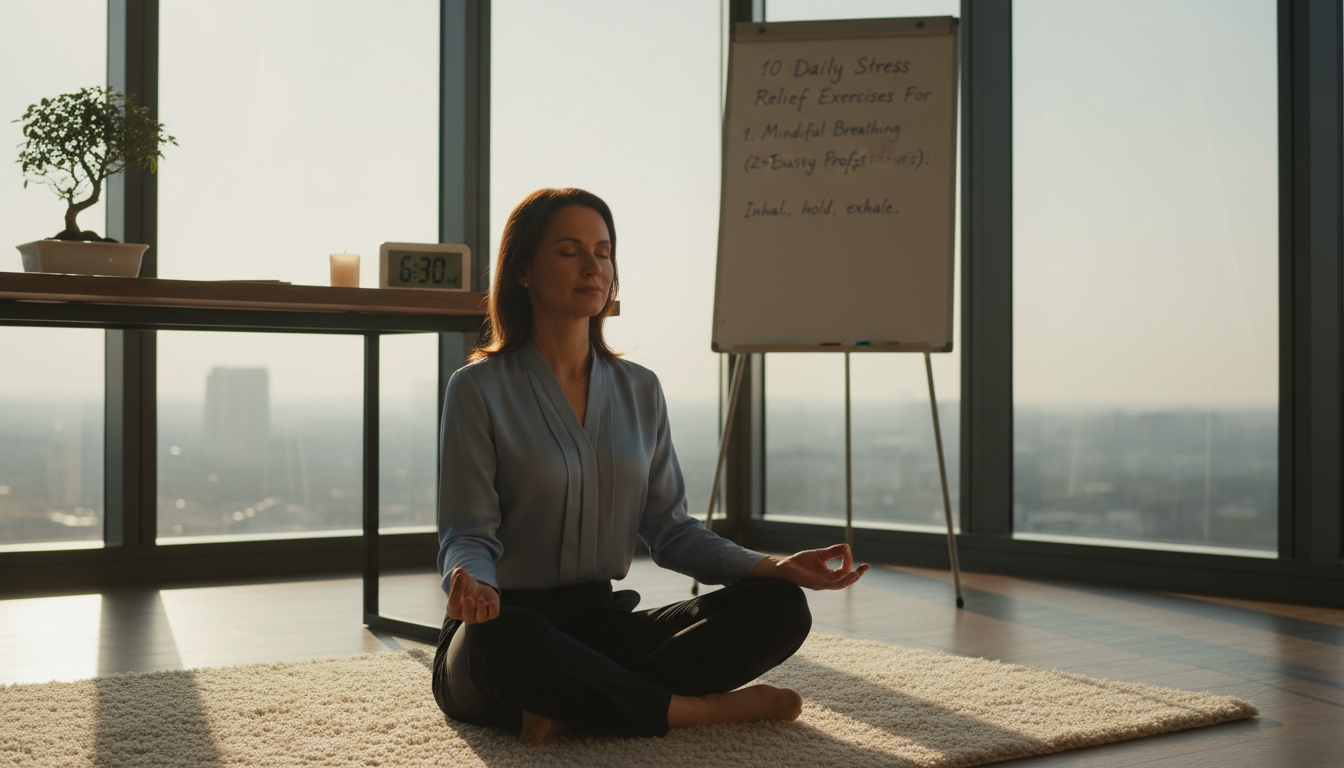
10 Daily Stress Relief Exercises For Busy Professionals
As a busy professional, you can combat daily stress and reclaim your focus and energy through a mix of mindful morning routines, strategic movement breaks, and restorative connection with nature. You’ll find breathing exercises, muscle relaxation techniques, and visualization methods to promote inner calm. Prioritizing quality sleep, unplugging from devices, and cultivating gratitude are also powerful stress reducers. Continue exploring this guide to discover more ways to optimize your well-being.
Table of Contents
Key Takeaways
- Start the day with mindful morning practices like focused breathing, light stretching, or meditation to ground the body and mind.
- Set aside time for digital detox by establishing device-free activities and a digital curfew before bedtime.
- Incorporate regular movement breaks like standing desk stretches, walking meetings, or stair climbing to boost energy and focus.
- Practice breathwork and progressive muscle relaxation techniques to soothe the mind and body and reduce stress.
- Immerse in nature during short breaks to engage the senses and refresh the mind.
Cultivate a Mindful Morning Routine
How often do you find yourself rushing through the morning, already feeling stressed before the day has truly begun? Cultivating a mindful morning routine can help you start the day calm and centered. Begin by waking up a bit earlier to enjoy a few moments of quiet contemplation. Sit comfortably and focus on your breathing, allowing thoughts to come and go without judgment. Incorporate light stretching or meditation to further ground yourself. As you move through your morning tasks, be present and attentive, rather than on autopilot. Avoid diving straight into emails or social media. Instead, savor your coffee, journal, or simply gaze out the window. This small shift in mindset can make a big difference in managing stress throughout the day.
Incorporate Energizing Movement Breaks Throughout the Day
When was the last time you took a break from your desk to move your body? It’s easy to get caught up in the whirlwind of deadlines and meetings, but carving out micro-movement breaks is essential for managing stress. Try these energizing exercises throughout the day:
| Exercise | Duration | Benefits |
|---|---|---|
| Standing Desk Stretches | 2-3 minutes | Improves posture and circulation |
| Walking Meeting | 10-15 minutes | Boosts creativity and focus |
| Desk Pushups | 30 seconds | Strengthens upper body |
| Stair Climbing | 5 minutes | Elevates heart rate |
Weaving in brief, rejuvenating movements can make a big difference in your energy and outlook. Don’t let stress hijack your workday – take charge with strategic activity breaks.
Engage in Guided Breathwork Exercises to Reduce Stress
Do you feel your mind racing with worries and anxieties throughout the workday? Engaging in guided breathwork exercises can help you hit the reset button and find calm amidst the chaos. Try these four steps:
- Find a quiet space. Close your eyes and take a deep breath in through your nose, feeling your belly rise.
- Exhale slowly through pursed lips, allowing your belly to fall.
- Repeat this cycle, focusing on the rise and fall of your breath.
- Continue for 5-10 minutes, allowing the rhythm of your breathing to soothe your mind and body.
Consistent breathwork practice can lower your stress levels, boost your focus, and leave you feeling refreshed and ready to tackle the rest of your day.
Practice Progressive Muscle Relaxation for Deeper Calm
Tense your muscle groups, one by one, then release the tension. Breathe deeply as you do this, feeling the stress melt away. Practicing this progressive muscle relaxation technique can help you achieve a deeper state of calm.
Tense Muscle Groups
Although you may not always notice it, the day-to-day stresses of work can cause certain muscle groups to become tense and constricted. To alleviate this physical discomfort, try focusing on these areas:
- Neck and shoulders – When stressed, you tend to hunch your shoulders and tighten your neck, leading to headaches and stiffness.
- Lower back – Sitting for long periods can make your lower back feel strained and achy.
- Jaw – Clenching your teeth or grinding them subconsciously can cause jaw pain.
- Hands and forearms – Gripping a computer mouse or pen too tightly can create tension in your hands and arms.
Addressing these specific muscle groups through progressive relaxation can help you unwind and regain a sense of calm.

Controlled Breathing
When you’re feeling stressed, taking the time to practice controlled breathing can promote a deeper sense of calm. Slow, deep breaths from your diaphragm activate the parasympathetic nervous system, counteracting the “fight-or-flight” response. Inhale for four seconds, hold for four seconds, then exhale for six seconds. Repeat this cycle several times. You’ll notice your mind and body begin to relax as you focus on your breath.
Controlled breathing is a simple yet powerful technique to reduce tension and restore inner peace. Give it a try the next time you feel overwhelmed – it’ll help you regain your focus and composure.
Use Visualization Techniques to Promote Relaxation and Focus
Visualization techniques can provide a powerful means to promote relaxation and focus amidst the demands of a busy professional schedule. By imagining a peaceful, calming scene, you can quiet your mind and reduce feelings of stress. Try these four visualization exercises:
- Picture yourself in a serene natural setting, like a beach or forest. Vividly imagine the sights, sounds, and sensations.
- Visualize completing a work task with ease and confidence. See yourself overcoming any challenges.
- Imagine your body relaxing, with each muscle group releasing tension.
- Envision a positive outcome for an upcoming event or presentation. Visualize yourself feeling calm and in control.
Regularly practicing these visualization techniques can help you manage daily stress and maintain your focus.
Nourish Your Mind and Body With Mood-Boosting Nutrition
How often do you think about the connection between the foods you consume and your mental well-being? It’s a vital link that’s often overlooked. Nourishing your mind and body with mood-boosting nutrition can significantly improve your ability to manage stress. Opt for whole, nutrient-dense foods like fruits, vegetables, lean proteins, and whole grains. These provide the essential vitamins, minerals, and antioxidants your brain needs to function optimally. Avoid processed, sugary, and high-fat foods, as they can disrupt your mood and energy levels. Stay hydrated, too. Drink plenty of water throughout the day. Making mindful food choices supports your mental health, boosts your energy, and enhances your ability to cope with the demands of a busy professional life.
Prioritize Quality Sleep and Establish Restful Wind-Down Rituals
Creating a sleep-conducive environment is crucial. Wind down with a relaxing nighttime routine to prepare your body for quality rest. Prioritize consistent sleep habits to boost your energy and mood.
Optimize Sleeping Environment
Why is optimizing your sleeping environment so important? The quality of your sleep has a significant impact on your stress levels and overall well-being. Here are four ways to optimize your sleeping environment:
- Keep it cool and dark. Aim for a bedroom temperature between 65-70°F and minimize light exposure for better sleep.
- Minimize noise. Use earplugs or a white noise machine to block disruptive sounds.
- Invest in a comfortable mattress and bedding. Replace worn-out items to ensure your body is properly supported.
- Limit screen time before bed. The blue light from devices can interfere with your body’s natural sleep-wake cycle.
Curate Relaxing Nighttime Routine
Establishing a relaxing nighttime routine is key to ensuring quality sleep and managing stress. Start by dimming the lights and turning off electronic devices at least an hour before bedtime. Take a warm bath, practice gentle stretching, or try meditation to calm your mind. Sip on a cup of caffeine-free tea and jot down any lingering thoughts in a journal. Establish a consistent sleep schedule, even on weekends, and create a sleep-conducive environment by keeping your bedroom cool, dark, and quiet. Prioritize winding down over late-night productivity – your body and mind will thank you.
Disconnect From Digital Devices for Restorative Downtime
Disconnecting from digital devices is crucial for restoring your mental well-being. In our constantly connected world, it’s easy to get caught up in the never-ending stream of notifications, emails, and social media. However, this can lead to increased stress, anxiety, and burnout. To combat this, try the following:
- Set aside specific times of the day for digital-free activities, such as reading, journaling, or taking a relaxing bath.
- Establish a digital curfew and turn off all devices at least an hour before bedtime.
- Experiment with mindfulness or meditation apps that can help you unwind without the distractions of technology.
- Engage in outdoor activities or hobbies that don’t require digital engagement, like gardening, hiking, or painting.
Immerse Yourself in Nature Through Outdoor Activities
Stepping away from the digital realm, immersing yourself in nature can work wonders for your stress relief. Take a brisk walk in the park, feel the sun on your face, and breathe in the fresh air.

Hiking through a forest or climbing a nearby hill will challenge your body and refresh your mind. Pack a healthy picnic and enjoy it outdoors, surrounded by the sights and sounds of the natural world.
Even a brief lunchtime stroll can re-energize you. Engage your senses – listen to the birds, smell the flowers, and feel the earth beneath your feet. Connecting with nature is a simple yet powerful way to alleviate the demands of your busy professional life.
Cultivate Gratitude and Positive Self-Talk for Mental Wellbeing
Cultivate a mindset of gratitude by consciously acknowledging the positive aspects of your day. This simple practice can have a profound impact on your mental wellbeing.
Try these four steps to cultivate gratitude and positive self-talk:
- Start your day by listing three things you’re grateful for. This sets a tone of appreciation.
- Reframe negative thoughts into constructive self-talk. Instead of “I can’t do this,” say, “I’ll give it my best effort.”
- Celebrate small wins throughout the day. Acknowledge your progress, no matter how incremental.
- Before bed, reflect on one good thing that happened. This trains your brain to focus on the positive.
Adopting these habits nurtures a resilient, optimistic mindset to better manage stress and boost your overall mental health.
Frequently Asked Questions
How Can I Manage Stress on a Tight Schedule?
Try taking short 5-minute breaks throughout your day to stretch, breathe deeply, or meditate. Prioritize your tasks and delegate when possible. Eat healthy snacks and stay hydrated to manage stress on a tight schedule.
What Are the Best Quick Stress-Relief Exercises?
Try deep breathing, stretching, or taking a short walk. These quick exercises can help you feel calmer and more focused when you’re short on time.
How Can I Improve My Sleep Quality?
Improve your sleep quality by sticking to a consistent sleep schedule, avoiding screens before bed, and practicing relaxation techniques like deep breathing. Exercise regularly, but not too close to bedtime.
What Types of Food Can Boost My Mood?
Eating foods rich in omega-3s, like salmon and walnuts, can boost your mood by reducing inflammation in the brain. Opt for complex carbs, such as whole grains, to increase serotonin production and elevate your spirits.
How Do I Unplug From Technology Effectively?
Unplug by setting tech-free zones in your home, scheduling device-free times, and taking regular digital detox breaks. Engage in mindful activities like reading, journaling, or spending time in nature to recharge.
Conclusion
You’ve explored a variety of stress relief exercises to incorporate into your daily routine. By consistently practicing these techniques, you’ll feel more grounded, centered, and equipped to manage the demands of your busy professional life. Remember, taking care of your mental and physical well-being is crucial for your long-term success and happiness.


No Comments