
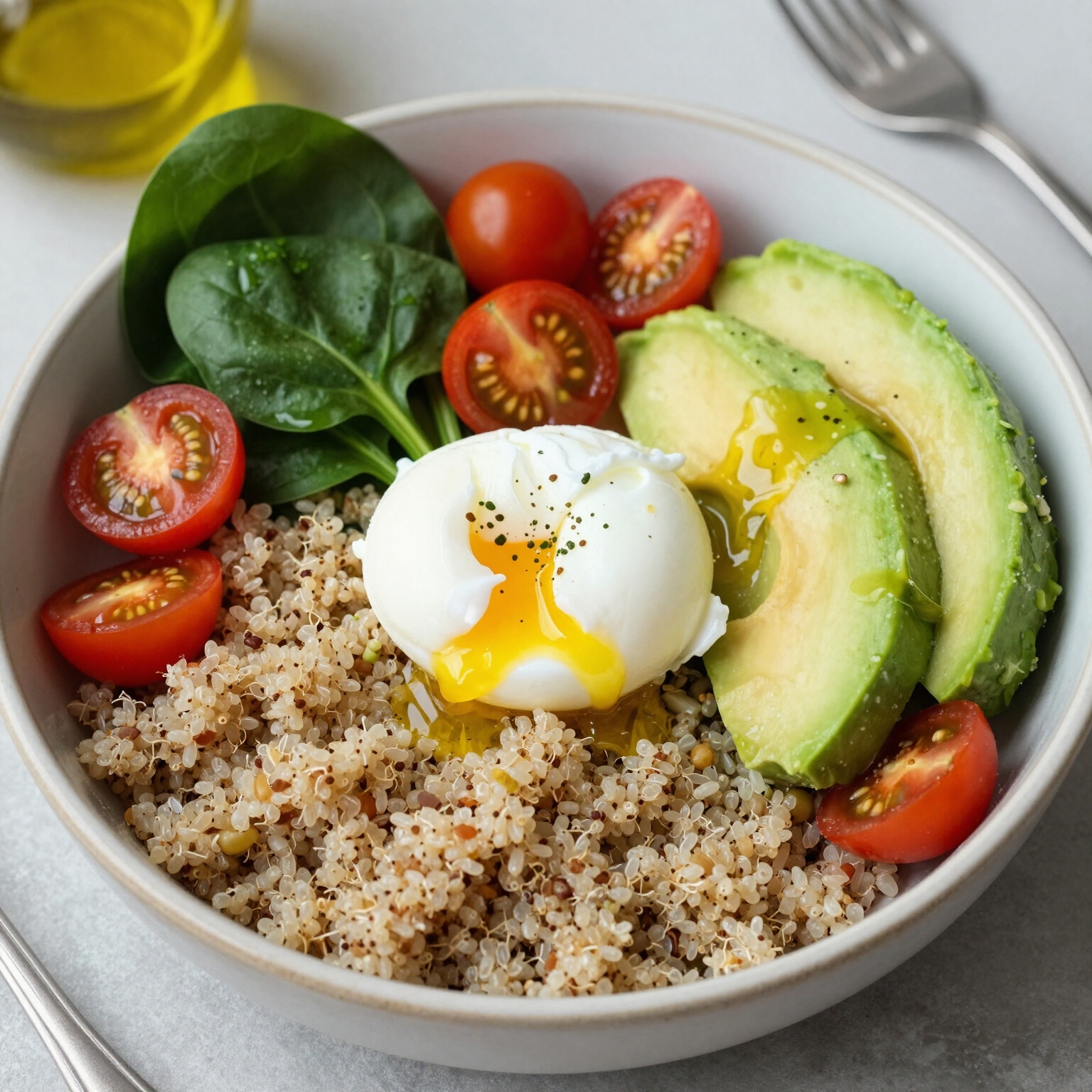
You’ll stay satisfied until lunch when you start your day with a high‑protein breakfast bowl that delivers 15‑35 g of protein, healthy fats, and fiber in a balanced 300‑400‑calorie mix. Protein slows digestion and stabilizes blood sugar, while avocado, smoked salmon, or olive oil add satiety and energy. Fiber‑rich greens or nuts further extend fullness, and low‑carb swaps like cauliflower rice keep carbs in check. Follow our five‑step build, prep tips, and flavor hacks for quick, tasty bowls that keep you full all morning.
Table of Contents
What Makes a High‑Protein Breakfast Bowl Keep You Full Until Lunch?
Why do some breakfast bowls keep you satisfied until noon while others leave you reaching for a snack? You stay full when the bowl mixes ample protein, healthy fats, and fiber. Protein—whether from cottage cheese, eggs, salmon, or turkey sausage—slows digestion, stabilizes blood sugar, and curbs cravings. Fat from avocado, smoked salmon, or a drizzle of olive oil adds satiety and keeps you energized. Fiber‑rich greens like spinach or a handful of nuts slows gastric emptying, extending the feeling of fullness. The combination of these macronutrients creates a balanced, slow‑release energy source that prevents the mid‑morning slump. Additionally, a higher protein count (15‑35 g per serving) triggers hormones that signal fullness to your brain. When you portion the bowl correctly—about 300‑400 calories—you get enough volume to feel satisfied without over‑eating, making it easier to power through until lunch.
Build a Balanced High‑Protein Bowl in 5 Simple Steps
After explaining why protein‑rich bowls keep you satisfied, let’s break down how to assemble a balanced high‑protein bowl in five straightforward steps.
- Pick a protein base. Choose cottage cheese, egg whites, or a cooked egg for 15‑30 g protein.
- Add a lean protein boost. Toss in smoked salmon, turkey sausage, or diced chicken for extra muscle‑fueling amino acids.
- Incorporate fiber‑rich greens. Layer baby spinach, kale, or arugula to slow digestion and keep blood sugar steady.
- Include healthy fats. Slice avocado, drizzle olive oil, or sprinkle nuts to enhance satiety and nutrient absorption.
- Finish with flavor and texture. Add cherry tomatoes, bell‑pepper strips, or a sprinkle of feta for freshness and crunch.
Combine ingredients in a bowl, drizzle a light vinaigrette if you like, and you’ve got a nutrient‑dense, satisfying breakfast ready to power you through the morning.
Baked Egg Bowl: 33 g Protein, 10‑Minute Prep, Oven‑Safe Storage
You’ll love how the baked egg bowl comes together in just a minute of prep, then bakes while you get on with your morning.
The glass dish you use is oven‑safe, so you can bake, store, and reheat without transferring to another container.
This convenience means you can grab a protein‑packed, 33‑gram bowl whenever you need a quick, satisfying start.
1‑Minute Prep
Ever wonder how a protein‑packed breakfast can be ready in just ten minutes?
You can shave that down to a single minute by pre‑portioning the baked egg bowl mix the night before. Scoop ½ cup cottage cheese, ¼ cup egg whites, and two beaten eggs into a silicone muffin cup, then sprinkle pre‑cooked sausage or turkey slices on top. Close the cup with a lid and store it in the fridge. In the morning, pop the cup into a pre‑heated oven or microwave for 60 seconds; the edges will set, the center will stay fluffy, and you’ll have 33 g of protein waiting. No chopping, no measuring—just a quick heat‑and‑eat routine that keeps you full until lunch.

Oven‑Safe Storage
The one‑minute heat‑and‑eat trick works best when you store the baked egg bowls in containers that can go straight from fridge to oven. Choose glass or ceramic dishes rated for 450 °F, like Pyrex or CorningWare, and avoid plastic lids that melt. Let the bowls cool completely before sealing; this prevents condensation that makes the crust soggy. If you’re prepping for the week, stack the containers upright and label each with the date. For freezer‑friendly batches, wrap the dish tightly with foil, then transfer to a zip‑top bag; you can reheat directly from freezer to oven, adding a few extra minutes. This method preserves the 33 g protein, keeps texture firm, and guarantees a safe, quick breakfast every morning.
Clean Lean High‑Protein Bowl With Smoked Salmon (34 G Protein & Omega‑3s)
Want a breakfast that fuels you for hours without weighing you down? This clean‑lean bowl gives you 34 g protein and omega‑3s in a single bite. Start with a bed of fresh baby spinach, then layer ½ cup low‑fat cottage cheese for creaminess and a solid protein boost. Add three slices of smoked salmon, rich in heart‑healthy fats and a salty punch. Top with a sliced avocado for smooth texture, a handful of cherry tomatoes for brightness, and a perfectly poached egg for extra protein and nutrients. Drizzle a squeeze of lemon juice and a pinch of black pepper to tie flavors together. The combination of leafy greens, dairy, fish, and egg keeps blood sugar stable, curbs cravings, and supports muscle recovery. Prep the ingredients the night before, assemble in under five minutes, and enjoy a satisfying, nutrient‑dense start to your day.
Quick Cottage‑Cheese Bowls: 6 Flavors Under 20 g Protein Each
You can mix cottage‑cheese with fruit, nuts, or savory toppings to hit a satisfying 15‑20 g of protein per bowl.
Choose ingredients like crisp apple and walnuts, tangy salsa and black beans, or smoked salmon and avocado for variety without extra prep.
Each flavor stays under 20 g protein, keeping you full and energized all morning.
Flavors & Ingredients
Craving variety without sacrificing protein? You can spin a simple cottage‑cheese base into six distinct bowls, each staying under 20 g protein. Start with a classic Sweet Apple: toss diced apple, a sprinkle of cinnamon, and a handful of walnuts into the cheese.
For a savory kick, mix in chopped cherry tomatoes, basil, and a drizzle of balsamic reduction.
The Mediterranean version adds kalamata olives, cucumber, and feta crumbles.
Boost omega‑3s with Smoked Salmon, pairing it with capers and dill.
A tropical twist blends pineapple chunks, toasted coconut, and a dash of lime zest.

Finally, go nutty with almond butter, sliced banana, and chia seeds.
All flavors keep preparation quick, ingredients inexpensive, and texture creamy.
Protein‑Rich Portion Sizes
Switching from flavor ideas to portion control, each cottage‑cheese bowl is designed to stay under 20 g of protein while still delivering a satisfying bite. You’ll find that a half‑cup of low‑fat cottage cheese (≈12 g protein) paired with a quarter‑cup of diced fruit or a sprinkle of nuts nudges the total just below the 20‑gram ceiling. This balance keeps you full without overloading calories, and the varied toppings keep mornings interesting. By measuring ingredients once and reusing the same base, you save prep time and stay consistent with your macro goals.
- ½ cup cottage cheese + ¼ cup berries = ≈18 g protein
- ½ cup cottage cheese + 2 tbsp chopped walnuts = ≈19 g protein
- ½ cup cottage cheese + ¼ cup diced cucumber + 1 tsp olive oil = ≈17 g protein
How to Swap Ingredients & Add Low‑Carb Boosts in Your Bowls
Want a low‑carb twist without sacrificing flavor? Swap starchy bases for cauliflower rice, shredded zucchini, or roasted bell‑pepper cubes. They’ll a the same bite while cutting carbs dramatically. Replace regular cheese with feta or goat cheese; they’re tangy, lower‑fat, and melt into the bowl without adding excess carbs. Use avocado or a dollop of Greek‑yogurt‑based tzatziki for creaminess instead of sugary sauces. For extra protein, toss in sliced turkey breast, cooked shrimp, or crumbled tofu; each adds 10‑15 g protein with minimal carbs. Sprinkle in low‑carb boosters like chia seeds, hemp hearts, or a few sliced almonds for texture and omega‑3s. If you love crunch, opt for roasted pumpkin seeds or pork rinds. Finally, season with fresh herbs, lemon zest, or smoked paprika to keep flavors bright without adding carbs. These swaps keep your bowl satisfying, nutrient‑dense, and fully compatible with a low‑carb lifestyle.
Meal‑Prep Strategies for High‑Protein Breakfast Bowls (Freezer‑Friendly, Reheat‑Ready)
Ever wondered how to keep your high‑protein breakfast bowls fresh, flavorful, and ready in minutes? You can batch‑cook, freeze, and reheat without sacrificing texture or taste. Start by cooking a large batch of protein‑rich bases—egg whites, cottage cheese, or smoked salmon—then portion them into individual glass containers. Add a quick‑freeze veggies like spinach or peppers, then seal and label. When morning hits, just microwave for 90 seconds or pop the container into a skillet for a crisp finish.
- Portion‑size containers – Use 8‑oz mason jars or BPA‑free trays; they fit snugly in the freezer and reheat evenly.
- Layering technique – Place liquid‑rich ingredients (cottage cheese, sauce) at the bottom, then protein, then veggies; this prevents sogginess.
- Flash‑freeze veggies – Spread chopped spinach or diced tomatoes on a tray, freeze 15 minutes, then transfer to bags; they stay separate and retain color.
These tricks keep your bowls ready, nutritious, and delicious every morning.
Bowl‑by‑Bowl Nutrition Quick‑Check: Calories, Macros, Satiety
Curious how each bowl stacks up nutritionally? Your baked egg bowl delivers roughly 350 kcal, 33 g protein, 22 g fat, and 12 g carbs, giving a high‑protein, moderate‑fat profile that keeps hunger at bay for 4–5 hours.
The clean‑lean spinach‑salmon bowl runs about 380 kcal, 34 g protein, 18 g fat, and 9 g carbs; the omega‑3‑rich salmon and fiber‑dense spinach boost satiety and stabilize blood sugar.
Cinnamon protein pancakes clock in at 300 kcal, 15 g protein, 8 g fat, and 45 g carbs, offering a carb‑forward option that still feels filling thanks to Greek yogurt.
Peanut‑butter banana smoothie provides 250 kcal, 25 g protein, 9 g fat, and 30 g carbs, delivering quick energy and lasting fullness from healthy fats.
Breakfast burritos sit around 400 kcal, 20 g protein, 16 g fat, and 35 g carbs; the combination of eggs, cheese, and beans creates a balanced macro mix that curbs cravings until lunch.
Adjust toppings or swap dairy for plant‑based alternatives to fine‑tune calories and macros while preserving satiety.
Frequently Asked Questions
Can I Make These Bowls Dairy‑Free and Still Hit Protein Targets?
Yes, swap cottage cheese for soy or almond yogurt, use egg whites, tofu, or tempeh, and add nuts or protein powder. You’ll still reach 30‑plus grams protein per bowl, staying dairy‑free.
How Long Do the Bowls Stay Fresh in the Fridge Before Losing Texture?
You’ll keep the bowls fresh for three to four days in the fridge before the texture starts to soften; just store them in airtight containers and reheat gently to retain creaminess and bite.
Are There Vegetarian or Vegan Protein Swaps for the Smoked Salmon?
You can swap smoked salmon with marinated tofu, tempeh, or chickpea “tuna” salad; each delivers 15‑20 grams protein, omega‑3s (if fortified), and a satisfying bite while keeping the bowl vegetarian or vegan.
What’s the Best Way to Reheat a Frozen Bowl Without Drying It Out?
You should thaw the bowl in the fridge overnight, then microwave it covered with a damp paper towel on medium power for 2‑3 minutes, stirring halfway to keep moisture in and avoid drying.
Do These Bowls Fit a Low‑Sodium Diet if I Limit the Sausage?
Yes, you can keep them low‑sodium by swapping the sausage for turkey bacon, smoked salmon, or extra veggies; just watch added salt in cheese and seasoning, and you’ll stay within a low‑sodium plan.
Conclusion
You’ve seen how a high‑protein breakfast bowl fuels you, the simple steps to build one, and tasty recipes that deliver 20‑plus grams of protein in minutes. By swapping ingredients and using meal‑prep tricks, you can keep flavors fresh, carbs low, and satiety high all morning. So pick a bowl, prep it, and power through your day feeling full, focused, and ready for anything.


Sorry, the comment form is closed at this time.