

You’ll find that a typical mango contains between 100 to 200 calories, depending on its size and weight. A small mango (200g) has about 107 calories, while a medium one (336g) packs 180 calories, and a large mango (400g) reaches 200 calories. Beyond just calories, you’re getting vitamin C, vitamin A, fiber, and antioxidants in every bite. There’s much more to discover about how preparation methods and serving sizes can impact your mango’s nutritional value.
Key Takeaways
- A medium-sized mango (336g) contains approximately 180 calories, while small mangoes have 107 calories and large ones 200 calories.
- Mango calorie content ranges from 100-200 calories per fruit depending on size and weight.
- Fresh mango contains about 60 calories per 100 grams of fruit flesh.
- Dried mango concentrates to 320 calories per 100g, while mango juice has 130 calories per 8 ounces.
- Mangoes provide more calories than apples (95) or oranges (62) but offer superior nutrient density.
Calorie Count by Mango Size and Weight
Most mangoes you’ll find at the grocery store contain between 100 and 200 calories, depending on their size and weight. A small mango weighing about 200 grams provides roughly 107 calories, while a medium one at 336 grams delivers approximately 180 calories. You’ll get around 200 calories from a large mango weighing 400 grams.
The mango flesh density affects the calorie concentration in each bite you take. Denser flesh means more fruit matter and calories per spoonful, while softer varieties contain more water and fewer calories by weight. You can estimate that every 100 grams of mango flesh contains about 60 calories.
Mango ripeness levels don’t significantly change the total calorie count, but they do influence sugar distribution. As your mango ripens, starches convert to sugars, making it taste sweeter without adding calories. Whether you’re tracking macros or counting calories, you can reliably calculate your intake by weighing the edible portion after removing the skin and pit.
Nutritional Breakdown Beyond Calories
While calorie content tells part of the story, mangoes pack an impressive array of vitamins, minerals, and beneficial compounds that make them nutritionally valuable beyond their energy contribution. You’ll find mangoes’ vitamin content particularly rich in vitamin C, providing about 67% of your daily value in just one cup. They’re also loaded with vitamin A, supporting your immune system and eye health.
Mangoes’ mineral composition extends beyond these basics. You’ll benefit from trace amounts of iron, calcium, and zinc. The fruit’s fiber content aids your digestion while its antioxidants, including beta-carotene and polyphenols, fight cellular damage. These nutrients work together, making mangoes a nutrient-dense choice that offers much more than just calories.
Here’s what you’re getting in a typical mango serving:
- Vitamin C: 60-70mg for immune support
- Folate: 71mcg for cell function
- Copper: 0.2mg for energy production
- Potassium: 325mg for heart health
- Magnesium: 19mg for muscle function
Comparing Mango Calories to Other Fruits
When you’re choosing between mangoes and other fruits, understanding their relative calorie content helps you make informed dietary decisions. A medium mango contains about 200 calories, placing it higher than many common fruits. You’ll find that apples have 95 calories, oranges contain 62 calories, and strawberries offer just 50 calories per cup. However, tropical fruits like pineapple match mangoes at 82 calories per cup.
Despite higher calories, mango nutrient density surpasses many lower-calorie options. You’re getting more vitamins A and C per calorie than you’d receive from apples or grapes. The mango glycemic index sits at 51, making it a medium-GI fruit that won’t spike your blood sugar as dramatically as watermelon or pineapple.
If you’re counting calories, berries and citrus fruits provide fewer calories per serving. Yet when you factor in mangoes’ fiber content, antioxidants, and satisfying sweetness, they’re worth the extra calories for most people’s nutritional goals.
How Preparation Methods Affect Calorie Content
How you prepare your mango can significantly impact its calorie content, transforming this 200-calorie fruit into anything from a low-calorie snack to a high-calorie dessert. Fresh mango remains your best bet for maintaining its natural calorie count, but various mango cooking methods can alter this number dramatically.
Here’s how different preparations affect calories:
- Dried mango: Concentrates sugars, reaching 320 calories per 100g
- Mango smoothie: Adding milk and sugar pushes it to 150+ calories per cup
- Grilled mango: Maintains original calories while caramelizing natural sugars
- Mango juice: Removes fiber, packing 130 calories in just 8 ounces
- Frozen mango chunks: Preserves the original 60 calories per 100g
For effective calorie reduction techniques, you’ll want to avoid added sugars and syrups. Instead, pair fresh mango with protein-rich foods to increase satiety without extra calories. Steaming or grilling won’t add calories, while dehydrating concentrates them. Remember, portion control matters more than preparation method when you’re watching your caloric intake.
Tips for Including Mangoes in a Calorie-Conscious Diet
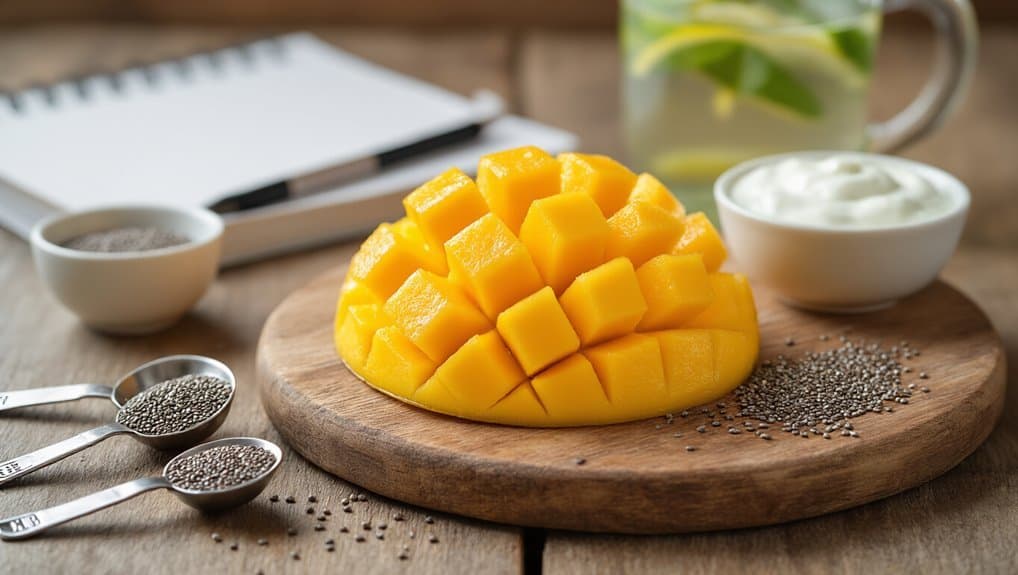
Managing your mango intake strategically can help you enjoy this tropical fruit without derailing your calorie goals. You’ll maximize satisfaction while minimizing calories by practicing portion control. Cut one mango into measured servings and store them in containers for grab-and-go healthy mango snacks. This prevents mindless overeating and helps you track your daily intake accurately.
You can stretch mangoes further by incorporating them into mango based smoothies with low-calorie ingredients like spinach, unsweetened almond milk, and ice. These combinations create filling drinks that satisfy sweet cravings without excessive calories. Consider freezing mango chunks for natural portion control—they’ll take longer to eat and feel more substantial.
Replace higher-calorie desserts with fresh mango slices, or add small amounts to salads for sweetness without dressing. You’ll find that pairing mangoes with protein sources like Greek yogurt or cottage cheese creates balanced snacks that keep you fuller longer while managing your overall caloric intake.
Frequently Asked Questions
Can Diabetics Safely Eat Mangoes Despite Their Natural Sugar Content?
Yes, you can safely eat mangoes if you have diabetes, but you’ll need careful portion control. Stick to small servings like half a cup of diced mango to minimize blood sugar spikes. You’ll find that pairing mango with protein or healthy fats helps slow sugar absorption.
Time your mango consumption with your insulin management schedule, and always monitor your blood glucose response. Don’t eliminate this nutritious fruit completely.
Do Mangoes Cause Weight Gain if Eaten Daily?
You won’t automatically gain weight from eating mangoes daily, but portion control matters since they’re calorie-dense. A medium mango contains about 200 calories and 45 grams of natural sugar.
Your body’s sugar metabolism processes these carbs differently than refined sugars, providing fiber that slows absorption. If you’re maintaining a balanced diet and staying within your daily caloric needs, one mango per day shouldn’t cause weight gain.
What’s the Best Time of Day to Eat Mangoes?
You’ll get the most benefits eating mangoes in the morning or as an afternoon snack. Their natural sugars provide quick energy when you need it most.
During peak seasonal availability from May through September, you can enjoy mangoes at optimal ripeness with maximum nutrients. Morning consumption helps your body absorb vitamins better, while afternoon timing curbs cravings. Avoid eating them late at night since the sugars might disrupt your sleep.
Are Dried Mango Calories Different From Fresh Mango Calories?
Yes, dried mango calories are significantly different from fresh ones. When you remove moisture content through drying, you’re concentrating the sugars and calories.
While fresh mango contains about 60 calories per 100g, dried mango packs around 320 calories for the same weight. You’ll notice the nutrient density increases too – you’re getting more vitamins and minerals per gram, but you’re also consuming five times the calories and sugar.
How Many Mangoes Can I Eat per Week While Dieting?
You can safely eat 2-3 mangoes per week while dieting. Portion size recommendations suggest limiting yourself to one cup of sliced mango (165g) per serving, which contains about 100 calories.
The mango nutrition profile offers excellent vitamin C, fiber, and antioxidants that’ll support your weight loss goals. You’ll want to track these calories within your daily deficit, treating mangoes as a nutritious carb source rather than unlimited “free” fruit.
Conclusion
You’ve learned that mangoes contain 60-200 calories depending on size, with most averaging around 100 calories. They’re nutrient-dense fruits that offer more than just calories—they’re packed with vitamins, fiber, and antioxidants. Whether you’re counting calories or simply enjoying their tropical sweetness, you can confidently add mangoes to your diet. Remember to account for preparation methods and portion sizes, and you’ll find these golden fruits fit perfectly into your healthy eating plan.


Table of Contents






No Comments