
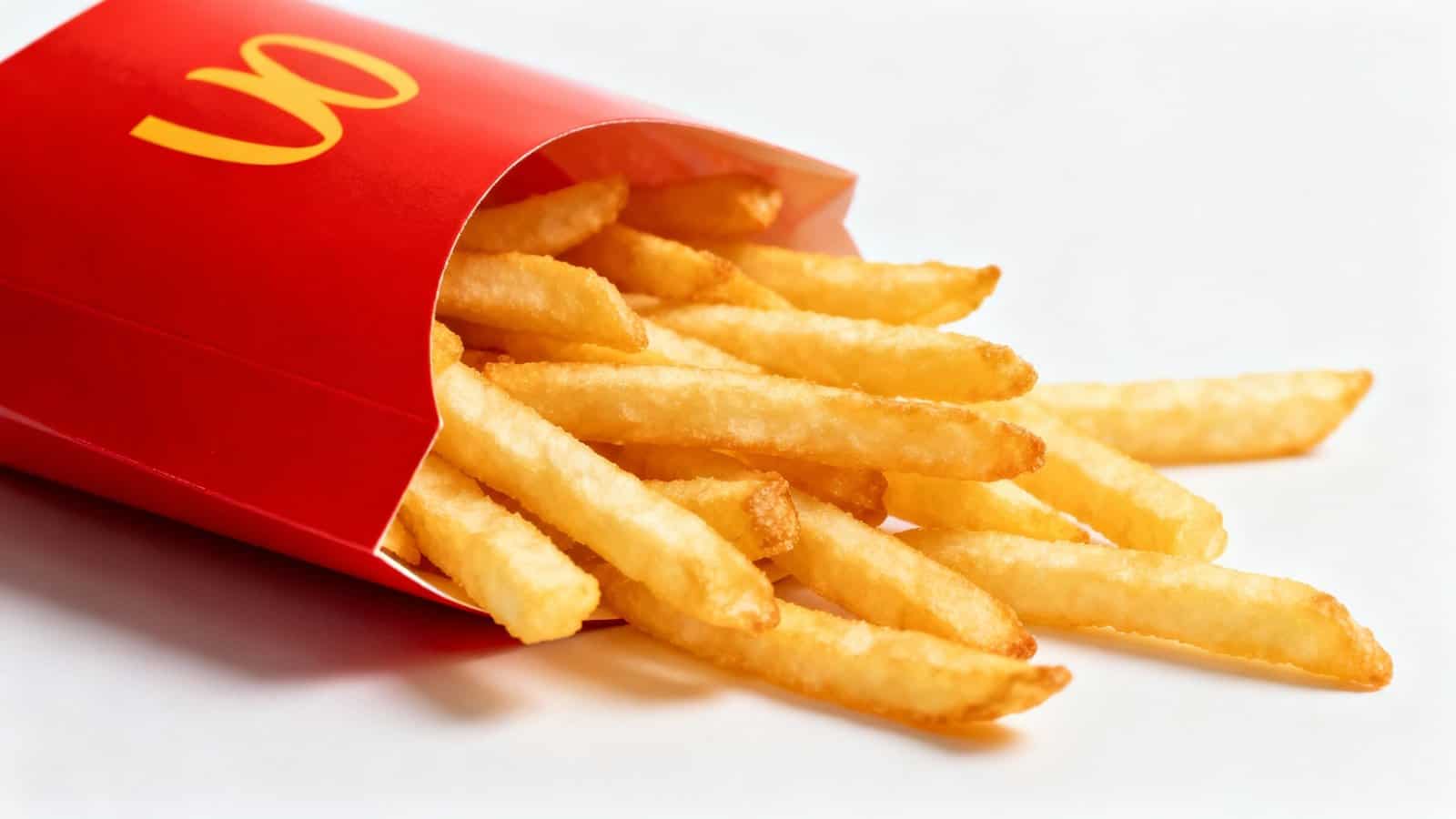
You’ll consume 320 calories when you order a medium fries at McDonald’s, which represents about 16% of your daily 2,000-calorie diet. Along with those calories, you’re getting 15 grams of fat, 43 grams of carbs, and 260 milligrams of sodium. That’s actually fewer calories than Burger King’s 380-calorie or Wendy’s 420-calorie medium portions. Smart portion control strategies and healthier menu swaps can help you enjoy those golden fries without derailing your nutrition goals.
Table of Contents
Key Takeaways
- McDonald’s medium fries contain approximately 320 calories, representing about 16% of a standard 2,000-calorie daily diet.
- The medium fries weigh 111 grams and provide 3.2 calories per gram.
- Nutritional content includes 15 grams total fat, 43 grams carbohydrates, and 260 milligrams sodium.
- McDonald’s medium fries have fewer calories than competitors like Burger King (380), Wendy’s (420), and Five Guys (620).
- Actual calorie content may vary based on cooking methods, oil absorption, and portion size differences between locations.
The Exact Calorie Count in McDonald’s Medium Fries
When you pick up a medium order of McDonald’s fries, you’re consuming approximately 320 calories according to the company’s official nutritional information. This calorie count represents about 16% of a standard 2,000-calorie daily diet, making it a significant portion of your recommended intake.
Beyond calories, you’ll want to understand the complete nutritional profile of these popular fries. Each medium serving contains 15 grams of total fat, with the saturated fat content reaching 2.3 grams. You’re also getting 43 grams of carbohydrates, including 3.9 grams of dietary fiber, and 3.8 grams of protein.
The sodium level sits at 260 milligrams per serving, which accounts for roughly 11% of your daily recommended value. These fries don’t provide significant vitamins or minerals, though they contain small amounts of potassium and iron. Understanding these numbers helps you make informed decisions about incorporating McDonald’s medium fries into your diet.
Nutritional Breakdown Beyond Calories
How do McDonald’s medium fries impact your body beyond their 320-calorie count? You’re consuming 15 grams of total fat, including 2 grams of saturated fat. The fat composition includes trans fats from the frying process, though McDonald’s has reduced these significantly over the years.
The sodium content delivers a substantial hit at 260 milligrams, representing 11% of your daily recommended intake. This salt load can affect your blood pressure and water retention, especially if you’re sensitive to sodium.
You’ll get 43 grams of carbohydrates, primarily from the potato starch, with minimal dietary fiber at just 4 grams. The protein content is negligible at 4 grams. McDonald’s fries also contain small amounts of potassium and iron but lack significant vitamins.
The cooking oil blend adds omega-6 fatty acids, which can promote inflammation when consumed excessively. Understanding these nutritional aspects helps you make informed decisions about including medium fries in your diet.
How McDonald’s Fries Compare to Other Fast Food Chains
When you’re choosing where to grab fries, you’ll find McDonald’s medium fries (320 calories) fall right in the middle compared to competitors.
Burger King’s medium fries pack 380 calories, while Wendy’s medium contains 420 calories, though their portion sizes vary significantly.
You’ll notice Five Guys takes the calorie crown with their regular fries hitting 620 calories, nearly double McDonald’s offering.
Calorie Count Comparison
Everyone’s curious about how McDonald’s medium fries stack up against the competition, and you might be surprised by the results. McDonald’s medium fries contain 320 calories, placing them in the middle range compared to other chains. Wendy’s medium fries pack 420 calories, while Burger King‘s hit 380. You’ll find Five Guys’ regular fries contain a whopping 620 calories.
When conducting a calorie density analysis, you’ll notice McDonald’s fries offer 3.2 calories per gram, making them relatively standard. Chick-fil-A’s waffle fries contain fewer at 360 calories per medium serving. The nutrient profile assessment reveals most fast-food fries share similar fat and sodium levels, though portion sizes vary significantly. You’re getting comparable caloric impact whether you choose Arby’s curly fries at 410 calories or stick with McDonald’s classic option.
Portion Size Differences
The actual weight of a “medium” fries varies dramatically across fast-food chains, making direct comparisons tricky. You’ll find McDonald’s medium fries weighs 111 grams, while Wendy’s medium contains 117 grams. Burger King’s medium fries pack 153 grams—that’s 38% more than McDonald’s.
| Chain | Medium Fries Weight |
|---|---|
| McDonald’s | 111 grams |
| Wendy’s | 117 grams |
| Burger King | 153 grams |
These differences affect your calorie intake significantly. When checking serving size accuracy, you’ll notice variations even within the same chain. Most restaurants maintain nutrition labeling compliance by posting ranges rather than exact numbers. If you’re counting calories, don’t assume all “medium” portions are equal. Request specific weight information or use the restaurant’s app for precise measurements. You’re often getting vastly different amounts of food despite ordering the same size designation.
Factors That Affect the Calorie Content
You’ll find that the calorie count in McDonald’s fries isn’t always identical due to several key factors. The type of cooking oil used can alter the caloric content, as different oils contain varying amounts of fat and calories per gram.
Portion size variations between locations and even individual servings can also cause your medium fries to contain slightly more or fewer calories than the standard nutritional listing indicates.
Cooking Oil Type
When McDonald’s switches between different cooking oils, the calorie content of their medium fries can vary slightly due to each oil’s unique fat composition and absorption rate. You’ll find that cooking oil quality directly impacts how many calories you’re consuming.
The frying temperature also plays a crucial role – higher temperatures create a crispier exterior that absorbs less oil.
Here’s what affects your fries’ calorie count:
- Canola-blend oil – McDonald’s current choice contains roughly 120 calories per tablespoon
- Oil absorption rate – Fresh oil penetrates less than degraded oil
- Trans fat content – Varies between oil types, affecting total calories
- Oil turnover frequency – Fresher oil means fewer calories absorbed
You’re looking at a 10-15 calorie difference depending on these oil-related factors.
Portion Size Variations
How much variation exists in McDonald’s medium fries portions? You’ll find that serving size adjustments can impact your calorie intake significantly. While McDonald’s aims for consistency, portions can vary by 10-15% depending on how staff fill the containers. When fries are scooped generously, you’re getting extra calories beyond the standard 320-calorie count.
Different fries preparation methods also affect portion weights. Freshly cooked batches tend to be fluffier and take up more container space, potentially giving you fewer fries. Conversely, fries that’ve sat longer become slightly compressed, allowing more to fit in your container. You’ll notice variations between locations too – some restaurants overfill containers while others stick strictly to standard portions. These differences can add or subtract 30-50 calories from your meal.
Making Medium Fries Fit Into Your Daily Calorie Budget
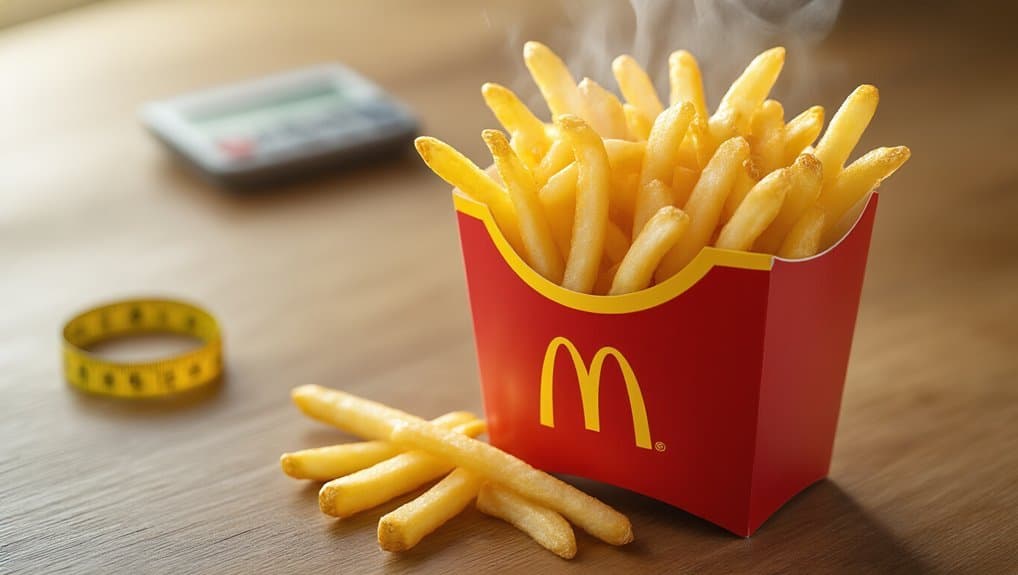
While McDonald’s medium fries pack 320 calories into a single serving, you can still enjoy them without derailing your nutritional goals. You’ll need smart portion control strategies to make them work within your daily calorie allowance. If you’re following a 2,000-calorie diet, medium fries represent about 16% of your daily intake.
Consider these calorie conscious swaps to balance your meal:
- Share your medium fries with someone to cut calories in half
- Order apple slices (15 calories) alongside a small fry instead
- Choose a side salad (15-20 calories) and steal a few fries from a friend
- Request light salt to reduce sodium without affecting calories
You can also compensate by choosing lower-calorie main items like grilled chicken sandwiches (380 calories) instead of Big Macs (563 calories). Planning ahead helps you’re fitting treats into your budget without guilt. Track your intake throughout the day, leaving room for occasional indulgences while maintaining your overall calorie goals.
Healthier Alternatives at Mcdonald’s With Lower Calories
Several menu items at McDonald’s deliver satisfying flavors with significantly fewer calories than those 320-calorie medium fries. You’ll find plenty of healthier menu options that won’t derail your diet goals.
Consider swapping fries for these alternatives:
| Menu Item | Calories |
|---|---|
| Apple Slices | 15 |
| Side Salad | 20 |
| 4-Piece McNuggets | 170 |
| Fruit & Yogurt Parfait | 210 |
You can also make calorie conscious modifications to your regular orders. Order grilled chicken instead of crispy, skip the cheese, or request light sauce. If you’re craving fries, downsize to a small portion at 230 calories – you’ll save 90 calories while still enjoying the taste.
Don’t overlook breakfast items either. An Egg McMuffin contains just 310 calories, making it comparable to medium fries while providing more protein and nutrients. These simple switches let you enjoy McDonald’s without consuming excessive calories.
The Impact of Dipping Sauces on Total Calorie Intake
Those seemingly innocent dipping sauces can transform your 320-calorie medium fries into a much higher-calorie meal. You’ll add significant calories when you’re dipping each fry into your favorite sauce. Understanding sauce nutrition facts helps you make informed choices about your meal’s total calorie count.
Here’s the sauce calorie impact for popular McDonald’s options:
- Sweet ‘N Sour Sauce – 50 calories per packet
- Creamy Ranch Sauce – 110 calories per packet
- Tangy Barbeque Sauce – 45 calories per packet
- Honey Mustard Sauce – 60 calories per packet
You’re essentially adding 14-34% more calories to your fries with just one sauce packet. If you’re using two packets, you’ve potentially doubled that impact. Consider limiting yourself to one packet or skipping sauce entirely. When you must have sauce, opt for lower-calorie choices like barbeque over ranch. Your seemingly small sauce decision can mean the difference between a 320-calorie side and a 430-calorie indulgence.
Tips for Enjoying McDonald’s Fries While Managing Weight
When you’re watching your weight but craving McDonald’s fries, you don’t have to eliminate them completely from your diet. Instead, practice smart portion control strategies that’ll satisfy your craving without derailing your goals. Consider ordering a small size rather than medium, saving about 110 calories. You can also share a medium order with a friend, cutting your intake in half.
Try pairing a small fry with nutritious side options like apple slices or a side salad to create a more balanced meal. This approach helps you feel fuller while consuming fewer calories overall. Another effective strategy is to eat your fries slowly and mindfully, savoring each bite rather than mindlessly munching.
Plan for the indulgence by reducing calories elsewhere in your day or adding extra physical activity. You’ll maintain your weight management goals while still enjoying the foods you love. Remember, sustainable weight management isn’t about perfection—it’s about making informed choices that work for your lifestyle.
Frequently Asked Questions
How Many Fries Come in a Mcdonald’s Medium Serving?
You’ll get approximately 111 individual fries in a McDonald’s medium serving. The portion size typically weighs around 117 grams, though the exact serving amount can vary slightly between locations.
Your medium fries contain about 320 calories, making them a popular side choice. The count depends on the cut size – thinner fries mean you’re getting more pieces, while thicker cuts reduce the total number in your container.
Are Mcdonald’s Fries Gluten-Free?
McDonald’s fries aren’t certified gluten-free, though they don’t contain gluten ingredients. You’ll find they’re cooked in shared fryers with breaded items, creating cross-contamination risks. If you’re managing celiac disease, you should explore gluten free alternatives like apple slices or salads.
For your dietary considerations, you can check McDonald’s allergen menu online. They’ve updated their transparency, but you shouldn’t rely on fries being safe if you’re highly sensitive to gluten.
What Type of Oil Does Mcdonald’s Use for Frying?
You’ll find McDonald’s uses a canola-based oil blend for frying their famous fries. They’ve specifically chosen this blend for its cooking oil quality, which helps achieve that golden, crispy texture you’re expecting.
McDonald’s has also made commitments regarding the sustainability of oil sources, working with suppliers who follow responsible farming practices. The oil blend doesn’t contain trans fats and meets their standards for consistent taste and performance across all locations.
Can I Order Unsalted Fries at Mcdonald’s?
Yes, you can order unsalted fries at McDonald’s! Just make customize order requests at the counter or drive-thru, and they’ll prepare fresh fries without salt. You’ll typically get them hotter since they’re made to order.
This option’s perfect if you’re watching sodium intake or prefer adding your own seasoning. McDonald’s nutrition information availability shows unsalted fries have the same calories but significantly less sodium than regular fries.
How Long Do Mcdonald’s Fries Stay Fresh After Purchase?
You’ll find McDonald’s fries stay fresh for about 5-10 minutes after purchase for optimal taste and texture. The storage duration is extremely short because they’re best eaten immediately while hot and crispy.
For freshness maintenance, you can’t really extend their life much – they’ll become soggy and lose their appeal quickly. If you must save them, eat within 30 minutes maximum, though they won’t taste nearly as good as when fresh.
Conclusion
You’ve learned that McDonald’s medium fries contain 320 calories, making them a significant part of your daily intake. While they’re not the healthiest option, you don’t have to eliminate them completely. If you’re craving those golden fries, consider splitting them with someone, skipping high-calorie sauces, or balancing them with lighter meals throughout your day. Remember, it’s about moderation and making informed choices that fit your lifestyle and nutritional goals.


No Comments