
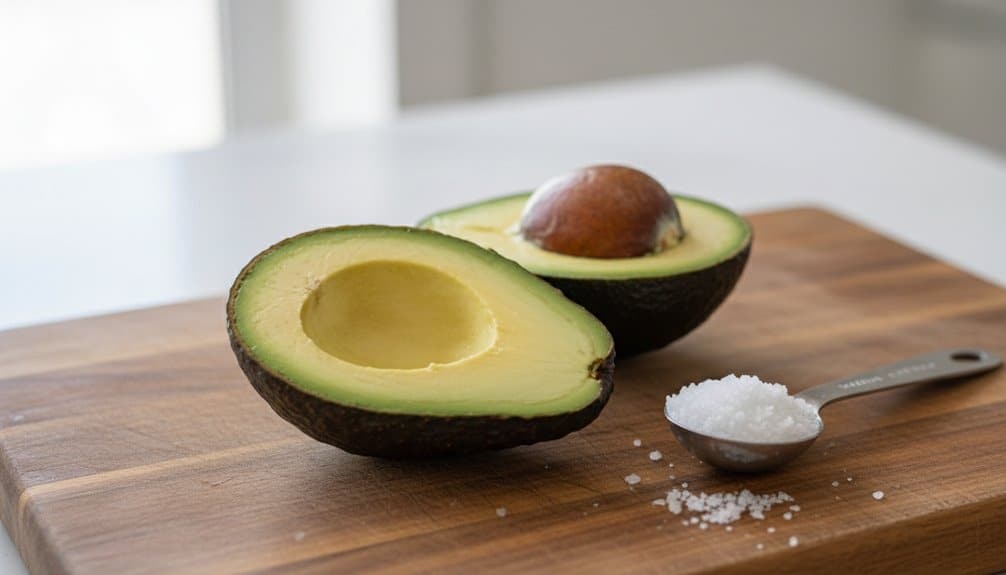
Large Avocado Calories: The Portioning Rule Nutritionists Use to Avoid Hidden Surplus
A large avocado packs 322 calories—95 more than a small one—making portion control crucial for managing your intake. Nutritionists recommend using the palm-to-portion method: your palm equals 3-4 ounces or half a medium avocado (about 160 calories), while your thumb represents one ounce or 50 calories. Since most people unknowingly eat entire avocados, pre-portioning immediately after cutting prevents consuming 400% of the recommended serving. Master these visual cues to transform avocados from calorie bombs into perfectly portioned nutrition powerhouses.
Table of Contents
Key Takeaways
- A large avocado contains 322 calories, which is 95 calories more than a small avocado at 227 calories.
- Nutritionists recommend limiting portions to 50 grams or 1/3 of a medium avocado, equaling 80 calories per serving.
- Use the palm method: your palm size equals half a medium avocado or 1/3 of a large one.
- Pre-portion avocados immediately after cutting to avoid accidentally consuming 4-5 servings from one large fruit.
- Restaurant guacamole can contain 2-3 whole avocados, adding 600-900 hidden calories to seemingly healthy meals.
Understanding the True Caloric Impact of Different Avocado Sizes
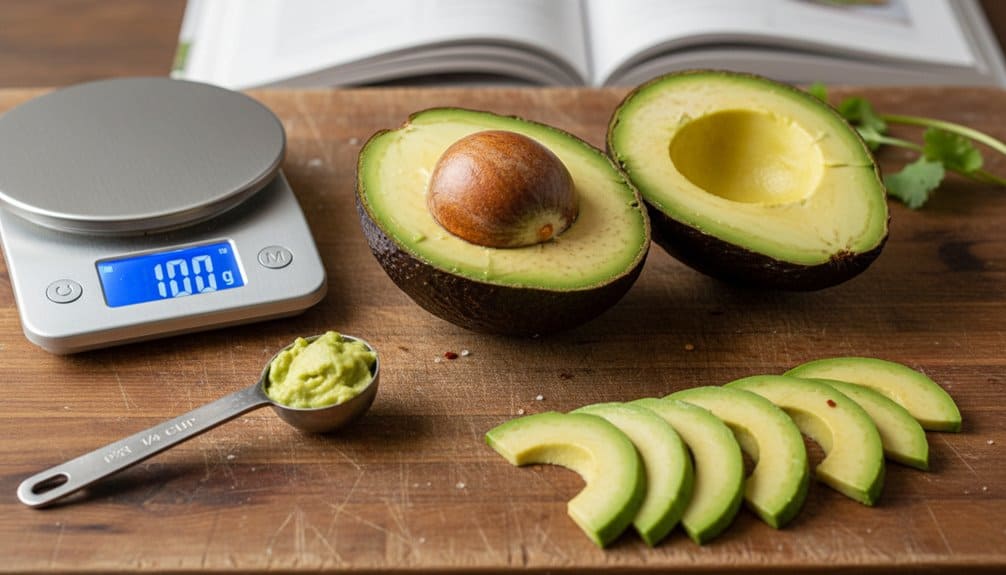
When you’re tracking calories, avocado sizes can throw off your calculations more than you’d expect. A small avocado contains roughly 227 calories, while a large one packs about 322 calories – that’s a 95-calorie difference you might’ve overlooked. You’ll find that avocado nutritional composition remains consistent across sizes, with approximately 77% of calories coming from fat, 19% from carbohydrates, and 4% from protein.
Understanding the avocado macronutrient breakdown helps you make smarter portions. In a large avocado, you’re getting about 29 grams of fat, 17 grams of carbs, and 4 grams of protein. Most people don’t realize they’re consuming an entire large avocado when they scoop out both halves for toast or salad. That’s why nutritionists recommend weighing your portions – a standard serving is just 50 grams or about one-third of a medium avocado at 80 calories. This precision prevents you from unknowingly adding hundreds of extra calories to your daily intake.
The Palm-to-Portion Visual Method for Perfect Avocado Servings
Measuring your avocado portions doesn’t require a food scale when you’ve got a built-in measuring tool – your palm. Your palm’s size corresponds to approximately 3-4 ounces of avocado, which equals half of a medium-sized fruit or one-third of a large one. This visual method instantly accounts for portion size variance based on your body’s needs.
When you’re dealing with avocado size differences, use your thumb as an additional guide. A thumb-sized portion represents about one ounce or 50 calories. You’ll find that large avocados often contain four to five thumb-sized portions, while medium ones yield three to four.
Place the avocado flesh in your cupped palm – if it overflows significantly, you’re looking at multiple servings. This technique eliminates guesswork and prevents overconsumption, especially with today’s increasingly large avocados that can pack 400+ calories each.
Common Mistakes That Lead to Accidental Calorie Overload
Restaurant guacamole bowls disguise the biggest calorie trap you’ll encounter with avocados. You’re likely consuming two to three whole avocados without realizing it, adding 600-900 calories to your meal. That seemingly healthy addition becomes a calorie bomb when you can’t track actual portions.
You’ll make similar mistakes at home when you’re eyeballing amounts. Spreading “just a little” avocado on multiple toast slices quickly adds up to an entire fruit. You’re also probably counting net carbs while ignoring the fat calories that constitute 77% of an avocado’s energy content.
Your portion control strategies fail when you’re eating directly from the avocado half with a spoon. Without pre-measuring, you’ll exceed recommended servings every time. Building nutritional awareness means recognizing that healthy fats still contain nine calories per gram. You’ll sabotage your goals by treating avocados as “free” foods just because they’re nutrient-dense. Pre-portion your servings immediately after cutting to avoid these pitfalls.
Strategic Ways to Incorporate Measured Portions Into Daily Meals
- Spread one pre-portioned serving on morning toast with poached eggs for a complete breakfast
- Mix half a portion into tuna salad, replacing mayo while adding creaminess
- Dice a full portion over grilled chicken bowls for satisfying healthy fats
- Spread one pre-portioned serving on morning toast with poached eggs for a complete breakfast
You’re more likely to stick with portioning when it’s convenient. Dedicate Sunday afternoons to preparing your weekly avocado portions. Label each container with the gram weight and calorie count. This visual reminder keeps you accountable while building sustainable habits that prevent overconsumption.
Frequently Asked Questions
Do Avocados Have Different Calorie Counts Based on Their Ripeness Level?
No, you’ll find avocado calorie variances between individual fruits are minimal across avocado ripeness stages. Whether you’re eating a firm or soft avocado, the calorie content doesn’t significantly change as it ripens.
The fruit’s composition remains stable – it doesn’t gain or lose calories during ripening. What does change is the texture and flavor profile. You’re getting roughly the same nutritional value whether your avocado is perfectly ripe or slightly underripe.
How Long Can Pre-Portioned Avocado Stay Fresh in the Refrigerator?
You’ll keep pre-portioned avocado fresh for 2-3 days in your refrigerator when stored properly. Your storage duration depends on maintaining an ideal refrigeration temperature between 35-40°F.
You’re best off placing cut portions in an airtight container with lemon or lime juice to prevent browning. If you’ve mashed it, press plastic wrap directly onto the surface before sealing.
You’ll notice quality declining after day three, so plan accordingly.
Does Freezing Avocado Portions Change Their Nutritional Value or Calorie Content?
Freezing won’t change your avocado’s nutritional value or calorie content. You’ll retain all the healthy fats, vitamins, and minerals during freezer storage duration of up to six months.
However, thawing procedure impacts texture significantly – you’ll notice mushiness that’s perfect for smoothies or spreads but not ideal for slicing. Quick-freeze portions on a tray before transferring to bags, and thaw them overnight in your refrigerator for best results.
Are Organic Avocados Higher or Lower in Calories Than Conventional Ones?
You’ll find organic and conventional avocados contain virtually identical calorie counts. The avocado production methods don’t affect the fruit’s natural fat and calorie composition.
Whether grown in California, Mexico, or other avocado growing regions, the nutritional profile remains consistent. What matters for calories is the avocado’s size and ripeness, not whether it’s organic. You’re getting the same 320 calories from a large avocado regardless of farming practices.
Can Certain Medications Affect How the Body Processes Avocado Calories?
Yes, certain medications can affect how your body processes avocado calories. Fat-blocking drugs like Orlistat reduce absorption rates of dietary fats, meaning you’ll absorb fewer calories from avocados.
Medication interactions with drugs affecting digestive enzymes or gut motility can also alter calorie absorption. If you’re taking medications for cholesterol, diabetes, or weight management, they might change how efficiently your body extracts and uses the calories from avocados you eat.
Conclusion
You’ve learned how avocado sizes dramatically affect your calorie intake and discovered the palm-to-portion method that’ll keep you on track. Now you’re aware of the sneaky mistakes that can sabotage your goals, and you’ve got practical strategies for measured portions in every meal. Don’t let those creamy green gems derail your nutrition plans. Use these portioning rules consistently, and you’ll enjoy avocados’ benefits without the caloric surprise that catches so many people off guard.


No Comments