
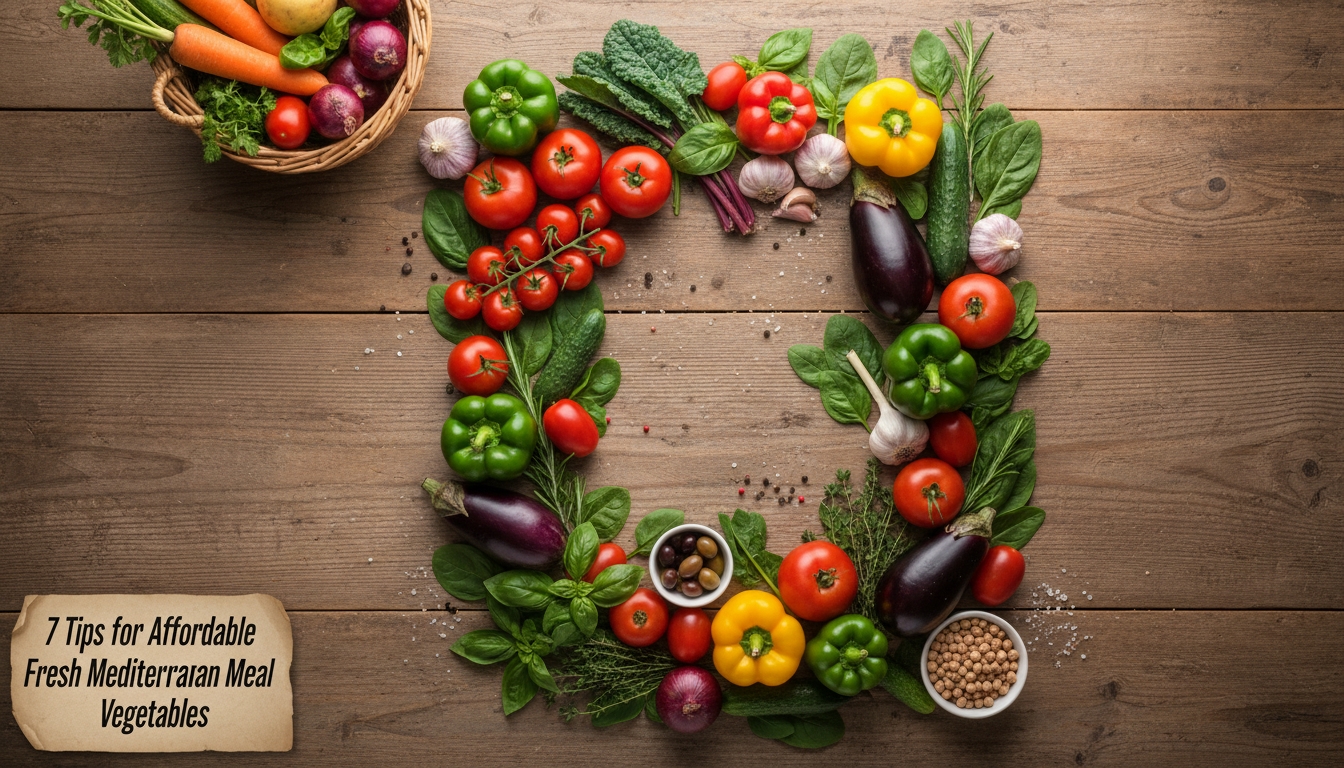
7 Tips for Affordable Fresh Mediterranean Meal Vegetables
Buy bulk Mediterranean staples like dried lentils, chickpeas, and olive oil for long‑lasting pantry basics. Hit the farmers’ market early to snag discounted arugula, spinach, and radicchio. Grow compact herbs—basil, oregano, thyme—in pots or window boxes. Purchase tomatoes, cucumbers, and peppers in season, store them in breathable bags, and freeze any excess. Keep greens crisp with damp paper towels or mesh bags, and use a simmering broth with smoked paprika, lemon zest, and fresh herbs to tie everything together. Keep reading to discover more tricks.
Pick Cheap Mediterranean Staples That Stay Fresh All Year
Ever wondered how to keep your Mediterranean pantry stocked without breaking the bank? Start by buying bulk jars of dried legumes—lentils, chickpeas, and fava beans. They’re cheap, shelf‑stable, and you can rehydrate them whenever you need a protein boost.
Next, stock up on olive oil in larger containers; it lasts years and adds authentic flavor to every dish.
Keep a stash of sun‑dried tomatoes in airtight tins—they’re inexpensive, nutrient‑dense, and perfect for sauces or salads.
Purchase whole garlic bulbs and onions in bulk; they’re the backbone of Mediterranean cooking and keep well when stored in a cool, dark place.
Finally, choose sturdy herbs like rosemary, thyme, and oregano, which dry quickly and retain aroma for months. By focusing on these long‑lasting staples, you’ll maintain a vibrant, budget‑friendly pantry all year round.
Shop the Farmers’ Market Early for Cheap Mediterranean Greens
Why rush to the farmers’ market early? Because the freshest Mediterranean greens arrive at dawn, and vendors discount them before the crowd spikes demand. You’ll find crisp arugula, tender baby spinach, and peppery radicchio at a fraction of the usual price. Arriving first lets you hand‑pick the brightest leaves, avoiding wilted or bruised bunches that later sellers push for higher margins. Bring a reusable bag, a cooler pack, and a short list of varieties you need for salads, sautés, or stews. Talk to the growers; they often share tips on storage and may offer “early‑bird” specials that aren’t advertised online. By shopping early, you lock in quality, stretch your budget, and keep your Mediterranean meals vibrant and nutritious all week long.
Grow Mediterranean Herbs & Leafy Greens in Small Spaces
Fresh herbs and leafy greens thrive even in tight quarters, so after snagging the best market produce you can keep the Mediterranean vibe alive right at home. Choose compact varieties—basil, oregano, thyme, and arugula—because they stay productive in pots or window boxes. Use a lightweight, well‑draining mix with a touch of compost; this prevents root rot and supplies steady nutrients. Place containers where they catch at least six hours of sunlight daily, or supplement with a modest LED grow light if your space lacks natural rays. Water consistently, keeping the soil moist but not soggy; a spray bottle works well for delicate seedlings. Trim regularly to encourage bushier growth and to harvest fresh leaves for salads, sauces, and garnishes. Rotate crops every few weeks to avoid pest buildup, and consider a vertical trellis for climbing herbs like rosemary. With these simple steps, you’ll enjoy a steady supply of aromatic greens without sacrificing space or budget.
Bulk‑Buy Mediterranean Tomatoes, Cucumbers & Peppers
You can take advantage of seasonal bulk purchasing to snag tomatoes, cucumbers, and peppers at a fraction of the regular price. Store them in a cool, dark place and use breathable bags to keep them fresh longer. By rotating your stock and using proper containers, you’ll cut waste and stretch your budget.
Seasonal Bulk Purchasing
Looking to stretch your grocery budget while keeping Mediterranean flavors vibrant? You can buy tomatoes, cucumbers, and peppers when they’re in season and the market price drops. Visit local farms or farmers’ markets early in the week; vendors often offer discounts for crates or bags. Compare unit prices per pound or per kilogram, and choose the biggest volume that fits your fridge space. If a stand has a “buy‑one‑get‑one‑free” deal, stock up and freeze excess in airtight bags for later use. Remember to inspect each vegetable for bruises—reject any that look damaged to avoid waste. By timing purchases with peak harvests, you lock in freshness, cut costs, and keep your Mediterranean dishes bright and affordable.
Cost‑Effective Storage Tips
When you bring home a bulk haul of tomatoes, cucumbers, and peppers, the key to keeping them crisp and flavorful is proper storage. First, sort by ripeness: keep ripe tomatoes at room temperature, away from direct sunlight, and move them to the fridge once they’re fully red. For cucumbers, wrap each in a paper towel, place them in a perforated bag, and store in the crisper drawer to retain moisture without sogginess. Peppers last longest when you leave their stems intact; store them in a sealed container with a damp cloth to prevent dehydration. Freeze excess produce by chopping tomatoes and peppers, spreading them on a tray, then transferring to zip‑top bags; cucumbers freeze best sliced and blanched briefly. Rotate stock weekly, using the oldest items first, and label containers with purchase dates to avoid waste. This systematic approach maximizes freshness while minimizing cost.
Store Mediterranean Veggies Properly to Keep Them Fresh
You’ll keep your Mediterranean veggies crisp by storing them in a cold‑storage container that lets excess moisture escape. Add a damp paper towel or a small herb‑preserving pouch to maintain the right humidity for herbs. This simple setup preserves flavor and texture for days.
Cold‑Storage Container Tips
Ever wondered how to keep Mediterranean veggies crisp and vibrant for weeks? Choose containers that breathe: perforated plastic bins or reusable mesh bags let excess moisture escape while preventing dehydration. If you prefer airtight jars, line the bottom with a paper towel to absorb stray droplets, then add another towel on top before sealing. Store leafy greens in a crisper drawer set to high humidity, but keep root vegetables like carrots and beets in a separate low‑humidity compartment to avoid soggy stems. Rotate containers weekly, moving older produce to the front so you use it first. Finally, keep the fridge door closed as much as possible; frequent opening raises temperature and accelerates wilting. These simple steps extend freshness without extra cost.
Herb‑Preserving Moisture Control
Keeping herbs fresh hinges on mastering moisture balance: too much dampness breeds mold, while too little dries them out. First, rinse herbs gently, then pat them dry with a paper towel. Wrap each bunch in a slightly damp cloth—just enough to stay cool, not soggy. Place the wrapped herbs in a perforated bag or a container with a loose lid to allow airflow.
For basil, store stems in a glass of water like a bouquet, covering leaves loosely with a plastic bag.
For parsley and cilantro, trim stems and submerge them in a shallow water tray, then cover with a damp towel. Check daily; if the cloth feels wet, replace it. This routine keeps flavor vivid and waste minimal.
Make Flavorful Broths & Sauces From Mediterranean Scraps
Ever wondered how kitchen scraps can become the star of your kitchen? You can turn carrot tops, onion skins, herb stems, and tomato cores into rich, Mediterranean‑inspired broths and sauces that boost flavor without extra cost. Start by gathering clean scraps in a sealed bag; the longer they sit, the richer the taste. Toss them into a pot with water, a splash of olive oil, and a pinch of sea salt. Simmer gently for 30‑45 minutes, then strain through a fine mesh. Use the liquid as a base for soups, risottos, or braised veggies, and reduce the rest with a dash of balsamic for a savory sauce. Keep a dedicated “scrap jar” on the counter, and you’ll never waste again.
- Carrot tops & peels – sweet, earthy depth
- Onion skins – mellow umami foundation
- Herb stems (parsley, cilantro, dill) – bright, aromatic lift
- Tomato cores & seeds – tangy, glossy finish
Pair Cheap Mediterranean Veggies With Budget‑Friendly Plant Protein
After you’ve extracted every last drop of flavor from your kitchen scraps, it’s easy to stretch those rich broths into hearty meals by pairing cheap Mediterranean vegetables with affordable plant proteins. Toss chopped zucchini, bell peppers, and eggplant into the simmering broth, then add a cup of cooked lentils or chickpeas for protein and texture. If you prefer beans, rinse a can of cannellini or black beans and stir them in; they absorb the broth’s aromatics instantly. For a quick fix, sprinkle crumbled tofu or tempeh cubes, seasoned with smoked paprika and a dash of lemon zest. Finish with a handful of fresh herbs—parsley, mint, or dill—to brighten the dish. This combo delivers a balanced, nutrient‑dense plate while keeping costs low, and the protein’s sturdy bite complements the soft, caramelized veggies perfectly. Enjoy a satisfying, Mediterranean‑inspired meal without breaking the bank.
Frequently Asked Questions
How Can I Preserve Mediterranean Herbs for Winter Use?
You can dry them, freeze them, or make herb‑oil blends. Slice, air‑dry on a screen, then store in airtight jars; or chop, pack in freezer bags, and drizzle with olive oil before freezing.
What Are the Cheapest Mediterranean Vegetables for a Low‑Sodium Diet?
You’ll find cucumbers, zucchini, bell peppers, tomatoes, and spinach cheapest; they’re naturally low‑sodium, fresh, and versatile for Mediterranean dishes, keeping costs down while supporting your diet.
Can I Substitute Canned Mediterranean Tomatoes for Fresh Ones in Sauces?
Yes, you can swap canned Mediterranean tomatoes for fresh in sauces; just drain, rinse, and adjust seasoning because canned varieties often contain added salt and a slightly different texture, so taste as you go.
Which Mediterranean Veggies Are Best for Quick, One‑Pot Meals?
You’ll love zucchini, bell peppers, eggplant, spinach, and cherry tomatoes—they cook fast, combine well, and keep your one‑pot Mediterranean dishes vibrant and budget‑friendly.
How Do I Make a Budget‑Friendly Mediterranean Veggie Stir‑Fry?
You’ll start by heating olive oil, then toss sliced zucchini, bell peppers, red onion, and cherry tomatoes. Add minced garlic, cumin, and oregano. Stir‑fry 5‑7 minutes, finish with lemon juice, salt, and pepper.
Conclusion
By sticking to these seven tips, you’ll keep your Mediterranean meals fresh, flavorful, and budget‑friendly all year long. Embrace cheap staples, shop early, grow what you can, buy in bulk, store right, turn scraps into soups, and pair veggies with affordable plant proteins. You’ll enjoy vibrant dishes without breaking the bank, and your pantry will stay stocked with nutritious, Mediterranean‑inspired goodness.


Table of Contents



No Comments