
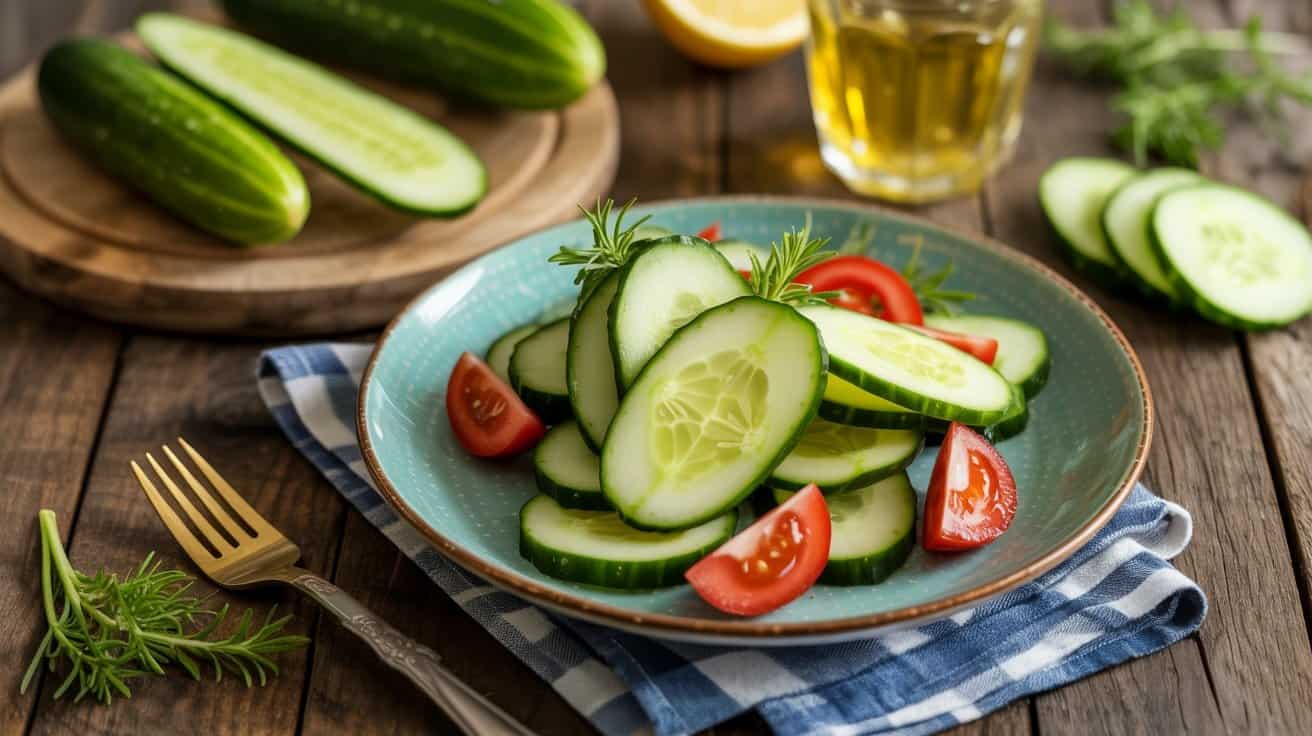
You’ll discover endless possibilities with fresh cucumbers through these versatile recipes. Transform them into tangy quick pickles ready in 30 minutes, creamy dill salads perfect for summer barbecues, or spicy Korean kimchi fermented to perfection. Try Asian smashed cucumbers with garlic-chili dressing, refreshing gazpacho, authentic Greek tzatziki, or cucumber-mint cocktails. Spiralize them into healthy noodle stir-fries or blend into cooling raita with toasted cumin. Each technique unlocks unique flavors and textures you won’t want to miss.
Table of Contents
Key Takeaways
- Quick pickles ready in 30 minutes using equal parts vinegar and water with sugar and salt create tangy cucumber sides.
- Fresh cucumber salads like creamy dill or Asian smashed versions offer crisp, refreshing accompaniments to grilled meats and sandwiches.
- Spiralized cucumber noodles make low-carb pasta alternatives for stir-fries with sesame-ginger sauces.
- Fermented cucumber kimchi develops complex flavors in 3-5 days using gochugaru, fish sauce, and beneficial bacteria.
- Chilled cucumber soups, tzatziki, and raita provide cooling yogurt-based dips and sides perfect for summer meals.
Classic Quick Pickled Cucumbers
Transform fresh cucumbers into tangy, crunchy pickles in just 30 minutes with this foolproof quick pickle method. You’ll need just five ingredients: cucumbers, white vinegar, water, sugar, and salt.
Slice your cucumbers thinly—about 1/8 inch thick works best for quick absorption of the brine.
Combine equal parts vinegar and water in a saucepan with two tablespoons of sugar and one tablespoon of salt per cup of liquid. Heat until the sugar and salt dissolve completely, then pour this hot mixture over your sliced cucumbers. Add garlic, dill, or red pepper flakes if you’d like extra flavor.
These brined cukes are perfect for lunch packing since they stay crisp and flavorful for up to two weeks when refrigerated. You can eat them after 30 minutes, but they’ll taste even better after a few hours. Use them on sandwiches, burgers, or as a refreshing side dish that cuts through rich foods.
Creamy Cucumber Dill Salad
While quick pickles offer a tangy crunch, sometimes you’ll want something richer and more indulgent. This creamy cucumber dill salad delivers exactly that satisfaction. You’ll start by thinly slicing two pounds of cucumbers and half a red onion. Salt them generously and let them drain for thirty minutes to remove excess moisture.
Mix your dressing with sour cream, mayonnaise, white vinegar, and sugar. The fresh dill pairing transforms this simple base into something special—add two tablespoons of chopped dill for the perfect herbaceous note. Once you’ve squeezed the water from your cucumbers, fold them into the dressing.
The texture contrast makes this salad irresistible. Crisp cucumber slices swim in velvety cream while the dill adds bright pops of flavor. You can serve it immediately, but it’s even better after chilling for an hour. This versatile side complements grilled meats, sandwiches, or stands alone as a refreshing summer dish.
Asian Smashed Cucumber With Garlic and Chili
When you’re craving bold flavors with minimal effort, this Asian smashed cucumber dish delivers an explosion of garlic, chili, and tangy seasonings.
You’ll start by smashing cucumbers with a rolling pin or knife’s flat side until they crack and split. This technique creates irregular surfaces that absorb the dressing better than clean cuts.
Mix minced garlic, chili flakes, soy sauce, and your vinegar pairing—rice vinegar works best, though black vinegar adds depth. Add sesame oil and a touch of sugar to balance the heat.
Pour this mixture over your smashed cucumbers and let them marinate for at least fifteen minutes.
For table presentation, arrange the cucumbers on a white platter to highlight the vibrant sauce. Garnish with sesame seeds and fresh cilantro.
You can prepare this dish two hours ahead, but don’t exceed that timeframe or the cucumbers will become too soft. Serve it cold as an appetizer or alongside grilled meats.
Chilled Cucumber Gazpacho
On hot summer days, nothing beats the refreshing coolness of cucumber gazpacho that you can whip up without turning on the stove. You’ll need four large cucumbers, peeled and chopped, along with green bell pepper, garlic, Greek yogurt, and fresh herbs like dill or mint. Blend everything with olive oil, lemon juice, and salt until you achieve your preferred consistency—smooth or slightly chunky.
Chill your chilled cucumber gazpacho for at least two hours before serving. You’ll taste the difference when it’s properly cold. Pour it into bowls and top with diced cucumber, croutons, or a drizzle of olive oil.
For summer soup pairings, you can’t go wrong with grilled shrimp skewers or crusty bread. The gazpacho’s cool, tangy profile complements spicy dishes beautifully. You’ll also love serving it as a starter before grilled fish or chicken. Make a double batch—it’ll keep for three days and tastes even better the next day.
Greek Tzatziki Sauce
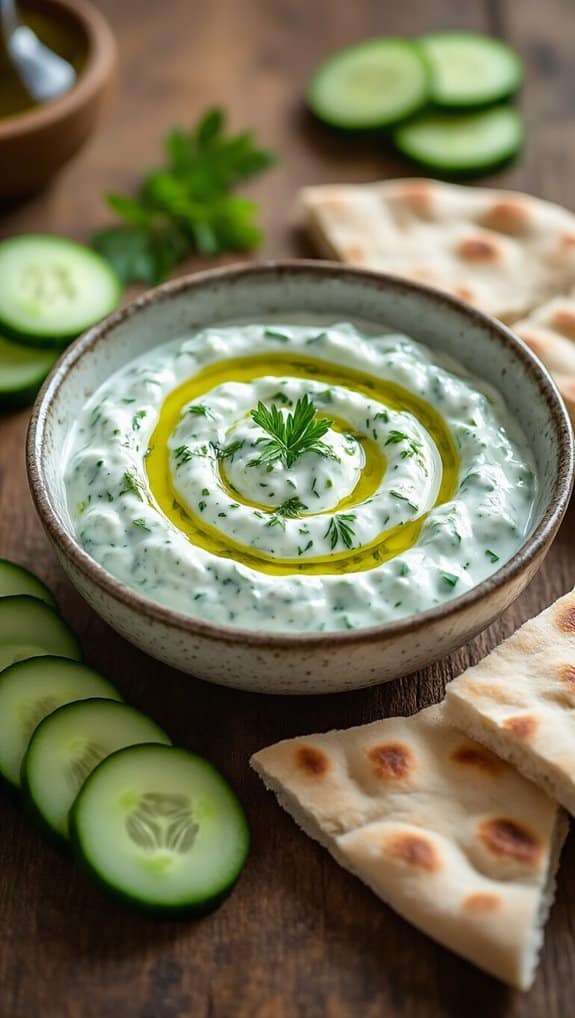
Whether you’re grilling lamb, serving gyros, or need a cooling dip for vegetables, Greek tzatziki sauce transforms simple cucumbers into a Mediterranean staple. You’ll need thick Greek yogurt, grated cucumber, garlic, and fresh dill to create this versatile condiment.
Start by grating cucumbers and squeezing out excess moisture through cheesecloth. Mix the drained cucumber with yogurt, minced garlic, olive oil, and lemon juice. Different yogurt textures affect the final consistency—full-fat creates richness while strained versions yield thickness.
| Ingredient | Amount | Purpose |
|---|---|---|
| Greek yogurt | 2 cups | Creamy base |
| Cucumber | 1 large | Fresh crunch |
| Garlic cloves | 2-3 | Pungent kick |
| Fresh dill | 2 tbsp | Herbal brightness |
Add Greek herbs like oregano or mint for variation. Salt your mixture and let it rest for flavors to meld. You’ve created an authentic sauce that’ll elevate any Mediterranean dish or serve as a refreshing standalone dip.
Cucumber Tea Sandwiches With Herbed Cream Cheese
You’ll create perfect cucumber tea sandwiches by mastering two essential elements: the classic preparation techniques that ensure crisp, dry cucumbers and the right herb combinations for your cream cheese spread.
Start by salting and draining your cucumber slices for 30 minutes to remove excess moisture, then pat them completely dry before assembly.
Your herb selection can range from traditional dill and chives to more adventurous combinations like basil-mint or tarragon-parsley, each bringing its own character to these elegant finger sandwiches.
Classic Preparation Methods
Nothing beats the elegance of cucumber tea sandwiches when you’re looking to master classic cucumber preparations.
You’ll start by selecting firm, fresh cucumbers and slicing them paper-thin using a mandoline or sharp knife. Pat the slices dry with paper towels to remove excess moisture—this prevents soggy sandwiches.
For the herbed cream cheese, you’ll blend softened cream cheese with fresh dill, chives, and a pinch of salt.
Spread this mixture onto crustless white bread, then layer your cucumber slices in overlapping rows.
Top with another bread slice and cut into triangles or rectangles.
While preparing cucumbers, consider water conservation by reusing the cucumber water for your garden.
If you’re growing your own, seed saving from heirloom varieties ensures you’ll have perfect sandwich cucumbers year after year.
Herb Selection Guide
The right herbs can transform your cucumber tea sandwiches from simple to sophisticated. You’ll want to select herbs that complement cucumber’s mild, refreshing taste without overpowering it.
Fresh dill remains the classic choice, offering a bright, tangy note that pairs naturally with cucumber’s coolness. Consider chives for a gentle onion flavor or mint for unexpected freshness.
When choosing herbs, think about their aromatic profiles—delicate herbs like parsley and tarragon won’t compete with cucumber’s subtlety. Basil adds sweetness while cilantro brings citrusy undertones.
These selections mirror successful companion plantings in gardens where these herbs naturally thrive alongside cucumbers.
Mix your chosen herbs directly into cream cheese, using roughly one tablespoon of fresh herbs per eight ounces. You can combine two complementary herbs for complexity, but don’t exceed three varieties.
Spicy Korean Cucumber Kimchi
You’ll need gochugaru (Korean chili flakes), fish sauce, and fresh ginger to create authentic kimchi flavor with your cucumbers.
The fermentation process typically takes 2-3 days at room temperature, though you can adjust timing based on your preferred sourness level.
Check your kimchi daily by tasting it—once it reaches the right balance of tangy and spicy, transfer it to the refrigerator to slow fermentation.
Essential Kimchi Ingredients
Before you can create authentic spicy Korean cucumber kimchi, you’ll need to gather several key ingredients that give this fermented dish its distinctive flavor and texture. You’ll want gochugaru (Korean chili flakes) for heat, fish sauce for umami depth, and fresh garlic and ginger for aromatic complexity. Don’t forget coarse sea salt for the initial brining process.
| Ingredient | Purpose |
|---|---|
| Gochugaru | Adds heat and color |
| Fish Sauce | Provides umami and probiotic benefits |
| Sea Salt | Draws moisture for fermentation |
| Scallions | Adds fresh, sharp flavor |
You’ll also need proper fermentation vessels—glass jars or ceramic crocks work best. They’re non-reactive and won’t affect your kimchi’s taste. Rice flour paste acts as a binding agent, while sugar feeds the beneficial bacteria during fermentation.
Fermentation Time Tips
When fermenting cucumber kimchi, temperature directly controls how quickly your batch develops its signature tangy flavor and probiotic richness. You’ll need ambient monitoring to track your kitchen’s temperature throughout the process. At 68-72°F, expect fermentation to complete in 3-5 days. Warmer conditions accelerate the process, while cooler temperatures slow it down.
Don’t use cold jars straight from the refrigerator—they’ll shock the fermentation process and delay bacterial activity. Instead, let your containers reach room temperature before adding ingredients. You’ll know fermentation’s progressing when bubbles form and the brine becomes cloudy. Taste daily after day two to catch your preferred sourness level. Once it’s ready, refrigerate immediately to halt fermentation. Remember, over-fermented cucumber kimchi becomes mushy and loses its crisp texture.
Cucumber Mint Cooler Cocktails
Nothing beats the refreshing combination of cucumber and mint in a cocktail, especially during warm weather gatherings. You’ll find these cooling ingredients create the perfect balance of crisp and aromatic flavors that’ll impress your guests every time.
Start with proper mint muddling technique. Don’t crush the leaves aggressively; instead, gently press them against your glass’s bottom to release essential oils without creating bitter compounds. You’ll want about 8-10 fresh mint leaves per cocktail.
For the cucumber element, you’ve got options. Slice fresh cucumbers into thin rounds for garnish, or muddle a few pieces directly in the shaker. Add cucumber bitters for an extra layer of complexity that won’t overpower the drink’s delicate profile.
Combine with vodka or gin, fresh lime juice, and simple syrup. Shake vigorously with ice, then strain into a chilled glass. Top with soda water and garnish with cucumber ribbons and a mint sprig.
Sesame Ginger Cucumber Noodle Stir-Fry
You’ll transform fresh cucumbers into crispy noodles using a spiralizer, creating the perfect base for this Asian-inspired stir-fry.
Start by preparing your sauce with sesame oil, fresh ginger, soy sauce, and rice vinegar, whisking until the flavors blend smoothly.
Pat your cucumber noodles dry before tossing them in the hot wok to prevent excess moisture from diluting your sauce.
Spiralizing Fresh Cucumbers
Transforming fresh cucumbers into delicate noodles opens up exciting possibilities for light, refreshing meals that won’t weigh you down. You’ll need a spiralizer, julienne peeler, or vegetable peeler to create these versatile strands.
Start with firm, straight cucumbers for best results. Your peeling techniques matter—remove the skin completely or leave strips for added texture and color. For seed removal, slice cucumbers lengthwise and scoop out the watery center with a spoon. This prevents soggy noodles.
Position your cucumber in the spiralizer and turn steadily to create uniform spirals. If you’re using a peeler, apply consistent pressure while drawing the blade down the length. Salt your noodles lightly and let them drain for 10 minutes to remove excess moisture before cooking or serving raw.
Sauce Preparation Tips
Once you’ve mastered creating cucumber noodles, the right sauce can transform them into a memorable stir-fry dish. You’ll need to focus on flavor balancing between sweet, salty, and acidic components. Mix two tablespoons of sesame oil with one tablespoon each of soy sauce, rice vinegar, and honey. Add fresh ginger and garlic for depth.
Perfect emulsification techniques ensure your sauce won’t separate:
- Whisk ingredients vigorously in a circular motion
- Add oil slowly while continuously mixing
- Use room-temperature ingredients for better binding
You’re creating an emulsion that’ll cling to every cucumber strand. Test the sauce’s consistency—it should coat the back of a spoon without dripping. Adjust sweetness with honey or tang with extra vinegar until you’ve achieved the ideal balance for your palate.
Cucumber Raita With Toasted Cumin
Cucumber raita with toasted cumin frequently appears on Indian restaurant menus, but you can easily make this cooling yogurt dish at home in under ten minutes. You’ll need just one cup of thick yogurt, half a diced cucumber, and a teaspoon of cumin seeds toasted until fragrant.
Start by dry-roasting the cumin in a small pan over medium heat for thirty seconds. Crush the seeds lightly and mix them into your yogurt with a pinch of salt. Fold in the cucumber pieces and you’re done. For yogurt alternatives, try Greek yogurt for extra thickness or dairy-free coconut yogurt for vegan options.
Regional variations add unique twists to this classic. Northern Indian versions include mint leaves, while South Indian styles incorporate curry leaves and mustard seeds. Bengali raita features a touch of sugar, and Punjabi versions add chopped onions. Serve your raita chilled alongside spicy curries, biryanis, or grilled meats.
Frequently Asked Questions
How Do I Choose the Best Cucumbers at the Grocery Store?
You’ll want to perform a firmness test by gently squeezing cucumbers – they should feel solid, not soft or mushy.
Check for color uniformity; avoid yellowing or dark spots.
Do an aroma check at the ends – fresh cucumbers smell mildly sweet, not sour.
Look for stem presence as recently harvested cucumbers often have small stem remnants.
Choose medium-sized ones that feel heavy for their size with bright, dark green skin.
Can I Freeze Cucumbers for Later Use?
You can freeze cucumbers, but they’ll become soft and watery when thawed, making texture preservation nearly impossible.
They won’t work for fresh salads after freezing. However, you can use frozen cucumbers in smoothies, cold soups, or water infusions.
For better results, try freezer pickling – combine sliced cucumbers with vinegar, sugar, and salt before freezing. This method maintains more flavor and creates a better texture for later use.
Should I Peel Cucumbers Before Eating Them?
You don’t need to peel cucumbers before eating them, but you might want to in certain situations.
If they’ve a thick wax coating from the grocery store, you’ll want to peel or thoroughly wash them.
Some people also peel cucumbers to reduce seed bitterness, especially in older or larger varieties where the skin can develop a slightly bitter taste.
Otherwise, the peel contains nutrients and adds texture.
What’s the Difference Between English, Persian, and Regular Cucumbers?
You’ll find English and Persian cucumbers are seedless varieties with thin, edible skins and mild flavors.
English cucumbers are long and wrapped in plastic, while Persian cucumbers are shorter and crunchier.
Regular cucumbers have thicker, waxed skins with more seeds and stronger flavor.
They’re often used as pickling cukes when harvested small.
Persian cucumbers offer the best crunch for salads, while English ones work great for sandwiches.
How Long Do Fresh Cucumbers Last in the Refrigerator?
You’ll typically get 7-10 days of storage duration from fresh cucumbers in your refrigerator’s crisper drawer.
Keep them whole and unwashed until you’re ready to use them. Once cut, they’ll last 2-3 days in an airtight container.
Watch for spoilage signs like soft spots, yellowing, wrinkled skin, or a slimy texture. If you notice any mold or sour smell, it’s time to toss them out immediately.
Conclusion
You’ve discovered nine incredible ways to transform humble cucumbers into exciting dishes that’ll impress everyone at your table. Whether you’re craving tangy pickles, cooling tzatziki, or spicy kimchi, you’ll find these recipes perfect for any occasion. Don’t let those cucumbers sit forgotten in your crisper drawer – grab them and start experimenting with these versatile preparations. You’ll soon realize that cucumbers aren’t just for salads anymore; they’re your new kitchen superstar waiting to shine.


No Comments