
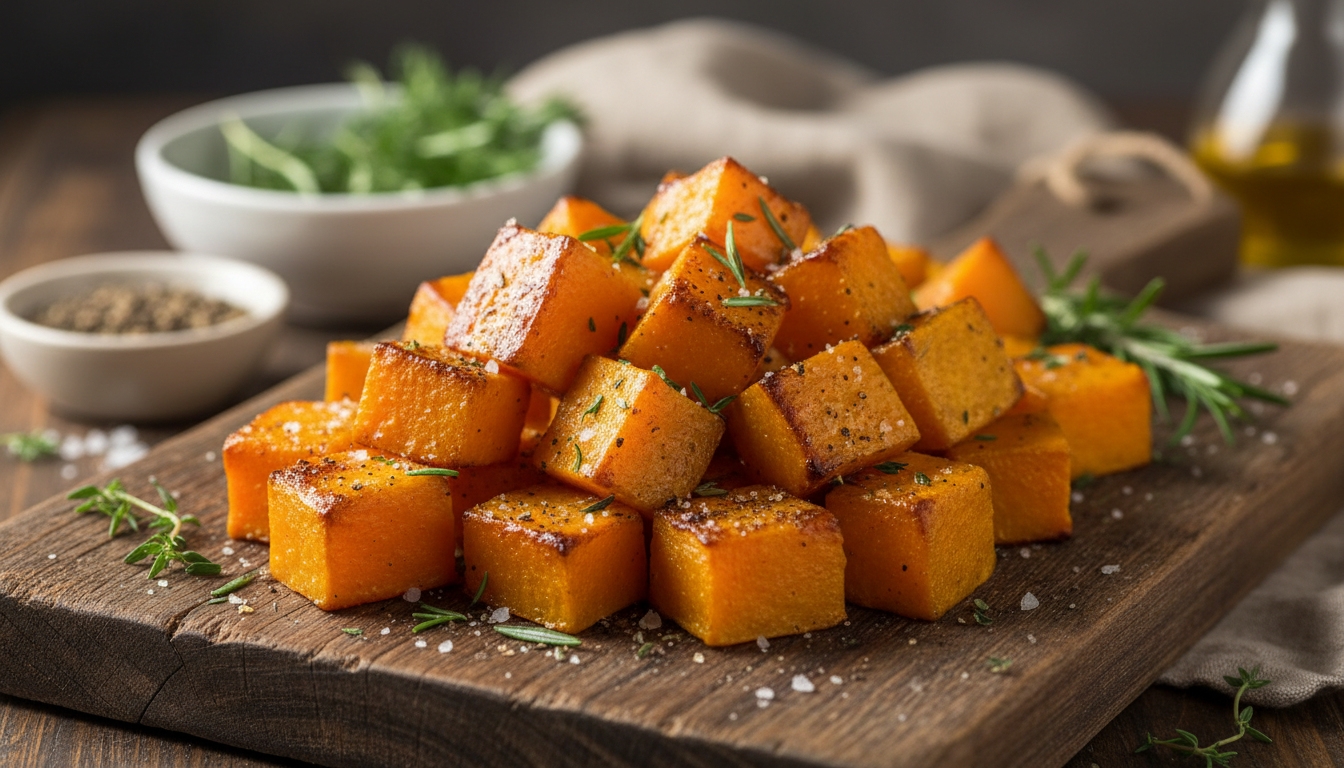
Preheat your oven to 400°F, then toss cubed butternut squash with 3 Tbsp olive oil (or half oil, half butter) per pound, 1 tsp salt, ½ tsp pepper, 1 tsp Italian seasoning, and 1 tsp garlic powder. Spread the cubes in a single layer on a rimmed sheet pan, avoiding crowding, and bake 10 minutes. Flip them, then continue roasting another 10‑15 minutes until they’re deep amber, caramelized, and tender. If you keep going, you’ll discover tricks for avoiding sogginess and tasty add‑ins.
Key Takeaways
- Preheat the oven to a steady 400 °F before adding the squash.
- Toss cubed butternut squash with 3 Tbsp olive oil (or 1.5 Tbsp olive + 1.5 Tbsp butter), 1 tsp salt, ½ tsp pepper, 1 tsp Italian seasoning, and 1 tsp garlic powder.
- Spread the coated cubes in a single layer on a rimmed sheet pan, avoiding crowding to prevent steam and promote caramelization.
- Bake 10 minutes, then shake or toss the pan; continue baking another 10–15 minutes until the pieces are deep amber and tender.
- For extra flavor, add ¼ tsp smoked paprika or 1 tsp maple‑brown sugar per pound, and ensure cubes are dry before oiling for a glossy, non‑soggy result.
Roast Butternut Squash Perfectly Every Time
A perfectly roasted butternut squash starts with a hot oven and a single layer of cubes. You’ll want the oven at 400°F so the heat sears the surface before the interior softens. Spread the cubed squash on a sheet pan without overlapping; crowding traps steam and prevents caramelization. Toss the pieces with olive oil, salt, and pepper just before they hit the heat, then give them a quick shake halfway through the 20‑25‑minute bake. This technique appears in many butternut squash recipes because it balances crisp edges with a tender center. For extra flavor, you can drizzle a little melted butter during the last minute, but the core method stays the same: high heat, even spacing, and a brief, vigorous toss. Follow these steps, and you’ll nail the texture and taste every time, no matter which butternut squash recipes you explore next.
Pick Seasonings and Oil Ratios for Roasting Butternut Squash
The hot‑oven technique you just mastered sets the stage for fine‑tuning flavor, so let’s choose seasonings and oil ratios that complement the natural sweetness of butternut squash. Start with a balanced oil coating: 3 tbsp olive oil per pound of squash gives a glossy sheen without sogginess. If you love richer depth, swap half the olive oil for melted butter; keep the total volume at 3 tbsp per pound. Next, layer seasonings that amplify caramel notes while adding contrast. A classic mix of salt, pepper, Italian seasoning, and garlic powder works every time, but feel free to experiment with smoked paprika or maple‑brown sugar for a sweet‑smoky twist. Remember, the oil not only prevents sticking but also carries fat‑soluble spices into the flesh, ensuring each bite bursts with balanced flavor.
- 3 tbsp olive oil per pound (or 1.5 tbsp olive + 1.5 tbsp butter)
- 1 tsp salt, ½ tsp black pepper, 1 tsp Italian seasoning, 1 tsp garlic powder
- Optional add‑ins: ¼ tsp smoked paprika or 1 tsp maple‑brown sugar per pound.
Bake Roasted Butternut Squash for Ideal Caramelization – Step‑by‑Step
Ever wondered how to lock in that sweet‑caramelized crust without drying the flesh? Preheat your oven to 400 °F and let it reach a steady temperature before the squash even touches the rack. While it heats, toss cubed butternut squash with olive oil, salt, pepper, Italian seasoning, and garlic powder—make sure each piece is evenly coated. Spread the cubes on a rimmed baking sheet in a single layer; crowding traps steam and prevents browning.
Slide the sheet into the oven and bake 10 minutes, then pull it out and give the squash a quick toss to expose untouched sides. Return it for another 10‑15 minutes, watching for a deep amber hue and a tender interior. If you like extra richness, drizzle melted butter over the cubes during the final five minutes; the butter will caramelize with the sugars, creating a glossy, sweet‑savory crust. Remove from the oven, let it rest a minute, and serve immediately.
Fix Common Issues When Roasting Butternut Squash
If the squash ends up soggy or unevenly browned, it’s usually because the pieces were too crowded or the oven temperature dropped during baking. First, give each cube space on the sheet; overcrowding traps steam and prevents caramelization. Second, preheat the oven fully and keep the door closed—temperature dips cause the squash to steam instead of roast. Third, use a high‑heat oil and avoid excess moisture from the squash itself; pat the cubes dry before tossing.
Quick fixes
- Spread out: Use two sheets or a larger pan to keep pieces separated.
- Maintain heat: Set the oven to 425 °F and avoid opening the door until halfway through.
- Dry & oil: Pat cubes with paper towels, then coat lightly with olive oil and seasoning.
These tweaks ensure crisp edges, deep color, and the perfect buttery bite you expect.
Serve Roasted Butternut Squash With Creative Variations
Craving a fresh twist on your roasted butternut squash? Toss it with a drizzle of maple syrup and a pinch of smoked paprika for a sweet‑smoky glaze, then finish with toasted pecans. For a Mediterranean spin, mix in chopped olives, sun‑dried tomatoes, and crumbled feta, letting the cheese melt into the warm cubes. If you love crunch, sprinkle toasted pumpkin seeds and a dash of chili flakes for heat. Turn the squash into a hearty salad by pairing it with arugula, shaved Parmesan, and a lemon‑vinaigrette; the bitter greens balance the caramelized sweetness. For a creamy option, stir in a spoonful of ricotta or a swirl of coconut yogurt, then garnish with fresh herbs like thyme or cilantro. Finally, blend the roasted pieces into a velvety soup, adding broth, a splash of orange juice, and a swirl of cream for a comforting finish. Enjoy experimenting!
Frequently Asked Questions
Can I Use Fresh Herbs Instead of Dried Italian Seasoning?
Yes, you can swap dried Italian seasoning for fresh herbs; just chop a tablespoon of basil, oregano, and thyme, toss them with the squash, and keep an eye on the cooking time.
Will Adding Maple Syrup Affect Caramelization?
Yes, maple syrup will help caramelization, but add it after the squash is mostly cooked; otherwise it may burn. Drizzle it in the last five minutes, toss gently, and you’ll get a glossy, sweet crust.
Is It Okay to Roast the Squash at 425°F for Faster Cooking?
Yes, you can roast at 425°F for quicker cooking, but keep an eye on it—higher heat speeds caramelization, so stir or flip halfway to prevent burning and ensure even tenderness.
How Long Can Leftover Roasted Butternut Squash Be Stored Safely?
You can keep leftover roasted butternut squash in the fridge for up to four days. Store it in an airtight container, and reheat it thoroughly before eating to ensure safety.
Can I Freeze Roasted Butternut Squash for Later Use?
Yes, you can freeze it. Let the roasted squash cool, spread it on a tray, freeze until solid, then transfer to airtight bags. Reheat in the oven or microwave, adding a splash of broth if needed.
Conclusion
Now’ve mastered the art of perfectly roasted butternut squash—cubes crisped on the edges, buttery inside, and seasoned just right. The high‑heat oven and single‑layer spread guarantee caramelization without steaming. Toss with a splash of butter or fresh herbs for extra depth, and you’ve got a versatile side, salad topper, or grain‑bowl base. It’s quick, elegant, and ready to elevate any dish with minimal effort.


No Comments