
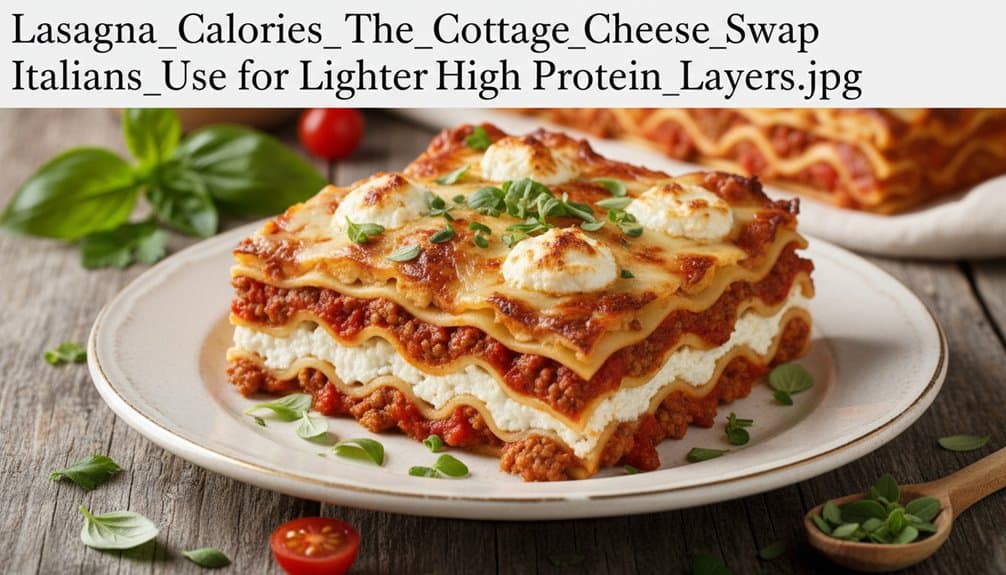
You’ll slash 210 calories and nearly double your protein intake per cup when you swap ricotta for cottage cheese in lasagna. This traditional Italian technique delivers 25 grams of protein at just 220 calories per cup, compared to ricotta’s 14 grams at 430 calories. Simply blend drained cottage cheese until smooth, mix in beaten egg and cornstarch for binding, then layer between pasta sheets. Master these techniques to transform your lasagna into a nutritious powerhouse.
Table of Contents
Key Takeaways
- Cottage cheese contains 220 calories per cup versus ricotta’s 430 calories, cutting lasagna calories nearly in half.
- Each cup provides 25 grams of protein compared to ricotta’s 14 grams, creating more filling, muscle-supporting layers.
- Blending drained cottage cheese for 30-45 seconds creates a smooth, ricotta-like texture perfect for spreading.
- Adding beaten egg and cornstarch prevents watery separation while maintaining the lighter calorie profile.
- The swap reduces saturated fat content while enhancing absorption of herbs and garlic in traditional Italian seasonings.
Why Cottage Cheese Creates Superior Nutritional Value in Traditional Lasagna
When you’re choosing between ricotta and cottage cheese for your lasagna, cottage cheese delivers nearly twice the protein per serving while cutting calories by 30-40%. You’ll get 14 grams of protein per half-cup of cottage cheese versus just 7 grams from ricotta. This protein boost transforms your lasagna’s nutritional macronutrient ratios, shifting the dish from carb-heavy to protein-forward.
Your nutrient density analysis reveals cottage cheese’s advantages extend beyond protein. You’re getting more calcium, B vitamins, and selenium while consuming less saturated fat. The lower fat content doesn’t compromise texture—cottage cheese creates equally creamy layers when properly drained and seasoned.
You’ll find cottage cheese’s naturally tangy flavor enhances herb and garlic notes better than mild ricotta. Its curds break down during baking, creating pockets that absorb sauce flavors throughout each layer. This swap means you’re serving a lasagna that’s both nutritionally superior and remarkably satisfying.
The Complete Calorie and Protein Comparison Between Ricotta and Cottage Cheese Layers
Breaking down the numbers reveals stark differences in how these cheeses impact your lasagna’s nutritional profile. You’ll find that cottage cheese delivers 25 grams of protein per cup versus ricotta‘s 14 grams, while containing just 220 calories compared to ricotta’s 430. This macronutrient breakdown shows cottage cheese provides more than double the protein at half the calories.
When you examine nutrition density, cottage cheese wins decisively. You’re getting 45% of your protein needs from one cup while consuming only 11% of a 2,000-calorie diet. Ricotta requires you to spend 22% of your daily calories for just 28% of protein requirements. The fat content tells another story – ricotta packs 32 grams per cup, mostly saturated, while cottage cheese contains only 10 grams. You’ll also benefit from cottage cheese’s higher calcium levels and B vitamins, making each lasagna layer work harder for your health goals.
Essential Techniques for Achieving Perfect Texture When Substituting Cottage Cheese
Although cottage cheese offers superior nutritional benefits, you’ll need specific preparation techniques to match ricotta’s smooth, creamy texture in your lasagna. Start by draining excess liquid from your cottage cheese using a fine-mesh strainer for 15 minutes. This prevents watery layers that’ll compromise your dish’s structure.
For optimal smooth consistency, blend the drained cottage cheese in a food processor for 30-45 seconds until it’s completely lump-free. You can’t skip this step if you want restaurant-quality results. Mix in one beaten egg per pound of cottage cheese to enhance binding and create silkier layers.
Consider adding a tablespoon of cornstarch to absorb remaining moisture and prevent separation during baking. Season with garlic powder, Italian herbs, and freshly grated Parmesan to mask any tangy notes. Press each layer firmly with a spatula to eliminate air pockets. These techniques ensure your healthier lasagna doesn’t sacrifice the luxurious mouthfeel everyone expects.
Building Your First High-Protein Cottage Cheese Lasagna With Classic Italian Methods
Since you’ve mastered the texture techniques, you’re ready to construct a protein-packed lasagna that honors traditional Italian layering methods. Start by preparing your homemade pasta sheets—roll them thin enough to cook evenly but thick enough to support cottage cheese’s moisture. You’ll need six to eight sheets for a standard 9×13 pan.
Create your base with a light tomato sauce coating, then lay your first pasta sheet. Spread a quarter-inch layer of seasoned cottage cheese, avoiding thick deposits that won’t heat through. Add your meat sauce sparingly—you’re building flavor, not drowning layers. Repeat this sequence three times, pressing gently after each tier to eliminate air pockets.
For the final layer, skip cottage cheese alternatives like ricotta blends. Instead, top with pasta, sauce, and a modest mozzarella sprinkle. This restraint prevents excess moisture while maintaining structure. Bake at 375°F for 45 minutes, then rest for 15 minutes before cutting.
Frequently Asked Questions
Can I Freeze Lasagna Made With Cottage Cheese Instead of Ricotta?
Yes, you can freeze lasagna made with cottage cheese. The cottage cheese substitution quality remains good when frozen properly.
You’ll want to wrap it tightly in plastic wrap and aluminum foil to prevent freezer burn. During the freezing process considerations, remember that cottage cheese has higher moisture content than ricotta, so it might release extra liquid when thawed. You’ll get best results freezing it before baking, then thawing overnight before cooking.
How Long Does Cottage Cheese Lasagna Last in the Refrigerator?
You’ll find cottage cheese lasagna stays fresh for 3-5 days when stored properly in your refrigerator. Keep your refrigerator temperature at or below 40°F to maximize storage duration.
You should cover the dish tightly with plastic wrap or aluminum foil, or transfer portions to airtight containers. If you notice any off smells, mold, or texture changes, it’s time to toss it. Don’t risk eating lasagna that’s been refrigerated longer than five days.
Which Cottage Cheese Fat Percentage Works Best for Lasagna Recipes?
You’ll get the best results with whole milk cottage cheese containing 4% fat, which creates creamier, richer layers that won’t dry out during baking. While low fat cottage cheese works and saves calories, it tends to release more water and can make your lasagna watery.
If you’re watching calories but want better texture, choose 2% cottage cheese as a compromise. Drain any variety well before layering to prevent sogginess.
Will Lactose-Intolerant People Tolerate Cottage Cheese Better Than Ricotta?
You’ll likely face similar digestibility concerns with cottage cheese since it contains roughly the same lactose levels as ricotta – about 3-4% each. Neither cheese offers relief for lactose intolerance.
You’re better off exploring milk protein alternatives like lactose-free cottage cheese brands, tofu ricotta, or cashew-based substitutes for your lasagna. These options maintain the creamy texture you want while eliminating the lactose that triggers your symptoms.
Do Authentic Italian Restaurants Actually Use Cottage Cheese in Lasagna?
You won’t find cottage cheese in authentic Italian restaurants’ traditional Italian recipes. They’ll use ricotta, béchamel, or mozzarella instead.
Cottage cheese is actually an American adaptation that became popular in homemade lasagna variations during the mid-20th century when Italian immigrants couldn’t easily find ricotta. While it’s common in American-Italian cooking, you’re looking at a distinctly non-authentic substitution that traditional Italian chefs would typically avoid in their kitchens.
Conclusion
You’ve discovered how cottage cheese transforms traditional lasagna into a protein-packed, lighter meal without sacrificing authentic Italian flavor. By swapping ricotta for cottage cheese, you’ll cut calories while boosting protein in every layer. Remember to drain excess moisture and blend for smoothness when you’re ready to build your first batch. This simple substitution delivers the comfort food you’re craving with nutritional benefits that’ll keep you satisfied longer. Your lighter lasagna journey starts now.


No Comments