
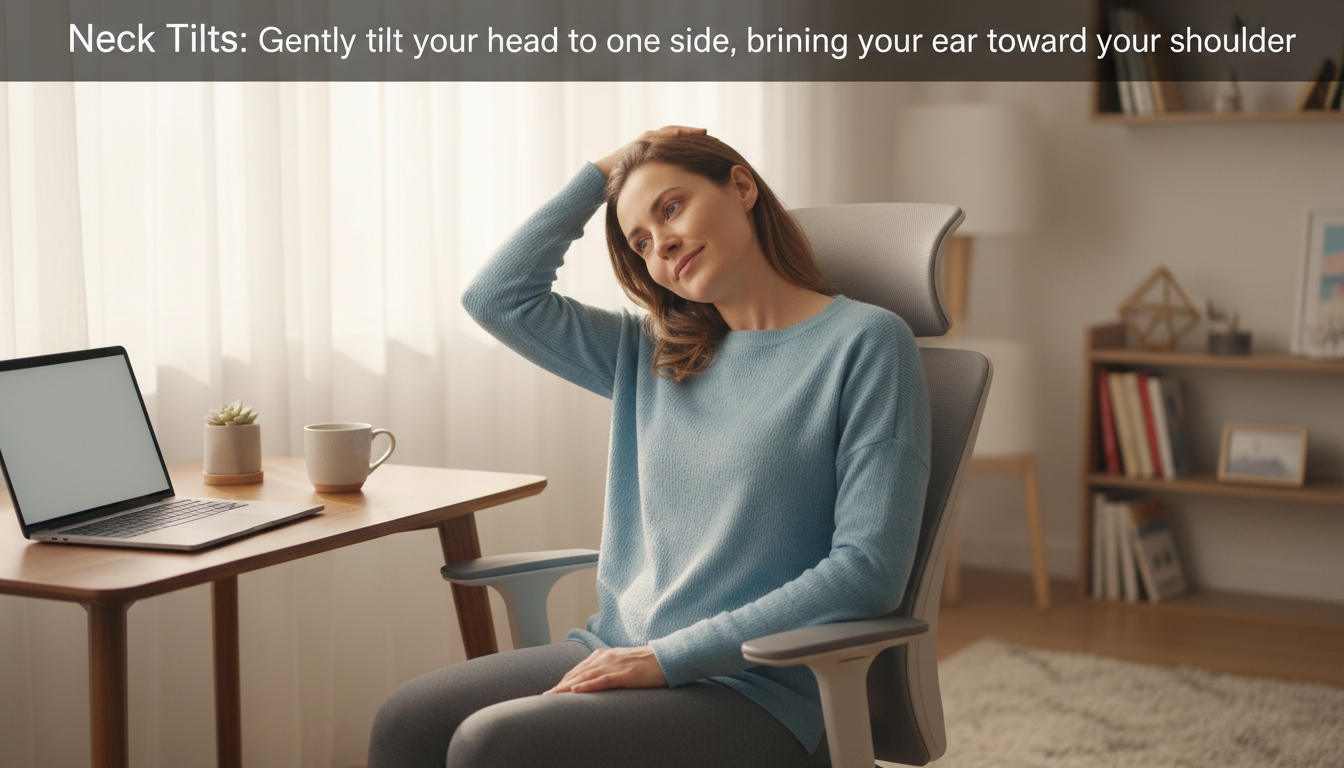
Sit upright, roll your head clockwise eight times, then reverse; shrug your shoulders up to your ears, hold two seconds, release, repeat ten times, and do fifteen forward arm circles before reversing. Perform a seated cat‑cow: inhale to arch, exhale to round, for 8–10 cycles. Stretch hamstrings by placing a heel on the desk, hinging at the hips, hold 20–30 seconds each side. Flex and extend wrists, hold each for 15 seconds, then circle ten times. Finish with a standing quad pull‑down and a 60‑second full‑body reset; keep going for deeper guidance.
Warm‑up: Simple Neck Rolls for Office Stretches
Because you spend hours hunched over a screen, a quick neck roll is the perfect warm‑up before any desk stretch. Sit upright, shoulders relaxed, and let your chin rest near your chest. Gently guide your head clockwise, moving in a smooth, controlled arc. Complete eight rotations, then reverse direction for another eight. Keep movements fluid; avoid jerking or forcing the motion. This simple routine increases blood flow to cervical muscles, reduces stiffness, and prepares the spine for broader stretches.
If you feel tension, pause and breathe deeply, allowing the muscles to relax before proceeding. Aim for a consistent rhythm, and notice how the range of motion improves after each set. Incorporating neck rolls into your daily routine can prevent chronic discomfort, enhance posture, and make longer desk stretches feel more comfortable and effective.
Shoulder Shrugs & Arm Circles for Office Stretches
A handful of shoulder shrugs and arm circles can instantly release tension built up from long hours at the desk. Start by lifting both shoulders toward your ears, hold for two seconds, then drop them back down; repeat ten times. This simple motion re‑engages trapped muscles and improves blood flow.
Next, extend your arms out to the sides at shoulder height. Begin small circles, gradually expanding the radius; do fifteen rotations forward, then reverse. Keep your core engaged and breathe steadily throughout.
These movements target the upper trapezius, deltoids, and rotator cuffs, which often stiffen when you type or scroll for extended periods. By integrating them into a quick break, you prevent postural fatigue and maintain mobility without leaving your workspace.
Aim for two sets of each exercise every hour, and you’ll notice a lighter, more relaxed shoulder girdle by day’s end.
Seated Cat‑Cow Stretch: Office Spine Mobilizer
You’ll feel your spine naturally aligning as you move through the cat‑cow rhythm, loosening that stubborn upper‑back tension.
The gentle arch and round each engage your core, giving it a subtle but effective activation.
Keep the motion fluid and steady, and you’ll notice a smoother, more relaxed posture throughout the workday.
Align Spine Naturally
The seated cat‑cow stretch is a quick, effective way to mobilize your spine while you work, letting you transition smoothly between a rounded and an arched back to release tension and improve posture. Sit tall, feet flat, hands on knees. As you inhale, arch your back, lift your chest, and look upward; as you exhale, round your spine, tuck your chin, and draw your belly in. This rhythmic motion realigns vertebrae, eases stiffness, and reinforces a neutral spine.
- Sit upright, shoulders relaxed.
- Inhale, push chest forward, arch lower back.
- Exhale, round shoulders, tuck chin.
- Repeat 8‑10 cycles, syncing breath with movement.
Ease Upper Back Tension
Feeling tightness creeping up your upper back while you type? Sit tall in your chair, feet flat, hands resting on thighs. Inhale, arch your spine, lift your chest, and gently push your shoulders forward—this is the “cow.” Exhale, round your back, tuck your chin, and pull your shoulders toward your spine—this is the “cat.” Move slowly, syncing breath with motion, and repeat ten cycles. Keep the movement fluid; avoid jerking or over‑extending. The stretch mobilizes thoracic vertebrae, releases trapped tension, and improves posture without leaving your desk. Focus on the sensation between shoulder blades, letting each breath deepen the release. Finish by taking a deep breath, opening your chest, and returning to a neutral, relaxed spine.
Boost Core Activation
Ever wonder how a simple seated cat‑cow can fire up your core while you work? Sit tall, plant your feet flat, and place your hands on your knees. As you inhale, arch your back, drop your belly, and lift your chest—this is the “cow.” Exhale, round your spine, pull your belly button toward your spine, and tuck your chin—this is the “cat.” Move smoothly, syncing breath with motion, and feel the deep abdominal muscles engage.
- Inhale, arch, lift chest
- Exhale, round, tuck chin
- Repeat 8‑10 cycles
- Hold each position 2‑3 seconds
You’ll notice a firmer mid‑section, better posture, and reduced lumbar fatigue. Keep the rhythm steady; the core stays activated throughout the day.
Desk‑Supported Hamstring Stretch for Office Lower‑Back Relief
Ever feel a tightness in your lower back after hours at the desk? Sit upright, place one heel on the desk, and keep your leg straight. Gently hinge at the hips, leaning forward until you feel a stretch along the back of your thigh. Hold for 20‑30 seconds, then switch legs. Keep your spine neutral—avoid rounding your back. Breathe deeply; each exhale helps the muscle lengthen. If the desk is too low, use a sturdy chair or a low coffee table as a prop. To increase intensity, slide the heel slightly farther from the desk while maintaining contact. Perform three repetitions per side, pausing between sets. This simple hamstring stretch unloads the lumbar spine, reduces tension, and improves circulation. Incorporate it into your daily routine to keep lower‑back discomfort at bay while you work.
Wrist Flexor & Extensor Stretch: Office Carpal‑Health Routine
Why let cramped wrists sabotage your productivity? Your hands spend hours typing, scrolling, and clicking, so keeping the flexors and extensors supple is essential. A quick desk routine can restore range of motion and reduce tension in under two minutes.
- Stretch the flexor – Extend one arm, palm up, and gently pull the fingers back with the opposite hand. Hold 15 seconds, then switch sides.
- Stretch the extensor – Extend the arm, palm down, and pull the fingers toward you. Hold 15 seconds, repeat both arms.
- Wrist circles – Rotate each wrist clockwise for 10 reps, then counter‑clockwise for 10. This mobilizes the joint and warms the muscles.
- Grip release – Make a tight fist, hold 5 seconds, then spread fingers wide, hold another 5 seconds. Repeat three times to activate both flexor and extensor groups.
Doing these moves every hour prevents stiffness, improves typing comfort, and keeps your carpal health in check.
Standing Quad Pull‑Downs: Office Leg Stretch
A quick standing quad pull‑down at your desk can release tight thigh muscles that build up from sitting too long. Stand with feet hip‑width apart, one hand gripping the desk for balance. Bend your right knee, bringing your heel toward your glutes. Reach back with your left hand and grasp the ankle or foot, pulling gently toward your butt while keeping knees together. Hold the stretch for 15‑20 seconds, feeling a deep lengthening in the front of the thigh. Switch legs and repeat. Keep your back straight, shoulders relaxed, and avoid arching the lower back. If you can’t reach the ankle, grasp the shin instead; the goal is a controlled pull, not a painful tug. Perform this mini‑routine three times per side throughout the day to counteract prolonged sitting and improve mobility for standing or walking.
60‑Second Full‑Body Reset: Office Stretch Flow From Desk to Floor
You’ll start by engaging your core with a simple activation sequence, then ease tension in your shoulders and upper back with a smooth release.
Next, shift your focus to the hips, hamstrings, and calves for a full lower‑body reset. This flow moves you from the desk to the floor while keeping every muscle awake and balanced.
Core Activation Sequence
The Core Activation Sequence kicks off the second full‑body reset by engaging deep abdominal muscles and stabilizing the spine as you transition from desk to floor. You’ll feel a controlled, grounded lift that prepares every movement that follows. Start standing, hinge at the hips, and lower into a plank, then flow back up with a smooth roll‑over. Keep breathing steady, drawing the belly button toward the spine, and maintain a neutral neck.
- Plank Hold – 20 seconds, elbows under shoulders, core tight.
- Dead‑Bug – 8 reps each side, arms extended, legs bent 90°.
- Bird‑Dog – 6 reps each side, opposite arm/leg lift, maintain balance.
- Standing Pelvic Tilt – 10 slow circles, engage lower abs, release tension.
These steps activate your core, improve posture, and make the floor transition effortless.
Upper Body Release
Your core is already humming, now let’s free the shoulders, chest, and upper back so the movement from desk to floor feels smooth and unrestricted. Sit tall, interlace your fingers behind your head, and gently press elbows outward while drawing your shoulder blades together. Hold ten seconds, then release.
Next, clasp your hands in front, palms facing outward, and straighten your arms, feeling a stretch across the chest and front of the shoulders. Breathe deeply, then roll your shoulders forward three times, followed by three backward rolls.
Finally, stand, place both hands on a desk edge, and hinge at the hips, letting your torso sink toward the floor while keeping arms straight. This opens the thoracic spine, eases tension, and prepares you for the floor transition.
Lower Body Reset
Feeling stiff in the hips and hamstrings after hours at a desk? Let’s reset your lower body with a quick flow that moves you from chair to floor. You’ll release tension, improve circulation, and prep your legs for the rest of the day. Follow these four steps, holding each pose for 15‑20 seconds:
- Seated Figure‑Four Stretch – Cross your right ankle over your left knee, gently press down on the knee, and lean forward.
- Standing Quad Pull – Grab your right ankle behind you, pull toward your glutes, and keep hips square.
- Desk‑to‑Floor Forward Fold – Place hands on the desk, step back into a hinge, and let your torso hang.
- Supine Hamstring Release – Lie down, lift one leg, hold the back of the thigh, and straighten slowly.
You’ll feel loosened hips, lengthened hamstrings, and a refreshed posture ready for the next task.
Frequently Asked Questions
Can I Do These Stretches if I Have a Back Injury?
Yes, you can try them, but listen to your body and stop if pain spikes. Focus on gentle, low‑impact moves, keep your spine neutral, and consult a therapist before starting.
How Often Should I Repeat Each Stretch Throughout the Day?
You should repeat each stretch two to three times every hour, holding each for 15‑30 seconds. Aim for at least six sessions daily, adjusting frequency if you feel any discomfort or fatigue.
Do I Need Any Equipment for the Desk‑Supported Hamstring Stretch?
You don’t need any equipment—just your chair and a sturdy desk. Place one foot on the chair, keep your back straight, and lean forward gently; your body’s weight does the work.
Can These Stretches Help Reduce Eye Strain From Screen Time?
Yes, they can. By loosening neck, shoulder, and upper back muscles, you improve posture and circulation, which eases eye fatigue. Regular breaks and gentle stretches keep tension down, reducing screen‑induced strain.
Is It Safe to Combine These Stretches With a Standing Desk?
Yes, you can safely combine those stretches with a standing desk—just keep movements controlled, avoid overreaching, and listen to your body. Adjust height to maintain good posture and prevent strain.
Conclusion
You’ve just unlocked a quick, office‑friendly stretch routine that keeps you limber and focused. By rolling your neck, shrugging shoulders, and looping arm circles, you release tension before it builds. The seated cat‑cow and desk‑supported hamstring moves mobilize your spine and hips, while wrist stretches protect your hands from repetitive strain. Finish with standing quad pull‑downs and a 60‑second full‑body reset, and you’ll feel refreshed, energized, and ready to tackle the rest of your day.


Sorry, the comment form is closed at this time.