
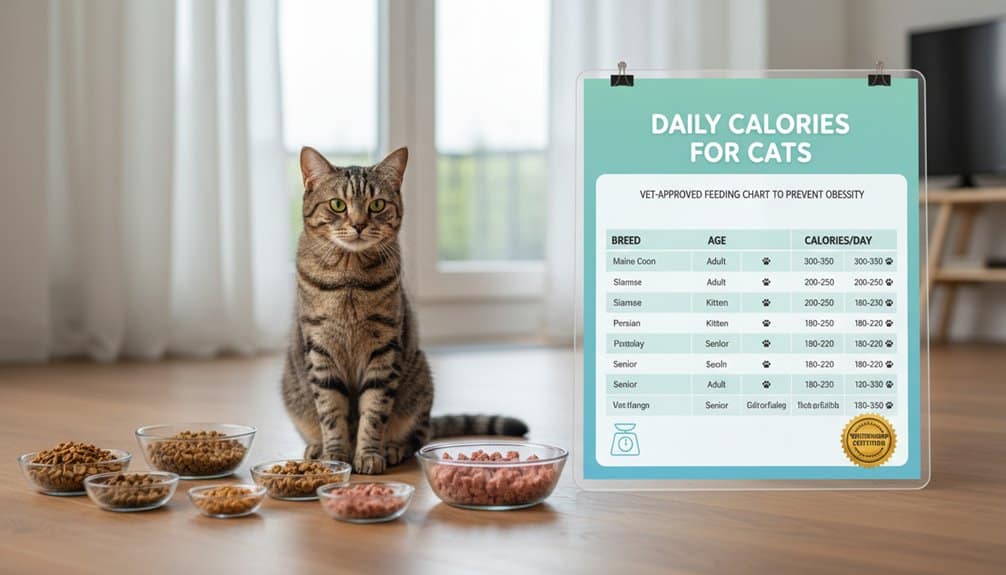
Daily Calories for Cats: Vet-Approved Feeding Chart to Prevent Obesity by Breed and Age
Your cat’s daily caloric needs depend on their life stage, breed, and activity level. Kittens need about 200 calories per pound while adult cats require 20-30 calories per pound. Active breeds like Bengals burn 10-15% more calories than sedentary ones, and senior cats need fewer calories as metabolism slows. You’ll prevent obesity by measuring portions precisely, feeding on schedule, and adjusting based on your cat’s body condition. Specific breed guidelines and feeding charts help optimize your cat’s health.
Table of Contents
Key Takeaways
- Kittens need 200 calories per pound daily, adults require 20-30 calories per pound, and seniors need approximately 20 calories per pound.
- Active breeds like Abyssinians burn 10-15% more calories, while British Shorthairs require 10% fewer calories after age two.
- Indoor cats need 20 calories per pound, while active outdoor cats require 35 calories per pound of body weight.
- Feed adult cats twice daily with measured portions, kittens three to four times, removing uneaten wet food after 30 minutes.
- Monitor weight weekly when adjusting portions, reducing calories by 10-20% if ribs aren’t easily felt through slight fat covering.
Understanding Your Cat’s Baseline Caloric Requirements by Life Stage
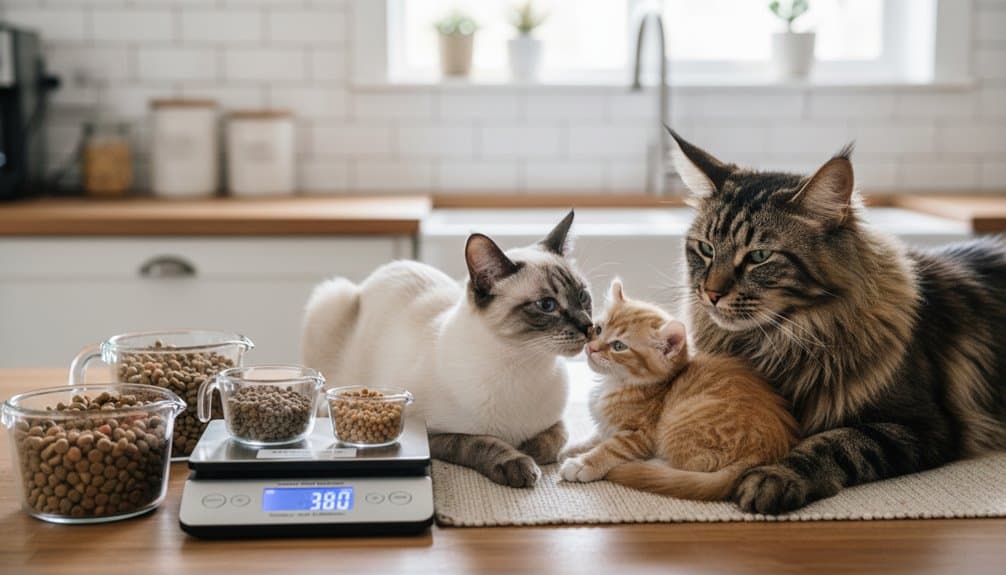
When you’re determining how many calories your cat needs each day, their life stage plays the most critical role in establishing that baseline number. Kittens require roughly 200 calories per pound of body weight daily because they’re rapidly growing and developing. Their high energy expenditure and nutritional considerations demand calorie-dense foods to support proper bone formation and muscle development.
Adult cats typically need 20-30 calories per pound, depending on their activity level. You’ll adjust this baseline based on whether your cat’s indoor-only or has outdoor access. Pregnant and nursing queens have dramatically increased dietary needs, requiring 1.5 to 2 times their normal caloric intake.
Senior cats often need fewer calories as their metabolism slows, usually around 20 calories per pound. However, you shouldn’t automatically reduce portions without veterinary guidance, as some seniors have medical conditions affecting their nutritional requirements. Understanding these life-stage variations helps you prevent both malnutrition and obesity.
Breed-Specific Calorie Guidelines and Metabolic Differences
While most feeding charts provide general guidelines based on weight alone, your cat’s breed significantly influences their metabolic rate and daily caloric needs. You’ll find that active breeds like Abyssinians and Bengals burn 10-15% more calories than Persian or Ragdoll cats who prefer lounging. Understanding these genetic predispositions helps you meet your cat’s optimal nutritional needs more accurately.
Consider these breed-specific metabolic differences:
- Maine Coons: Require 20% more calories during their extended 3-5 year growth period
- Siamese cats: Need fewer calories despite being active due to their lean body type
- British Shorthairs: Prone to weight gain, requiring 10% calorie reduction after age two
- Sphynx cats: Burn extra calories maintaining body temperature without fur insulation
- Scottish Folds: Lower activity levels mean 15% fewer calories than similarly-sized breeds
You can’t rely on one-size-fits-all feeding recommendations. Your breed’s unique metabolism directly impacts how you’ll calculate and adjust their daily caloric intake for maintaining ideal body condition.
Calculating and Adjusting Portions Based on Activity Level and Body Condition
Now that you understand how breed affects metabolism, you’ll need to calculate your cat’s specific caloric needs based on their actual activity level and body condition score. Indoor cats typically require 20 calories per pound of body weight, while active outdoor cats need 35 calories per pound.
Check your cat’s body condition by feeling their ribs – you should easily feel them with slight fat covering. If ribs aren’t detectable, reduce portions by 10-20%. If they’re too prominent, increase food gradually. Active cats who play frequently or roam outdoors need larger portions than sedentary lap cats.
For portion size adjustment, start with manufacturer guidelines, then modify based on your cat’s response. Weigh your cat monthly for metabolic rate monitoring – weight changes indicate whether you’re feeding appropriately. If your cat gains or loses more than 2% body weight monthly, adjust portions accordingly. Remember, each cat’s metabolism differs, so what works for one won’t necessarily work for another.
Creating a Sustainable Feeding Schedule to Maintain Healthy Weight
Consistently feeding your cat at scheduled times rather than free-feeding helps regulate their metabolism and prevents overeating. You’ll achieve optimal caloric balance by establishing fixed meal times that align with your cat’s natural hunting instincts. Most adult cats thrive on two meals daily, while kittens need three to four smaller portions.
Your portion control strategies should include:
- Measure food precisely using a kitchen scale or measuring cup
- Split daily calories between morning and evening meals
- Remove uneaten wet food after 30 minutes
- Track your cat’s weight weekly for the first month
- Adjust portions if weight fluctuates more than 5%
Set feeding times 12 hours apart for adults, ideally at 7 AM and 7 PM. This routine prevents begging behavior and helps you monitor appetite changes that could signal health issues. If you’re transitioning from free-feeding, gradually reduce food availability over two weeks to prevent stress.
Frequently Asked Questions
Can I Mix Wet and Dry Food When Calculating Daily Calories?
Yes, you can mix wet and dry food when calculating daily calories. You’ll need to add the calories from both foods together to ensure you’re meeting your cat’s daily requirements. Check the labels on both products for calorie content, then adjust portion sizes accordingly.
When establishing feeding schedules, divide the total daily calories between meals, whether you’re serving wet food, dry food, or a combination of both throughout the day.
How Do Treats Affect My Cat’s Total Daily Calorie Intake?
Treats should make up no more than 10% of your cat’s total daily calories. You’ll need to subtract treat calories from their regular food allowance to maintain proper portion control.
Check the calorie content on treat packages and adjust meals accordingly. If you’re giving 20 calories in treats, reduce their regular food by the same amount. This prevents overfeeding while still letting you reward your cat without risking weight gain.
Should Pregnant or Nursing Cats Follow Different Calorie Guidelines?
Yes, pregnant and nursing cats need significantly more calories than standard feeding charts suggest. During pregnancy, you’ll increase her intake by 25-50%, while lactation requirements can double or triple her normal calories.
These specialized nutritional needs support developing kittens and milk production. You should feed high-quality kitten food during these periods since it’s calorie-dense and nutrient-rich. Always consult your vet for specific portions based on your cat’s condition.
What if My Cat Refuses to Eat the Recommended Portion Size?
If your cat won’t eat the recommended portion, you’ll need gradual portion reduction rather than sudden changes. Start by decreasing their current amount by just 10% weekly until you reach the target.
Try appetite stimulation techniques like warming the food, adding low-calorie broth, or using puzzle feeders to make meals more appealing. You can also split portions into smaller, frequent meals throughout the day to encourage eating without overwhelming your cat.
How Long Before I See Weight Loss Results After Reducing Calories?
You’ll typically notice weight loss results within 2-4 weeks after reducing calories, though safe feline weight loss happens gradually. Track your cat’s progress weekly using consistent calorie tracking methods like measuring cups or food scales.
If you don’t see changes after a month, you’ll need portion size adjustments – either decreasing food further or reassessing treats. Healthy cats lose 1-2% of body weight weekly, so patience is essential for sustainable results.
Conclusion
You’ve now got the tools to keep your cat at a healthy weight through proper calorie management. Remember, every cat’s needs differ based on breed, age, and activity level. Start with the baseline recommendations, then adjust portions based on your cat’s body condition. Stay consistent with feeding schedules and monitor weight changes monthly. When in doubt, consult your vet for personalized guidance. Your commitment to proper nutrition will help ensure your cat lives a longer, healthier life.


No Comments