
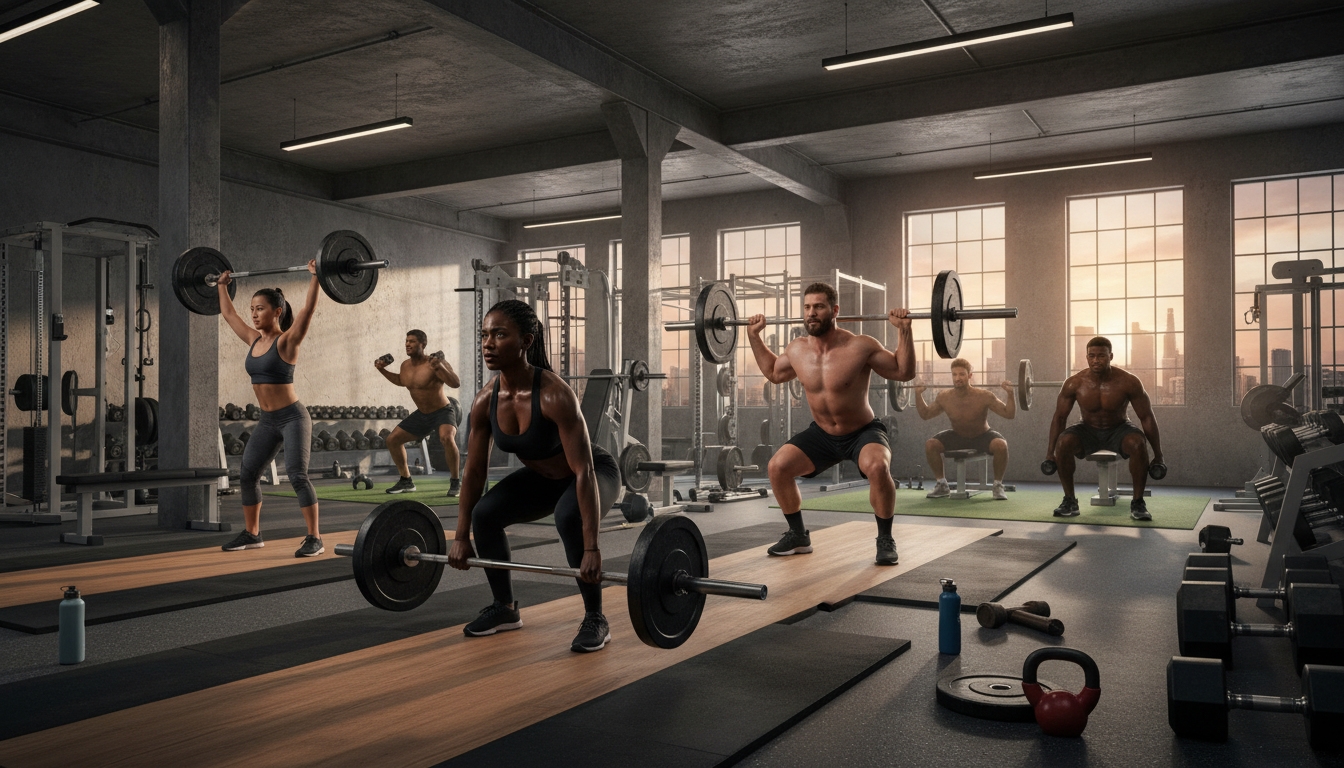
10 Best Compound Movements for Building Muscle
You’ll get the most muscle growth by mastering the ten core compound lifts: squats, deadlifts, bench presses, overhead presses, and barbell rows, plus variations like front squats, Romanian deadlifts, incline bench, push‑press, and Pendlay rows. Each movement recruits multiple large muscle groups, boosts hormonal response, and builds functional strength across the whole body. Proper form—neutral spine, braced core, controlled tempo—protects joints and maximizes overload. Keep progressing with incremental weight and reps, and you’ll unlock even deeper insights on structuring a full‑body routine.
Why Squats Are the Foundation of Compound‑Lift Muscle Growth
One of the most effective ways to build muscle is by mastering the squat, because it recruits multiple large muscle groups—quads, glutes, hamstrings, and core—simultaneously, delivering a powerful stimulus for growth. When you squat, you engage the anterior chain and posterior chain together, forcing your nervous system to coordinate a massive amount of muscle fibers. This coordinated effort boosts hormonal response, especially testosterone and growth hormone, which amplify protein synthesis across the body. Additionally, the squat’s load‑bearing nature improves bone density and joint stability, laying a solid structural foundation for heavier lifts later on. By consistently challenging yourself with progressive overload, you’ll see strength gains that translate to other compound movements like deadlifts and presses. In short, the squat acts as a catalyst, accelerating overall muscle development and enhancing performance in every other lift you attempt.
How to Perform a Proper Squat and Avoid Common Mistakes
Ever wonder why your squats feel shaky or your knees cave in? You’re probably missing a few fundamentals. First, set your stance shoulder‑width apart, toes slightly pointed out. Keep your chest up, spine neutral, and engage your core before you descend. Push your hips back as if you’re sitting into a chair, then bend the knees while keeping them tracking over your toes. Lower until your thighs are at least parallel to the floor, then drive through your heels to stand, squeezing glutes at the top.
- Foot placement: shoulder‑width, toes 15‑30° outward.
- Knee tracking: knees stay in line with toes, never caving inward.
- Depth: reach parallel or slightly below, maintaining torso upright.
- Breathing: inhale on the way down, exhale forcefully on the way up.
Why Deadlifts Target Multiple Muscle Groups in One Compound Lift
You’ll feel a full‑body activation as the deadlift engages your hamstrings, glutes, back, and core all at once.
This compound move builds functional strength that transfers to everyday lifting and sports performance.
Full‑Body Activation
Why do deadlifts feel like the ultimate full‑body workout? You’re pulling from the floor, engaging hips, spine, and shoulders in one fluid motion. The lift forces every major muscle group to cooperate, turning a single rep into a comprehensive strength session. When you execute a proper deadlift, you’re not just training the posterior chain; you’re also stimulating core stability, grip strength, and upper‑back tension. That synergy accelerates muscle growth and boosts overall athleticism.
- Hip extensors (glutes, hamstrings) generate the primary drive.
- Spinal erectors keep your back rigid and protect the lumbar region.
- Core muscles (abs, obliques) brace the torso and transmit force.
- Upper‑back and traps stabilize the bar and maintain posture.
Functional Strength Transfer
How does a single deadlift translate into functional strength across your entire body? You engage the posterior chain—glutes, hamstrings, and spinal erectors—while simultaneously loading the core, lats, and forearms. The hip hinge forces you to generate power from your hips, teaching you how to lift objects from the ground without straining your back.
As you pull the bar upward, your grip strength improves, and your upper back stabilizes the load, mirroring real‑world tasks like loading a truck or picking up a suitcase. This coordinated effort builds inter‑muscular communication, so when you squat, jump, or carry groceries, the same neural pathways fire efficiently. The deadlift thus becomes a universal strength bridge, turning gym gains into everyday power.
How to Execute a Safe Deadlift and Protect Your Lower Back
A solid deadlift starts with a neutral spine and a hip‑hinge motion that keeps the bar close to your body. First, set your feet hip‑width apart, grip the bar just outside your shins, and hinge at the hips while keeping your chest up. Engage your core, squeeze your shoulder blades together, and drive through your heels as you stand, maintaining a straight line from head to hips. Lower the weight by reversing the motion, always keeping the bar near your legs and your back flat.
- Foot placement: Hip‑width, toes slightly pointed out for stability.
- Grip: Double‑overhand or mixed grip, hands just outside the knees.
- Hip hinge: Push hips back, keep shoulders over the bar, avoid rounding.
- Core bracing: Take a deep breath, brace as if preparing for a punch; hold until lock‑out.
Practice with light loads, focus on form, and increase weight only when you can maintain these cues. This protects your lower back and maximizes muscle recruitment.
Why Bench Press Is Essential for Upper‑Body Strength in Compound Training
The bench press sits at the core of any upper‑body routine because it simultaneously engages the chest, shoulders, and triceps, delivering a powerful stimulus for strength and muscle growth. When you push the bar upward, you recruit multiple muscle fibers across three major joints, creating a synergistic overload that other isolated lifts can’t match. This compound nature forces your nervous system to coordinate larger motor units, boosting overall power output and enhancing inter‑muscular coordination.
Because the movement is vertical, it also trains stabilizer muscles in the rotator cuff and scapular region, reducing injury risk and improving posture. Incorporating heavy bench sets into your program accelerates progressive overload, a key driver of hypertrophy, while lighter, higher‑rep variations sharpen muscular endurance. In short, the bench press builds a solid upper‑body foundation, allowing you to lift heavier in other exercises and achieve balanced, functional strength.
How to Master Bench Press Form for Maximum Hypertrophy
You’ll want a grip that’s just wider than shoulder‑width to keep the bar path efficient and the chest engaged. Keep your elbows tucked at about a 45‑degree angle to maximize muscle tension while protecting your shoulders. Fine‑tuning these two cues will let you lift heavier and stimulate more growth.
Grip Width Optimization
Ever wondered why some bench presses feel effortless while others stall? Your grip width determines which muscles dominate the lift and how safely you move. Too narrow, and you over‑activate triceps; too wide, and you stress shoulders. Find the sweet spot by testing a range of positions and listening to the tension in your chest, shoulders, and forearms. Adjust until you feel a balanced stretch across the pectorals and a stable bar path.
- Place hands just outside shoulder width, thumb‑wrapped around the bar.
- Keep elbows at about a 45‑degree angle to your torso.
- Use a grip that allows the forearms to stay perpendicular to the floor at the bottom.
- Re‑check spacing each set; slight shifts can improve recruitment.
Elbow Position Control
Why does a slight tweak in elbow angle make the difference between a weak set and a massive chest pump?
When you tuck your elbows about 45‑° from your torso, you target the pectorals while sparing the shoulders. Keep them tucked enough to engage the chest, but not so tight that you turn the movement into a triceps press. As the bar descends, imagine a 45‑degree line from your wrist to your shoulder; maintain that trajectory. Use a controlled tempo—2 seconds down, 1 second up—to reinforce the angle.
If you feel the shoulders taking over, pull the elbows slightly tighter; if the triceps dominate, open them a few degrees. Consistent elbow positioning maximizes muscle fiber recruitment and yields a bigger, more defined chest.
Why Overhead Press Builds Shoulder Strength and Core Stability
How does the overhead press simultaneously boost shoulder strength and reinforce core stability? When you push the bar overhead, your deltoids, traps, and rotator cuff work together to generate force. At the same time, your spine, glutes, and abdominals contract to keep the torso rigid, preventing sway. This dual demand creates a synergistic stimulus: the shoulders get a pure pressing challenge while the core learns to brace under load, improving both static and dynamic stability.
- Deltoid activation – the front, side, and rear heads fire to move the weight, increasing muscle size and endurance.
- Spinal alignment – maintaining a neutral spine forces the erector spinae to engage, strengthening the back.
- Hip and glute lock – a tight pelvis and glutes create a solid base, reducing lumbar strain.
- Abdominal bracing – the rectus abdominis and obliques contract to prevent arching, sharpening core control.
This compound effort translates to stronger shoulders for pressing, pulling, and everyday lifts, while your core becomes a reliable stabilizer for any heavy movement.
How to Perform Overhead Press Correctly and Prevent Injury
What’s the key to a safe, effective overhead press? Start with a solid stance: feet shoulder‑width apart, knees slightly bent, core braced. Grip the bar just outside shoulder width, wrists neutral, elbows under the bar. Take a deep breath, tighten your lats, and press the weight upward in a smooth, controlled arc, keeping the bar path close to your face. Finish with arms fully extended, shoulders down and back, then lower the bar under the same controlled motion. Keep the spine neutral; avoid arching your lower back by engaging the core throughout. If you feel the elbows flaring out, narrow your grip slightly and cue “elbows down.” Use a weight you can press without compromising form—progress incrementally. Warm up with light sets and shoulder mobility drills, and never sacrifice technique for ego lifts. This approach minimizes shoulder impingement, rotator‑cuff strain, and lower‑back stress.
How Barbell Rows Strengthen the Upper Back and Complement Bench Press
Ever wondered why your bench press stalls after a few weeks? Your upper back is likely the weak link. Barbell rows hit the lats, rhomboids, and rear delts—muscles that stabilize the shoulder girdle during pressing. Strengthening them improves posture, reduces shoulder strain, and lets you generate more power from a solid base. When your back can hold the bar steady, you’ll notice a smoother lock‑out and a higher rep range on the bench.
- Pull the bar toward your lower ribs, keeping elbows close to your torso.
- Maintain a neutral spine; avoid rounding your lower back.
- Squeeze your shoulder blades together at the top of each rep.
- Use a controlled tempo: 2‑second concentric, 3‑second eccentric.
Integrate rows 2‑3 times weekly, progressively loading them as you’d the bench. The synergy between a strong pull and a strong push translates into consistent strength gains and a more balanced physique.
Putting It All Together: A Beginner Full‑Body Routine Using These 10 Compound Lifts
You’ll start each session with a few light warm‑up sets to prime your joints and muscles. As you add weight, keep a simple log of reps, sets, and load so you can see clear progress. This routine lets you rotate through all ten lifts while tracking improvements without overcomplicating things.
Warm‑Up Sets
When you step onto the gym floor, start each compound lift with a few light warm‑up sets to prime your muscles, joints, and nervous system, then progress to working weight. Warm‑up sets should be systematic: begin with an empty bar, add 20‑30 % of your target load, and increase the weight in small increments while keeping reps high (10‑12). This routine boosts blood flow, enhances motor‑unit recruitment, and reduces injury risk. Keep rest intervals short—30‑45 seconds—so you stay warm but don’t fatigue. Treat the warm-up as a rehearsal, not a workout; the goal is to feel ready, not exhausted.
- 1‑2 sets with the empty bar
- 1 set at 20 % of target weight, 10‑12 reps
- 1 set at 40 % of target weight, 6‑8 reps
- 1 set at 60 % of target weight, 3‑5 reps
Progression Tracking Strategies
Because consistent progress hinges on measurable data, tracking your lifts systematically turns a beginner full‑body routine into a clear roadmap for strength gains. Start a simple spreadsheet or app, logging exercise, set, reps, weight, and RPE each session. Use the “double‑progression” rule: increase weight once you hit the target rep range with an RPE of 7–8, then add a rep or two before the next load bump. Cycle every four to six weeks, deloading 10‑15 % to recover and prevent plateaus. Plot weekly totals for each lift; upward trends confirm adaptation. If a lift stalls, adjust volume or technique before adding weight. Consistently reviewing these metrics keeps you accountable and ensures steady, measurable muscle growth.
Frequently Asked Questions
Do I Need a Spotter for Heavy Squats?
You’ll benefit from a spotter on heavy squats; they can rescue you if you hit a lockout, keep you safe, and boost confidence, letting you push more weight safely.
Can I Substitute Dumbbells for Barbell Deadlifts?
Yes, you can swap dumbbells for barbell deadlifts, but keep the weight balanced, hinge from your hips, and maintain a neutral spine. Focus on controlled reps, and adjust the load to match your strength.
How Often Should I Change My Grip on Bench Press?
You should switch your bench‑press grip every 4–6 weeks, alternating between wider, shoulder‑width, and close‑hand positions. This prevents overuse injuries, balances muscle development, and keeps your lifts progressing.
Is There an Optimal Tempo for Overhead Press Reps?
You should aim for a 2‑second eccentric, a brief pause, then a 1‑second concentric. That 2‑0‑1 tempo maximizes tension, improves control, and promotes strength gains in the overhead press.
Should I Add Weight Plates to Barbell Rows for Extra Intensity?
Yes, add plates to your barbell rows for extra intensity. Start with a weight that lets you keep a tight core and full range of motion, then progressively overload as you stay form and control.
Conclusion
By mastering these ten compound lifts, you’ll hit every major muscle group, boost strength, and keep your workouts efficient. Squats, deadlifts, bench presses, overhead presses, and rows form a solid foundation that fuels growth and functional power. Stick to proper form, progress gradually, and you’ll see consistent gains while minimizing injury risk. This full‑body routine gives you the perfect start for building muscle and confidence in the gym.


Table of Contents






No Comments