
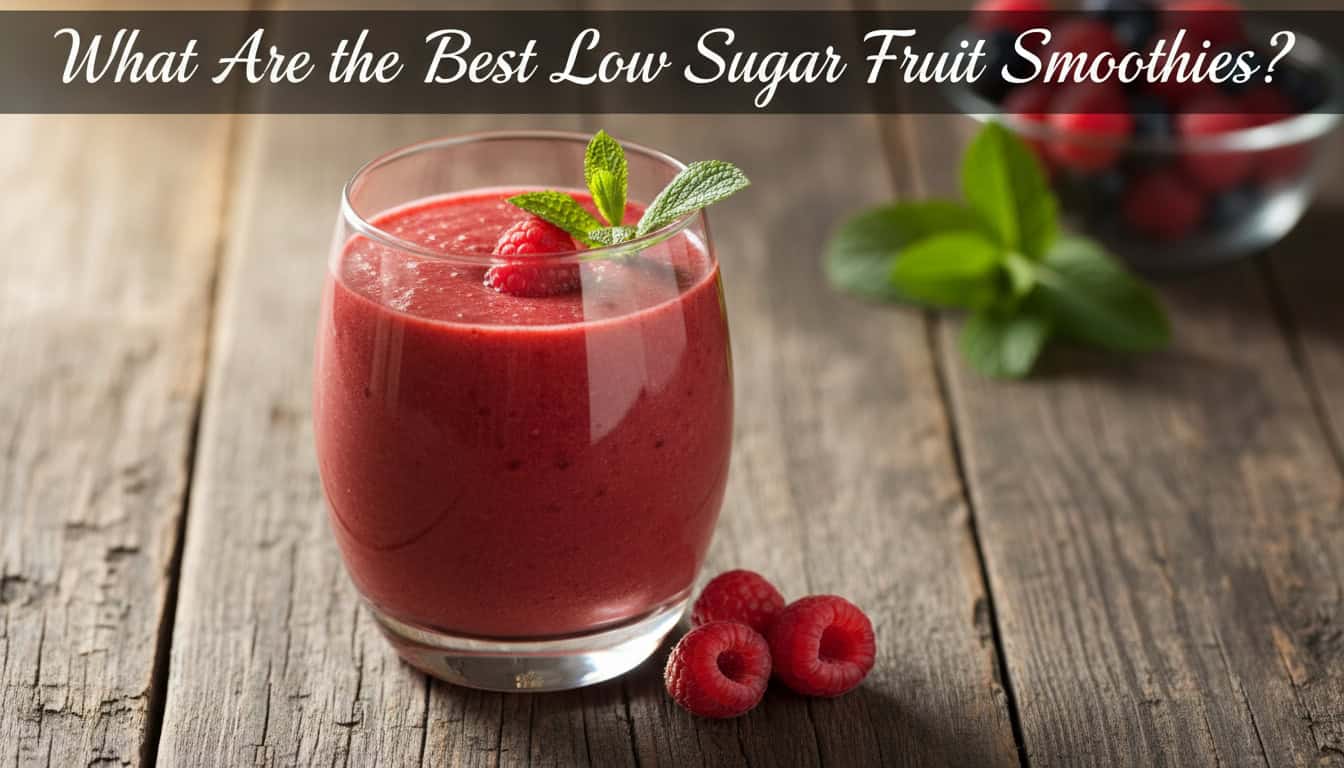
What Are the Best Low Sugar Fruit Smoothies?
You’ll keep sugar low by using a cup of berries like raspberries, strawberries, blackberries or blueberries (5‑10 g sugar), blend them with unsweetened almond or coconut milk (under 2 g carbs), add a scoop of whey or plant protein (20 g protein, <2 g sugar), toss in a handful of spinach or kale for fiber, and finish with a splash of lemon juice or a pinch of stevia for flavor. This combo stays under 10 g sugar per serving and stays creamy. Keep reading to discover more tasty variations.
Table of Contents
How to Build a Low‑Sugar Smoothie – The Complete Guide
Ever wondered how to craft a smoothie that satisfies cravings without spiking sugar? Start by picking a low‑sugar fruit—berries, kiwi, or a mix of raspberries and blackberries—keeping the portion to one cup. Add a base liquid that stays under two grams of carbs per cup, like unsweetened almond milk or a splash of water. For creaminess, toss in a tablespoon of powdered peanut butter or a quarter cup of plain Greek yogurt; both boost protein without added sugar. Sprinkle in a scoop of whey or plant‑based protein powder for satiety, then throw in a handful of spinach or kale for bulk and micronutrients. Finish with a dash of cinnamon, a few drops of vanilla extract, or a splash of lemon juice for flavor without extra carbs. Blend the greens first, then the fruit and protein, and enjoy a smooth, low‑sugar drink that keeps energy steady.
Build a Creamy, Protein‑Rich Low‑Carb Liquid Foundation for Low‑Sugar Smoothies
One of the best ways to keep your low‑sugar smoothie creamy while packing protein is to start with a low‑carb liquid base. Choose unsweetened almond, coconut, or macadamia milk for <2 g carbs per cup, or add nonfat Fairlife milk for 13 g protein with minimal sugar. Blend in a scoop of whey or plant‑based protein powder (20‑25 g protein, <2 g sugar) to boost satiety. For extra creaminess, stir in plain nonfat Greek yogurt (5‑7 g protein, 4‑5 g sugar per ½ cup) or low‑fat cottage cheese (14 g protein, 2 g sugar per ½ cup). If you prefer a dairy‑free option, powdered peanut butter supplies 7 g protein per tablespoon without added sugar. Finish with a splash of water or ice cubes if you need a thinner texture. This combination delivers a velvety mouthfeel, high protein, and low carbs, setting the stage for a balanced low‑sugar fruit addition.
Choose the Right Low‑Sugar Fruit Base for Your Low‑Sugar Smoothie
Pick berries like raspberries, strawberries, blackberries, or blueberries for a naturally low‑sugar base that still packs fiber and antioxidants. Keep the fruit portion to about one cup so the total sugar stays under ten grams per serving. Pair the berries with an unsweetened almond or coconut milk to keep carbs minimal while adding creaminess.
Berry Selection for Minimal Sugar
Which berries should you reach for when you want a low‑sugar smoothie? Pick raspberries, strawberries, blackberries, or blueberries—each offers 5‑10 g sugar per cup and a fiber boost that slows glucose spikes.
Raspberries sit at the bottom with just 5 g sugar and 8 g fiber, making them ideal for ultra‑light blends.
Strawberries bring 7‑8 g sugar, 91 % water, and a vitamin C punch, while blackberries match that sugar level but add 7.6 g fiber and a low glycemic index.
Blueberries are slightly sweeter at 10 g per cup but still fit a low‑sugar plan if you limit the portion to half a cup.
Combine any of these berries with unsweetened almond milk or water, and you’ll keep total carbs under 15 g per serving while enjoying vibrant flavor and texture.

Low‑Carb Liquid Foundations
Why settle for a sugary base when you can keep carbs low and flavor high? Choose unsweetened almond, coconut, or macadamia milk—they stay under 2 g carbs per cup and add a silky mouthfeel. If you need protein, pour in nonfat Fairlife milk or plain Greek yogurt; the former gives 13 g protein with virtually no sugar, while yogurt adds 5‑7 g protein and only 4‑5 g natural sugar. For an ultra‑light texture, replace half the liquid with water or ice cubes. Powdered peanut butter boosts healthy fats and protein without added sugar, and a splash of lemon or lime juice adds brightness with just 1 g sugar per tablespoon. Keep your total carbs under 15 g per serving for a balanced, low‑sugar smoothie.
Blend Greens Smoothly – Tips for a Grit‑Free Low‑Sugar Smoothie
When you add greens first and blend them for a few seconds before the fruit, you prevent leafy grit from clumping and create a silky base. Start with a handful of spinach, kale, or cucumber, and pulse on high for 10‑15 seconds. If the mixture looks too thick, drizzle a splash of unsweetened almond or coconut milk; the extra liquid lubricates the blades and breaks down fibrous strands. Adding a pinch of salt or a few ice cubes can further smooth the texture without raising sugar. For extra creaminess, toss in a quarter‑avocado or a spoonful of powdered peanut butter—both coat the greens and mask any residual grit. Finish by layering the fruit, protein powder, or yogurt, then give the whole drink another quick blend to marry flavors. This two‑stage method guarantees a velvety, low‑sugar smoothie every time.
Sweeten Naturally: Herbs, Spices, and Zero‑Calorie Extracts for Low‑Sugar Smoothies
You can boost sweetness with fresh herbs like mint or basil, which add bright flavor without sugar. A pinch of cinnamon, nutmeg, or ginger brings warm spice notes that balance fruit tartness and may aid insulin sensitivity.
For zero‑calorie options, stir in a few drops of stevia or monk‑fruit extract, letting you keep the smoothie low‑sugar while still satisfying cravings.
Herbal Sweet Boosters
Ever wondered how to sweeten a smoothie without adding sugar? Try herbal sweet boosters that add flavor without extra carbs. Fresh mint leaves lend a cool, subtle sweetness that pairs well with berries and cucumber. Basil brings a fragrant, slightly peppery note that brightens strawberry‑kiwi blends. A pinch of dried lavender can give a floral hint while keeping the glycemic load low. For a richer profile, add a splash of vanilla‑infused almond milk or a few drops of pure monk‑fruit extract, which delivers intense sweetness with zero calories. If you enjoy a hint of spice, stir in a dash of ground cardamom or star‑anise powder; both add depth without sugar. These herbs let you craft satisfying, low‑sugar smoothies that taste naturally sweet.
Spice‑Infused Flavor Enhancements
If you want a low‑sugar smoothie that still feels indulgent, reach for spices and zero‑calorie extracts that add depth without carbs. A pinch of cinnamon boosts warmth and may improve insulin sensitivity, while ground ginger injects a zingy bite that balances berries’ tartness. Nutmeg offers subtle earthiness, and a dash of vanilla extract rounds flavors with aromatic richness. These boosters let you keep fruit portions modest while still savoring a complex palate.
- Cinnamon – ½ tsp per cup, no sugar.
- Ginger – ¼ tsp, fresh or powdered, adds spice.
- Nutmeg – a pinch, warm undertone.
- Vanilla extract – ½ tsp, minimal carbs.
Zero‑Calorie Sweetener Options
Wondering how to sweeten a low‑sugar smoothie without adding carbs? Try zero‑calorie extracts like stevia or monk‑fruit; they’re orders of magnitude sweeter than sugar, so a pinch does the job. Blend in a dash of vanilla extract for depth—its natural sugars are negligible.
Herbs such as mint or basil add fresh brightness without calories, while spices like cinnamon or ginger boost flavor and may improve insulin sensitivity. If you crave a citrus note, squeeze a few drops of lemon or lime juice; the sugar contribution is under a gram per tablespoon.
Combine these options with your fruit, greens, and protein base, and you’ll keep carbs under control while satisfying any sweet tooth.
Create Sample Low‑Sugar Smoothie Recipes for Every Taste
Looking for a low‑sugar smoothie that satisfies every craving? You can mix and match berries, leafy greens, and protein boosters to hit sweet, tart, creamy, or earthy profiles while staying under 15 g carbs.

- Berry‑Citrus Zing – ½ cup raspberries, ½ cup strawberries, ¼ cup unsweetened almond milk, a squeeze of lemon, a pinch of cinnamon, and one scoop vanilla whey protein.
- Tropical Green – ½ cup kiwi, ¼ cup frozen mango (optional), 1 cup spinach, ¾ cup coconut milk, 1 tbsp hemp seeds, and a dash of monk‑fruit.
- Nutty Avocado Dream – ½ avocado, ¼ cup blackberries, ½ cup plain Greek yogurt, ½ cup water, 1 tbsp powdered peanut butter, and a sprinkle of nutmeg.
- Spiced Cauliflower Cream – ½ cup riced cauliflower, ¼ cup blueberries, ¾ cup macadamia milk, 1 tbsp chia seeds, a few drops vanilla extract, and a pinch of ginger.
Blend each recipe until silky, adjust thickness with ice or water, and enjoy a balanced, low‑sugar treat any time of day.
Frequently Asked Questions
Can I Add Ice Cubes Without Affecting the Sugar Count?
Yes, you can toss in ice cubes; they’re just water, so they don’t add sugar or carbs, and they’ll chill the smoothie while keeping the total sugar count exactly the same.
Do Frozen Berries Change the Nutritional Profile?
Frozen berries keep the same sugar and fiber as fresh, but they’re slightly denser, so you might get a bit more carbs per cup. Their antioxidants stay intact, and the texture becomes thicker when blended.
Are There Low‑Sugar Fruit Options for Kids’ Smoothies?
You can give kids berries, kiwi, and avocado—each stays under ten grams sugar per cup. Mix them with unsweetened almond milk, Greek yogurt, and a splash of lemon for flavor without excess carbs.
How Does Avocado Affect Smoothie Thickness?
Avocado thickens your smoothie instantly; its creamy fats and fiber create a rich, velvety texture, so you’ll get a fuller mouthfeel without adding sugar or extra calories.
Can I Use Protein Powder With Added Vitamins?
Yes, you can blend protein powder that includes added vitamins; just check the label for sugar content, ensure the vitamins suit your needs, and keep the serving size moderate to stay low‑sugar.
Conclusion
Now you’ve got the tools to craft low‑sugar smoothies that taste amazing and keep carbs in check. Pick a low‑sugar fruit, add protein, blend in greens, and finish with a dash of natural sweeteners or spices. Experiment with textures and flavors, and you’ll enjoy a refreshing, guilt‑free drink every day.


Sorry, the comment form is closed at this time.