

You’ll get steady energy without the crash by switching to matcha’s L-theanine-buffered caffeine, cold brew coffee’s smooth 200mg dose, or adaptogenic drinks with ashwagandha and rhodiola. These alternatives deliver clean caffeine through natural compounds that your body processes gradually. Mix yerba mate with coconut water for electrolytes, brew green tea at 175°F for optimal extraction, or create DIY fruit infusions with citrus and herbs. Master these combinations and you’ll transform your daily energy routine completely.
Table of Contents
Key Takeaways
- Matcha provides 70mg caffeine per teaspoon with L-theanine for 4-6 hours of steady focus without jitters or crashes
- Cold brew coffee delivers 200mg caffeine with 65% less acidity than regular coffee, preventing stomach discomfort
- Green tea variations like sencha offer 30-50mg caffeine plus antioxidants when brewed at 175°F for optimal extraction
- Yerba mate contains 85mg caffeine, fifteen amino acids, and numerous vitamins for smooth, jitter-free energy lasting hours
- Adaptogenic drinks with ashwagandha, rhodiola, or cordyceps support stress management and steady energy without artificial ingredients
Matcha: The Sustained Energy Powerhouse
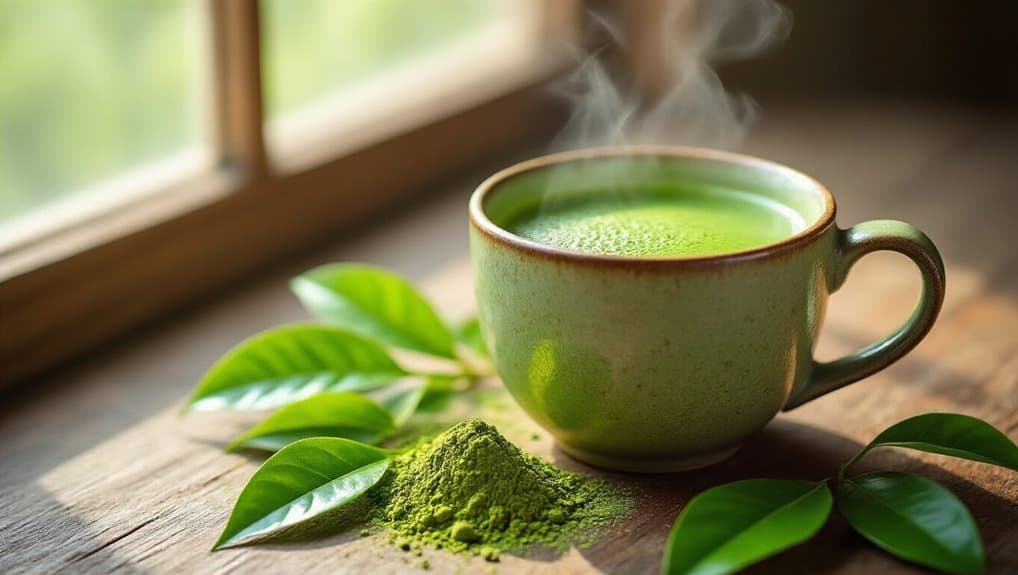
When you’re searching for sustained energy without the crash, matcha delivers a unique combination of caffeine and L-theanine that sets it apart from conventional energy drinks. This green tea powder contains roughly 70mg of caffeine per serving, but you’ll experience a smoother, longer-lasting boost thanks to L-theanine’s calming effects on your nervous system.
You don’t need ceremonial whisking to enjoy matcha’s benefits. Simply mix one teaspoon with hot water or blend it into smoothies. The powder dissolves completely, delivering concentrated nutrients directly to your system. Unlike energy drinks that spike and drop your blood sugar, matcha provides steady alertness for 4-6 hours.
The antioxidant synergy in matcha surpasses regular green tea by 137 times. You’re consuming the entire leaf, not just an infusion. These catechins, particularly EGCG, support metabolism and mental clarity while fighting oxidative stress. For optimal results, choose ceremonial-grade matcha over culinary varieties—you’ll taste the difference and feel sustained energy without jitters.
Cold Brew Coffee: Smooth Caffeine Without the Acidity
Cold brew coffee frequently outperforms traditional hot coffee as an energy drink alternative, offering 65% less acidity while maintaining a robust caffeine content of 200mg per cup. You’ll appreciate how cold maceration over 12-24 hours creates this low-acid beverage that’s gentler on your stomach while preserving complex flavor extraction.
The slow steeping process extracts caffeine efficiently without releasing bitter compounds. You can enhance your experience with Nitro Cold Brew, which adds a creamy texture through nitrogen infusion.
| Brewing Factor | Result |
|---|---|
| Water Temperature | 68°F preserves delicate notes |
| Steep Time | 16 hours optimal extraction |
| Grind Size | Coarse prevents over-extraction |
| Concentration | 1:8 ratio for smooth strength |
| Shelf Life | 2 weeks of refrigerated freshness |
You’ll find cold brew’s naturally sweet, chocolate-forward profile eliminates sugar cravings common with energy drinks. The sustained caffeine release prevents crashes, making it ideal for all-day energy without jitters or digestive discomfort.
Green Tea Variations That Pack a Natural Punch
You’ll find green tea offers more than just a gentle caffeine lift when you explore its diverse varieties and preparation techniques.
Matcha delivers concentrated antioxidants and sustained energy through its powdered whole-leaf form, while sencha provides a cleaner boost with its distinctive grassy notes and metabolism-supporting compounds.
Your brewing method—from water temperature to steeping time—directly impacts both the caffeine extraction and the release of L-theanine, the amino acid that creates green tea’s signature calm alertness.
Matcha Power Benefits
Often overlooked in the rush for synthetic energy boosters, matcha delivers sustained alertness through a unique combination of caffeine and L-theanine that prevents the jittery crash you’d experience with conventional energy drinks.
You’ll get 70mg of caffeine per teaspoon, but the L-theanine slows its absorption, creating four to six hours of steady focus.
Traditional ceremony rituals aren’t just for show—the proper whisk technique aerates the powder, releasing chlorophyll and antioxidants that support metabolism and detoxification.
Your brain receives enhanced alpha waves from L-theanine, promoting calm concentration instead of anxious energy.
You’re also consuming ten times more antioxidants than regular green tea since you’re ingesting the whole leaf.
Mix it into smoothies, lattes, or drink it straight for maximum benefits.
Sencha Energy Boost
While matcha offers concentrated leaf power, sencha provides a lighter yet equally effective energy lift through its unique steaming process that preserves catechins and amino acids.
You’ll discover sencha’s lightly oxidized leaves deliver 30-50mg of caffeine per cup—enough to sharpen focus without triggering jitters.
The steaming method locks in L-theanine, creating sustained alertness that lasts 4-6 hours.
You’re getting an umami sweetness that makes afternoon energy slumps manageable without sugar crashes.
Brew it at 160-170°F for two minutes to extract maximum benefits while preventing bitterness.
Sencha’s chlorophyll content supports natural detoxification as you energize.
You can cold-brew it overnight for a refreshing morning starter or drink it hot between meals.
The gentle stimulation won’t disrupt your sleep patterns when consumed before 2 PM.
Brewing Methods Matter
Master your brewing technique, and you’ll unlock double the energy potential from the same tea leaves.
Temperature and timing dramatically affect caffeine extraction—water at 175°F releases optimal compounds without bitter tannins that crash your energy later.
Pour over techniques give you precise control. You’ll extract 20% more caffeine by slowly pouring water in circular motions, allowing leaves to bloom fully.
This method preserves L-theanine, which smooths out caffeine’s jittery edges.
Try French press immersion for maximum potency. Steeping leaves for four minutes in this method extracts 40% more caffeine than traditional brewing.
The metal filter allows beneficial oils through that paper filters trap.
Cold brewing overnight yields the smoothest energy boost—high caffeine with minimal acidity.
You’ll get sustained alertness without the stomach upset common with energy drinks.
Adaptogenic Drinks for Stress-Free Energy
When you’re seeking sustained energy without the jitters and crash of traditional energy drinks, adaptogenic drinks offer a compelling alternative.
These beverages contain herbs and mushrooms that help your body manage stress while naturally boosting energy levels. Unlike caffeine’s sudden spike, adaptogens provide steady, balanced vitality throughout your day.
You’ll find powerful options in adaptogen smoothies combining ashwagandha, rhodiola, or cordyceps with nutrient-dense ingredients.
These blends support your adrenal function and enhance mental clarity without overstimulation. Many people report improved focus and reduced anxiety when switching from conventional energy drinks to adaptogenic beverages.
Herbal tinctures offer another concentrated approach.
You can add drops of ginseng, schisandra, or eleuthero to water or tea for quick absorption. These liquid extracts deliver adaptogenic compounds efficiently, helping you maintain consistent energy while supporting your body’s stress response. Start with small doses to assess your tolerance and gradually increase as needed.
DIY Natural Energy Drinks You Can Make at Home
You don’t need expensive store-bought options when you can create powerful energy drinks in your own kitchen. Green tea blends offer a perfect foundation—you’ll get sustained caffeine without the crash, and you can customize them with ingredients like ginger, lemon, or mint for added benefits.
Fresh fruit infusions provide natural sugars and vitamins that boost your energy, especially when you combine citrus fruits with herbs like basil or rosemary for an invigorating drink that beats any commercial alternative.
Green Tea Blends
Green tea stands out as a powerhouse base for homemade energy drinks, offering steady caffeine release without the crash. You’ll get 25-50mg of caffeine per cup plus L-theanine, which promotes calm focus and reduces jitters.
Start with quality loose-leaf green tea or matcha powder. While ceremonial etiquette isn’t necessary for energy drinks, proper brewing matters—steep at 175°F for 2-3 minutes to avoid bitterness. Mix your base with cold water, ice, and natural sweeteners like honey or stevia.
Master flavor pairing by combining green tea with complementary ingredients. Try matcha with coconut milk and vanilla, sencha with fresh mint and lime, or genmaicha with ginger and lemon. You can also blend green tea with fruits like pineapple or mango for tropical energy drinks that taste amazing.
Fruit Infusion Recipes
While green tea provides steady energy, fruit-infused drinks deliver natural sugars and vitamins that’ll boost your stamina without artificial ingredients.
You can create a refreshing citrus spritz by combining fresh lemon and orange juice with sparkling water and a splash of lime.
This combination provides vitamin C and natural electrolytes that’ll keep you energized throughout the day.
For a more robust option, try a berry muddle drink.
Crush fresh blueberries and raspberries in your glass, add mint leaves, then pour cold coconut water over the mixture.
The berries’ antioxidants fight fatigue while their natural fructose provides quick energy.
You’ll get sustained vitality without the crash that comes from synthetic sweeteners.
These homemade infusions cost less than commercial energy drinks, and you’ll control every ingredient that goes into your body.
Smart Hydration Options With Natural Caffeine Boost
When you’re looking for sustained energy without the crash, combining proper hydration with natural caffeine sources offers a smarter alternative to conventional energy drinks. Your body performs best when it’s properly hydrated, and adding natural caffeine amplifies this effect without synthetic additives.
Yerba mate stands out as an exceptional choice, delivering 85mg of caffeine per cup alongside fifteen amino acids and numerous vitamins. You’ll get smooth, jitter-free energy that lasts hours. Mix it cold with coconut water for added electrolyte boosters that enhance absorption and prevent dehydration.
Green tea with Himalayan salt creates another powerful combination. You’re getting L-theanine for focus, antioxidants for cellular protection, and minerals for optimal fluid balance. Try matcha mixed with alkaline water and a pinch of sea salt for maximum benefits.
These options provide steady energy while supporting your body’s natural hydration mechanisms. You won’t experience the sugar crash or artificial ingredient overload common in commercial energy drinks.
Frequently Asked Questions
How Much Caffeine Is Safe to Consume Daily for Adults?
You can safely consume up to 400mg of caffeine daily, which equals about four cups of coffee.
However, recommended limits vary based on your individual tolerance and health conditions.
You’ll want to stay under 200mg if you’re pregnant or sensitive to caffeine.
Monitor how your body responds – if you’re experiencing jitters, anxiety, or sleep issues, you’ve likely exceeded your personal threshold and should cut back accordingly.
Can Pregnant Women Safely Drink Natural Caffeine Alternatives?
You’ll need to limit caffeine during pregnancy, following strict prenatal caffeine guidelines of 200mg daily maximum.
Natural alternatives aren’t automatically safer – green tea and matcha still contain caffeine that counts toward your limit.
Pregnancy safe herbalism suggests trying caffeine-free options like ginger tea, peppermint, or rooibos instead.
You shouldn’t assume “natural” means risk-free. Always check with your healthcare provider before consuming any caffeinated beverages, even plant-based ones, while you’re expecting.
What Time Should I Stop Consuming Caffeine to Avoid Sleep Issues?
You’ll want to establish an evening cutoff of 2 PM if you’re highly caffeine-sensitive, though most people can handle caffeine until 3-4 PM without disrupting sleep.
Your individual sensitivity determines the exact timing – some metabolize caffeine faster than others. Track how different cutoff times affect your sleep quality. If you’re tossing and turning at night, push your last cup earlier until you find your sweet spot.
Are Sugar-Free Energy Drinks Actually Bad for You?
Yes, sugar-free energy drinks can harm your health despite having zero calories. The artificial sweeteners they contain may disrupt your gut bacteria and trigger negative metabolic effects, including insulin resistance and increased cravings.
You’re also consuming high caffeine doses, synthetic additives, and acids that erode tooth enamel. While they’re marginally better than sugary versions, you’ll benefit more from natural alternatives like green tea or black coffee.
How Long Does Caffeine Stay in Your System?
Caffeine stays in your system for 5-6 hours on average, but you’ll experience significant variability based on your genetics.
Your body’s half life for caffeine depends on genetic differences in liver enzymes that metabolize it.
You might clear caffeine in 3 hours or need up to 10 hours.
If you’re a slow metabolizer, you’ll feel effects longer and should time your intake earlier to avoid disrupting sleep.
Conclusion
You don’t need synthetic energy drinks packed with artificial ingredients to stay energized. These natural alternatives deliver clean caffeine while nourishing your body with antioxidants, adaptogens, and essential nutrients. Whether you’re sipping matcha for sustained focus, brewing cold coffee for smooth energy, or mixing your own natural drinks at home, you’re making a healthier choice. Start swapping those chemical-laden energy drinks for these cleaner options and feel the difference in your overall well-being.


No Comments