
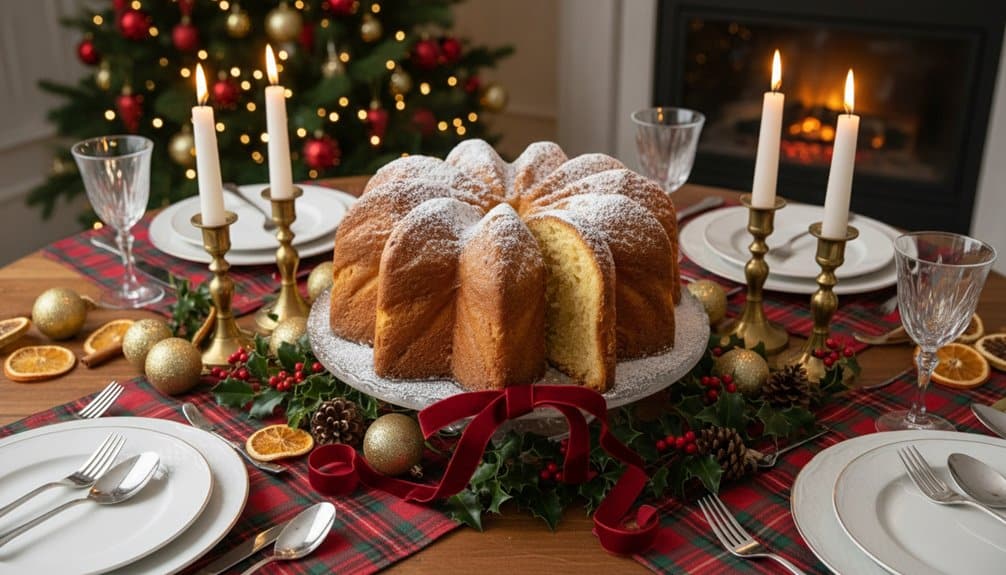
Fluffy Italian Pandoro Cake the Festive Dessert Trend Taking Over Holiday Tables This Year
You’ll discover pandoro’s irresistible charm through its distinctive eight-pointed star shape and cloud-like texture that’s captivated Italian families since the Renaissance. This Veronese Christmas tradition requires three careful proofing stages to achieve its signature airy crumb, while its butter-rich dough creates the perfect canvas for both classic powdered sugar dusting and modern creative presentations. From tiramisu-style layers to savory appetizer stacks, pandoro’s versatility makes it this season’s most adaptable holiday centerpiece that’ll transform your festive gatherings.
Table of Contents
Key Takeaways
- Pandoro’s distinctive eight-pointed star shape and fluffy texture make it an Instagram-worthy centerpiece for modern holiday celebrations.
- This Veronese cake requires three distinct proofing stages, creating the signature airy texture that’s captivating contemporary bakers worldwide.
- Creative serving trends include savory layered appetizers, mini mascarpone stacks, and tiramisu-style presentations for holiday entertaining.
- The cake’s Renaissance origins and Italian hospitality symbolism add authentic cultural appeal to today’s festive dining experiences.
- Pandoro’s versatile presentation options, from dessert boards to interactive displays, perfectly suit social media-driven holiday food trends.
The History and Origins of Pandoro: From Verona to Your Holiday Table
When you bite into a slice of golden pandoro during the holidays, you’re tasting centuries of Veronese tradition that dates back to the Renaissance era.
This star-shaped cake emerged from Verona’s rich culinary heritage, where local bakers perfected the delicate balance of butter, eggs, and flour that creates its signature fluffy texture.
The pandoro’s Verona Origins trace to the 1800s when Domenico Melegatti officially patented the recipe, though similar cakes existed centuries earlier in noble Venetian households.
You’ll find that its distinctive eight-pointed star shape comes from a special mold that creates the cake’s elegant ridged appearance.
Today’s Christmas Traditions have embraced pandoro as an essential holiday dessert throughout Italy and beyond.
You dust it with powdered sugar before serving, transforming each slice into a winter wonderland.
This beloved cake represents more than dessert—it’s a symbol of Italian hospitality and festive celebration.
How to Make Perfect Pandoro at Home: Tips for Achieving That Signature Fluffy Texture
Creating authentic pandoro at home requires mastering a few key techniques that separate amateur attempts from bakery-quality results.

Your success hinges on proper dough hydration – you’ll need to gradually incorporate liquids into your flour mixture, ensuring each addition is fully absorbed before adding more.
This prevents dense, heavy bread.
Temperature control is crucial during mixing.
Keep your ingredients at room temperature, and don’t rush the process.
Your dough should feel smooth and elastic when properly developed.
The proofing technique makes or breaks your pandoro’s signature airy texture.
You’ll need three distinct rises: first proof for 2-3 hours, second proof after shaping for 4-6 hours, and final proof overnight in the refrigerator.
Each stage develops flavor and creates those delicate air pockets.
Use the windowpane test to check gluten development – stretch a small piece of dough until it’s translucent without tearing.
Creative Ways to Customize and Serve Pandoro for Modern Holiday Celebrations
Why settle for traditional presentation when pandoro’s versatility opens doors to countless creative possibilities?

Transform this classic Italian cake into show-stopping centerpieces that’ll impress your holiday guests and create Instagram-worthy moments.
- Savory Twists – Slice pandoro horizontally and layer with herbed cream cheese, smoked salmon, or prosciutto. These unexpected combinations create sophisticated appetizers that bridge sweet and savory flavors perfectly.
- Mini Stacks – Cut pandoro into small rounds and create individual trifles with mascarpone, fresh berries, and chocolate shavings. These portion-controlled treats are ideal for cocktail parties and buffet-style gatherings.
- Dessert Boards – Arrange pandoro slices alongside artisanal chocolates, seasonal fruits, and flavored creams. Let guests customize their own combinations for an interactive dessert experience.
- Tiramisu-Style Layers – Soak pandoro pieces in coffee and layer with traditional tiramisu filling for a fusion dessert that combines two Italian classics.
Frequently Asked Questions
How Long Does Pandoro Cake Stay Fresh After Baking?
Your pandoro cake stays fresh for 3-4 days at room temperature when stored properly.
The shelf life depends on your storage methods – wrap it tightly in plastic wrap or store it in an airtight container to maintain moisture.
You’ll notice it starts drying out after day four.
For longer storage, you can freeze it for up to three months.
Can Pandoro Be Made Gluten-Free Without Losing Its Fluffy Texture?
You can make gluten-free pandoro while maintaining its signature fluffiness, though it requires careful technique.
Use high-quality gluten-free flour blends containing xanthan gum or rice flour for structure.
Master proper leavening techniques by allowing extra rising time and maintaining consistent temperatures during fermentation.
You’ll need to adjust liquid ratios since gluten-free flours absorb moisture differently, but the results can closely match traditional pandoro’s airy texture.
What’s the Difference Between Pandoro and Panettone Cake?
You’ll notice pandoro’s smooth, golden texture compared to panettone’s fruit-studded crumb.
Pandoro doesn’t contain candied fruits or raisins, giving it a clean, buttery flavor.
The texture comparison reveals pandoro’s denser, more uniform structure versus panettone’s lighter, airy consistency. Different baking techniques create these distinctions – pandoro uses a star-shaped mold and requires longer kneading, while panettone needs specific fermentation timing for its characteristic holes.
Where Can I Buy Authentic Pandoro if I Don’t Make It?
You can find authentic pandoro at Italian bakeries in your area, which often import or make traditional versions during holiday season.
Specialty stores like gourmet food shops and upscale grocery stores typically stock imported Italian brands from October through January.
You’ll also find authentic options at Italian delis, European markets, and online retailers that specialize in imported Italian holiday treats and traditional baked goods.
Is Pandoro Cake Suitable for People With Nut Allergies?
Traditional pandoro doesn’t contain nuts, but you’ll face cross contamination risks if it’s made in facilities processing tree nuts or peanuts.
Always check allergen labeling carefully before purchasing, as manufacturing practices vary between brands.
Some commercial producers use shared equipment that could introduce allergens.
If you’re highly sensitive, contact manufacturers directly about their production methods and facility protocols to ensure your safety during holiday celebrations.
Conclusion
You’ve discovered how pandoro’s rich Veronese heritage has evolved into today’s holiday sensation. You’ve learned the essential techniques for creating that coveted airy texture at home. Now you’re equipped with innovative serving ideas that’ll transform this traditional cake into a showstopping centerpiece. Don’t hesitate to experiment with your own creative twists—pandoro’s versatility makes it perfect for putting your personal stamp on this year’s holiday celebrations.


No Comments