
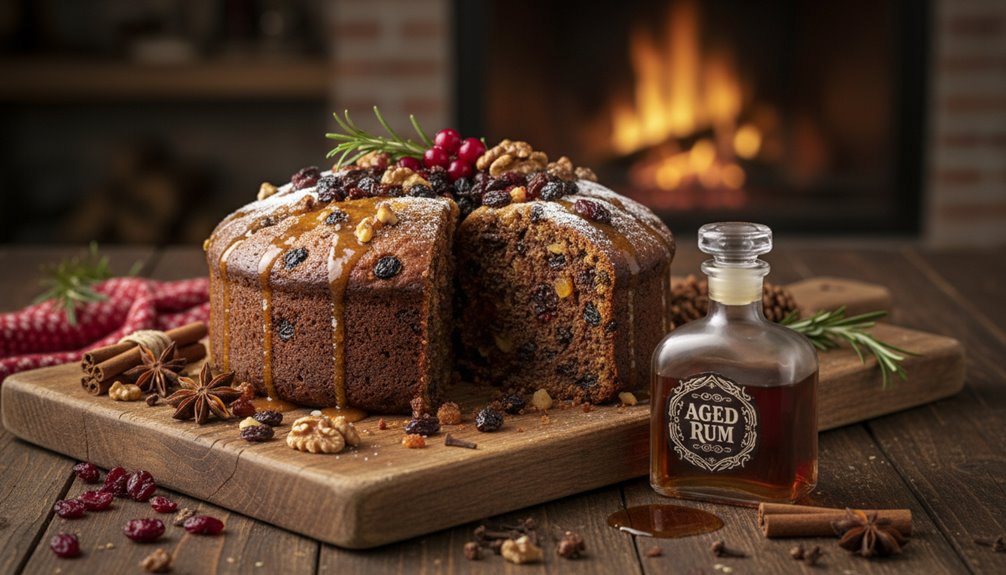
Rich Plum Cake With Rum A Tried-And-True Holiday Classic
You’ll create an exceptional rum-infused plum cake by soaking dried fruits in dark rum for optimal flavor absorption, then folding them into a rich batter made with creamed butter and brown sugar. Bake at 325°F for 75-85 minutes until moist, then age your cake for at least four weeks, brushing with additional rum every two weeks. This medieval European tradition delivers complex flavors that develop beautifully over time, and mastering the technique involves understanding proper fruit preparation and storage methods.
Table of Contents
Key Takeaways
- Plum cake with rum originated in medieval Europe as a symbol of prosperity and natural preservation method.
- Use dark or spiced rum with 40-50% ABV for rich, complex flavors that enhance the cake’s taste.
- Soak dried fruits in rum for optimal absorption, stirring every 8-12 hours before baking.
- Bake at 325°F for 75-85 minutes in a buttered springform pan until toothpick comes out moist.
- Age the cake for at least four weeks, brushing with rum biweekly for maximum flavor development.
The History and Heritage of Traditional Plum Cake
Centuries of tradition have shaped the beloved plum cake into more than just a dessert—it’s become a cornerstone of holiday celebrations across cultures. You’ll find plum cake origins tracing back to medieval Europe, where dried fruits symbolized prosperity and preservation through harsh winters.
British colonists spread these plum cake traditions worldwide, adapting recipes to local ingredients and tastes. You’re participating in a culinary legacy that spans continents when you bake this festive treat. The addition of rum wasn’t merely for flavor—it served as a natural preservative, allowing families to prepare cakes weeks in advance.
You’ll discover that different regions developed their own variations. Caribbean islands embraced dark rum, while European bakers preferred lighter spirits. The cake’s dense, moist texture comes from techniques perfected over generations, ensuring each bite delivers the rich, complex flavors that’ve made plum cake synonymous with celebration and togetherness.
Essential Ingredients for the Perfect Rum-Infused Plum Cake
You’ll need to choose the right rum and prepare your plums properly to create an exceptional cake that balances sweet fruit with rich, complex spirits. The rum you select directly impacts your cake’s flavor profile, so don’t settle for bottom-shelf options when premium aged varieties will transform your dessert.
Fresh plum preparation requires specific techniques to ensure they maintain their texture and complement the rum’s intensity throughout baking.
Quality Rum Selection Tips
Picking out the right rum can make or break your plum cake’s flavor profile. You’ll want to choose a rum that complements rather than overpowers the delicate plum flavors while adding depth and warmth to your holiday classic.
Consider these key factors when selecting your rum:
- Opt for dark or spiced rum – These varieties offer richer, more complex flavors that pair beautifully with plums and traditional cake spices
- Check alcohol content recommendations – Choose rums with 40-50% ABV for optimal flavor extraction without overwhelming the cake
- Consider distilling techniques – Pot-distilled rums typically provide more robust flavors than column-distilled varieties, making them ideal for baking
You don’t need premium sipping rum for baking, but avoid bottom-shelf options that might introduce harsh notes into your finished cake.

Fresh Plum Preparation Methods
While rum selection sets the foundation for your cake’s flavor, proper plum preparation ensures the fruit maintains its integrity and contributes maximum taste throughout the baking process. Start by washing plums under cool running water, gently rubbing their skin to remove any residue or wax. Pat them completely dry with paper towels before proceeding.
When dicing plums, work with a sharp knife to create uniform pieces approximately half-inch in size. Remove pits carefully, cutting around them rather than forcing the knife through. You’ll want to maintain the fruit’s natural moisture while creating pieces that distribute evenly throughout your batter. Toss diced plums lightly in flour before folding them into your cake mixture—this prevents them from sinking during baking.
Preparing and Soaking Your Dried Fruits
Once you’ve gathered your dried fruits, the soaking process becomes the foundation for your plum cake’s rich, boozy flavor. You’ll want to begin this crucial fruit preparation step at least 24 hours before baking, though longer soaking duration yields even better results.
Start by chopping larger dried fruits like apricots and dates into uniform pieces. This ensures even rum distribution and prevents oversized chunks from disrupting your cake’s texture. Place all dried fruits in a large bowl and cover completely with dark rum.
Here’s what you need to remember during the soaking process:
- Stir the mixture every 8-12 hours to redistribute the rum
- Cover the bowl tightly with plastic wrap to prevent evaporation
- Add more rum if fruits absorb all liquid before baking day
The fruits should plump beautifully, becoming tender and deeply infused with rum’s warmth. This patience pays off with incredibly moist, flavorful cake.
Step-by-Step Baking Instructions
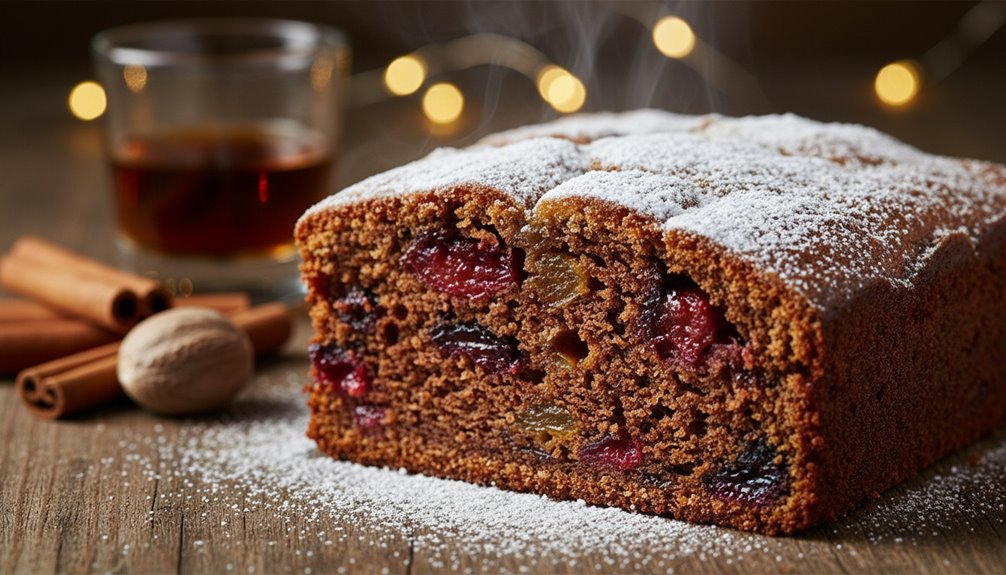
The transformation begins when you preheat your oven to 325°F and generously butter a 9-inch springform pan. Line the bottom with parchment paper for easy removal.
Among essential equipment recommendations, use a stand mixer for optimal creaming and a large bowl for folding ingredients.
Cream butter and brown sugar until light and fluffy, about 4 minutes. Add eggs one at a time, beating well after each addition. Incorporate vanilla extract and rum.
In a separate bowl, whisk together flour, baking powder, cinnamon, nutmeg, and salt.

Alternately add dry ingredients and milk to the creamed mixture, beginning and ending with flour. Fold in your soaked fruits and any remaining liquid using proper baking techniques—gentle movements prevent overmixing. Pour batter into prepared pan, smoothing the top.
Bake for 75-85 minutes until a toothpick inserted in center comes out with just a few moist crumbs. Cool completely before removing from pan.
Aging and Storing Your Plum Cake for Maximum Flavor
After your plum cake has cooled completely, the real magic happens during the aging process where flavors deepen and meld into something extraordinary. You’ll want to wrap your cake tightly in cheesecloth or parchment paper, then store it in an airtight container.
For optimal results, follow these proper storage conditions:
- Keep the cake in a cool, dark place like a pantry or cellar where temperatures remain consistent
- Brush the surface with additional rum every two weeks to maintain moisture and enhance flavor development
- Allow at least four weeks for prolonged maturation, though some bakers prefer aging their cakes for up to three months
During this time, the rum penetrates deeper into the cake while the plum flavors intensify. You’ll notice the texture becomes more tender and moist. Check periodically for any signs of mold, especially in humid conditions. The waiting period transforms your good cake into an exceptional holiday centerpiece.
Serving Suggestions and Festive Presentation Ideas
You’ll transform your aged plum cake into a stunning centerpiece with the right presentation techniques. Consider garnishing with sugared cranberries, fresh rosemary sprigs, or edible gold leaf to create an impressive holiday display.
Arrange your cake on elegant serving platters with coordinated linens and ambient lighting to complete the festive atmosphere.
Holiday Garnish Ideas
Elevating your plum cake with rum into a stunning centerpiece requires thoughtful garnish choices that complement both its rich flavors and festive occasion. Transform your cake’s appearance with these sophisticated touches that’ll impress your holiday guests.
- Crystallized fruits and nuts: Arrange candied orange peel, sugared cranberries, and toasted pecans around the cake’s base for texture and visual appeal
- Fresh greenery accents: Tuck sprigs of rosemary, thyme, or holly leaves between cake slices to add natural elegance and aromatic touches
- Edible flower garnishes: Crown your cake with delicate pansies, violas, or sugared rose petals for an elegant finishing touch
You’ll create a memorable presentation that matches the cake’s sophisticated flavor profile while honoring traditional holiday aesthetics.
Elegant Plating Techniques
Mastering the art of plating transforms your rum-soaked plum cake from a simple dessert into an elegant culinary experience. Start by choosing white or neutral-colored plates to make colors pop.
Cut clean, even slices using a sharp knife warmed in hot water between cuts. Try creative plating techniques like fanning thin plum slices alongside each portion or creating geometric patterns with powdered sugar using stencils.
Place cake off-center for modern appeal, then add height with a small quenelle of whipped cream or ice cream. Incorporate visually stunning garnishes such as candied orange peel spirals, fresh mint sprigs, or edible gold leaf.
Drizzle remaining rum syrup artistically around the plate’s edge for professional finishing touches that’ll impress guests.
Festive Table Arrangements
Centerpieces featuring your rum-soaked plum cake create memorable moments that’ll captivate dinner party guests. Position your decorated cake on a raised pedestal surrounded by seasonal elements to establish elegant table settings that complement the dessert’s rich character.
Transform your dining space with these festive arrangements:
- Warm lighting displays – Scatter battery-operated fairy lights around cake stands and weave them through garland for soft illumination
- Natural seasonal accents – Arrange pine cones, cinnamon sticks, and dried orange slices alongside your cake presentation
- Coordinated linens – Choose deep burgundy or forest green table runners that echo the cake’s luxurious plum tones
Layer different textures and heights across your table to achieve cozy holiday ambiance. Mix metallic charger plates with rustic wooden serving boards, creating visual interest that draws attention to your stunning plum cake centerpiece.
Troubleshooting Common Plum Cake Challenges
Even experienced bakers encounter obstacles when making plum cake with rum, but most issues stem from predictable causes with straightforward solutions. If your cake turns out dense or heavy, you’ve likely overmixed the batter or used incorrect ingredient substitutions. Replace butter with oil carefully—maintain the same fat ratio but reduce liquid slightly.
When fruit sinks to the bottom, toss plums in flour before folding them in using proper mixing techniques.
Dry cake usually results from overbaking or insufficient liquid. Check doneness with a toothpick inserted off-center since fruit creates moisture pockets. If your cake cracks on top, you’re baking at too high a temperature—reduce by 25°F and extend time.
Alcohol flavor that’s too strong indicates you haven’t allowed proper aging time. Wrap finished cake in rum-soaked cheesecloth and store airtight for at least one week. Too little rum flavor means you need additional soaking or longer storage time.
Frequently Asked Questions
Can I Make This Plum Cake Without Alcohol for Children?
Yes, you can easily make this cake kid-friendly by exploring alcohol free baking options. Simply replace the rum with equal amounts of fruit juice, vanilla extract mixed with water, or milk.
These plum cake variations maintain the moist texture while creating a family-friendly dessert. You’ll still get that rich, festive flavor without worrying about serving alcohol to children.
How Long Does Homemade Plum Cake Stay Fresh at Room Temperature?
Your homemade plum cake stays fresh for 3-4 days at room temperature when you use proper storage methods. You’ll need to wrap it tightly in plastic wrap or store it in an airtight container to maintain moisture and prevent staleness.
The shelf life duration depends on your kitchen’s humidity and temperature. You can extend freshness by refrigerating it for up to one week.
What’s the Best Rum Substitute for Recovering Alcoholics or Pregnant Women?
You’ll find non-alcoholic rum extracts work perfectly as your best substitute, providing authentic flavor without alcohol content. Use the same measurement as called for in your recipe.
Alternatively, try plum juice substitution—it complements the cake’s fruit flavors beautifully while maintaining moisture. You can also use apple juice, grape juice, or vanilla extract mixed with water. These substitutes won’t compromise your cake’s rich taste or texture.
Can I Freeze Individual Slices of Plum Cake for Later Consumption?
Yes, you can absolutely freeze individual slices of plum cake for later enjoyment. After refrigerating baked cake overnight, cut it into portions and wrap each slice tightly in plastic wrap, then place in freezer bags.
When you’re ready to eat, thaw slices at room temperature for about an hour. Freezing individual slices makes portion control easy and keeps your cake fresh for months.
Is It Safe to Mail Plum Cake as a Holiday Gift?
Yes, you can safely mail plum cake as a holiday gift. You’ll need proper packaging requirements like airtight containers, bubble wrap, and sturdy boxes to prevent damage. Choose reliable shipping methods with tracking and consider expedited delivery to maintain freshness.
Wrap individual slices separately, use insulated packaging for temperature control, and include freezing instructions for recipients to preserve quality upon arrival.
Conclusion
You’ve mastered the art of creating a spectacular rum-infused plum cake that’ll become your family’s treasured holiday tradition. With proper aging, quality ingredients, and patience, you’ll have a cake that improves with time and fills your home with festive aromas. Don’t be afraid to experiment with different rum varieties or fruit combinations—this recipe’s your foundation for countless delicious variations. Your guests won’t believe you made something so professionally delicious.


No Comments