
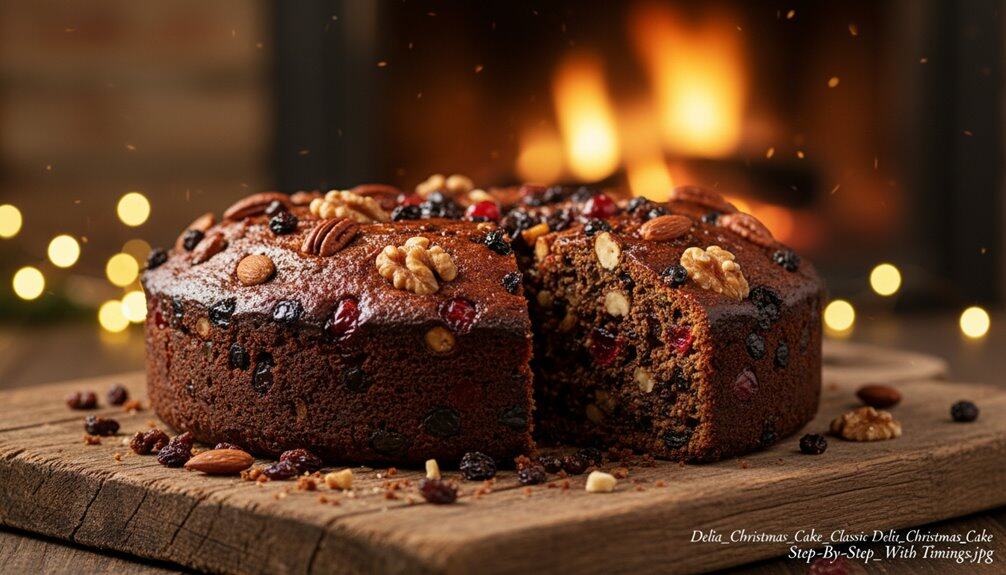
Classic Delia Christmas Cake Step-By-Step With Timings
You’ll need to soak your mixed dried fruits in brandy or rum for 8-24 hours before starting Delia’s classic Christmas cake. Cream butter and dark muscovado sugar, add eggs individually, then gently fold in the soaked fruits and sifted flour mixture. Bake in a lined 8-9 inch tin at 150°C for 4-5 hours, testing with a skewer. Feed weekly with alcohol until Christmas, wrapping in parchment and storing in an airtight container. Master these essential techniques to create the perfect festive centerpiece.
Table of Contents
Key Takeaways
- Soak dried fruits in alcohol for 8-24 hours before mixing to develop deeper flavors and texture.
- Preheat oven to 150°C and bake in an 8-inch tin for 4-5 hours total time.
- Test doneness with a skewer inserted into the center; it should come out clean when ready.
- Feed the baked cake weekly with alcohol until Christmas for optimal flavor development and moisture.
- Store wrapped in parchment and foil in airtight container, checking monthly for mold until serving.
Essential Ingredients for Delia’s Traditional Christmas Cake
When you set out to make Delia’s legendary Christmas cake, you’ll need to gather a carefully curated selection of premium ingredients that form the foundation of this beloved holiday tradition.
Start with mixed dried fruits—currants, sultanas, and raisins—ensuring exceptional fruit qualities by choosing plump, glossy specimens without crystallization. Add candied peel, glacé cherries, and blanched almonds for texture and depth.
Your alcohol selection proves crucial for the cake’s distinctive character. Delia recommends brandy as the primary choice, though you can substitute with rum, sherry, or whisky based on preference. The alcohol both preserves the cake and infuses rich flavor throughout.
Essential dry ingredients include plain flour, ground almonds, mixed spice, and a pinch of salt. You’ll need butter, dark muscovado sugar, and large eggs for structure. Finally, gather black treacle for moisture and that signature dark color that makes this Christmas cake truly unforgettable.
Preparing Your Cake Tin and Oven Setup
Before you begin mixing your ingredients, you’ll need to select the proper cake tin and prepare it correctly for Delia’s Christmas cake recipe. Start by choosing a deep, round tin that’s approximately 8-9 inches in diameter, then line it thoroughly with parchment paper to prevent sticking and ensure easy removal.
Set your oven to the correct temperature and position the rack in the lower third, as this cake requires gentle, even heat for its long baking time.
Choosing the Right Tin
Since the success of your Christmas cake depends heavily on even baking and proper heat distribution, selecting the right tin becomes crucial to achieving that perfect, moist texture Delia’s recipe promises. For tin size selection, you’ll need a deep 8-inch round tin or 7-inch square tin to accommodate the rich fruit mixture. The depth prevents overflow while allowing proper cooking throughout.
Tin material considerations are equally important. Choose heavy-gauge aluminum or anodized steel for superior heat conduction. Avoid thin, lightweight tins that create hot spots and uneven browning. Non-stick coatings aren’t necessary since you’ll line the tin anyway. Ensure your chosen tin has straight sides rather than sloped ones, as this promotes uniform rising and creates the classic Christmas cake shape that holds decorations beautifully.

Lining With Parchment Paper
Proper parchment lining creates a protective barrier that prevents your precious Christmas cake from sticking and ensures clean removal after that long, slow bake. You’ll need enough parchment paper to line both the base and sides of your tin with generous overhang.
Cut a circle for the base by tracing around your tin’s bottom. For the sides, measure the circumference and height, adding extra inches for overlap. When lining the tin, place the base circle first, then wrap the side strip around, ensuring it sits snugly against the walls. The parchment paper lining should extend about two inches above the rim—this creates a protective collar that prevents over-browning during the extended baking time.
Oven Temperature and Positioning
Once your tin is properly lined, you’ll need to position your oven rack and set the correct temperature for Christmas cake’s distinctive low-and-slow baking method.
Proper oven temperature setting ensures your cake bakes evenly without burning the exterior before the center cooks through. You’ll want to preheat your oven to 150°C (130°C fan) or 300°F. This gentle heat allows the dense fruit mixture to cook gradually, preventing the dried fruits from burning while ensuring the cake develops its characteristic deep, rich flavor.
For optimal oven rack positioning, place your rack in the lower third of the oven. This prevents the top from browning too quickly.
- Preheat oven to 150°C (130°C fan/300°F)
- Position rack in lower third of oven
- Allow 15-20 minutes for proper preheating
- Keep oven door closed during baking
Soaking the Dried Fruits: Timing and Technique
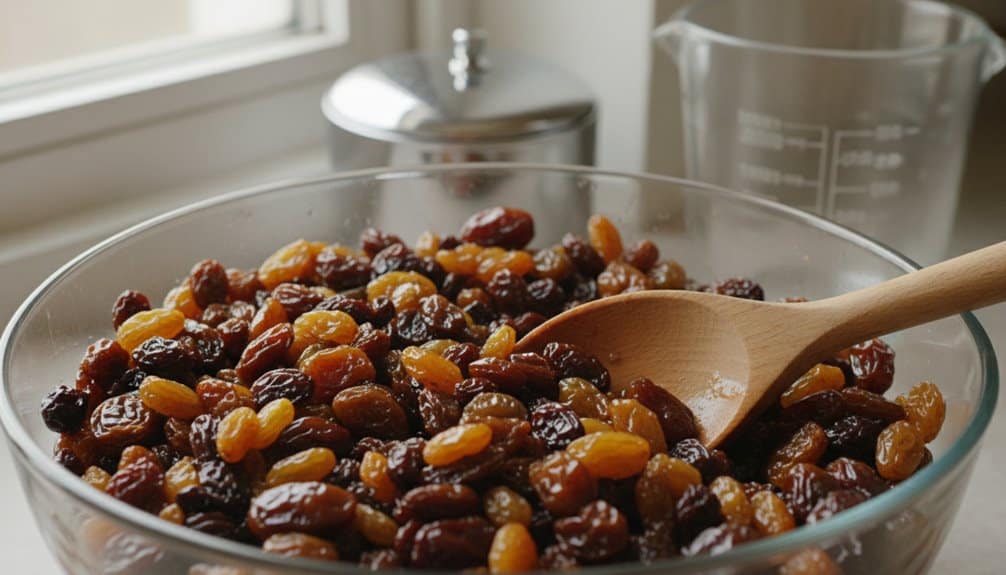
You’ll want to soak your dried fruits for at least 24 hours before baking, though leaving them for up to a week creates even richer flavors. The best liquid combination typically includes brandy, sherry, or rum mixed with orange juice for depth and complexity.
Start this process well ahead of your baking day since properly soaked fruits are essential for achieving that signature moist texture Delia’s recipe is known for.
Optimal Soaking Duration
How long should you soak your dried fruits to achieve that perfect, plump texture that makes Delia’s Christmas cake so exceptional? The ideal soaking period is overnight, but you can extend it up to 24 hours for maximum flavor absorption. Your proper soaking technique begins with covering the fruits completely in alcohol or tea, ensuring even distribution throughout.
During soaking, the fruits absorb liquid and expand, creating that characteristic moist bite. You’ll notice the mixture darkening as flavors meld together. Check periodically that all fruits remain submerged.
Key soaking guidelines:

- Minimum time: 8-12 hours overnight
- Maximum time: 24 hours for deeper flavor
- Liquid level: Keep fruits completely covered
- Storage: Cover bowl, store at room temperature
Once soaked, drain excess liquid before incorporating into your cake batter.
Best Liquid Combinations
While traditional recipes often call for brandy alone, combining different liquids creates more complex flavors that transform your Christmas cake into something extraordinary. You’ll achieve optimal results by balancing brandy alcohol ratios with complementary liquids that enhance rather than overpower the fruit’s natural sweetness.
| Primary Base | Secondary Liquid | Fruit Liquid Proportions |
|---|---|---|
| Brandy (50%) | Dark rum (50%) | 200ml per 500g fruit |
| Brandy (60%) | Sherry (40%) | 180ml per 500g fruit |
| Brandy (70%) | Orange juice (30%) | 220ml per 500g fruit |
| Rum (100%) | None | 200ml per 500g fruit |
These combinations ensure your dried fruits absorb maximum flavor while maintaining proper moisture levels for Delia’s signature texture.
Mixing the Batter: Step-by-Step Method
After you’ve prepared all your ingredients and equipment, begin by creaming the butter and brown sugar together in your largest mixing bowl until the mixture becomes pale and fluffy—this should take about 3-4 minutes with an electric mixer.
Beat in eggs one at a time, ensuring each is fully incorporated before adding the next. If the mixture curdles slightly, don’t worry—it’ll come together once you add the flour.
Next, fold in your soaked fruit mixture using a large metal spoon. When mixing wet ingredients like your brandy-soaked fruit, work gently to prevent breaking up the pieces.
Now focus on blending dry components: sift the flour, spices, and salt together, then fold these into your mixture using figure-eight motions.
- Cream butter and sugar for 3-4 minutes until pale
- Add eggs individually, beating well after each addition
- Fold in soaked fruit mixture with gentle movements
- Sift and fold dry ingredients using figure-eight technique
Baking Times and Temperature Guidelines
Two key factors determine your Christmas cake’s success: the right temperature and proper timing. You’ll want to bake your cake at 140°C (275°F) for the first hour, then reduce to 120°C (250°F) for the remaining time. This gradual approach prevents the outside from browning too quickly while ensuring the center cooks thoroughly.
For an 8-inch round tin, expect approximately 4-5 hours total baking time. However, baking time adjustments may be necessary depending on your oven’s characteristics. Check after 3 hours by inserting a skewer into the center—it should come out clean when done.
Temperature variations between ovens mean you might need to adjust accordingly. If your cake’s browning too fast, cover it with foil and reduce heat by 10°C. Fan ovens typically require 20°C lower temperatures. Don’t open the oven door frequently, as this causes heat loss and uneven baking.
Testing for Doneness and Cooling Process
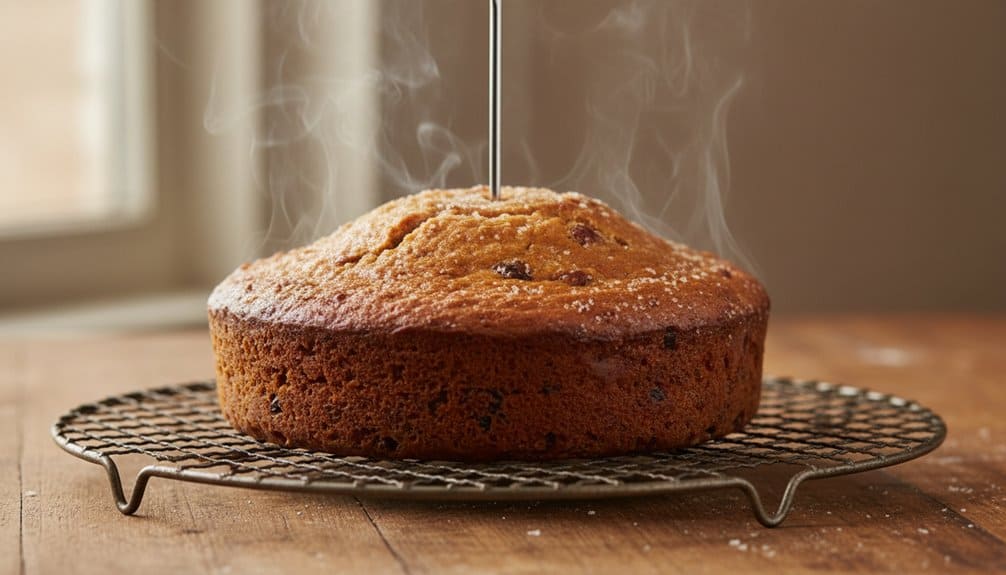
The skewer test remains your most reliable indicator, but you’ll need to look for additional signs to confirm your Christmas cake is properly baked. Insert a skewer into the cake’s center—it should emerge clean or with just a few moist crumbs. Additionally, the cake should spring back lightly when pressed and pull away slightly from the tin’s edges.
Cake doneness testing checklist:
- Skewer inserted in center comes out clean
- Cake surface springs back when gently pressed
- Edges pull away slightly from tin sides
- Deep golden-brown color across the top
Once confirmed done, leave the cake in its tin for 30 minutes before turning out. This initial cooling prevents cracking. The cake cooling process requires patience—place on a wire rack and cool completely before wrapping. Don’t rush this stage, as residual heat will continue cooking the cake if wrapped too early.
Feeding and Storing Your Finished Christmas Cake
Once your Christmas cake has cooled completely, you’ll begin the essential feeding process that transforms a good fruitcake into an exceptional one. Alcohol based feeding involves piercing the cake’s surface with a skewer and slowly drizzling brandy, rum, or sherry over it. This process should be repeated weekly until Christmas.
Wrap your cake in parchment paper, then foil, storing it in an airtight container. Festive storage considerations include keeping it in a cool, dark place away from temperature fluctuations.
| Week | Alcohol Amount | Storage Notes |
|---|---|---|
| 1 | 2-3 tablespoons | Initial heavy feeding |
| 2-4 | 1-2 tablespoons | Weekly maintenance |
| 5-8 | 1 tablespoon | Light feeding |
| 9-12 | Optional feeding | Pre-decoration prep |
| Final | None | Ready for marzipan/icing |
Check your cake monthly for any signs of mold. The alcohol preserves it naturally while developing rich, complex flavors that make Christmas cakes legendary.
Frequently Asked Questions
Can I Make This Cake if I Have a Nut Allergy?
You can make this cake with a nut allergy by using alternative ingredients. Simply omit any nuts called for in the original recipe and substitute them with dried fruits, seeds, or chocolate chips.
Check that all your ingredients are certified nut-free, especially marzipan if used. This creates a delicious nut free recipe that’s safe for you to enjoy during the holidays.
How Far in Advance Should I Start Making This Christmas Cake?
You should start your cake making timeline at least 6-8 weeks before Christmas for suitable advance preparation. This allows proper maturation time as you’ll feed the cake weekly with brandy or rum.
Make the cake in late October or early November, then wrap it in parchment and foil. Store in a cool, dry place, feeding it alcohol regularly to develop rich flavors and moist texture.
Can I Substitute the Alcohol With Fruit Juice or Tea?
Yes, you can easily create alcohol free versions of Delia’s Christmas cake using non alcoholic substitutes. Replace the brandy or sherry with strong black tea, apple juice, or grape juice. These liquids will still provide moisture and flavor to your cake.
Soak your dried fruits in your chosen substitute for at least 24 hours before baking for best results.
What’s the Best Way to Decorate Delia’s Christmas Cake?
You’ll achieve the most elegant presentation by keeping decorations simple on Delia’s Christmas cake. Start with a smooth layer of marzipan, then royal icing or fondant.
Add subtle touches like sugared cranberries, rosemary sprigs, or gold ribbon around the base. You can create beautiful effects with piped snowflakes or delicate sugar flowers. Simple decorations often look more sophisticated than elaborate designs.
Can I Freeze the Cake and for How Long?
You can absolutely freeze Delia’s Christmas cake for up to three months. For proper freezing technique, wrap the cake tightly in plastic wrap, then aluminum foil to prevent freezer burn.
You’ll want to freeze it before adding any decorative icing or marzipan. The freeze duration maintains the cake’s moisture and rich flavors perfectly.
Thaw slowly in the refrigerator overnight before decorating.
Conclusion
You’ve now mastered Delia’s classic Christmas cake recipe from start to finish. Remember to feed your cake regularly with brandy or your chosen spirit over the coming weeks—this’ll develop those rich, complex flavors that make Christmas cake special. Store it wrapped in parchment and foil in a cool, dry place. With proper care, your homemade cake will be the perfect centerpiece for your Christmas celebrations.


No Comments