
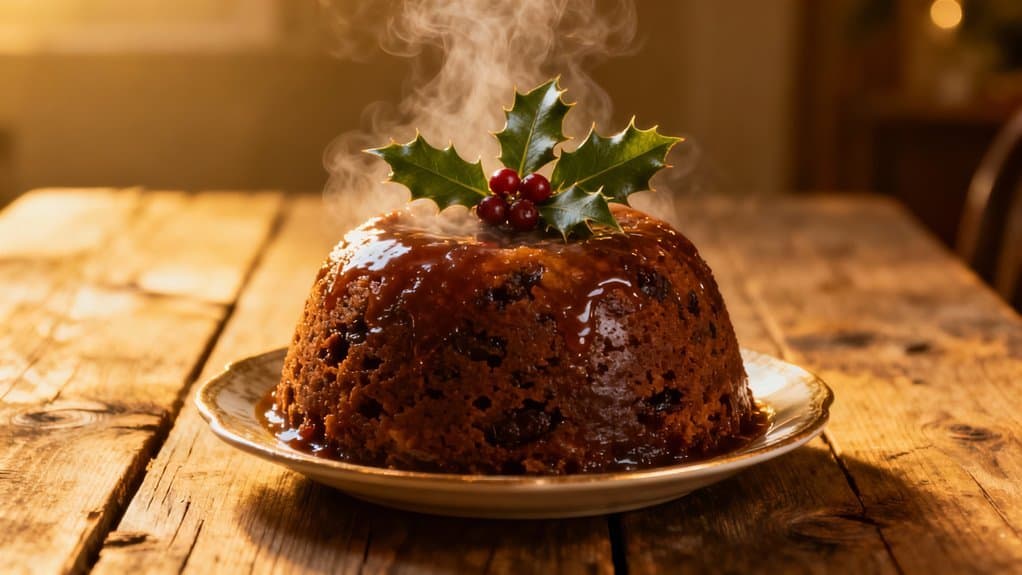
Old Fashioned Christmas Pudding Made the Traditional Way
You’ll create authentic Christmas pudding by soaking dried fruits in brandy overnight, toasting warming spices until fragrant, and combining everything with beef suet and breadcrumbs. After stirring clockwise while making wishes, you’ll steam the pudding for six to eight hours, rest it overnight, then warm it again before serving. The traditional flaming finale—where you pour warmed alcohol over the pudding and ignite it—transforms this centuries-old dessert into pure magic. There’s much more to master about this heritage dessert’s ritual and technique.
Table of Contents
Key Takeaways
- Medieval origins evolved into Victorian tradition using dried fruits, spices, suet, and alcohol to preserve ingredients and symbolize family unity.
- Toast spices briefly, soak dried fruits in brandy overnight, then combine all ingredients while stirring clockwise with intention and family participation.
- Steam pudding initially for 6–8 hours, rest overnight, steam again 2–3 hours, then warm 1–2 hours before serving for optimal texture.
- Serve on warmed plate dusted with powdered sugar, garnished with holly and berries, accompanied by whipped cream or custard for richness.
- Warm brandy separately before flaming pudding tableside using long lighter; maintain safety by avoiding cold spirits on hot pudding and curtain proximity.
The History and Heritage of Christmas Pudding
Whether you’re a culinary historian or a holiday enthusiast, you’ll find that Christmas pudding‘s roots run deeper than most desserts. This beloved dish traces back to medieval times, evolving significantly through the Victorian Origins of the 19th century, when it became the formal tradition you recognize today.
The pudding’s journey reflects centuries of cultural refinement. Medieval cooks created it as a way to preserve fruits and spices, layering ingredients that’d sustain them through winter months. By Victorian times, it transformed into a celebration centerpiece with symbolic meaning.
Folklore Traditions wove themselves into every aspect of its preparation. You’d stir the pudding while making secret wishes, and family members contributed ingredients representing hopes for the coming year.
The pudding became more than dessert—it represented unity, abundance, and gratitude.
Today, when you prepare Christmas pudding, you’re honoring generations of tradition and cultural heritage that connects you to your ancestors’ celebrations.
2. Essential Ingredients for Authentic Christmas Pudding
To create an authentic Christmas pudding, you’ll need to gather a carefully balanced combination of dried fruits, spices, and binding ingredients that’ve remained largely unchanged for centuries.
Start with dried fruits—currants, raisins, and sultanas form your foundation.
You’ll want candied peel and chopped dried apricots for complexity.

Ground spices like cinnamon, nutmeg, and cloves provide warmth and depth.
For binding, suet creates the traditional texture, while breadcrumbs and flour hold everything together.
Eggs act as your primary binder, creating a moist crumb.
Regarding Alcohol Choices, brandy‘s the classic option, though rum and sherry work beautifully.
These spirits preserve the pudding while infusing rich flavor.
For Sweetener Types, brown sugar delivers molasses notes that enhance the spice profile.
Some recipes incorporate treacle for deeper complexity.
Don’t overlook the humble carrot—finely grated, it adds natural moisture and subtle sweetness.
Finally, you’ll need beef suet, which remains non-negotiable for achieving that authentic, traditional texture.
3. Gathering Your Equipment and Tools
Once you’ve assembled your ingredients, the right equipment will make the actual preparation and cooking process considerably smoother.

You’ll need a large mixing bowl, sturdy wooden spoon, and measuring cups for combining your pudding mixture.
A food processor speeds up chopping dried fruits and nuts, though a sharp knife works fine too.
Mould selection matters significantly—traditional ceramic or metal pudding basins with lids are ideal, though you can use heatproof bowls covered with foil.
Choose one with at least a two-pint capacity.
For cooking, you’ll require a large saucepan or steamer pot tall enough to accommodate your mould.
A trivet or folded cloth inside prevents direct heat contact.
Tool maintenance ensures longevity and performance.
Clean your equipment thoroughly after use, dry it completely, and store it properly.
Quality tools justify the investment when you’re making Christmas pudding annually.
4. Preparing Your Ingredients: A Step-by-Step Guide
Properly preparing your ingredients sets the foundation for a successful Christmas pudding. You’ll want to start by gathering all your dried fruits, spices, and spirits before beginning.
Spice toasting enhances the flavor profile of your pudding dramatically. Gently warm your cinnamon, nutmeg, and cloves in a dry pan for two to three minutes until fragrant. This process awakens their essential oils.
Next, you’ll handle fruit maceration, which allows your dried fruits to absorb moisture and flavor. Soak your raisins, currants, and candied peel in brandy or sherry overnight.
| Ingredient | Preparation | Timing |
|---|---|---|
| Spices | Toast in dry pan | 2-3 minutes |
| Dried fruit | Soak in spirits | Overnight |
| Fresh citrus | Zest and juice | Day of mixing |
Finally, measure your flour, sugar, and breadcrumbs precisely. Grate your fresh lemon and orange zest. Having everything prepped and organized ensures smooth mixing and optimal results in your pudding.
5. the Art of Mixing and Stirring With Tradition
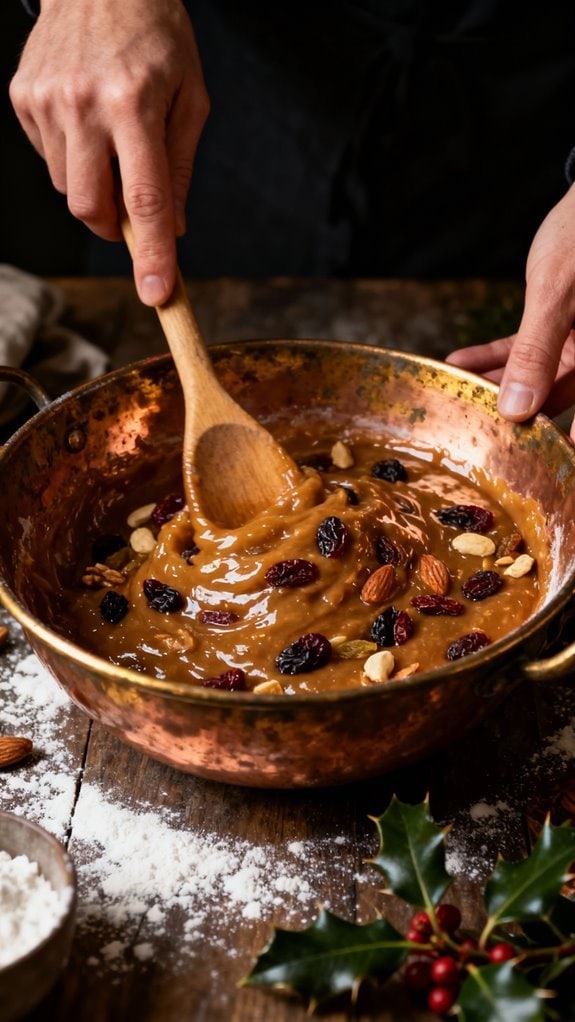
Combining your prepared ingredients requires more than mechanical mixing—it demands intention and rhythm that connects you to centuries of Christmas pudding tradition.
Mindful stirring transforms this process into something sacred.
You’re not simply blending; you’re honoring generations of bakers who’ve stirred before you.
Each circular motion becomes family choreography passed down through time.
Consider these essential stirring practices:
- Stir clockwise to invite good fortune into your pudding
- Use a wooden spoon for authentic tradition and better ingredient incorporation
- Take turns with family members, allowing each person to make a wish
- Stir slowly and deliberately, maintaining focus throughout
- Count your strokes to deepen your meditative connection
Your rhythm matters.
Don’t rush this step.
Feel the mixture thicken beneath your spoon as ingredients marry together.
The resistance you encounter builds character in both pudding and baker alike.
This unhurried approach isn’t inefficiency—it’s reverence.
You’re crafting not just dessert, but a edible link connecting past Christmases to those yet to come.
6. The Long Steaming Process Explained
Steaming your pudding for hours transforms the raw mixture into something rich and complex, where heat and moisture work together to develop deep flavors you can’t achieve through any other cooking method.
| Steam Timing | Duration |
|---|---|
| Initial steaming | 6-8 hours |
| Second steaming | 2-3 hours |
| Rest period | Overnight minimum |
| Final warming | 1-2 hours |
You’ll need to monitor condensation control carefully throughout the process. Water droplets collecting on the pudding’s surface can create soggy spots, so cover your basin with pleated parchment paper topped with foil. This layering allows steam circulation while preventing drips.
Check your water level regularly—it shouldn’t drop below halfway up the basin’s sides. You’re maintaining consistent steam, not boiling water directly. When you lift the lid, you’re briefly releasing steam that’s been slowly breaking down fruit fibers and melding spices into the suet, creating that signature dense texture and integrated flavor profile traditional Christmas pudding demands.
7. Serving and Flaming Your Finished Pudding
How do you transform your finished pudding into a showstopping finale?
With proper presentation tips and flame safety precautions, you’ll create an unforgettable moment.
Start by turning your pudding onto a warmed plate.
You can enhance its visual appeal through these methods:
- Dust the top with powdered sugar for an elegant finish
- Drizzle warm brandy or rum sauce around the base
- Garnish with fresh holly and berries for festive color
- Add a sprig of rosemary for aromatic appeal
- Top with a dollop of whipped cream or custard
When flaming your pudding, prioritize flame safety.
Warm your alcohol separately before pouring—never pour cold spirits directly onto hot pudding.
Use a long lighter or long match to ignite the vapors carefully.
Keep the flame away from curtains and overhead decorations.
Dim the lights before flaming for maximum dramatic effect.
Let the flames burn naturally until they extinguish, which typically takes one to two minutes.
Frequently Asked Questions
Can I Make Christmas Pudding Weeks or Months in Advance Without Compromising Quality?
Yes, you can make Christmas pudding weeks or months ahead.
In fact, you’ll benefit from the maturation benefits that develop during storage.
Your pudding actually improves with time as flavors deepen and blend.
A typical timing schedule suggests making it 4-8 weeks before Christmas for optimal results.
Store it in an airtight container in a cool, dark place.
You’re not compromising quality—you’re enhancing it through proper aging.
What Substitutes Work Best for Traditional Ingredients Due to Allergies or Dietary Restrictions?
You’ll find excellent substitutes for traditional ingredients.
Replace regular flour with gluten free flour to accommodate celiac needs.
Swap beef suet for vegan suet, which you can make from coconut oil and breadcrumbs or purchase pre-made.
You can substitute dried fruits with sugar-free varieties, use plant-based milk instead of dairy, and replace eggs with flax or chia seed mixtures.
These swaps maintain your pudding’s moisture and richness while accommodating dietary restrictions.
How Do I Store Leftover Christmas Pudding Properly to Maintain Freshness and Flavor?
You’ll preserve your pudding best with airtight wrapping.
Wrap it tightly in plastic wrap, then aluminum foil to prevent moisture loss and freezer burn.
Store it in your refrigerator for up to two weeks, or freeze it for several months.
When freezing tips matter most, place wrapped pudding in airtight containers for extra protection.
Thaw overnight in the refrigerator before reheating, ensuring you maintain its rich flavor and moist texture perfectly.
What Alcohol Alternatives Can I Use if I Prefer a Non-Alcoholic Version?
You can easily swap alcohol for apple cider, which adds natural sweetness and depth. Alternatively, try a tea infusion—strong brewed Earl Grey or spiced chai works wonderfully.
You’ll get those rich, warming flavors without the booze. Both options maintain the pudding’s traditional character while catering to your preference.
Adjust the liquid quantities slightly since non-alcoholic substitutes behave differently than spirits during cooking and aging.
How Can I Troubleshoot Common Problems Like Pudding Being Too Dry or Dense?
You’ll fix dryness by adjusting your moisture balance—add more suet or fruit juice to your mixture.
For density issues, don’t overmix your batter, as you’ll develop gluten unnecessarily.
Extend your steam duration gradually; underbaking causes dryness, while proper steaming keeps your pudding moist.
Test doneness with a skewer—it shouldn’t come out wet.
Store your pudding wrapped tightly; it’ll continue absorbing moisture and improving with age.
Conclusion
You’ve now mastered the art of making traditional Christmas pudding from scratch. You’ll find that your homemade creation far surpasses anything you can buy. You’ve invested time and care into every step, from mixing the rich ingredients to the patient steaming process. When you serve it flaming at your holiday table, you’ll create memories that’ll last for generations. You’ve preserved a cherished tradition.


No Comments