
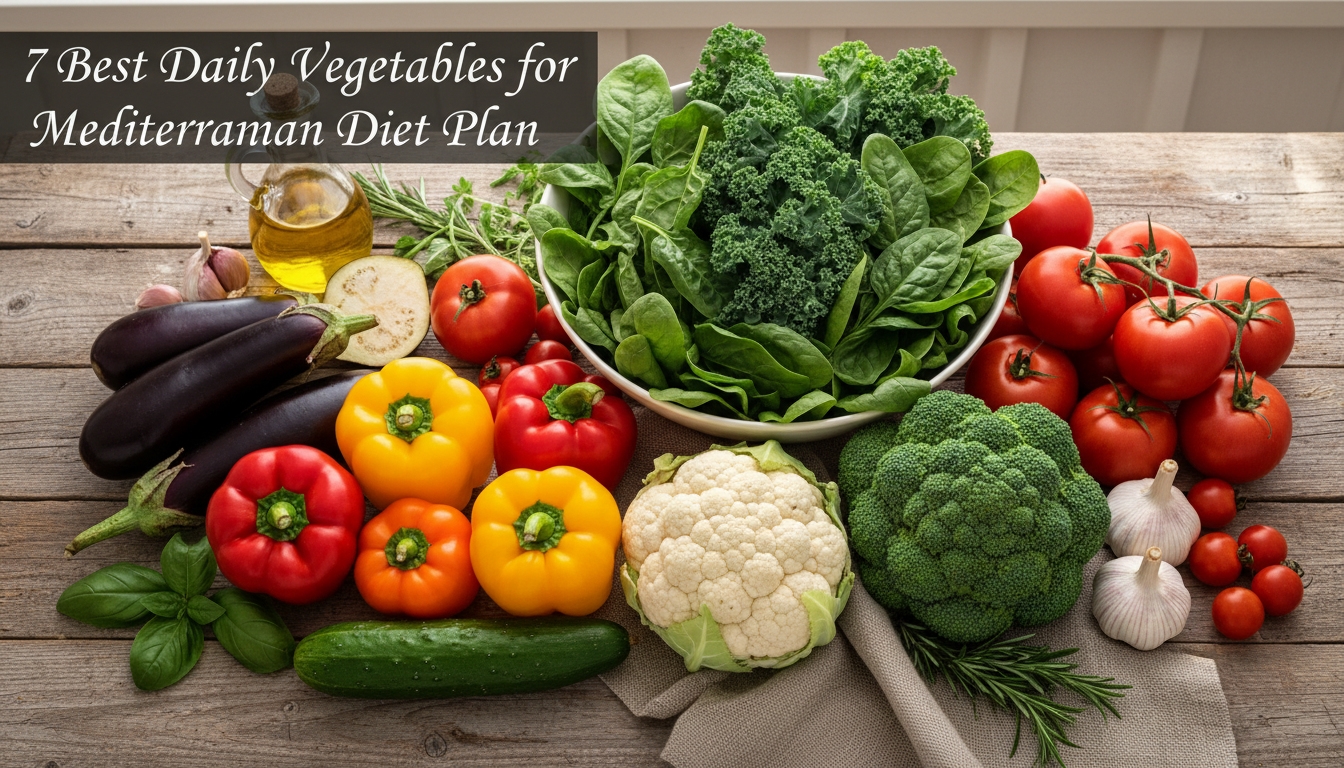
7 Best Daily Vegetables for Mediterranean Diet Plan
You’ll get the most Mediterranean boost by eating tomatoes, cucumbers, bell peppers, eggplant, zucchini, kale and spinach each day. Tomatoes supply lycopene and vitamin C for heart health, while cucumbers add hydration and crunch. Bell peppers bring vibrant antioxidants and vitamin C, and eggplant offers nasunin and monounsaturated fat when cooked with olive oil. Zucchini provides low‑calorie bulk and potassium, kale delivers massive vitamin K, calcium, and iron, and spinach adds iron, lutein, and fiber. Keep these veggies in your meals and you’ll discover even more benefits.
The 7 Best Mediterranean‑Style Vegetables
Looking for vegetables that fit the Mediterranean diet’s flavor and health profile? You’ll love tomatoes, crisp cucumbers, sweet bell peppers, earthy eggplants, tender zucchini, bitter arugula, and leafy kale. Each offers vibrant color, low calories, and a punch of antioxidants, fiber, and healthy fats when paired with olive oil. Slice tomatoes for salads, roast bell peppers for a smoky side, grill eggplant for a meaty texture, sauté zucchini with garlic, toss cucumbers into tzatziki, and pepper arugula into pasta.
Kale, rich in vitamin K and calcium, works well in soups or smoothies. These seven vegetables supply the phytonutrients that support heart health, reduce inflammation, and keep you satiated throughout the day. Rotate them in meals, combine them with legumes, whole grains, and lean proteins, and you’ll meet the Mediterranean diet’s nutritional goals without sacrificing taste.
How Spinach Boosts Mediterranean Nutrition
How does spinach amplify a Mediterranean diet? You’ll find it packs iron, calcium, and lutein while staying low‑calorie. Its leafy texture blends into salads, sautés, and soups, delivering a steady supply of vitamin K that supports bone health and cardiovascular function. The plant’s nitrates improve blood flow, complementing olive‑oil fats for optimal nutrient absorption. Plus, spinach’s antioxidants counteract inflammation, a key goal of Mediterranean eating.
| Nutrient | Benefit |
|---|---|
| Iron | Boosts oxygen transport and energy |
| Vitamin K | Enhances clotting and bone density |
| Lutein | Protects eyes and reduces oxidative stress |
| Nitrates | Improves vascular tone and blood pressure |
| Fiber | Supports gut health and satiety |
Incorporate a handful daily—raw in a mezze plate, wilted into a frittata, or blended into a chilled gazpacho—to keep your Mediterranean meals vibrant, balanced, and nutrient‑dense.
Why Tomatoes Are the Heart of Mediterranean Cooking
You’ll notice tomatoes pack a powerful antioxidant mix that fights inflammation and boosts immunity. Their juicy, tangy flavor makes them a versatile base for sauces, salads, and stews across the Mediterranean table. Plus, the lycopene and potassium they contain help keep your heart strong and your blood pressure steady.
Rich Antioxidant Profile
Because tomatoes are packed with lycopene, vitamin C, and flavonoids, they deliver a potent antioxidant punch that protects heart cells from oxidative stress. You’ll notice that these compounds neutralize free radicals, reducing inflammation and supporting vascular elasticity. Lycopene’s deep red hue signals its ability to scavenge harmful oxidants, while vitamin C regenerates other antioxidants, keeping your immune system robust. Flavonoids further stabilize cellular membranes, lowering the risk of plaque buildup. By incorporating fresh or cooked tomatoes daily, you amplify your body’s defense against age‑related degeneration and maintain smoother blood flow. This antioxidant synergy aligns perfectly with Mediterranean principles, helping you stay vibrant and heart‑healthy without extra supplements.
Versatile Culinary Base
Tomatoes form the backbone of Mediterranean cuisine, turning simple dishes into vibrant, flavor‑rich meals. You’ll find them in sauces, stews, salads, and even desserts, each time delivering a bright, tangy punch that balances herbs, olive oil, and cheese. Their high water content and natural acidity make them perfect for quick sautés or slow‑cooked ragùs, letting you layer flavors without overwhelming the palate. When you dice them fresh, they release juices that meld with garlic and basil, creating a base that carries the entire dish.
Roast them whole, and the caramelized edges add depth to grain bowls or fish plates. By mastering tomato techniques—raw, sautéed, roasted, or pureed—you unlock endless culinary possibilities while keeping meals light, aromatic, and authentically Mediterranean.
Supports Heart Health
Ever wondered why Mediterranean meals keep your heart thriving? You’ll find that tomatoes are packed with lycopene, potassium, and antioxidants that lower LDL cholesterol and reduce inflammation. When you add fresh or cooked tomatoes to salads, sauces, or stews, you boost nitric oxide production, which relaxes blood vessels and improves circulation. The fiber in tomato skins also helps regulate blood sugar, preventing spikes that strain the heart. Pairing tomatoes with olive oil enhances lycopene absorption, making the benefit even stronger. By including a cup of sliced tomatoes daily, you support healthy blood pressure, protect arterial walls, and enjoy a flavorful cornerstone of the Mediterranean diet that keeps your heart beating strong.
What Makes Bell Peppers Flavorful Antioxidants?
Why do bell peppers taste so vibrant and pack such an antioxidant punch? You’ll find the answer in their pigment chemistry. Capsanthin, lutein, and zeaxanthin give red, orange, and yellow varieties their bright hues while neutralizing free radicals. Vitamin C, abundant in every color, boosts collagen and shields cells from oxidative stress. These compounds thrive when the pepper is crisp, so quick sauté or raw crunch preserves their potency. The sweet, mildly peppery flavor stems from sugars that develop during the fruit’s ripening, balanced by a subtle heat from capsaicin in hotter varieties. You also get flavonoids like quercetin, which enhance anti‑inflammatory effects and improve vascular health. When you slice a bell pepper, you release these nutrients, allowing your body to absorb them efficiently. Incorporating a handful daily supports the Mediterranean diet’s goal of vibrant, nutrient‑dense meals.
How Zucchini Adds Low‑Calorie Satiety to Mediterranean Meals
After enjoying the bright, antioxidant‑rich burst of bell peppers, you’ll find zucchini to be the perfect low‑calorie partner for Mediterranean dishes. Its high water content and subtle fiber give you volume without the calories, so you stay full while keeping the plate light. You can grill, sauté, or spiral‑slice it into “zoodles,” letting the mild flavor soak up herbs, olive oil, and lemon. This versatility lets you replace starchy sides, cutting energy density by up to 70 %. Plus, zucchini supplies potassium, vitamin C, and a hint of lutein, supporting heart health and eye protection. Pair it with tomatoes, basil, and feta for a balanced bite that satisfies cravings and fuels your day.
| Nutrient | Approx. per 100 g |
|---|---|
| Calories | 17 kcal |
| Fiber | 1 g |
| Water | 94 % |
| Vitamin C | 17 mg |
| Potassium | 261 mg |
Eggplant’s Role in Mediterranean Healthy Fats and Fiber
When you slice into a glossy, deep‑purple eggplant, you’ll discover a vegetable that packs a surprising amount of heart‑healthy fats and soluble fiber while staying low in calories. Its skin contains nasunin, an anthocyanin that protects cell membranes and supports lipid metabolism. Inside, the flesh offers a modest amount of monounsaturated fat, especially when you drizzle it with olive oil during cooking, enhancing nutrient absorption. The soluble fiber slows glucose absorption, stabilizes blood sugar, and feeds beneficial gut bacteria, which in turn help regulate cholesterol. Pairing eggplant with tomatoes, garlic, and herbs creates a synergistic blend that maximizes anti‑inflammatory compounds without adding excess calories.
- Nasunin‑rich skin for antioxidant protection
- Monounsaturated fat boost when sautéed in olive oil
- Soluble fiber that moderates glucose and cholesterol
- Low‑calorie bulk for satiety without weight gain
- Versatile preparation (grilled, roasted, baked) retains nutrients
How Kale Maximizes Vitamins and Minerals in a Mediterranean Diet
Eggplant’s rich antioxidants set the stage for another powerhouse, kale, which delivers a dense mix of vitamins and minerals that the Mediterranean diet thrives on. You’ll find kale packed with vitamin K, A, C, and folate, plus calcium, potassium, and iron, all of which support bone health, immune function, and red‑blood‑cell production. Its phytonutrients, especially lutein and zeaxanthin, protect eye health, while fiber keeps digestion smooth and blood‑sugar stable. Pair kale with olive oil, lemon, and nuts for a Mediterranean‑style salad that maximizes nutrient absorption. You’ll feel energized, your skin will glow, and your heart will thank you.
| Nutrient | Daily % Value (per cup) | Key Benefits |
|---|---|---|
| Vitamin K | 684 % | Bone health, clotting |
| Vitamin C | 134 % | Antioxidant, immunity |
| Calcium | 9 % | Bone density |
| Iron | 5 % | Oxygen transport |
| Folate | 14 % | Cell growth, pregnancy |
Add kale to soups, smoothies, or roasted dishes to keep your Mediterranean meals vibrant and nutrient‑dense.
Frequently Asked Questions
How Many Servings of Vegetables Should I Eat Daily on a Mediterranean Diet?
You should aim for five to seven servings of vegetables each day, focusing on leafy greens, tomatoes, peppers, cucumbers, and cruciferous options, which supply fiber, antioxidants, and essential nutrients.
Can I Substitute Frozen Vegetables for Fresh Ones in Mediterranean Recipes?
You can swap frozen vegetables for fresh ones in Mediterranean recipes; just ensure they’re plain, minimally processed, and thawed before cooking so texture and flavor stay true to the dish.
What Are the Best Ways to Store Mediterranean Vegetables to Retain Nutrients?
Store Mediterranean vegetables in the crisper drawer, wrapped loosely in a damp paper towel, and keep them in airtight containers. Use the fridge for leafy greens, root veggies in a cool, dark place, and freeze quickly after blanching.
Do Mediterranean Vegetables Need to Be Cooked or Can They Be Eaten Raw?
You can eat most Mediterranean vegetables raw, especially leafy greens, cucumbers, and tomatoes; cooking enhances flavor and nutrient absorption for carrots, peppers, and eggplant, but raw options remain nutritious and refreshing.
How Do Seasonal Variations Affect the Availability of Mediterranean Vegetables?
You’ll notice that summer brings abundant tomatoes, zucchini, and eggplant, while winter limits you to kale, carrots, and beets; spring adds asparagus and peas, and autumn supplies squash and peppers, shifting your choices seasonally.
Conclusion
You’ve just discovered why these seven vegetables are staples of the Mediterranean diet. Spinach fuels your body with iron and antioxidants, while tomatoes bring heart‑healthy lycopene to every bite. Bell peppers pack a crunchy, vitamin‑rich punch, and zucchini offers low‑calorie fullness. Eggplant supplies fiber and healthy fats, and kale crowns the lineup with a dense blend of vitamins and minerals. Embrace them daily, and you’ll enjoy vibrant, nutritious meals that support lasting health.


Sorry, the comment form is closed at this time.